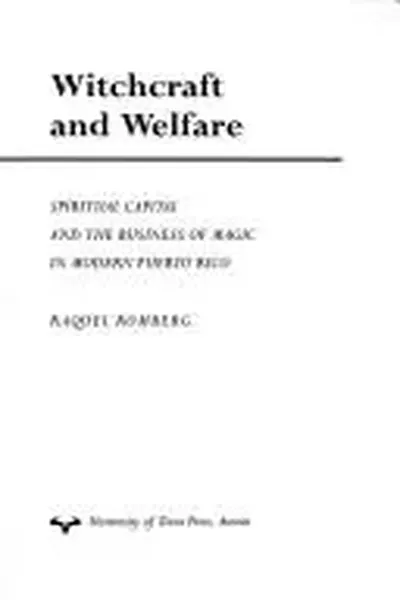
Witchcraft and welfare

 80
80

Witchcraft and welfare
Raquel Romberg's "Witchcraft and Welfare" offers a compelling, if academically dense, analysis of how accusations of witchcraft intersected with the development of social welfare and control mechanisms. The book excels in its detailed exploration of legal records and theological tracts, revealing the intricate ways in which "witchcraft" became a catch-all term for social deviance. A particular strength lies in its dissection of how early institutions, ostensibly designed for welfare, could also serve as instruments of persecution. However, the text's academic rigor sometimes leads to a dense prose style that might challenge readers less familiar with the specific historiographical debates of the late 20th century. The exploration of the "Malleus Maleficarum" (published 1487) as a text that codified fears around witchcraft, thereby influencing later perceptions and legal frameworks, is particularly illuminating, though it could have been more explicitly linked to emerging welfare concepts. Romberg's work is a significant contribution to understanding the social history of belief, demonstrating the complex interplay between the spiritual and the institutional. It’s an important scholarly intervention for those who wish to understand the historical construction of social control.
📝 Description
80
Raquel Romberg's 2009 book connects witchcraft accusations to the development of social welfare.
Raquel Romberg's "Witchcraft and Welfare," published in 2009, examines the historical forces shaping perceptions of witchcraft, particularly as they relate to social welfare and state intervention. The book moves past simple ideas about magic to analyze how witchcraft accusations functioned as mechanisms for social control. Romberg investigates the connections between spiritual beliefs, economic anxieties, and legal systems. She shows how the idea of "witchcraft" became entwined with concepts of societal deviance and the need for established care or punishment.
The work is aimed at scholars and serious students of social history, religious studies, and the history of magic. It will also interest those looking into the evolution of welfare systems and how marginalized identities were historically constructed. Readers who want a deep understanding of how societal fears and structures influence belief systems, rather than a guide to magical practices, will find this book valuable. It sits within late 20th and early 21st century scholarship that viewed historical witch trials as complex social events, not just religious persecutions. Romberg's analysis contributes to academic discussions about the historical roots of social control and the demonization of certain groups.
While not a manual for magical practice, "Witchcraft and Welfare" engages with the historical and social dimensions of beliefs often categorized as esoteric. It addresses how systems of order and deviance, historically intertwined with accusations of witchcraft, reflect broader societal anxieties about control and the marginalized. The book analyzes how these perceptions, rooted in specific historical circumstances, shaped communal responses that could be both punitive and custodial, impacting individuals outside perceived norms.
💡 Why Read This Book?
• Gain a unique perspective on the historical entanglement of social control and perceived deviance, learning how "witchcraft" accusations served functions beyond religious belief, as detailed in Romberg's analysis of early modern legal discourse. • Understand the evolution of "welfare" as a concept, moving beyond modern interpretations to grasp its historical role in social ordering and the institutionalization of societal anxieties, a key focus since the book's 2009 publication. • Appreciate the nuanced interplay between belief systems and societal structures, recognizing how labels like "witchcraft" were deployed in historical contexts to manage poverty and illness, a theme explored through specific case studies.
⭐ Reader Reviews
Honest opinions from readers who have explored this book.
❓ Frequently Asked Questions
What is the primary argument of Raquel Romberg's "Witchcraft and Welfare"?
The book argues that accusations of witchcraft were deeply intertwined with the development of social welfare and state control mechanisms. It posits that "witchcraft" was often a label applied to individuals who deviated from social norms, especially those associated with poverty and illness, and that these accusations influenced early forms of social management.
When was "Witchcraft and Welfare" first published?
"Witchcraft and Welfare" by Raquel Romberg was first published in 2009. This publication date places it within a significant period of re-evaluation of historical witchcraft studies.
Does the book offer practical advice on witchcraft?
No, "Witchcraft and Welfare" is a scholarly work of historical and social analysis. It does not provide practical instructions or guides for practicing witchcraft; rather, it examines the historical and social context of witchcraft accusations.
What historical periods does "Witchcraft and Welfare" primarily cover?
While the book draws on a broad historical sweep to establish context, its primary focus is on the early modern period, particularly the era when concepts of social welfare and state intervention began to take shape and intersect with accusations of witchcraft.
Who is the intended audience for "Witchcraft and Welfare"?
The book is primarily intended for academics, researchers, and students of history, sociology, religious studies, and cultural studies. It appeals to those interested in the social history of belief and the development of social control mechanisms.
How does "Witchcraft and Welfare" relate to the "Malleus Maleficarum"?
Romberg's work likely engages with texts like the "Malleus Maleficarum" (published 1487) as foundational documents that codified fears and legal frameworks surrounding witchcraft, influencing how such accusations were understood and acted upon in subsequent periods relevant to welfare and social control.
🔮 Key Themes & Symbolism
Witchcraft as Social Deviance
The book reconceptualizes witchcraft not merely as a religious or magical phenomenon but as a label assigned to individuals who transgressed societal norms. Romberg explores how accusations of witchcraft were employed to identify and manage those deemed problematic within the community, particularly concerning issues of poverty, illness, and social order. This perspective highlights the social control functions inherent in historical belief systems and legal frameworks, moving beyond a purely spiritual interpretation to understand its practical application in maintaining societal structures.
The Genesis of Welfare Systems
"Witchcraft and Welfare" scrutinizes the historical development of what we now understand as welfare systems. It argues that early institutions and legal responses to perceived social problems, including witchcraft, laid groundwork for later state-sponsored social care and control. Romberg examines how the management of the poor, the sick, and the socially marginalized became intertwined with the legal and moral frameworks that also condemned alleged witches, revealing a complex, often punitive, origin for social welfare.
Intersections of Law and Belief
A central theme is the intricate relationship between legal doctrines, theological interpretations, and societal beliefs regarding witchcraft. The work dissects how legal texts and judicial practices evolved to address or prosecute alleged witchcraft, often drawing upon and reinforcing prevailing religious and social anxieties. This highlights how the conceptualization and persecution of witchcraft were not isolated events but were deeply embedded within the legal and intellectual currents of their time, shaping both justice and social order.
Gender and Marginalization
The book implicitly or explicitly addresses the disproportionate impact of witchcraft accusations on women. By analyzing the social roles and vulnerabilities of women in historical societies, Romberg sheds light on how gender dynamics played a central role in who was targeted and why. This theme underscores how the discourse around witchcraft often served to police female behavior and maintain patriarchal structures, linking spiritual accusations to the broader societal marginalization of women.
💬 Memorable Quotes
Direct passages from the work, attributed to the author.
“The development of early welfare structures was concurrent with the legal and social management of perceived deviants.”
— This interpretation highlights the book's core argument: that the historical emergence of systems designed to care for or control societal members ran parallel to, and often intersected with, the processes of identifying and punishing those accused of witchcraft.
“Perceptions of witchcraft influenced how society dealt with illness and poverty.”
— This captures the essence of the book's thesis, suggesting that rather than viewing illness and poverty solely through medical or economic lenses, historical societies often interpreted them through the framework of witchcraft, leading to specific forms of social response and control.
“Legal frameworks codified fears about witchcraft, shaping societal responses.”
— This points to the significant role of legal systems in solidifying and legitimizing societal fears surrounding witchcraft. The interpretation emphasizes how laws and judicial practices did not just react to beliefs but actively shaped and reinforced them.
“The concept of "welfare" historically encompassed social control as much as social provision.”
— This interpretation underscores the book's nuanced definition of welfare, suggesting that its historical roots lie not only in providing aid but also in enforcing social norms and managing populations deemed problematic, often through punitive means.
💡 Key Ideas
Editorial paraphrase of the work's core concepts — not direct quotes.
Accusations of witchcraft served as a means to manage social disorder and economic anxieties.
This paraphrased concept suggests that beyond spiritual beliefs, the label 'witchcraft' was a practical tool used by communities and authorities to address underlying social tensions and economic hardships, identifying scapegoats for collective problems.
🌙 Esoteric Significance
Tradition
While "Witchcraft and Welfare" is primarily a work of social and historical scholarship rather than a text within an esoteric tradition, its analysis of historical witchcraft practices touches upon the historical roots of Western occultism. It provides a critical lens on how actual historical beliefs and social anxieties became codified and later reinterpreted within esoteric movements. The book implicitly engages with the historical discourse that influenced later occult revival movements by examining the societal conditions and beliefs that fueled witch accusations, offering a counterpoint to romanticized views.
Symbolism
The book does not focus on symbolic interpretation in the manner of traditional esoteric texts. However, the concept of "witchcraft" itself, as analyzed by Romberg, functions as a potent symbol of societal fear, transgression, and the marginalized "other." The historical accusations often involved symbols of pacts with demonic forces or the perversion of natural order, which, while not treated as literal truths by Romberg, represent symbolic frameworks used for social condemnation. The legal and institutional mechanisms for dealing with accused witches also become symbolic of societal attempts to impose order and control.
Modern Relevance
Contemporary scholars studying social justice, the history of marginalized communities, and the evolution of state power often draw upon the analytical frameworks presented in works like Romberg's. While not directly cited by modern occult practitioners, the book's examination of how societal anxieties are projected onto specific groups offers a critical perspective on modern forms of prejudice and social control. It informs understandings of how historical narratives of witchcraft continue to influence contemporary cultural perceptions and academic discourse on power dynamics.
👥 Who Should Read This Book
• Academic researchers in history, sociology, and religious studies seeking to understand the socio-economic drivers of historical witch accusations and their connection to early forms of social control. • Students of social welfare history interested in the origins of institutionalized care and punishment, and how these systems historically intersected with societal fears and marginalized groups. • Critical readers of occult and esoteric history who wish to gain a grounded, scholarly perspective on the historical realities and social functions of witchcraft accusations, moving beyond folkloric interpretations.
📜 Historical Context
Published in 2009, Raquel Romberg's "Witchcraft and Welfare" emerged within a vibrant field of scholarship that had, since the mid-20th century, moved beyond viewing witch trials solely as products of religious fanaticism. The work engages with historians like Keith Thomas and Christina Larner, who had previously explored the social, economic, and cultural factors behind the European witch hunts. Romberg's contribution lies in specifically linking these phenomena to the nascent development of social welfare and state control. The era saw increasing attention to the micro-histories of marginalized groups and the complex interplay of power, belief, and everyday life. While direct censorship of Romberg's work is not widely documented, the academic discourse around witchcraft history itself has often been subject to intense debate, with some scholars challenging earlier interpretations or the extent of the phenomenon. Romberg's focus on the administrative and institutional aspects of witchcraft accusations places her work in dialogue with studies on the rise of the early modern state and its methods of social regulation.
📔 Journal Prompts
Analyze the function of "witchcraft" as a label for social deviance in the context of early welfare concerns.
Reflect on how historical anxieties about poverty and illness shaped perceptions of witchcraft.
Consider the role of legal frameworks in codifying and amplifying societal fears explored in the book.
Examine the symbolic weight of "witchcraft" within the historical social order described by Romberg.
How did the concept of "welfare" as social control, as presented in the book, influence the treatment of marginalized individuals?
🗂️ Glossary
Social Control
Mechanisms and practices used by societies to regulate individual and group behavior, ensuring conformity to norms and laws. This can include legal systems, social pressure, and ideological frameworks.
Social Welfare
In a historical context, refers to societal systems and institutions designed to address the needs of the poor, sick, or marginalized, often encompassing both provision of aid and mechanisms of social order or control.
Deviance
Behavior, beliefs, or characteristics that violate social norms and are likely to elicit formal or informal sanctions. In historical contexts, witchcraft accusations often served to label individuals as deviant.
Early Modern Period
A historical period generally considered to span from the late 15th century to the late 18th century, characterized by significant social, political, and intellectual changes, including the rise of nation-states and evolving legal systems.
Legal Frameworks
The established set of laws, regulations, and judicial precedents within a society. Romberg's work examines how these frameworks were applied to witchcraft accusations.
Transgression
An act that goes against or breaches a law, rule, or moral code. In the context of witchcraft, transgression often involved perceived pacts with supernatural forces or violations of divine and natural law.
Marginalization
The process by which individuals or groups are pushed to the edges of society, denied access to resources, opportunities, and social participation. Women were often marginalized in historical societies, making them more susceptible to accusations.
🔮 Readers Also Liked
Browse all →






More by Raquel Romberg
All books →



More Free Magic & Ritual Books
View all →