Blandt menneskeædere på Ny Guinea
 62
62

Blandt menneskeædere på Ny Guinea

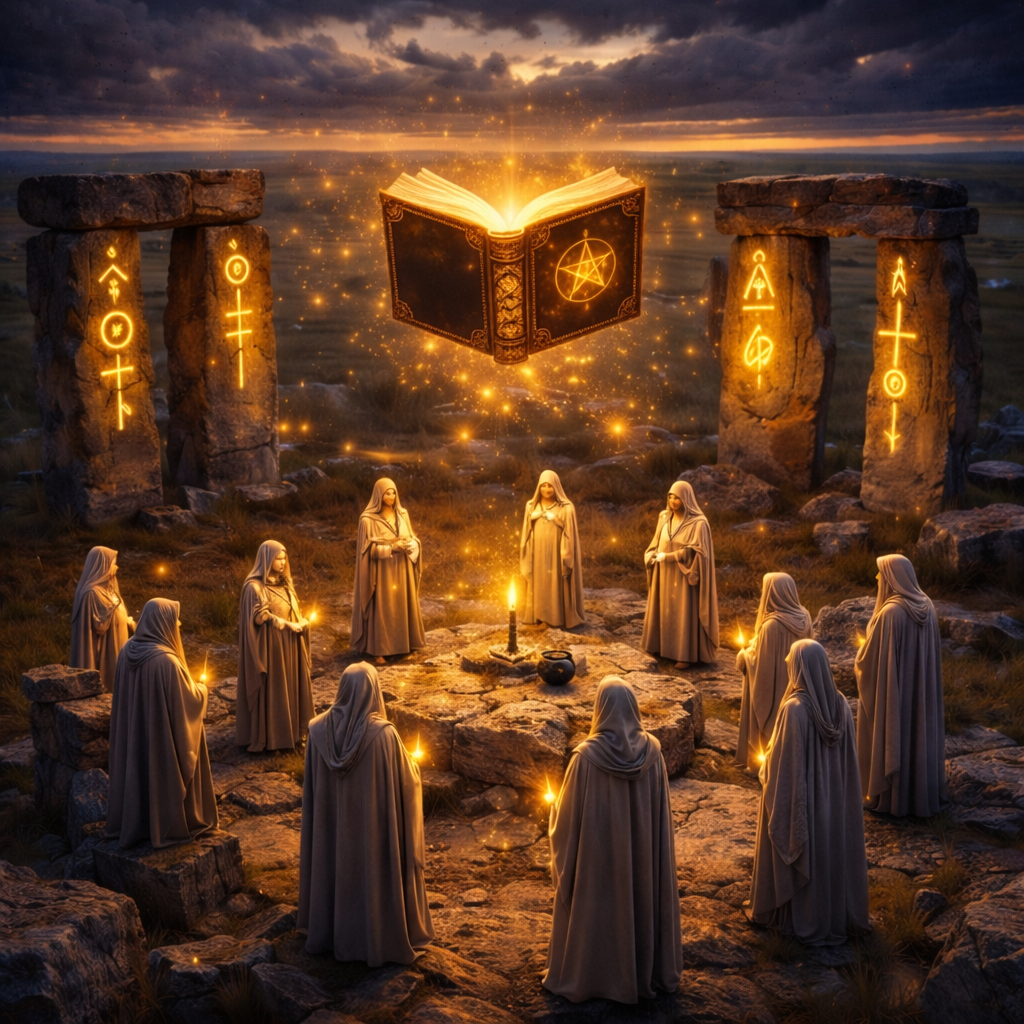

Reviewed by Evander Ashcroft (Alchemy & Hermeticism Editor) — Jens Bjerre's 'Among Cannibals in New Guinea' is a rare ethnographic treasure, resonating deeply with esoteric traditions. Bjerre meticulously documents practices that, when viewed through an alchemical lens, reveal potent symbolism of transformation, dissolution, and reintegration. The cannibalistic rituals described are not merely acts of savagery but represent profound metaphysical concepts of absorbing essence and power, akin to the Great Work of spiritual alchemy. This book is essential for scholars of primitive religions and occultists seeking to understand the archetypal roots of ritualistic consumption and the psychological underpinnings of belief systems that blur the lines between the physical and the spiritual. Its strength lies in its unflinching portrayal of deeply ingrained cultural narratives that hold keys to understanding human consciousness and its quest for transcendence, regardless of societal context.
📝 Description
62
Jens Bjerre published 'Blandt menneskeædere på Ny Guinea' in 1963, detailing his experiences among the Fore people.
Jens Bjerre's 1963 account, 'Blandt menneskeædere på Ny Guinea' (Among Cannibals in New Guinea), is not a simple travelogue but an ethnographic study of the Fore people of New Guinea. Bjerre, an ethnologist, observed a society where ritualistic cannibalism played a significant role. He documented how the consumption of flesh was tied to spiritual beliefs, including the assimilation of ancestral wisdom and the transfer of power. The book examines societies where distinctions between self and other were not rigid, and where eating could be a sacred act.
This work is aimed at serious readers interested in comparative religion and anthropology. Bjerre invites readers to consider the darker aspects of human psychology and social customs. The book describes a New Guinea that possessed a potent, ancient spiritual system, showing how the sacred and the 'savage' were connected. It suggests universal ideas about personal change and the concept of the self being consumed or transformed.
This book engages with esoteric thought by examining belief systems that operate outside conventional Western frameworks. It touches on concepts of spiritual assimilation, power transference through ritual, and the fluidity of selfhood, which resonate with certain animistic and shamanistic traditions. The Fore people's worldview, as described by Bjerre, presents a case study in how societies construct reality through embodied practices and symbolic acts, challenging rationalist assumptions about human consciousness and the nature of the sacred.
💡 Why Read This Book?
Uncover the primal roots of ritual and belief. This book offers a rare, unvarnished look at societies where cannibalism is steeped in profound spiritual and symbolic meaning, touching upon themes of assimilation, power, and transformation. Ideal for seekers of hidden knowledge, ethnographers, and practitioners interested in the anthropological underpinnings of magical and ritualistic practices. Read it to broaden your understanding of the human psyche's most ancient expressions.
⭐ Reader Reviews
Honest opinions from readers who have explored this book.
❓ Frequently Asked Questions
What is the primary esoteric theme explored in this book?
The primary esoteric theme is the symbolic and ritualistic significance of cannibalism, viewed as a profound act of spiritual assimilation, power transference, and transformation that echoes ancient rites of embodying divine or ancestral energies.
Is this book suitable for beginners in esoteric studies?
While challenging, it's suitable for determined beginners who are drawn to raw ethnographic accounts that illuminate fundamental human psychological and spiritual drives, offering a foundational understanding of ritualistic practices.
What is the historical significance of Jens Bjerre's work?
Bjerre's work is significant for its early, unflinching documentation of remote cultures, offering critical ethnographic data that provides insight into pre-modern belief systems and their complex relationship with survival and spirituality.
Does the book discuss any specific magical practices?
While not a grimoire, the book details social customs and beliefs that are intrinsically tied to what can be interpreted as magical practices concerning influence, spiritual connection, and transformation through ritual consumption.
How does this book relate to modern occultism?
It provides a crucial anthropological and historical context for understanding the archetypal roots of ritualistic practices, self-transformation, and the symbolic consumption of power that remains relevant in contemporary occult thought.
🔮 Key Themes & Symbolism
The Alchemy of Consumption
This theme looks at the ritualistic consumption of human flesh not as an act of barbarity, but as a sophisticated metaphysical process. It explores how certain cultures viewed the act as a means to absorb the essence, wisdom, or power of the consumed, mirroring alchemical principles of dissolution and reintegration. The book illuminates the symbolic language of the body as a vessel for spiritual transference, where the physical act becomes a sacrament for achieving altered states of consciousness or connecting with ancestral forces, offering a unique perspective on the human drive for transformation through radical engagement with the 'other'.
Veils of Consciousness and the Primal Psyche
The work meticulously peels back layers of societal norms to reveal a primal psyche deeply connected to the earth and its mysteries. It explores how the perceived 'otherness' of cannibalistic societies challenges Western notions of identity and consciousness, suggesting a fluid boundary between the self and the collective, the living and the dead. Bjerre's observations hint at an understanding of consciousness that is not solely individual but deeply interwoven with the fabric of the community and the spirit world, revealing how ritualistic practices served to maintain cosmic balance and navigate existential realities.
Sacredness in the Savage
This theme investigates the profound sacredness embedded within what appears 'savage' to external observers. It argues that the extreme practices documented are not devoid of spiritual meaning but are, in fact, highly ritualized expressions of a worldview that integrates the cycle of life and death into a cohesive cosmic order. The book reveals the inherent symbolism in these customs, where acts like cannibalism are imbued with a sacred purpose, serving to honor ancestors, appease spirits, or ensure the continuity of life, thereby challenging simplistic dichotomies between the sacred and the profane.
💬 Memorable Quotes
Direct passages from the work, attributed to the author.
“In their eyes, the veil between worlds was thin as a whisper.”
— This highlights the heightened spiritual awareness and permeability of reality experienced by the depicted peoples, suggesting a direct connection to the unseen realms that modern societies often perceive as separated.
“To eat is to become, to absorb the essence of life itself.”
— This speaks to the transformative power attributed to ritualistic consumption, where the act of eating transcends mere sustenance to become a process of embodying or integrating the qualities and spirit of the consumed.
“Their myths were the threads that wove the cosmos anew each dawn.”
— This emphasizes the vital, active role of mythology in shaping their reality and consciousness, portraying myths not as mere stories but as living forces that continuously recreate and sustain their worldview.
“The forbidden act, a sacred key to primal truths.”
— This suggests that what appears taboo or horrifying from an external perspective often holds profound spiritual or symbolic significance within its originating culture, serving as a gateway to deeper understanding.
💡 Key Ideas
Editorial paraphrase of the work's core concepts — not direct quotes.
The flesh of man, a vessel of ancestral spirit.
This quote expresses the core esoteric idea that the physical body, particularly when consumed ritually, becomes a conduit for spiritual inheritance and power, echoing ancient beliefs in reincarnation and spiritual assimilation.
🌙 Esoteric Significance
Tradition
This work resonates deeply with shamanistic traditions and animistic belief systems, where the interconnectedness of all things—living, dead, and spiritual—is paramount. It touches upon themes found in ancient mystery cults and early forms of sympathetic magic, where the act of imitation or symbolic consumption was believed to grant power or influence. The anthropological documentation serves as a tangible, albeit raw, manifestation of universal esoteric principles concerning transformation, the sacredness of the body, and the power of ritual to alter consciousness and reality.
Symbolism
The central symbolism revolves around the act of cannibalism as a potent metaphor for assimilation and transformation. It represents the dissolution of individual boundaries to integrate with collective or spiritual forces, mirroring alchemical processes of 'solve et coagula' (dissolve and coagulate). The human body becomes a sacred text, its consumption a ritualistic reading and embodiment of ancestral wisdom, power, or divine essence. This symbolism speaks to primal human desires for connection, immortality, and mastery over the forces of life and death.
Modern Relevance
In contemporary esoteric thought, this book offers a vital bridge to understanding the archetypal roots of ritual and belief. It challenges modern dissociations between the physical and spiritual, reminding us of the profound power inherent in embodied practices and symbolic acts. The exploration of societies where the sacred is intimately interwoven with the rawest aspects of human existence provides a potent counterpoint to sterile, abstract spiritual pursuits, offering insights into primal psychology, the nature of consciousness, and the enduring human quest for meaning through transformation, even in its most extreme forms.
👥 Who Should Read This Book
This compelling work is recommended for a diverse audience. **Scholars of anthropology, religious studies, and comparative mythology** will find invaluable primary source material and nuanced observations. **Seekers of esoteric knowledge** interested in the primal roots of ritual, symbolism, and consciousness will be profoundly impacted by its unflinching exploration of human belief. **Practitioners** aiming to understand the deeper psychological and symbolic underpinnings of ritualistic practices, particularly those involving transformation and embodiment, will find fertile ground for contemplation. **Beginners** with a strong intellectual curiosity and a willingness to confront challenging subject matter will gain a foundational, albeit intense, understanding of how societies construct meaning and connect with the sacred.
📜 Historical Context
Written during a period of intense global exploration and anthropological inquiry, Jens Bjerre's 'Blandt menneskeædere på Ny Guinea' emerges from the early to mid-20th century, a time when Western scholars were beginning to document and interpret the vast diversity of human cultures. This era was marked by both a fascination with and a degree of ethnocentric bias towards indigenous societies, often viewed through the lens of progress and evolution. Bjerre's work, however, stands out for its more nuanced approach, seeking to understand the internal logic and spiritual significance of seemingly 'primitive' practices. The book reflects the growing academic interest in ethnology and comparative religion, contributing to a broader understanding of the human experience and the myriad ways in which societies construct meaning, ritual, and their relationship with the sacred. Its publication provided a crucial, albeit sometimes unsettling, window into the depths of human belief systems at a time when such knowledge was rapidly being lost or altered by modernization.
📔 Journal Prompts
Reflect on a time when you felt a profound sense of connection to something larger than yourself. How did this experience alter your perception of 'self'?
Consider the concept of 'sacredness'. Where do you find the sacred in your own life, and how does it manifest in your daily practices or beliefs?
If you were to symbolically 'consume' an aspect of nature or another being to gain its essence, what would it be and why?
Explore the boundaries between the 'civilized' and the 'savage' in your own cultural understanding. Where do these lines blur, and what does this reveal about your own biases?
How does the concept of transformation, as explored through ritual, resonate with your personal journey? What 'dissolutions' and 'reintegrations' have you experienced?
🗂️ Glossary
Animism
The belief that natural objects, phenomena, and the universe itself possess souls or spirits. It is a worldview where the distinction between the animate and inanimate is fluid, and spiritual forces are immanent in the world.
Ethnography
The scientific description of the customs of individual peoples and cultures. It involves detailed observation and documentation of a specific cultural group's way of life, beliefs, and social structures.
Liminality
A state of being in between, a transitional phase or space where established norms and identities are suspended. In rituals, it often represents a period of transformation or spiritual transition.
Sympathetic Magic
A form of magic based on the principle that like affects like (the law of similarity) or that objects once in contact continue to be connected (the law of contagion). It involves creating a likeness or using a part of something to affect the whole.
Archetype
In psychology and mythology, a primordial, universal pattern, image, or symbol that is part of the collective unconscious. These patterns represent fundamental human experiences and motivations.
This book appears in 3 collections
🔮 Readers Also Liked
Browse all →




From the “Ritual Magic” Collection
View all →





More Free Magic & Ritual Books
View all →