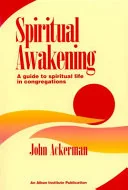
Spiritual Awakening
 77
77

Spiritual Awakening
Ackerman’s "Spiritual Awakening" presents a refreshingly practical framework for congregational spiritual development, sidestepping the often vague pronouncements found in similar guides. His background as a parish pastor lends an authenticity to the six-week program he outlines, focusing on actionable steps rather than abstract ideals. The emphasis on "corporate spirituality" is its greatest strength, providing a much-needed corrective to hyper-individualized approaches to faith. However, the program's structure, while detailed, might feel somewhat prescriptive for congregations accustomed to more organic spiritual exploration. A passage detailing the leader training for small group facilitation, for instance, clearly lays out the practical support offered, a commendable aspect. The limitation lies in its potential rigidity for those seeking a more emergent spiritual path. Ackerman offers a solid, if somewhat conventional, blueprint for communal spiritual growth.
📝 Description
77
John W. Ackerman's 1994 book outlines a six-week program for congregational spiritual growth.
Published in 1994, "Spiritual Awakening" by John W. Ackerman presents a structured six-week program intended for clergy and lay leaders. The book focuses on cultivating both individual and communal spiritual growth within church settings. Ackerman moves past a focus on individual spirituality to promote a "corporate spirituality." This approach integrates personal faith development with the collective life of the church community. The program includes specific components like leader training modules and adaptable course plans, designed for practical application in various church environments.
The book is primarily for clergy, pastors, spiritual directors, and others involved in spiritual formation within religious institutions. It is especially useful for leaders aiming to implement a systematic, congregation-wide strategy for spiritual development. Lay leaders, small group facilitators, and church committees seeking to deepen their communities' spiritual lives will also find its methods beneficial. The work addresses a perceived need for more integrated and communal spiritual practices, diverging from solely individual devotional models.
While presented within a Christian congregational context, "Spiritual Awakening" touches on themes common in broader contemplative and mystical traditions. The emphasis on "corporate spirituality" suggests a recognition of a collective consciousness or shared spiritual life within a community, echoing ideas found in certain monastic traditions or communal spiritual movements. The programmatic approach to fostering growth, using structured modules and small groups, mirrors methods employed in various spiritual disciplines aimed at intentional community and shared practice. The book’s concern with lived experience of faith within community also aligns with perennialist ideas about the communal manifestation of spiritual realities.
💡 Why Read This Book?
• You will learn a structured, six-week program to foster "corporate spirituality," a concept distinct from individualistic faith practices, as detailed in Ackerman's practical curriculum plans. • Gain specific leader training techniques for small group facilitation, enabling you to guide congregational spiritual formation effectively, as outlined in the course modules. • Understand how to integrate individual spiritual development with the collective life of a church community, a core principle of Ackerman's approach presented in the book.
⭐ Reader Reviews
Honest opinions from readers who have explored this book.
❓ Frequently Asked Questions
What is "corporate spirituality" as defined by John W. Ackerman?
Ackerman defines "corporate spirituality" as the shared spiritual life and practice of an entire congregation, moving beyond the sum of individual spiritual experiences to create a unified communal faith."Spiritual Awakening" outlines methods to cultivate this collective spiritual dimension.
Is "Spiritual Awakening" a theological treatise or a practical guide?
The book functions primarily as a practical guide. While grounded in theological principles, its focus is on providing a six-week program with leader training and course plans for congregational application.
Who is the intended audience for John W. Ackerman's "Spiritual Awakening"?
The primary audience includes clergy, pastors, spiritual directors, and consultants on spiritual formation. It is also highly relevant for lay leaders and church committees aiming to enhance their community's spiritual life.
What kind of support does the book offer for leaders?
Ackerman provides specific leader training modules and detailed course plans within the six-week program. These are designed to equip facilitators with the necessary skills to guide small group discussions and foster communal spirituality.
When was "Spiritual Awakening" first published?
The book "Spiritual Awakening" by John W. Ackerman was first published in 1994, placing it within a late 20th-century context of renewed interest in discipleship and communal spiritual practices.
Can "Spiritual Awakening" be used for non-Christian congregations?
While Ackerman's background is as a parish pastor, the core principles of fostering "corporate spirituality" and structured small group formation can be adapted. However, the program's specific content is rooted in a Christian context.
🔮 Key Themes & Symbolism
Corporate Spirituality
This theme explores the integration of individual spiritual journeys into a cohesive communal faith experience. Ackerman argues against atomized spirituality, positing that a congregation can and should develop a shared spiritual consciousness. The book provides a framework for cultivating this collective dimension, emphasizing practices that bind members together in their pursuit of the divine. It's about building a shared spiritual ecosystem, not just individual piety.
Programmatic Spiritual Formation
The work offers a distinct, structured approach to spiritual growth through a carefully designed six-week program. This emphasis on a systematic curriculum, including leader training and course plans, moves spiritual formation from an often haphazard process to an intentional, guided endeavor. It provides a roadmap for clergy and leaders to facilitate deep spiritual engagement within their communities over a defined period.
Small Group Dynamics
Small groups are presented as the crucial vehicle for implementing the six-week program. The book details how these intimate settings foster vulnerability, shared learning, and mutual support, essential elements for developing both individual and corporate spirituality. Ackerman's insights focus on empowering facilitators to create safe and productive environments for spiritual exploration within these smaller units.
Leadership in Spiritual Development
A significant focus is placed on equipping leaders—pastors, directors, and facilitators—with the necessary tools and understanding to guide their congregations. This involves not only training in program delivery but also fostering a personal spiritual depth that enables authentic leadership in spiritual formation initiatives.
💬 Memorable Quotes
Direct passages from the work, attributed to the author.
“The goal is developing the 'corporate spirituality' of congregations.”
— This central thesis highlights the book's unique focus on communal spiritual life, distinguishing it from guides centered solely on individualistic faith development. It frames spirituality as an emergent property of the collective.
“A six-week program focuses on developing individuals' spirituality in small groups.”
— This statement underscores the book's practical, structured methodology. It emphasizes the intentional use of small groups as the primary context for guided spiritual growth over a specific timeframe.
“Includes leader training and course plans.”
— This factual point emphasizes the comprehensive support provided for facilitators. It signifies that the book is not just theoretical but offers ready-to-use resources for program implementation.
“Ackerman, parish pastor, spiritual director, and consultant on spiritual formation.”
— This description establishes the author's credentials and experience, lending weight to his practical advice. His complex roles suggest a deep understanding of both theological concepts and lived congregational dynamics.
💡 Key Ideas
Editorial paraphrase of the work's core concepts — not direct quotes.
Practical suggestions assist in developing the 'corporate spirituality'.
This paraphrase points to the actionable nature of the guide, indicating that it offers concrete advice and implementable strategies for leaders aiming to foster a shared spiritual life within their communities.
🌙 Esoteric Significance
Tradition
While rooted in Christian pastoral care, "Spiritual Awakening" touches upon themes of communal consciousness and shared spiritual fields that resonate with broader esoteric concepts of collective spiritual evolution. It departs from purely individualistic paths by focusing on the development of a unified spiritual body within a congregation, echoing Gnostic ideas of a spiritual community or 'pleroma,' albeit within a distinctly orthodox framework. The emphasis on structured practice and inner transformation aligns with many esoteric disciplines that utilize methodical approaches to achieve higher states of awareness.
Symbolism
The book itself, as a structured program, can be seen as a symbolic vessel. The six-week duration represents a cycle of transformation, common in many mystical traditions. Small groups act as microcosms of the larger congregation, mirroring the Hermetic principle of 'As Above, So Below,' where the dynamics within the small group reflect and influence the whole. The leader serves as a focal point, a guide analogous to a hierophant or guru, facilitating the descent into and ascent from the depths of spiritual experience.
Modern Relevance
Contemporary movements in intentional community, emergent church models, and even secular mindfulness groups focused on collective well-being can find elements of Ackerman's "corporate spirituality." Thinkers and practitioners exploring the intersection of psychology, sociology, and spirituality, particularly those interested in group dynamics and shared consciousness, might draw inspiration from his structured approach to communal faith development. The book's emphasis on practical, replicable methods remains relevant for anyone seeking to foster deeper spiritual connection within groups.
👥 Who Should Read This Book
• Clergy and church leaders seeking practical, structured programs for deepening congregational spirituality, moving beyond individualistic faith. • Spiritual directors and consultants looking for actionable methodologies to foster "corporate spirituality" and enhance small group effectiveness. • Lay leaders and committee members interested in implementing a systematic, six-week plan for communal spiritual growth within their church communities.
📜 Historical Context
Published in 1994, John W. Ackerman's "Spiritual Awakening" arrived at a time when many mainline Protestant denominations in North America were grappling with questions of discipleship and spiritual formation. The late 20th century saw a resurgence of interest in small group ministries, often influenced by models like those promoted by organizations such as the Willow Creek Association, which emphasized practical application and community building. This period also featured a theological discourse around the nature of the church as a lived reality, moving beyond purely institutional or abstract definitions. Ackerman’s work addressed a perceived gap, offering a structured program to cultivate what he termed "corporate spirituality." While not engaging directly with figures like Henri Nouwen in a public debate, his approach shared a common concern with many contemporary spiritual writers for authentic, lived faith within community, contrasting with more individualistic or purely academic explorations of spirituality prevalent at the time.
📔 Journal Prompts
Reflect on the concept of "corporate spirituality" as distinct from individual faith.
Analyze the role of small groups in fostering communal spiritual development.
Consider the leader's responsibility in guiding a six-week spiritual formation program.
Identify potential "corporate spirituality" practices for your specific congregation.
Evaluate the effectiveness of structured versus emergent approaches to spiritual growth.
🗂️ Glossary
Corporate Spirituality
The shared spiritual life, consciousness, and practice of an entire congregation or community, seen as more than the sum of individual spiritual experiences. It emphasizes collective growth and shared faith.
Spiritual Formation
The process by which individuals are shaped and transformed by God (or a higher power/principle) into the likeness of Christ (or a desired spiritual ideal), often involving intentional practices and community.
Small Groups
Intimate gatherings of church members or participants, typically meeting regularly, designed for mutual support, learning, discussion, and shared spiritual practice within the context of the larger congregation.
Leader Training
Specific instruction and preparation provided to individuals who will facilitate spiritual growth activities, such as small group discussions, equipping them with necessary skills and theological grounding.
Course Plans
Detailed outlines and schedules for a specific program of study or spiritual development, including session topics, activities, and objectives, such as the six-week program detailed in the book.
Parish Pastor
A minister or clergy member with pastoral responsibility for a specific geographical area or congregation, overseeing spiritual care and leadership within that community.
Spiritual Director
An individual trained to guide others in their spiritual journey, helping them discern God's presence and action in their lives through prayerful conversation and reflection.
This book appears in 1 collection
🔮 Readers Also Liked
Browse all →









From the “Spiritual Awakening” Collection
View all →







More Free Magic & Ritual Books
View all →