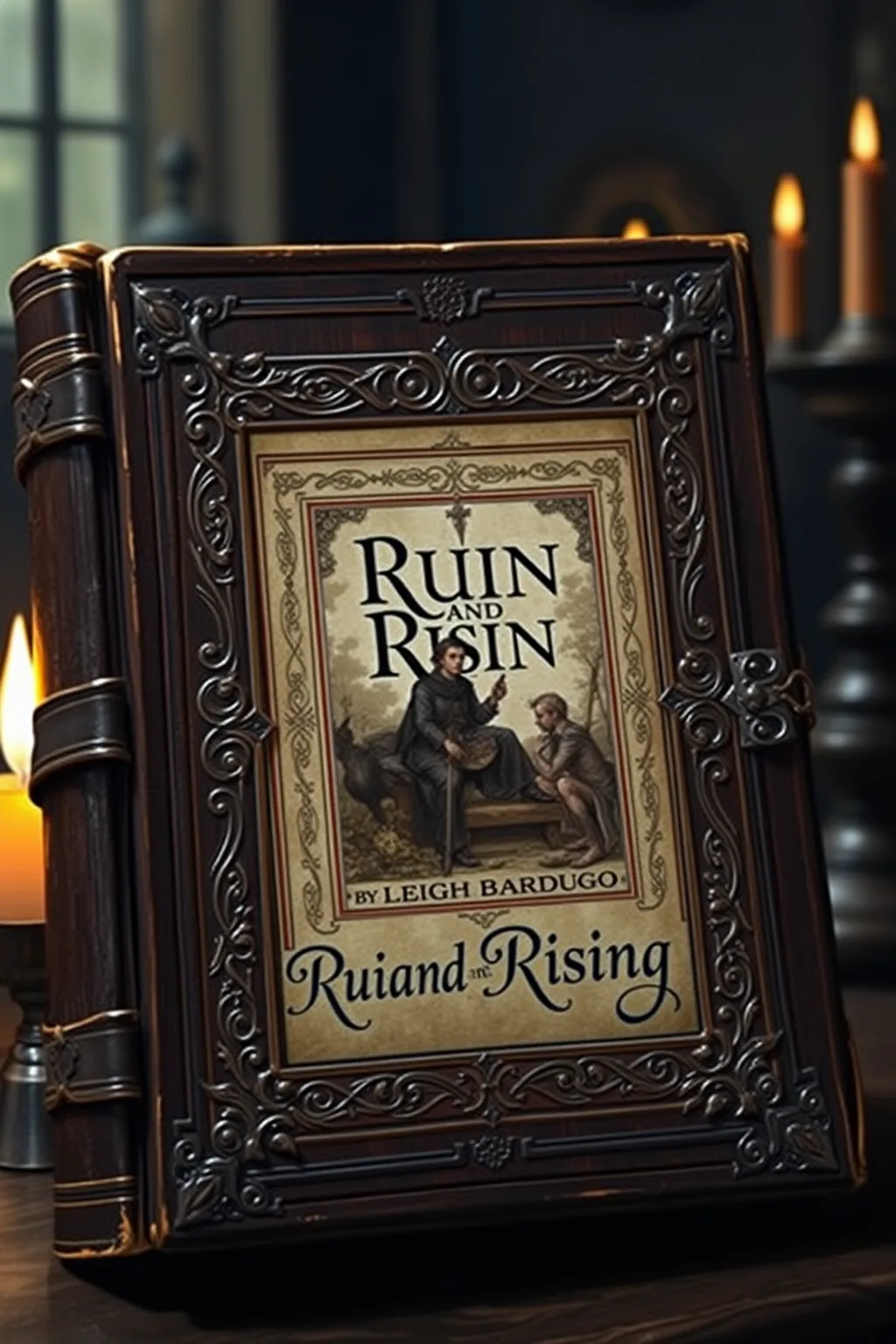
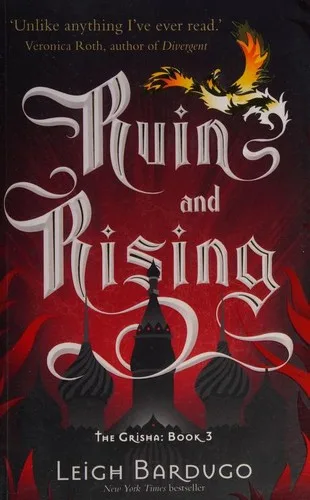
Ruin and Rising
 73
73

Ruin and Rising
Bardugo's "Ruin and Rising" offers a potent conclusion to Alina Starkov's arc, particularly in its unflinching depiction of the personal cost of wielding immense power. The novel excels in portraying Alina's internal turmoil as she navigates her role as the Sun Summoner, moving beyond simple heroism to a more complex, often morally gray, understanding of her abilities and her responsibilities. A notable strength lies in the intricate political machinations and the exploration of how faith and propaganda can be weaponized, as seen through the character of the Apparat. However, the pacing occasionally falters in the mid-section, with certain plot threads feeling slightly drawn out before the climactic push. The handling of Alina's final confrontation with the Darkling, while impactful, could have benefited from a more nuanced exploration of their intertwined destinies beyond their immediate conflict. Ultimately, "Ruin and Rising" delivers a satisfying, albeit intense, conclusion that emphasizes sacrifice and the true nature of leadership.
📝 Description
73
Published in 2016, Ruin and Rising concludes Leigh Bardugo's Grishaverse trilogy with Alina Starkov's fight against encroaching darkness.
Ruin and Rising, released in 2016, concludes the Grishaverse trilogy with Alina Starkov confronting the forces threatening her world. Alina, who discovered she is the Sun Summoner, a Grisha capable of manipulating light, must grapple with her immense power and its consequences. The narrative centers on her struggle against the Darkling and his ambitions, a conflict that forces her to make difficult choices about leadership and sacrifice. Her journey involves understanding the true nature of magic and belief within Ravka, a nation divided by the Shadow Fold.
The book examines Alina's personal growth as she navigates her identity and the responsibilities thrust upon her. It questions the manipulation of faith and power, particularly through the character of the Apparat. Bardugo's conclusion focuses on the personal cost of war and the choices individuals make when faced with overwhelming odds. The story explores the duality of power, its potential for both creation and destruction, and the personal sacrifices required to protect what one holds dear.
This novel engages with the trope of the chosen one, a figure destined for greatness who must overcome immense personal challenges and external threats. It explores themes of light versus darkness, not merely as a physical conflict but as a struggle within the protagonist's own soul. The narrative also touches upon the idea of faith as a tool for control, examining how belief systems can be shaped and exploited by those in power. The 'Sun Summoner' archetype draws on myths of figures who wield elemental forces to bring order or destruction, placing Alina's story within a broader tradition of fantasy narratives about messianic figures.
💡 Why Read This Book?
• Learn about the burden of wielding unique power, exemplified by Alina Starkov's struggle with her Sun Summoner abilities and the sacrifices required to protect her nation. • Understand the complex interplay of faith, manipulation, and political power through the actions of figures like the Apparat and the societal reliance on mythical 'Saints'. • Explore the personal cost of revolution and destiny, as depicted in the devastating consequences of Alina's quest to destroy the Fold and its impact on her relationships and identity.
⭐ Reader Reviews
Honest opinions from readers who have explored this book.
❓ Frequently Asked Questions
When was Ruin and Rising published?
Ruin and Rising was published in 2016, concluding the Shadow and Bone trilogy by Leigh Bardugo.
Who is the main protagonist in Ruin and Rising?
The main protagonist is Alina Starkov, who discovers she is the legendary Sun Summoner and becomes a central figure in the war against the Darkling.
What is the 'Fold' in the Grishaverse?
The Fold is a magical, lightless expanse of land that divides the nation of Ravka, created by the Darkling, and is a major obstacle the protagonists aim to overcome.
What are Grisha?
Grisha are individuals in Ravka with the ability to manipulate the 'small science,' essentially performing magic derived from their control over fundamental elements or processes.
Does Ruin and Rising have a happy ending?
The ending of Ruin and Rising is complex and bittersweet, focusing on sacrifice and the attainment of peace, rather than a simple, universally happy resolution.
What is the 'Apparat' in the book?
The Apparat is a powerful figure within Ravka's religious and political structure, who manipulates faith and propaganda to serve his own agenda, often influencing Alina's public image.
🔮 Key Themes & Symbolism
The Burden of Destiny
Alina Starkov's journey is defined by the immense weight of her prophesied role as the Sun Summoner. "Ruin and Rising" explores the psychological toll of being singled out as a savior, forcing her to confront the reality of her power and its implications. The narrative questions whether destiny is an immutable force or something shaped by individual choice and sacrifice, particularly as Alina grapples with the expectations placed upon her by various factions, including the Apparat and the remnants of the First Army.
Power and Corruption
The novel meticulously examines how absolute power can corrupt, even when initially sought for benevolent purposes. The Darkling's descent into tyranny serves as a stark warning, but "Ruin and Rising" also scrutinizes the potential for corruption within Alina herself as she gains more control and influence. The book presents power not as inherently good or evil, but as a force that magnifies existing intentions and character flaws, leading to difficult ethical compromises.
Faith and Manipulation
"Ruin and Rising" looks at the ways in which faith can be manufactured and exploited for political gain. The Apparat's role highlights how religious fervor and the narrative of a 'Saint' can be used to control populations and justify actions. The book contrasts genuine belief with calculated manipulation, showing how the perception of Alina as a divine figure is carefully constructed and maintained, raising questions about the true nature of leadership and the influence of public perception.
The Nature of Magic and Science
The Grishaverse operates on a system where magic is understood as 'small science,' a fundamental manipulation of the physical world. "Ruin and Rising" further explores this concept, distinguishing between the innate abilities of Grisha and the more mundane scientific understanding of the world. It touches upon the potential for magic to evolve or be corrupted, and the ethical considerations of using such powers, especially in the context of warfare and societal control.
💬 Memorable Quotes
Direct passages from the work, attributed to the author.
“When you are strong, you are kind. When you are weak, you are cruel.”
— This aphorism, often attributed to the Darkling or reflecting his philosophy, suggests that true strength lies in compassion and restraint, while cruelty often stems from insecurity or desperation.
“The world is not made of light and shadow. It is made of choices.”
— This concept underscores the book's thematic emphasis on agency and moral responsibility. It suggests that the outcomes of conflicts and personal journeys are determined not by inherent good or evil, but by the decisions individuals make.
“She was the Sun Summoner. She was the Saint. She was the weapon.”
— This series of declarations reflects the many-sided and often imposed identities thrust upon Alina. It highlights the pressure she faces to fulfill various roles—savior, divine figure, instrument of war—and the internal struggle to reconcile these with her true self.
💡 Key Ideas
Editorial paraphrase of the work's core concepts — not direct quotes.
I cannot fix this. I can only break it.
This quote captures Alina's realization that the path to resolving the conflict and her own destiny involves destruction rather than mere mending, highlighting the immense and perhaps irreversible nature of the choices she must make.
The Darkling is all the darkness in my life.
This is a paraphrased interpretation of Alina's internal conflict. It reflects her deep-seated connection and opposition to the Darkling, framing him as the embodiment of the negative forces she must confront, both externally and within herself.
🌙 Esoteric Significance
Tradition
While not explicitly tied to a single historical esoteric tradition, "Ruin and Rising" draws upon archetypal themes common in Western esotericism, particularly Gnosticism and Hermeticism. The concept of a chosen individual (Alina) possessing unique, divine-like power ('Sun Summoner') who must overcome a primordial darkness (the Fold, the Darkling) echoes Gnostic narratives of the spark of divinity trapped in the material world. The exploration of power, its corrupting influence, and the manipulation of belief systems also aligns with Hermetic principles concerning the correspondence between the macrocosm and microcosm, and the dangers of unbalanced forces.
Symbolism
The primary symbol is the 'Sun Summoner' itself, representing the archetype of the bringer of light, a figure of immense power capable of dispelling darkness. The 'Fold,' a vast, unnatural darkness, symbolizes ignorance, division, and primordial chaos that must be overcome through enlightened power. The 'Heart of Morozova' functions as a powerful relic, representing concentrated life force or a key to unlocking ultimate potential, a common motif in alchemical and magical lore signifying a concentrated essence or catalyst.
Modern Relevance
Contemporary practitioners of narrative magic and those exploring Jungian archetypes find resonance in "Ruin and Rising." The book’s exploration of the 'chosen one' trope, the internal struggle with power, and the manipulation of belief systems offer modern frameworks for understanding psychological journeys and the dynamics of influence. Thinkers in the field of 'pop esotericism' and those analyzing the symbolic language of popular culture often cite Bardugo's work as an example of how ancient archetypes are reinterpreted for contemporary audiences, providing accessible narratives for exploring themes of self-discovery and overcoming internal shadows.
👥 Who Should Read This Book
• Readers interested in the archetypal journey of the 'chosen one' who must grapple with immense power and destiny, similar to figures found in Gnostic myths or Arthurian legends. • Students of comparative mythology and folklore who wish to examine how ancient themes of light versus darkness and the quest for enlightenment are reinterpreted in contemporary fantasy literature. • Fans of character-driven fantasy who appreciate explorations of moral ambiguity, the psychological impact of leadership, and the complex relationships that form under duress, particularly involving figures like Alina Starkov and the Darkling.
📜 Historical Context
Published in 2016, "Ruin and Rising" arrived as Leigh Bardugo's Grishaverse gained significant traction, positioning itself as a major contender in the expansive Young Adult fantasy landscape. This period saw established series like Suzanne Collins' "The Hunger Games" concluding and new sagas gaining momentum, with authors increasingly exploring complex magic systems and sociopolitical undertones. Bardugo's work, particularly its focus on a unique Slavic-inspired world and a magic system termed 'small science,' offered a distinct flavor. While "Ruin and Rising" built on the foundation laid by earlier works like "Shadow and Bone" (2012), it also engaged with broader genre trends. The narrative's exploration of power, destiny, and the manipulation of faith can be seen in dialogue with the thematic concerns of other contemporary fantasy authors. Its reception was largely positive, cementing the Grishaverse's popularity and Bardugo's status, though like many YA fantasy novels, it faced scrutiny regarding its tropes and character archetypes from critics comparing it to established fantasy giants.
📔 Journal Prompts
Alina Starkov's acceptance of her identity as the Sun Summoner and its subsequent burdens.
The Apparat's use of faith and propaganda as tools of control.
The nature of the Fold as a manifestation of unnatural darkness and division.
The ethical compromises made by Alina and other characters in pursuit of their goals.
The relationship between power and kindness, as suggested by the Darkling's philosophy.
🗂️ Glossary
Grisha
Individuals in Ravka possessing the ability to manipulate the 'small science,' essentially performing magic derived from elemental control or manipulation of physical processes. They are classified into different orders based on their abilities.
Sun Summoner
A legendary Grisha with the unique and powerful ability to summon and control light. Alina Starkov discovers she is the last of this line, prophesied to be a savior.
The Fold
A vast, magical expanse of unnatural darkness and monstrous creatures that physically divides the nation of Ravka. It was created by the Darkling and is a major obstacle to unification and safety.
Apparat
A powerful and manipulative figure within Ravka's religious and political hierarchy, who presents himself as a spiritual advisor but often uses faith and prophecy for his own gain.
Small Science
The Grisha term for their magical abilities, conceptualizing magic as a form of applied science that manipulates fundamental aspects of the world, such as elements, flesh, or thought.
Ravka
The fictional nation where the Grishaverse's initial trilogy is set. It is characterized by its internal divisions, civil war, and the presence of Grisha alongside ordinary people.
Heart of Morozova
A mythical amplifier, a powerful artifact rumored to significantly enhance a Grisha's abilities. Finding and controlling such relics is a key element of Alina's quest.
🔮 Readers Also Liked
Browse all →







More by Leigh Bardugo
All books →



More Free Magic & Ritual Books
View all →