Witchcraft and Paganism Today
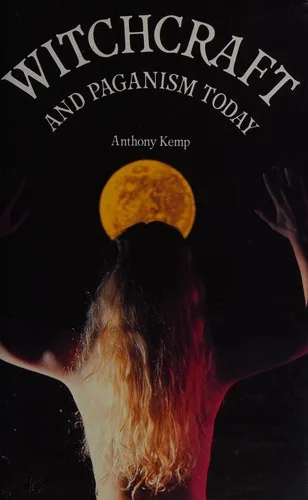
 75
75

Witchcraft and Paganism Today
Anthony Kemp’s 'Witchcraft and Paganism Today' arrives not with a thunderclap, but with the quiet authority of a seasoned observer. Kemp avoids the common pitfall of romanticizing his subject, instead presenting a meticulously researched overview of the burgeoning pagan and witchcraft scenes of the early 1990s. His strength lies in his systematic approach, categorizing different strains of practice and belief without imposing a rigid hierarchy. For instance, his discussion of the varying interpretations of the 'Goddess' across different covens offers a nuanced perspective. A limitation, however, is the book's publication date; while foundational, it naturally omits the subsequent explosion of online communities and the further diversification of traditions that have occurred since 1993. Nevertheless, for understanding the state of play just before the internet truly reshaped esoteric landscapes, Kemp’s work remains a valuable, if dated, document.
📝 Description
75
Anthony Kemp's 1993 book examines contemporary witchcraft and paganism beyond sensationalism.
Anthony Kemp's 'Witchcraft and Paganism Today' offers a scholarly look at modern pagan and witchcraft practices. It moves past sensationalized views to show the actual lives of current followers. Kemp presents a practical viewpoint on a topic often misunderstood. This book is for serious students of modern esoteric movements, anthropologists, sociologists of religion, and anyone wanting a factual grasp of witchcraft and paganism as they were in the late 20th century. It appeals to readers who value observed facts over theoretical ideas.
The book came out in 1993, a time of considerable growth and change in the Neopagan movement. Earlier, more uniform ideas of witchcraft, influenced by figures like Gerald Gardner, were being questioned by many different traditions and personal spiritual paths. Kemp's writing sought to record this changing environment. He looked at how ancient traditions were being rebuilt, the balance between personal spiritual experience and set beliefs, the impact of feminist ideas on modern witchcraft, and the different ways 'paganism' is defined. The work considers how practitioners use both historical records and current cultural trends to shape their spiritual lives.
Published in 1993, 'Witchcraft and Paganism Today' documents the Neopagan revival's evolution. It addresses the shift from earlier, more formalized interpretations, often linked to figures like Gerald Gardner, towards a broader spectrum of practices. The book captures a moment when the movement was diversifying, with practitioners actively engaging with historical research and contemporary culture to define their spiritual paths. It reflects an academic interest in understanding these modern spiritual paths outside of sensationalized or folkloric accounts.
💡 Why Read This Book?
• Gain a grounded understanding of witchcraft and paganism as documented in the early 1990s, moving beyond popular stereotypes. Kemp's analysis of the diversification of traditions prior to the internet age offers unique historical perspective. • Learn about the specific challenges and methodologies employed by early researchers in documenting contemporary esoteric movements, as detailed in Kemp's research approach. • Understand the historical development of key concepts like the reconstruction of ancient traditions, a topic explored extensively in the book's examination of various pagan paths.
⭐ Reader Reviews
Honest opinions from readers who have explored this book.
❓ Frequently Asked Questions
When was 'Witchcraft and Paganism Today' first published?
'Witchcraft and Paganism Today' by Anthony Kemp was first published in 1993, offering an early snapshot of the evolving landscape of modern paganism and witchcraft.
What is the author's approach to studying witchcraft?
Anthony Kemp adopts a scholarly and observational approach, aiming to provide a factual account of contemporary practices rather than a polemical or devotional one.
Does the book cover Gardnerian Wicca specifically?
While Kemp discusses various traditions, his focus is broader, examining the diversification of witchcraft and paganism beyond specific lineages like Gardnerian Wicca, which was prevalent at the time.
Is this book suitable for absolute beginners to witchcraft?
It is more suited for those with some existing interest or academic background in esoteric studies or sociology of religion, as it provides analysis rather than introductory spells or rituals.
How does the book address the historical reconstruction of paganism?
Kemp examines the efforts by modern pagans to reconstruct or reinterpret pre-Christian European religious traditions, discussing the various methodologies and debates surrounding this aspect.
What era does 'Witchcraft and Paganism Today' primarily focus on?
The book focuses on the state of witchcraft and paganism in the period leading up to its publication in 1993, capturing the trends and developments of the late 20th century.
🔮 Key Themes & Symbolism
Diversification of Practice
Kemp meticulously documents the splintering of witchcraft and paganism into myriad forms by the early 1990s. He moves beyond monolithic views, showing how various groups and individuals forged distinct paths, often drawing eclectically from different sources. This includes the rise of traditions focusing on specific cultural revivals, such as Celtic or Norse paganism, alongside more generalized nature-based spirituality. The work highlights the tension between established covens and emergent solitary practitioners, illustrating a dynamic spiritual landscape.
Reconstruction vs. Innovation
A central theme is the ongoing debate within paganism regarding historical accuracy versus contemporary relevance. Kemp explores how practitioners grapple with reconstructing ancient beliefs and rituals, often from fragmented evidence, and how this process is inevitably shaped by modern understanding and needs. He examines the different approaches to sourcing information, from academic texts to personal gnosis, and the varying degrees of emphasis placed on historical fidelity.
Feminist Influence
The book recognizes the significant impact of feminist thought on the development of modern witchcraft and paganism. Kemp discusses how the emphasis on the divine feminine, the re-evaluation of female deities, and the creation of women-centered spiritual spaces became prominent features. This section studies how feminist principles influenced ritual structure, theological perspectives, and the overall ethos of many contemporary pagan groups emerging in the late 20th century.
Defining 'Paganism'
Kemp addresses the semantic challenges inherent in defining 'paganism' itself. He illustrates how the term encompasses a wide spectrum of beliefs and practices, from polytheistic reconstructionists to nature-based spiritualists and even some forms of ceremonial magic. The work highlights the lack of a single, universally accepted definition and instead presents the term as a broad umbrella for diverse, non-Abrahamic spiritual paths seeking connection with nature and the pre-Christian past.
💬 Memorable Quotes
Direct passages from the work, attributed to the author.
“The proliferation of groups and individuals claiming the title 'witch' or 'pagan' by 1993 indicated a significant cultural shift.”
— This highlights Kemp's observation of the growing visibility and acceptance, or at least recognition, of these spiritual paths in mainstream society by the early 1990s, moving them from the fringe.
“Discussions of historical accuracy in reconstructed traditions were often passionate.”
— This points to the internal debates and intellectual fervor within the pagan community regarding the legitimacy and methodology of recreating ancient religious practices.
“The emphasis on personal experience over dogma was a defining characteristic for many modern pagans.”
— This suggests that individual spiritual authority and direct connection to the divine or nature were prioritized over adherence to strict, external religious laws or creeds.
“The concept of the 'Goddess' became a central, albeit variably interpreted, figure in many traditions.”
— This refers to the widespread adoption and adaptation of female divinity in Neopagan theology, serving as a focal point for worship and spiritual identity across diverse groups.
“Practitioners actively engaged with both ancient texts and contemporary cultural influences.”
— This indicates that modern witchcraft and paganism are not mere imitations of the past but dynamic syntheses, blending historical inspiration with elements relevant to present-day life and thought.
🌙 Esoteric Significance
Tradition
Kemp's work does not align strictly with a single esoteric lineage but rather surveys a spectrum of contemporary spiritualities often categorized under the umbrella of 'Paganism' or 'Witchcraft'. It engages implicitly with traditions that draw from Hermeticism and ancient polytheistic revivals, acting as a sociological and anthropological bridge. The book documents how these diverse paths, while often departing from classical esoteric structures, retain a focus on immanent divinity and nature-based spirituality.
Symbolism
While not a deep dive into esoteric symbolism, Kemp's work touches upon the practical application of symbols. The pentagram, often discussed in relation to Wicca, is presented as a symbol of the elements and spirit, used in ritual contexts. The recurring motif of nature itself—trees, seasons, celestial bodies—serves as a primary symbolic language, representing cycles of life, death, and rebirth central to many pagan cosmologies.
Modern Relevance
Although published in 1993, Kemp's documentation remains relevant for understanding the foundational diversification of modern Paganism. Contemporary thinkers and practitioners in fields like comparative religion, religious studies, and even sociology of culture can reference his early analysis to trace the evolution of these movements. His work provides a baseline for observing how practices and beliefs have further fragmented and reformed, particularly with the advent of online communities and globalized spiritual exchange.
👥 Who Should Read This Book
• Students of religious studies and sociology: Gain an empirical overview of the state of witchcraft and paganism in the early 1990s, providing a historical baseline for analyzing contemporary movements. • Aspiring practitioners seeking context: Understand the diverse spectrum of beliefs and practices that existed before the digital age, helping to contextualize modern interpretations and traditions. • Cultural historians: Analyze the social and cultural factors influencing the growth and diversification of esoteric and alternative spiritualities in the late 20th century.
📜 Historical Context
Published in 1993, Anthony Kemp's 'Witchcraft and Paganism Today' emerged as the Neopagan movement was experiencing a surge in visibility and diversification. The preceding decades had seen figures like Gerald Gardner popularize Wicca, but by the early 90s, a more complex landscape had formed. Kemp's work arrived amidst burgeoning academic interest in New Religious Movements, though it often stood apart from more theoretical or esoteric analyses. While mainstream reception might have been limited, the book provided a crucial, grounded overview for those seeking to understand the practical realities of these traditions. Contemporary authors like Margot Adler were also documenting these spiritual shifts, but Kemp's focus remained distinctly on the observable practices and internal dialogues of the era, predating the widespread impact of the internet on esoteric communities.
📔 Journal Prompts
The concept of 'reconstruction versus innovation' in pagan traditions.
Reflect on the challenges Kemp faced in documenting diverse witchcraft practices.
Analyze the influence of feminist thought on spiritual paths discussed by Kemp.
Consider the definition of 'paganism' presented in the book.
Examine the tension between established covens and solitary practitioners.
🗂️ Glossary
Neopaganism
A contemporary religious movement that seeks to revive or re-interpret pre-Christian European religious traditions, often emphasizing nature worship, polytheism, and magic.
Wicca
A modern, esoteric religion often characterized by polytheistic beliefs, reverence for nature, and the practice of magic, typically organized into covens.
Coven
A group or gathering of witches, typically consisting of twelve members or fewer, often led by a High Priestess and/or High Priest.
Reconstructionism
In a pagan context, the effort to recreate the religious beliefs, rituals, and practices of specific ancient cultures based on available historical and archaeological evidence.
Esoteric
Intended for or likely to be understood by only a small number of people with a specialized knowledge or interest; pertaining to hidden or secret knowledge.
Goddess Worship
Religious practices centered on the veneration of a female deity or deities, prominent in many modern pagan and witchcraft traditions.
Divinity
The state or nature of being divine; a god or goddess.
🔮 Readers Also Liked
Browse all →







More Free Witchcraft & Paganism Books
View all →





![D. [i. e., Doktor] Balthasar Bekkers reformierten Predigers in Amsterdam bezauberte Welt. ... 1781: Vol 1 Iss 81](/img/thumb/d-i-e-doktor-balthasar-bekkers-reformierten-predigers-in-amsterdam-bezauberte-welt-1781-vol-1-iss-81-bekker-balthasar-1634-1698.webp)