Witchcraft and Magic

 79
79

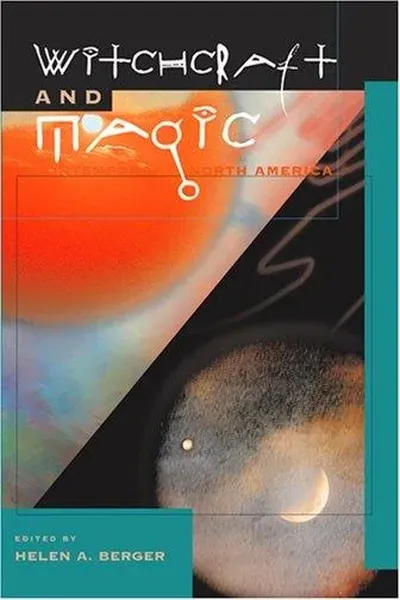
Witchcraft and Magic
Helen A. Berger's Witchcraft and Magic, published in 2011, stands as a sober corrective to the more fanciful accounts of magical practice. Its strength lies in its rigorous sociological framing, treating modern witchcraft not as a relic or a fantasy, but as a lived, evolving religious and cultural phenomenon. Berger’s analysis of how practitioners construct and maintain belief systems, particularly in Chapter 4's discussion of ritual efficacy, is particularly astute. The work’s primary limitation, however, is its occasional academic dryness; the focus on theory sometimes overshadows the vibrant human element of the practices it describes. Despite this, the book offers a crucial, grounded perspective on a subject often obscured by myth. It is a solid academic survey for those seeking to understand contemporary witchcraft through a critical lens.
📝 Description
79
Helen A. Berger's 2011 book examines contemporary witchcraft and magic with an academic lens.
Published in 2011, Witchcraft and Magic by Helen A. Berger offers a scholarly look at modern witchcraft and magical practices. The book moves past sensational views to show the many forms these traditions take today. Berger analyzes the social, cultural, and personal aspects of these beliefs and rituals. She details how people create meaning and form their identities through magical practices. Berger uses anthropological and sociological frameworks to analyze phenomena often dismissed as folklore or sensational media.
This work is for academics, students of religion and sociology, and serious practitioners who want to grasp the theoretical foundations of modern witchcraft. It suits those seeking research-based analysis over practical instruction. Readers who value critical thought and an empirical approach to belief systems will find it useful. It is also for anyone curious about how spiritual and magical practices have changed in the 21st century.
Berger's 2011 work arrives during a time of growing academic attention to New Religious Movements and contemporary paganism. It builds on earlier scholarship in Western Esotericism, referencing figures like Mircea Eliade and Ronald Hutton. The book engages with discussions about defining and categorizing magic and witchcraft, particularly in relation to established religions. It acknowledges the increasing acceptance of witchcraft as a valid area for academic study.
💡 Why Read This Book?
• Gain a sociological understanding of how modern witchcraft communities function, moving beyond stereotypes. Berger analyzes the social dynamics and belief construction that shape these groups, offering insights not found in purely historical or practice-oriented texts. • Understand the academic approach to magic and witchcraft, informed by research into New Religious Movements. This book provides a framework for analyzing contemporary spiritualities that differentiates it from popular occult literature. • Explore the concept of 'ritual efficacy' as defined by practitioners themselves, as discussed in Berger's analysis. This offers a unique perspective on how meaning is generated within these belief systems, distinct from external validation.
⭐ Reader Reviews
Honest opinions from readers who have explored this book.
❓ Frequently Asked Questions
What is the primary academic discipline used in Helen A. Berger's Witchcraft and Magic?
Helen A. Berger primarily employs sociological and anthropological methodologies in Witchcraft and Magic. Published in 2011, the book examines contemporary witchcraft through the lens of social science, focusing on belief systems, community formation, and the practice of magic as cultural phenomena.
Does Witchcraft and Magic by Helen A. Berger discuss historical witchcraft trials?
While the book's focus is on contemporary practices, it does touch upon historical contexts to differentiate modern witchcraft from historical accusations. Berger analyzes how contemporary practitioners engage with or distance themselves from the historical legacy of witchcraft trials.
What year was Helen A. Berger's Witchcraft and Magic first published?
Witchcraft and Magic by Helen A. Berger was first published in 2011. This allows the work to engage with the state of contemporary paganism and witchcraft studies at the turn of the 21st century.
Is Witchcraft and Magic a guide to practicing witchcraft?
No, Witchcraft and Magic is an academic study, not a practical guide. Helen A. Berger's 2011 work uses sociological and anthropological frameworks to analyze the beliefs and practices of modern witches, rather than instructing readers on how to perform magic.
What distinguishes contemporary witchcraft as presented in Berger's book?
Berger's 2011 book distinguishes contemporary witchcraft by highlighting its diversity, its role in identity formation, and its negotiation with mainstream society. It moves away from monolithic portrayals to show how individuals and groups create personal meaning through these practices.
🔮 Key Themes & Symbolism
Social Construction of Belief
Berger examines how beliefs and practices within contemporary witchcraft are not static but are actively constructed and negotiated within social groups. The work published in 2011 analyzes how individuals and communities define what constitutes 'magic' and 'witchcraft' for themselves, often in dialogue with or in opposition to mainstream cultural narratives. This theme is crucial for understanding witchcraft as a lived religion rather than a fixed dogma, highlighting the dynamic interplay between personal conviction and communal validation in shaping magical worldviews.
Identity and Self-Definition
A core theme is how identifying as a witch or engaging in magical practices contributes to personal identity. Berger explores the processes through which individuals adopt and express these identities, often as a means of finding community, meaning, or empowerment. The book discusses how this self-definition can be a response to alienation or a way to connect with alternative spiritualities, moving beyond simplistic notions of witchcraft as mere folklore or fantasy and situating it within the personal journeys of its adherents.
Ritual Efficacy and Meaning
The book examines the concept of ritual efficacy from the practitioners' perspective. Berger investigates how magical rituals are understood to 'work' and the meaning derived from their performance, regardless of external validation. This involves exploring how intention, belief, and communal practice contribute to the perceived effectiveness of spells, ceremonies, and other magical acts, offering a nuanced view of how meaning is generated and sustained within these traditions.
Contemporary Paganism's Evolution
Witchcraft and Magic situates contemporary witchcraft within the broader range of modern paganism and alternative spiritualities. Berger traces the evolution of these movements, noting their diversity and adaptation in the late 20th and early 21st centuries. The work considers how factors like the internet and globalization have influenced the dissemination of ideas and practices, contributing to the ongoing transformation of these spiritual traditions.
💬 Memorable Quotes
Direct passages from the work, attributed to the author.
“Contemporary witchcraft is characterized by a high degree of diversity.”
— This statement highlights a central argument that modern witchcraft is not a monolithic entity. Berger emphasizes that practitioners adopt varied beliefs, practices, and organizational structures, moving away from singular, fixed definitions and acknowledging the fluid nature of these traditions.
“Practitioners often construct their own cosmologies.”
— This concept points to the individual agency within modern witchcraft. Berger illustrates how adherents frequently develop personal belief systems, drawing from various sources, rather than adhering to rigid doctrines. This emphasizes the personalized and adaptable nature of contemporary magical and spiritual paths.
“Identity as a witch is frequently negotiated with societal perceptions.”
— This highlights the social dimension of identifying with witchcraft. Berger explores how individuals balance their personal commitment to magical practices with external societal views, which can range from skepticism to outright condemnation, influencing how they express their identity.
“Modern magical traditions adapt and evolve rapidly.”
— This observation underscores the dynamic nature of contemporary witchcraft. Berger notes how these practices are not static but change in response to cultural shifts, technological advancements, and the ongoing contributions of practitioners, making them living traditions.
💡 Key Ideas
Editorial paraphrase of the work's core concepts — not direct quotes.
The performance of ritual is often more important than its outcome.
This paraphrased concept suggests that for many practitioners, the act of engaging in ritual itself holds significant meaning and power. The process of ceremony, intention, and communal participation can be intrinsically valuable for personal or spiritual development, irrespective of whether external, measurable results are achieved.
🌙 Esoteric Significance
Tradition
While not strictly adhering to a single esoteric lineage, Berger's work engages with the broader field of Western Esotericism by examining modern manifestations of magical practice. It analyzes contemporary witchcraft, which often draws eclectically from Hermeticism, Wicca, and folk magic traditions. The book's significance lies in its sociological framing of these practices, treating them as legitimate religious and cultural phenomena within the diverse spectrum of modern spirituality, rather than solely through the lens of occult theory.
Symbolism
The book explores how symbols function within contemporary witchcraft. For instance, the pentagram, a common symbol in Wicca and other traditions, is analyzed not just for its traditional meanings but for how practitioners imbue it with personal and communal significance related to protection, the elements, or spiritual balance. Similarly, the concept of the 'Goddess' serves as a potent symbol of immanent divinity, often representing nature, cyclical processes, and feminine power, which Berger examines as a key element in the identity formation of many practitioners.
Modern Relevance
Berger's work continues to be relevant for contemporary scholars and practitioners interested in the sociology of religion and magic. Thinkers analyzing the impact of digital culture on spirituality, or researchers studying the resurgence of interest in witchcraft and paganism, often cite or engage with her 2011 analysis. Her framework provides a valuable tool for understanding how individuals and groups forge spiritual paths outside mainstream religious institutions in the 21st century.
👥 Who Should Read This Book
• Students of contemporary religion and sociology: Gain a research-based understanding of modern witchcraft as a social and cultural phenomenon, moving beyond popular misconceptions. • Academic researchers of Western Esotericism: Understand how contemporary magical practices are studied and analyzed through established social science methodologies. • Skeptics and the curious: Obtain a grounded, analytical perspective on witchcraft that separates scholarly inquiry from sensationalized accounts, providing factual context.
📜 Historical Context
Helen A. Berger's Witchcraft and Magic, published in 2011, emerged within a vibrant academic range of the early 21st century, characterized by burgeoning scholarship on New Religious Movements and Western Esotericism. It builds upon the foundational work of scholars like Ronald Hutton, whose detailed historical analyses, such as 'The Triumph of the Moon' (1999), had already begun to reshape understandings of modern paganism and witchcraft. Berger's work implicitly engages with the ongoing academic discourse that sought to differentiate historical witchcraft accusations from modern, self-identified pagan witchcraft traditions. The book’s sociological approach also reflects a broader trend in religious studies to analyze lived religion and the construction of meaning within diverse spiritual communities. At the time of its publication, the internet was already a significant force in disseminating magical ideas, a factor that Berger’s analysis acknowledges in its discussion of contemporary practices.
📔 Journal Prompts
The diversity of contemporary witchcraft practices as explored by Berger.
Negotiating identity as a practitioner within societal perceptions.
The role of ritual performance in personal meaning-making.
How modern paganism evolves with technology and globalization.
Personal reflections on constructed cosmologies versus inherited belief systems.
🗂️ Glossary
Contemporary Witchcraft
Refers to modern, self-identified magical practices and belief systems that often draw from various historical and cultural sources. Berger's 2011 work analyzes this as a diverse religious and cultural phenomenon.
New Religious Movements (NRMs)
A sociological term for religious or spiritual groups that have emerged relatively recently and are often outside the mainstream. Contemporary witchcraft is frequently studied within this category.
Ritual Efficacy
The perceived effectiveness or power of a ritual. Berger examines how practitioners understand and experience the efficacy of their magical practices, often focusing on subjective or psychological dimensions.
Cosmology
A framework of beliefs about the universe, its origin, and its nature. In witchcraft, cosmologies are often personalized and may incorporate elements from various traditions.
Identity Formation
The process by which individuals develop a sense of self. Berger analyzes how identifying with witchcraft and engaging in magical practices contributes to personal identity.
Sociological Lens
An approach to studying phenomena that focuses on social structures, interactions, and cultural contexts. Berger uses this lens to analyze witchcraft.
Esotericism
A broad category of spiritual or religious traditions characterized by knowledge or practices accessible only to a select group of initiates. Modern witchcraft is often considered within this field.
🔮 Readers Also Liked
Browse all →







More by Helen A. Berger
All books →
More Free Witchcraft & Paganism Books
View all →

![Aloysii Charitini [pseud.] Discurs von trüglichen Kennzeichen der Zauberey, worinnen viel abergläubische Meinungen vernunfftmässig untersucht und verworffen; wie auch ... 1708: Iss 174](/img/thumb/aloysii-charitini-pseud-discurs-von-tr-glichen-kennzeichen-der-zauberey-worinnen-viel-abergl-ubische-meinungen-vernunfftm-ssig-untersucht-und-verworffen-wie-auch-1708-iss-174-brunneman-jacob-d-1735.webp)