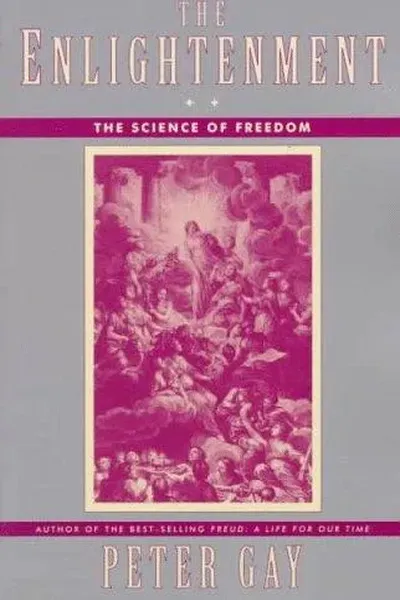
A Community of Witches
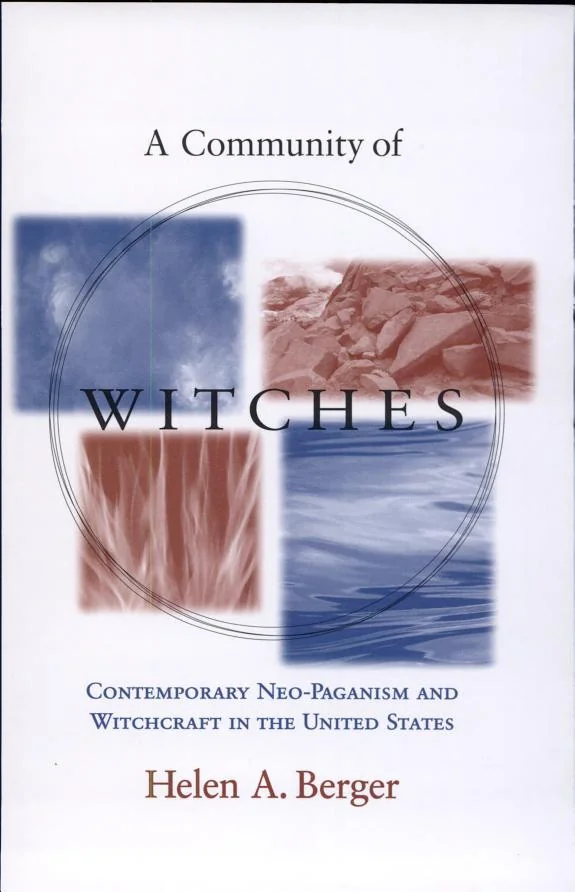
 81
81

A Community of Witches
Helen A. Berger's "A Community of Witches" offers a crucial sociological lens on Wicca, grounding the spiritual in the tangible. The work's strength lies in its detailed examination of Wicca not as an ancient, static tradition, but as a dynamic, evolving religious movement that absorbed American cultural influences from its inception in the late 1960s. Berger effectively illustrates how external societal changes shaped internal practices and beliefs. A point of contention, however, might be the book's focus, which, while illuminating for understanding the religion's formation, may leave those seeking deeper theological or ritualistic explorations wanting more. The discussion on how "the religion absorbed into its basic fabric the societal concerns of the time" is particularly insightful, demonstrating the symbiotic relationship between spiritual movements and their contexts. This study remains a valuable, if specialized, contribution to understanding contemporary Paganism.
📝 Description
81
Helen A. Berger's 2003 book analyzes Neo-Paganism and Wicca as modern religious movements.
Berger's study examines Neo-Paganism and Witchcraft, specifically Wicca, moving past sensationalized views to understand it as a contemporary religious movement. The book traces Wicca's arrival in the United States from the United Kingdom during the late 1960s. It details how the religion adapted to American social and cultural shifts, influencing its identity and practices.
The work addresses the core beliefs and rituals that distinguish Wicca. Berger analyzes the interplay of societal influences and internal theological growth that shaped this spiritual path for its followers. The book aims to provide a clear perspective on a religion often misunderstood.
This work situates Wicca within the broader context of modern pagan revivals that gained traction in the latter half of the 20th century. It discusses how these movements, distinct from earlier occult traditions, sought to establish themselves as legitimate religions. Berger's analysis focuses on the sociological and cultural factors that shaped Wicca's development, particularly its transition and growth in the United States.
💡 Why Read This Book?
• Gain a sociological understanding of Wicca's development, learning how its integration into American culture from the late 1960s onwards shaped its practices, a perspective crucial for understanding modern religious movements. • Understand the specific concept of Wicca as a "new religious movement," differentiating it from historical paganism and appreciating its contemporary origins and influences. • Explore the interplay between imported traditions and local cultural absorption, providing concrete examples of how the religion integrated "societal concerns" into its evolving fabric.
⭐ Reader Reviews
Honest opinions from readers who have explored this book.
❓ Frequently Asked Questions
When did Wicca first appear in the United States according to A Community of Witches?
According to Helen A. Berger's "A Community of Witches," Wicca was imported to the United States from the United Kingdom in the late 1960s, marking its emergence as a distinct religious movement within American society.
What is the primary focus of Helen A. Berger's A Community of Witches?
The book focuses on the beliefs and practices of Neo-Paganism and Witchcraft (Wicca) as a new religious movement, examining how it developed and absorbed influences from the era in which it emerged in the United States.
Does A Community of Witches discuss historical witchcraft or only modern Wicca?
While acknowledging that "magic," "witchcraft," and "paganism" evoke images of the past, the book specifically explores Wicca as a modern religious movement that developed in the late 20th century, rather than focusing on historical witchcraft.
What does the book mean by Wicca absorbing 'societal concerns'?
Berger indicates that as Wicca established itself in the US from the late 1960s, its practices and beliefs began to reflect the prevailing social and cultural issues of the time, integrating them into its spiritual framework.
Who is Helen A. Berger and what is her background?
Helen A. Berger is a scholar who has extensively researched and written about contemporary Paganism and Witchcraft. Her work, including "A Community of Witches," provides academic insight into these spiritual movements.
Is A Community of Witches suitable for someone new to Wicca?
Yes, the book provides a solid academic overview of Wicca's emergence as a modern religion, making it suitable for newcomers seeking to understand its sociological context and development in the late 20th century.
🔮 Key Themes & Symbolism
Wicca as a New Religious Movement
Berger posits Wicca not as an ancient survival, but as a distinctly modern religious movement that coalesced in the late 20th century. The work details its transplantation from the UK to the US in the 1960s and subsequent adaptation. It emphasizes how contemporary social and cultural factors, rather than solely historical lineage, shaped its identity, practices, and theological underpinnings, offering a critical framework for understanding contemporary Paganisms.
Cultural Absorption and Adaptation
A central theme is how Wicca, upon its arrival in the United States, actively absorbed the prevailing societal concerns and cultural currents of the era. This absorption was not passive; the religion integrated these external influences into its "basic fabric," shaping its rituals, ethics, and community structures. This process highlights the dynamic relationship between religious expression and the socio-historical context in which it exists.
Sociology of Contemporary Spirituality
The book contributes to the sociology of religion by dissecting the formation and growth of a specific spiritual community. It moves beyond theological dogma to analyze the social structures, belief systems, and ritual practices that constitute Wicca as a lived religion. By examining its emergence and development, Berger provides a case study for understanding how alternative spiritualities arise and sustain themselves in secularizing societies.
Distinguishing Modern Wicca
Berger clarifies the distinction between popular, often sensationalized, notions of witchcraft and the specific practices and beliefs of modern Wicca. By focusing on the religion's emergence post-WWII and its establishment in the US from the 1960s, the work aims to situate Wicca within the field of contemporary religious innovation, separate from historical or folkloric interpretations.
💬 Memorable Quotes
Direct passages from the work, attributed to the author.
“Wicca has emerged as part of a new religious movement that reflects the era in which it developed.”
— This core assertion frames the book's argument, positioning Wicca not as an ancient revival but as a product of late 20th-century social and cultural forces, distinct from historical perceptions.
“The religion absorbed into its basic fabric the soci[etal currents of the time].”
— This highlights the book's focus on how Wicca's identity and practices were shaped by its contemporary environment upon arriving in the United States, rather than being solely dictated by tradition.
“Generally known to scholars and practitioners as Wicca.”
— This provides a scholarly definition and identifies the specific term used within academic and practitioner circles, establishing clarity for the subject matter discussed throughout the work.
“Imported to the United States in the late 1960s from the United Kingdom.”
— This factual statement anchors the timeline and geographical origins of Wicca's development as a movement within the American context, crucial for understanding its formative period.
“While the words 'magic,' 'witchcraft,' and 'paganism' evoke images of the distant past and remote cultures...”
— This sets up the book's central thesis: to counter popular or historical assumptions by presenting Wicca as a contemporary phenomenon shaped by modern influences.
🌙 Esoteric Significance
Tradition
While not strictly adhering to a singular esoteric lineage like Hermeticism or Kabbalah, "A Community of Witches" engages with the broader field of Western Esotericism by examining a modern spiritual movement that draws upon and reinterprets pagan and magical themes. It fits within the academic study of NRMs that often intersect with esoteric currents, analyzing how such movements function as distinct religious systems rather than mere continuations of ancient practices.
Symbolism
The book implicitly engages with the symbolism of modern Wicca by analyzing its practices and beliefs as they developed. While not a deep dive into specific symbols, it touches upon the meaning-making within Wiccan communities. For instance, the concept of nature worship inherent in Paganism, and the ritualistic enactment of cycles (often symbolized by the Goddess and God) become significant as markers of identity and spiritual connection in a modern context.
Modern Relevance
Berger's work remains relevant today for scholars and practitioners interested in the sociology of religion and the evolution of contemporary Paganism. It provides a foundational understanding of Wicca's development as a distinct religious movement, influencing subsequent studies on Pagan identity, community formation, and the adaptation of esoteric ideas into accessible modern spiritual paths.
👥 Who Should Read This Book
• Scholars of religion and sociology: To understand the academic framework for analyzing New Religious Movements and the specific case of Wicca's emergence. • Practicing Wiccans and Neo-Pagans: To gain a deeper insight into the historical and sociological forces that shaped their traditions from the late 1960s onwards. • Students of Western Esotericism: To differentiate modern Wicca from older esoteric orders and understand its unique position within contemporary spirituality.
📜 Historical Context
Helen A. Berger's "A Community of Witches" emerged in 1999, a period when the study of New Religious Movements (NRMs) was gaining academic traction. The late 1960s, when Wicca began its significant establishment in the United States, was a time of profound social upheaval, marked by the counterculture movement, increased interest in Eastern religions, and a burgeoning feminist spirituality. Berger’s work contextualizes Wicca within this milieu, contrasting it with the more established Western esoteric traditions like Theosophy or the Hermetic Order of the Golden Dawn, which had different historical trajectories and philosophical underpinnings. While authors like Gerald Gardner were foundational in popularizing Wicca in the UK, Berger's focus is on its American reception and adaptation. The book provides an academic counterpoint to more devotional or polemical accounts of witchcraft, situating it as a sociological phenomenon reflecting its era.
📔 Journal Prompts
The absorption of societal concerns into Wicca's fabric.
Wicca as a new religious movement in the late 20th century.
The process of importing a religion from the UK to the US.
The distinction between historical paganism and modern Wicca.
How Wicca reflects the era of its development.
🗂️ Glossary
Neo-Paganism
A modern religious movement that draws inspiration from the diverse spiritual and mythological traditions of pre-Christian Europe, often emphasizing nature worship and polytheism.
Wicca
A contemporary, nature-based religion that typically follows the teachings of Gerald Gardner and his successors, characterized by reverence for nature, a duotheistic or polytheistic cosmology, and the practice of magic.
New Religious Movement (NRM)
A term used by scholars to describe religious or spiritual groups that have emerged relatively recently, often differing significantly from established religious traditions.
Sociological Analysis
The study of society and social relationships, focusing on how social structures, institutions, and cultural norms influence human behavior and belief systems.
Counterculture
A way of life and set of attitudes opposed to or at variance with the prevailing social norm, particularly the counterculture of the 1960s.
Hermeticism
A religious, philosophical, and esoteric tradition based on writings attributed to Hermes Trismegistus, emphasizing divine wisdom, cosmic unity, and the power of knowledge.
Feminist Spirituality
A diverse range of spiritual practices and beliefs that emerged in the late 20th century, often focusing on the divine feminine, goddess worship, and women's experiences.
This book appears in 1 collection
🔮 Readers Also Liked
Browse all →![The old colony town [Plymouth, Mass.], and other sketches. 1893: Iss 118](/img/thumb/the-old-colony-town-plymouth-mass-and-other-sketches-1893-iss-118-bliss-william-root-1825-1906.webp)








From the “Neopaganism” Collection
View all →






More Free Witchcraft & Paganism Books
View all →