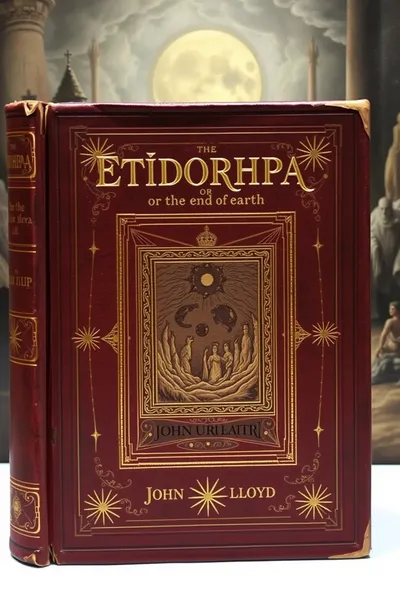
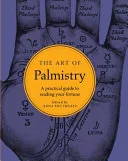
The Art of Palmistry
 71
71

The Art of Palmistry
Southgate approaches palmistry with a refreshing practicality, treating the hand as a palimpsest of personal experience rather than a rigid decree. The book's strength lies in its clear, photograph-driven instruction, making the often-obscure symbology of mounts and lines digestible for the uninitiated. I found the section on the 'Mount of Apollo' particularly well-explained, linking its prominence to artistic inclination and success. However, the emphasis on the constant change of lines, while intended to empower, occasionally risks overcomplicating interpretation for a novice. The work serves as a solid, modern primer on chiromancy, grounded in observation.
📝 Description
71
Anna Southgate's 2016 book approaches palmistry as a tool for self-reflection, not fixed prophecy.
First published in 2016, "The Art of Palmistry" by Anna Southgate presents chiromancy as a system for self-understanding. The book emphasizes that palm lines change, suggesting regular consultation and personal observation to track life's unfolding patterns. It serves as both a practical guide for reference and a method for continuous personal development through the study of hand topography. The work is aimed at those curious about esoteric practices and looking for an accessible introduction to palmistry. It will appeal to individuals interested in self-discovery, personal growth, and sensing subtle energetic influences. Beginners will benefit from its clear explanations and visual aids, while those already familiar with the subject may find value in its detailed examination of hand features. Anyone wanting to learn a non-verbal language of the self will find this book useful.
Palmistry, or chiromancy, has roots in ancient Greece and India. This 2016 book engages with a tradition that saw a significant revival in the 19th century, alongside spiritualism and occult movements, influenced by figures like Cheiro. Southgate's contemporary approach aims to demystify the practice. It moves away from purely predictive claims, favoring psychological and symbolic interpretations that align with modern interests in mindfulness and somatic awareness.
💡 Why Read This Book?
• Gain a practical method for self-observation by learning to map the specific 'mounts' and lines on your own palm, as detailed in Southgate's guide. • Understand the concept of 'identifiers' like stars and crosses, and how their presence and changes reflect evolving life circumstances, a core principle of this text. • Develop a personal interpretative framework that moves beyond fortune-telling, focusing on the dynamic 'changing patterns' of the hand as a mirror of inner states, as Southgate advocates.
⭐ Reader Reviews
Honest opinions from readers who have explored this book.
❓ Frequently Asked Questions
How does "The Art of Palmistry" differ from ancient palmistry texts?
Southgate's 2016 publication updates chiromancy for a modern audience, emphasizing psychological interpretation and the dynamic, changing nature of palm lines over purely predictive methods found in some older texts.
What are the 'mounts' in palmistry?
The mounts are the fleshy pads on the palm, located below the fingers and at the base of the palm. Each is associated with a planet and specific personality traits or potentials, as explained in the book.
Can palm lines really change?
Yes, according to "The Art of Palmistry," palm lines are understood to shift and evolve over time, reflecting changes in a person's life, experiences, and inner development. This makes repeated consultation of the guide beneficial.
Is this book suitable for complete beginners to palmistry?
Absolutely. The book uses clear language and photographic examples to guide readers through mapping the hand, reading lines, and interpreting mounts, making it accessible for those new to the subject.
What is the primary benefit of studying palmistry with this book?
The primary benefit is gaining a tool for self-awareness and personal growth by understanding the symbolic language of your own hands, as presented through Southgate's detailed approach.
Does the book focus on predicting the future?
No, "The Art of Palmistry" focuses more on understanding current potentials, personality traits, and life paths, viewing the hand as a map of evolving inner and outer circumstances rather than a fixed destiny.
🔮 Key Themes & Symbolism
The Hand as a Living Map
This work posits the palm not as a static graph but as a dynamic, living map of an individual's journey. Southgate emphasizes that the lines and mounts are fluid, constantly reconfiguring to reflect shifts in consciousness, health, and life experiences. This perspective reframes palmistry from a deterministic practice to a tool for self-awareness and continuous personal evolution, encouraging readers to view their hands as evolving narratives.
Interpreting Hand Topography
Central to the book is the detailed examination of the hand's physical features: the mounts, lines, and various markings. Each element is presented with its associated meanings, drawing from established chiromantic traditions. The text guides the reader through identifying these features and understanding their interplay, fostering a deeper comprehension of how these topographical elements contribute to a holistic reading of an individual's character and potential.
Chiromancy for Self-Discovery
Southgate positions palmistry as a profound method for self-discovery and introspection. By learning to read the specific configurations on one's own palm, individuals can gain insights into their strengths, challenges, and life patterns. The book encourages an ongoing dialogue with the hand, using its markings as prompts for reflection and personal growth, aligning the esoteric practice with modern psychological approaches to self-understanding.
The Fluidity of Fate
A core tenet explored is the mutable nature of what we perceive as fate, as written on the palm. Unlike deterministic systems, "The Art of Palmistry" highlights that the lines and symbols are not fixed pronouncements but indicators that can change. This concept empowers the reader, suggesting that awareness of one's palm can inform choices and influence the unfolding of personal destiny, emphasizing agency over predetermination.
💬 Memorable Quotes
Direct passages from the work, attributed to the author.
“Every person has a unique story--and it's written on our palms.”
— This foundational statement frames the book's central premise: that the physical lines and features of the hand are a personalized symbolic language, a unique narrative waiting to be deciphered by the individual.
“By comparing your palm's features with the photographs in this guide, you can create a profile to monitor their changing patterns.”
— This highlights the practical, self-monitoring aspect of Southgate's approach. It encourages active engagement, using the book's visual aids to establish a baseline and track the subtle, ongoing evolution of one's palmistry readings.
“Learn how to map the hand, and read the mounts and every line and identifier on your palm.”
— This concisely outlines the book's instructional goal: to equip the reader with the fundamental skills of chiromancy, covering all essential components from the major mounts to the finer details of palm markings.
“Because the lines constantly change, you'll want to consult this book again and again.”
— This reinforces the dynamic nature of palmistry as presented here. It suggests that the book is not a one-time read but an evolving resource, intended for repeated use as the reader's own life and palm markings transform.
“The work explores how to create a profile to monitor their changing patterns.”
— This interpretation emphasizes the book's utility as a tool for ongoing self-assessment. It suggests a systematic method for observing personal development through the lens of palmistry, encouraging consistent practice.
🌙 Esoteric Significance
Tradition
This work fits within the broad stream of Western esoteric traditions, particularly those influenced by Hermeticism and Neoplatonism, which explore correspondences between the macrocosm and the microcosm. While not explicitly Kabbalistic or Gnostic, its focus on symbolic interpretation and self-knowledge aligns with the Hermetic principle 'As Above, So Below.' Southgate's approach departs from purely divinatory systems by emphasizing the hand as a map of consciousness and potential rather than a fixed destiny.
Symbolism
Key symbols include the 'mounts' of the palm, each linked to planetary energies (e.g., Mount of Venus for love, Mount of Jupiter for ambition), representing inherent potentials and character traits. The primary lines – Life, Head, and Heart – symbolize vitality, intellect, and emotion respectively. Secondary lines and 'identifiers' like stars or crosses act as finer nuances, offering symbolic commentary on specific life events, relationships, or innate talents.
Modern Relevance
Southgate's practical, observation-focused approach appeals to contemporary interests in mindfulness, somatic psychology, and self-actualization. Modern practitioners of various esoteric paths, from beginner occultists to those interested in Jungian archetypes and self-reflection tools, can utilize "The Art of Palmistry." Its emphasis on personal narrative and evolving patterns aligns with current therapeutic and self-help modalities seeking symbolic languages for understanding the human condition.
👥 Who Should Read This Book
• Individuals seeking an accessible introduction to palmistry who desire a practical guide for self-exploration, moving beyond fortune-telling. • Practitioners of esoteric arts interested in expanding their toolkit with a method that links physical form to psychological and energetic states. • Researchers of divination and folk magic interested in a contemporary perspective on chiromancy that emphasizes its use as a tool for personal insight and development.
📜 Historical Context
Anna Southgate's "The Art of Palmistry," published in 2016, emerges within a long tradition of chiromancy, a practice with roots stretching back to ancient civilizations like India and Greece. The 19th century saw a significant resurgence of interest in occult sciences, including palmistry, influenced by figures such as the Comte de Saint-Germain and later, William John Warner, known as 'Cheiro,' who popularized a more accessible, often predictive, form of the art. Southgate's contemporary work engages with this lineage but pivots towards a more psychological and self-exploratory interpretation, moving away from the purely deterministic or fortune-telling aspects that characterized some earlier revivalist movements. While not directly engaging with contemporaries like the Theosophical Society's interest in divination, her approach aligns with a modern esoteric milieu that seeks practical tools for personal development and mindfulness, differentiating itself from the more sensationalist claims sometimes associated with Victorian palmistry.
📔 Journal Prompts
Reflect on the prominence of your Mount of Venus and its potential connection to your emotional expression.
Map the intersection of your Head and Heart lines; what insights emerge about your thinking-emotion balance?
Consider the 'Life Line' as depicted in the book: how does its perceived depth or clarity relate to your current vitality?
Analyze any 'identifiers' present on your palm, such as crosses or stars, and their possible meaning in your life narrative.
Track the changes in a minor line over a month; what life events or internal shifts might this correspond to?
🗂️ Glossary
Chiromancy
The practice of interpreting the lines, mounts, and other features of the human hand to understand character, potential, and life paths.
Mounts
The fleshy, raised pads on the palm located beneath the fingers and at the base of the palm, each associated with a planet and specific personality traits.
Life Line
The primary palm line that curves around the base of the thumb, traditionally associated with vitality, physical health, and major life events.
Head Line
The horizontal line across the palm, typically below the Heart Line, representing intellectual faculties, thinking patterns, and communication style.
Heart Line
The uppermost horizontal palm line, running across the palm below the fingers, related to emotional nature, romantic relationships, and heart health.
Identifiers
Various marks and symbols on the palm, such as stars, crosses, squares, or islands, that provide specific details or modify the interpretation of lines and mounts.
Palimpsest
A manuscript or piece of writing material on which the original text has been effaced or overwritten, used metaphorically to describe the hand as a layered record of experience.
This book appears in 1 collection
🔮 Readers Also Liked
Browse all →









From the “Palmistry” Collection
View all →








More Free Occult Philosophy Books
View all →