Finn Fancy Necromancy
 77
77

Finn Fancy Necromancy
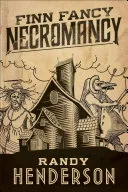
Randy Henderson's "Finn Fancy Necromancy" offers a compelling premise: a young necromancer, Finn Gramaraye, returns after a quarter-century soul-state in the Other Realm, only to find a world he barely recognizes and the same accusations that landed him there. The novel excels in its portrayal of Finn's disorientation, juxtaposing his 1980s sensibilities with the jarring realities of the 21st century, a contrast that injects both humor and pathos. The central mystery of who framed Finn and why provides a sturdy backbone for the narrative, propelling the plot forward with a detective-like urgency. However, while the pacing is generally brisk, as noted by Kirkus Reviews, some of the supporting characters feel less developed, serving primarily as plot devices rather than fully realized individuals. The depiction of necromancy itself is handled with a unique, less sensationalist approach. Ultimately, "Finn Fancy Necromancy" is a clever fantasy mystery that succeeds through its strong protagonist and intriguing central conflict.
📝 Description
77
Finn Fancy Necromancy, published in 2015, begins with a teenage necromancer framed for dark magic.
Randy Henderson's 2015 novel, Finn Fancy Necromancy, centers on Finn Gramaraye, a young necromancer wrongly accused of dark magic in 1986. This accusation leads to his spiritual banishment for twenty-five years to the Other Realm. Upon his return, Finn finds himself inhabiting an older physical body in a 21st-century world that has changed dramatically. His primary goal becomes clearing his name and uncovering the conspiracy that led to his initial downfall.
The story engages with themes of justice and identity, particularly as Finn attempts to adapt to a technologically advanced society after his extended absence. The narrative contrasts the 1980s with the 2010s, using this temporal displacement as a key element in the plot. Readers will encounter a unique magical system and a strong narrative voice through Finn's perspective.
While set in a modern fantasy world, Finn Fancy Necromancy engages with occult themes by framing necromancy not merely as a magical art but as a tool for societal condemnation. Finn's involuntary journey through the Other Realm and his subsequent re-entry into corporeal existence touch upon concepts of spiritual separation and reintegration. The novel uses these elements to explore the personal consequences of magic and prolonged isolation, questioning the nature of identity when removed from one's physical and temporal context.
💡 Why Read This Book?
• You will experience the disorienting shock of temporal displacement through Finn's 1980s perspective clashing with 21st-century technology, a feeling amplified by his 25-year imprisonment in the Other Realm. • You will engage with a unique take on necromancy, viewing it as a tool for framing and societal judgment rather than just a magical act, as Finn seeks to clear his name. • You will feel the urgency of a fantasy mystery as Finn, a framed necromancer, uncovers secrets in a world that has moved on since his sentencing in 1986.
⭐ Reader Reviews
Honest opinions from readers who have explored this book.
❓ Frequently Asked Questions
What is the core conflict in Finn Fancy Necromancy?
The core conflict involves Finn Gramaraye, a teenage necromancer framed in 1986, returning after 25 years to a changed world. He must uncover who framed him and why, while navigating his own advanced age and the unfamiliar 21st century.
How does the book portray necromancy?
Necromancy is depicted not just as a magical art but as a charge used to condemn Finn. The narrative explores the societal implications and personal cost of such accusations and magical practices.
What is the significance of Finn's time in the Other Realm?
His 25 years as a disembodied soul in the Other Realm are crucial. It explains his absence, his unique perspective, and the physical and psychological disconnect he experiences upon returning to a corporeal body.
Does the book focus heavily on 1980s nostalgia?
While Finn's 1980s background is established and contrasted with the present, the focus is more on his disorientation and the mystery. The era serves as a backdrop for his character and initial framing.
Is Finn Fancy Necromancy part of a series?
Yes, Finn Fancy Necromancy is the first book in a series, following Finn Gramaraye's adventures and investigations into magical crimes.
What kind of fantasy elements are present?
The book features necromancy, a disembodied soul state in an 'Other Realm,' and other magical abilities, blending these with a contemporary mystery narrative.
🔮 Key Themes & Symbolism
Temporal Displacement and Identity
Finn's 25-year sentence in the Other Realm creates a profound sense of temporal displacement. He returns physically older but mentally tethered to 1986, struggling to reconcile his past self with the radically altered 21st century. This disconnect forces an examination of identity: Is he the teenager framed for crimes, or the soul who endured decades of non-existence? The narrative uses this to explore how personal identity is shaped by memory, experience, and societal context.
Justice and False Accusation
At its heart, the novel is about a quest for justice. Finn is wrongly accused and imprisoned for dark necromancy. His return is motivated by a desire to clear his name and expose the true perpetrators. This theme questions how easily accusations, especially of arcane practices, can be used to silence or ostracize individuals, and the long, arduous path required to undo such injustices.
The Evolution of Magic and Society
The stark contrast between Finn's 1986 world and the 21st century highlights the rapid evolution of society and technology. This also implicitly affects how magic is perceived and practiced. While Finn's necromancy is the catalyst for his downfall, the book suggests that societal understanding and fear of the unknown, particularly concerning magic, have their own temporal dimensions and can be manipulated.
Secrets and Betrayal
The framing of Finn is rooted in secrets and betrayal, suggesting a conspiracy that reaches beyond his initial crime. His journey to uncover the truth forces him to confront hidden motives and past actions of those around him. This theme underscores how personal vendettas and hidden agendas can have devastating, long-lasting consequences, even across decades and realms.
💬 Memorable Quotes
Direct passages from the work, attributed to the author.
“Framed for magical crimes, a teenage necromancer from the 80s must navigate a twenty-first century world of secrets.”
— This summary expresses the core conflict: a character out of time, accused of dark magic, thrust into a modern mystery. It highlights the central themes of temporal displacement and the pursuit of truth in a changed world.
“He was sentenced to twenty-five grueling years as a disembodied soul in the Other Realm.”
— This detail emphasizes the unique nature of Finn's punishment and his subsequent existence. It suggests a profound, otherworldly experience that shapes his return and his perspective on the physical world.
“Now he's finally back—in a body that's decades older, and a world that has moved on from cassette tapes and Miami Vice.”
— This highlights the stark contrast between Finn's past and present. It points to the novel's exploration of cultural and technological shifts and the personal challenge of reintegration after an extended absence.
“But some things haven't changed...”
— This is a classic narrative hook suggesting that despite the superficial changes in the world, underlying human elements like secrets, betrayal, or the nature of magic remain constant, driving the ongoing conflict.
“Finn Gramaraye was framed for committing dark necromancy.”
— This establishes the inciting incident and the central injustice Finn must overcome. It immediately frames the narrative as a mystery focused on clearing his name and understanding the motivations behind his framing.
🌙 Esoteric Significance
Tradition
While not explicitly tied to a single esoteric lineage like Hermeticism or Kabbalah, "Finn Fancy Necromancy" taps into broader themes found in occult literature concerning the nature of souls, other realms, and the manipulation of forbidden knowledge. The concept of the 'Other Realm' and a disembodied soul speaks to ideas explored in various spiritualist and Theosophical writings that posit non-physical planes of existence and the journey of consciousness beyond the physical body.
Symbolism
Necromancy itself serves as a potent symbol, representing forbidden knowledge and the fear of death and the afterlife, often used as a scapegoat for societal anxieties. Finn's existence as a disembodied soul in the 'Other Realm' symbolizes a state of limbo or profound spiritual detachment, a theme explored in various mythologies and esoteric traditions concerning the soul's journey. The contrast between the 1980s and the 21st century can symbolize the clash between older, perhaps more intuitively understood, magical principles and their modern, technologically mediated, or misunderstood manifestations.
Modern Relevance
Contemporary practitioners and readers interested in the intersection of magic and technology, or those exploring the psychological impact of temporal displacement and spiritual confinement, find relevance in Finn's story. The novel's exploration of how societal fears and prejudices can be weaponized against those perceived as 'other,' particularly concerning esoteric practices, speaks to ongoing discussions in modern occult and metaphysical communities about ethical magic and personal liberation.
👥 Who Should Read This Book
• Readers interested in urban fantasy mysteries who appreciate protagonists with unique magical abilities and a strong voice, especially those who enjoy narrative structures involving temporal displacement. • Fans of detective fiction seeking a supernatural twist, who are intrigued by characters trying to solve crimes from decades past or uncover conspiracies rooted in occult practices. • Individuals exploring themes of justice, identity, and adaptation, particularly those who enjoy narratives about characters grappling with drastic changes in their personal circumstances and the world around them.
📜 Historical Context
Published in 2015, Randy Henderson's "Finn Fancy Necromancy" arrived during a robust period for urban fantasy and genre hybridization. The concept of characters displaced in time, while not new, found a fresh application here. Henderson's work engaged with contemporary trends in mystery and fantasy, offering a narrative grounded in a recognizable, albeit technologically advanced, world. Unlike the more overt magical realism or high fantasy prevalent at the time, Henderson's approach grounded supernatural elements within a crime-solving framework. The novel's reception, while positive, particularly from trade reviews like Kirkus, did not signify a major literary movement but rather contributed to the rich field of genre fiction available to readers. Its specific mention of the 1980s and the 21st century reflects a growing trend of intergenerational storytelling and nostalgia in popular culture.
📔 Journal Prompts
Finn's disorientation upon returning to the 21st century.
The societal use of necromancy as a label for condemnation.
The ethics of framing someone for magical crimes.
The concept of the Other Realm and disembodied existence.
Reconciling a 1980s mindset with contemporary technology.
🗂️ Glossary
Necromancy
A form of magic focused on communicating with the dead or raising them. In "Finn Fancy Necromancy," it's also depicted as a label used for false accusation and societal control.
Other Realm
A non-physical plane of existence where Finn spends 25 years as a disembodied soul, distinct from the living world.
Disembodied Soul
A soul or consciousness existing without a physical body, as experienced by Finn during his sentence.
Temporal Displacement
The state of being out of sync with one's own time, as Finn experiences returning to a world decades after his supposed crime and imprisonment.
Framing
The act of falsely implicating someone in a crime, used here as the central plot device against Finn.
Gramaraye
The surname of the protagonist, Finn, associated with his family's magical background and the necromancy charges.
Miami Vice
A popular 1980s television series, referenced to highlight the cultural era Finn is disconnected from.