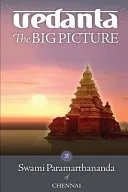
Vedanta
 84
84

Vedanta
Swami Paramarthanada’s *Vedanta* offers a commendably direct exposition of a profound philosophical system. The author, a student of the esteemed Swami Dayananda Saraswati, avoids obscure jargon, presenting the essential teachings of Advaita Vedanta with admirable clarity. A particular strength lies in the systematic breakdown of complex ideas, such as the five personality layers (koshas) and the nature of the Self. The book’s initial chapters, focusing on motivations and the means of self-knowledge, lay a solid foundation for the subsequent explorations. However, the transcription process, while diligent, occasionally results in prose that feels slightly less polished than a fully edited manuscript might be, with some sections reading more like transcribed speech than narrative text. The chapter on the creation of the universe, while informative, could benefit from more explicit connections to the practical application of Vedanta principles in daily life. Nevertheless, for those seeking an unadorned introduction to Vedanta's core philosophical architecture, this work provides a valuable and accessible guide.
📝 Description
84
Swami Paramarthanada's Vedanta, published April 17, 2018, explains core Indian spiritual thought.
This book collects talks by Swami Paramarthanada, a disciple of Swami Dayananda Saraswati. It aims to make the central ideas of Vedanta understandable through modern English. The author provides a clear structure for thinking about the self and its place in the world, drawing on a long line of Indian spiritual teachings.
It is for people who want a solid introduction to Vedanta. This includes beginners to its ideas or those looking for a quick review. Students of philosophy and spiritual seekers interested in Eastern traditions will find it useful. Anyone wanting clarity on self-knowledge, meditation, and freedom will also benefit. Those already familiar with Swami Dayananda Saraswati's teachings will recognize his approach here.
The teachings in Vedanta belong to the Advaita Vedanta tradition, a Hindu philosophical school focused on non-duality. Swami Paramarthanada's spiritual lineage connects to Swami Vivekananda, who was instrumental in bringing Vedanta to the West in the late 19th century. This book continues that work by translating complex philosophical concepts into current language, connecting older spiritual ideas with modern spiritual interests.
💡 Why Read This Book?
• Gain a clear understanding of the five personality layers (koshas) as explained by Swami Paramarthanada, offering a framework for self-analysis that moves beyond superficial self-perception. • Learn the essential means of self-knowledge according to traditional Vedanta, a path outlined by Swami Paramarthanada based on his lineage from Swami Dayananda Saraswati. • Grasp the concept of liberation (moksha) as presented in the book, providing a practical perspective on freedom from suffering and the realization of the Self.
⭐ Reader Reviews
Honest opinions from readers who have explored this book.
❓ Frequently Asked Questions
Who was Swami Dayananda Saraswati and what is his connection to this book?
Swami Dayananda Saraswati was a highly influential teacher of Advaita Vedanta in India. Swami Paramarthanada is his disciple, and this book is based on his talks, directly reflecting the teachings he received from Swami Dayananda.
What does 'Vedanta' actually mean and what is its origin?
Vedanta literally means 'the end of the Vedas' or 'the essence of the Vedas'. It refers to the philosophical teachings found in the Upanishads, the concluding parts of the ancient Indian scriptures known as the Vedas.
How does this book explain the 'Self'?
The book explains the Self (Atman) as the true, unchanging essence of an individual, distinct from the temporary physical body, mind, and ego. It is presented as the underlying reality of existence.
What are the 'five personality layers' mentioned in the book?
These are known as the five koshas: Annamaya (food sheath), Pranamaya (energy sheath), Manomaya (mind sheath), Vijnanamaya (intellect sheath), and Anandamaya (bliss sheath). The book uses them to describe the different levels of our being.
Is this book suitable for someone completely new to Indian philosophy?
Yes, the book is designed to present traditional Vedanta teachings in clear modern English, making it suitable for beginners seeking a straightforward outline of essential concepts.
What is the significance of 'karma' as discussed in Vedanta?
In Vedanta, karma refers to the law of cause and effect governing actions and their consequences. The book explores how understanding karma is crucial for comprehending one's present situation and future possibilities.
🔮 Key Themes & Symbolism
The Nature of the Self
The book meticulously deconstructs the concept of the Self (Atman), differentiating it from the empirical personality. It posits the Self as the singular, unchanging consciousness that is the substratum of all existence. This exploration is central to Vedanta's goal of realizing one's true nature, moving beyond the limitations of the ego and the physical body. The text outlines how this realization is achieved through inquiry and understanding the non-dualistic perspective inherent in the tradition.
Means of Self-Knowledge
Paramarthanada outlines the practical path to self-knowledge, emphasizing that it is not merely intellectual assent but a process of inquiry and assimilation. This involves understanding one's motivations for seeking truth, the nature of the obstacles (like ignorance and attachment), and the methods for overcoming them. The book highlights the importance of discriminative wisdom (viveka) and dispassion (vairagya) as foundational elements for spiritual progress.
The Koshas and Liberation
A significant portion of the work is dedicated to explaining the five koshas, or layers of personality, which veil the true Self. By understanding these sheaths—physical, energetic, mental, intellectual, and blissful—one can begin to discern the Self from the non-Self. The ultimate aim, liberation (moksha), is presented as the cessation of suffering through the direct realization of the Self's identity with the absolute reality (Brahman).
Creation and Karma
The book addresses cosmological questions regarding the creation of the universe from a Vedantic perspective, often explaining it as a manifestation of consciousness. It also looks at the law of karma, detailing how actions create impressions that shape future experiences. This understanding is presented not as fatalism but as a framework for responsible living and spiritual growth, emphasizing free will within the causal nexus.
💬 Memorable Quotes
Direct passages from the work, attributed to the author.
“The Self is the witness, the pure consciousness that is aware of all changes.”
— This highlights a core Vedantic tenet: the Self is not the object of experience (body, mind, senses) but the subject that perceives them. It is the unchanging backdrop against which all phenomena occur.
“Ignorance is the root cause of bondage and suffering.”
— This statement points to avidya (ignorance) as the primary obstacle to self-realization. The book suggests that liberation comes from dispelling this ignorance through knowledge.
“Meditation and devotion are aids to self-knowledge.”
— This emphasizes that while intellectual understanding is crucial, practices like meditation and devotion are vital tools that prepare the mind for the direct realization of the Self.
“Karma dictates our present circumstances and influences our future.”
— This succinctly explains the law of karma as presented in Vedanta, underscoring its role in shaping individual experience and the importance of mindful action.
💡 Key Ideas
Editorial paraphrase of the work's core concepts — not direct quotes.
Liberation is the realization of what you already are.
This paraphrased concept suggests that liberation isn't an acquisition of something new, but the recognition of one's eternal, inherent nature as the Self, free from all limitations.
🌙 Esoteric Significance
Tradition
This work is firmly situated within the Advaita Vedanta tradition, a major branch of Indian philosophical and spiritual thought. While Vedanta itself is a philosophical system, its exploration of consciousness, the nature of reality, and the path to liberation carries profound esoteric implications. It aligns with perennialist philosophies that seek the underlying unity behind diverse religious expressions, focusing on direct experiential realization of truth rather than dogma.
Symbolism
The 'five personality layers' (koshas) serve as a symbolic map of human consciousness, illustrating how the true Self is obscured. The concept of the 'Self' (Atman) itself functions symbolically, representing the immutable, eternal core of being, distinct from the transient phenomena of existence. The idea of 'creation' can also be viewed symbolically, representing the unfolding of consciousness or the divine play (Lila) rather than a literal, historical event.
Modern Relevance
Contemporary thinkers and practitioners in fields ranging from consciousness studies to mindfulness and psychology often draw upon Vedantic concepts. Swami Paramarthanada's accessible presentation makes these ideas relevant to modern seekers exploring non-duality, self-inquiry, and the integration of spiritual principles into daily life. His work appeals to contemporary interest in contemplative practices and the philosophical underpinnings of well-being.
👥 Who Should Read This Book
• Aspiring students of Advaita Vedanta seeking a foundational text that clearly outlines core teachings on the Self, karma, and liberation. • Individuals interested in comparative philosophy and world religions looking for an accessible introduction to a major Indian spiritual tradition. • Practitioners of meditation and mindfulness who wish to understand the philosophical context and deeper implications of their practices within the framework of Vedanta.
📜 Historical Context
The teachings in Swami Paramarthanada's *Vedanta* are deeply rooted in the Advaita Vedanta tradition, a prominent school of Hindu philosophy emphasizing non-duality. This lineage gained significant traction in the West following the 1893 Parliament of Religions in Chicago, where Swami Vivekananda introduced Vedanta's core concepts to a global audience. Paramarthanada's approach, as a disciple of Swami Dayananda Saraswati, represents a continuation of this modern Vedantic movement, which seeks to present these ancient teachings in clear, contemporary language accessible to educated laypeople. This effort positions the book within a broader intellectual current of the late 20th and early 21st centuries, characterized by a growing interest in Eastern spirituality and comparative philosophy. While rival schools of thought, such as qualified non-dualism (Vishishtadvaita) or dualistic systems (Dvaita), offer different interpretations of reality, Advaita Vedanta, as expounded here, focuses on the ultimate identity of the individual Self (Atman) with the Absolute (Brahman).
📔 Journal Prompts
The concept of the Self as witness, contrasted with the changing personality layers.
The practical means for self-knowledge presented by Swami Paramarthanada.
Understanding liberation (moksha) as the realization of one's inherent nature.
The role of karma in shaping experience and the path towards freedom.
Reflecting on the five personality layers (koshas) and their relationship to the true Self.
🗂️ Glossary
Vedanta
A school of Hindu philosophy based on the Upanishads, focusing on the nature of ultimate reality, the self, and the path to liberation.
Swami
A title of respect for a Hindu monk or ascetic, indicating spiritual attainment and mastery.
Advaita Vedanta
A specific school of Vedanta that emphasizes the non-dual nature of reality, asserting the identity of the individual Self (Atman) with the Absolute (Brahman).
Atman
The individual Self or soul; the true, eternal, unchanging consciousness that is the essence of an individual.
Brahman
The ultimate reality, the Absolute, the supreme cosmic spirit that is the source and substratum of all existence.
Koshas
The five 'sheaths' or layers that cover the Atman, comprising the physical, energetic, mental, intellectual, and blissful aspects of the personality.
Moksha
Liberation or release from the cycle of birth and death (samsara); the ultimate goal in many Indian spiritual traditions.