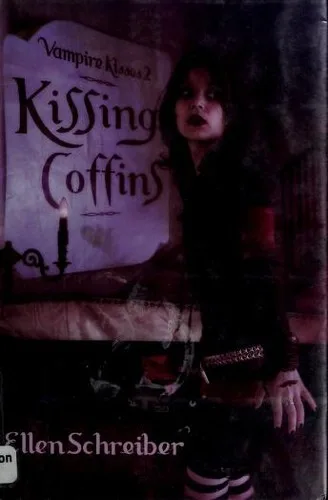
Vampire Kisses 2
 82
82

Vampire Kisses 2
Schreiber’s sophomore effort in the Vampire Kisses saga doesn't stray far from the established blueprint, offering more of the angsty, gothic-tinged romance that defined the first book. The strength lies in its unwavering commitment to its aesthetic and character dynamics, particularly the push-and-pull between Raven and Alexander. However, the plot progression feels somewhat retread, lacking significant narrative propulsion beyond the central relationship. The exploration of Alexander's vampiric nature, while central, remains largely on the surface, hinting at deeper lore without fully excavating it. A passage detailing Raven’s internal conflict over Alexander’s secrets, for instance, effectively captures the intended mood but offers little surprise to those familiar with the genre.
Ultimately, Vampire Kisses 2 functions as a reliable continuation for its existing fanbase, delivering the expected blend of teenage angst and supernatural allure.
📝 Description
82
Vampire Kisses 2, published in 2005, continues Raven's gothic romance with Alexander.
Ellen Schreiber's 2005 novel Vampire Kisses 2 picks up the story of Raven, a gothic protagonist caught between her human life and an attraction to the vampire Alexander. The book examines Raven's struggle with identity and her place in the world, blending contemporary teenage issues with classic vampire mythology. Schreiber uses a dark, romantic aesthetic to draw readers into Raven's experiences.
This installment is suited for young adults interested in paranormal romance that features a gothic tone. Readers who enjoy stories with brooding characters, unusual relationships, and a touch of the mysterious will find familiar elements here. Those who enjoyed the first book will recognize the ongoing character arcs and plot developments.
Published in 2005, Vampire Kisses 2 arrived during a period when vampire narratives were becoming increasingly romanticized for young adult audiences. This trend moved away from the monstrous depictions of earlier eras, influenced by writers like Anne Rice. Schreiber's series participated in this shift, presenting vampires as figures of dark allure and romantic fascination, adapting gothic tropes for a contemporary, younger readership.
💡 Why Read This Book?
• Understand the evolution of the modern romantic vampire trope by examining Raven's fascination with Alexander, a character embodying the genre's shift towards brooding, attractive anti-heroes. • Experience a specific brand of gothic adolescent fantasy, rooted in the 2005 cultural landscape where paranormal romance surged, offering a distinct feel compared to earlier or later works. • Explore themes of dark romanticism and the allure of the 'other' through Raven's internal monologues and her interactions with the mysterious characters introduced.
⭐ Reader Reviews
Honest opinions from readers who have explored this book.
❓ Frequently Asked Questions
What is the primary focus of Vampire Kisses 2?
The book centers on the ongoing gothic romance between Raven and the mysterious vampire Alexander, exploring themes of identity and attraction within a supernatural context.
Who is the author of Vampire Kisses 2?
The author is Ellen Schreiber, who first published the novel in 2005.
What genre does Vampire Kisses 2 belong to?
It falls into the young adult paranormal romance and gothic fiction categories, continuing the style of the first book.
Does Vampire Kisses 2 continue the story from the first book?
Yes, it is a direct sequel, following the established characters and plot threads from the original Vampire Kisses novel.
What are the main themes explored in Vampire Kisses 2?
Key themes include the allure of the forbidden, the concept of the outsider, and the romanticization of darkness, particularly through the protagonist Raven's experiences.
When was Vampire Kisses 2 first published?
Vampire Kisses 2 was first published in 2005.
🔮 Key Themes & Symbolism
Gothic Adolescent Romance
This theme centers on the classic gothic tropes of dark romance, mysterious suitors, and brooding atmosphere, adapted for a young adult readership. Raven's attraction to Alexander, a vampire, embodies this, blending forbidden desire with a sense of danger and melancholy. The narrative emphasizes the aesthetic of darkness and the emotional intensity often associated with young love, filtered through a supernatural lens popular in the mid-2000s.
The Outsider and Identity
Raven's character often embodies the feeling of being an outsider, struggling with her unique interests and perceived differences from her peers. Her connection with Alexander, who is literally supernatural and lives apart from conventional society, amplifies this theme. The book explores how finding connection with someone 'different' can impact one's sense of self and belonging, questioning societal norms and personal identity.
Romanticized Vampirism
Vampire Kisses 2 participates in the trend of romanticizing vampires, presenting them not as monstrous creatures but as alluring, often tragic figures. Alexander is portrayed with charisma and deeper meaning, appealing to Raven's fascination with the mysterious and the forbidden. This approach contrasts with older vampire lore, focusing on the romantic potential and emotional complexity of the vampire archetype for a contemporary audience.
Dark Aesthetics and Atmosphere
The series cultivates a distinct gothic atmosphere through its descriptions of settings, character appearances, and emotional tone. Cemeteries, moonlit nights, and shadowy figures contribute to a visual and emotional landscape that appeals to readers drawn to the macabre and melancholic. This deliberate use of dark aesthetics serves to enhance the romantic and supernatural elements of the story.
💬 Memorable Quotes
Direct passages from the work, attributed to the author.
“Raven's internal conflict over Alexander's secrets.”
— This highlights Raven's struggle between her desire for truth and her attraction to Alexander's enigmatic nature, a core dynamic of their relationship.
“The allure of the forbidden and the mysterious.”
— This concept underscores the romantic appeal of the unknown and the dangerous, a central element driving Raven's fascination with Alexander and his world.
“Alexander's brooding presence.”
— This phrase captures the characterization of Alexander as a classic gothic romantic figure, whose darkness and mystery are key to his appeal.
“Raven's feeling of being different.”
— This reflects the theme of the 'outsider' narrative, where the protagonist feels disconnected from mainstream society and finds solace in unconventional connections.
“The gothic setting of the high school.”
— This suggests the juxtaposition of traditional gothic elements with a contemporary adolescent environment, creating a unique stylistic blend.
🌙 Esoteric Significance
Tradition
While not explicitly tied to a formal esoteric tradition like Hermeticism or Kabbalah, Vampire Kisses 2 taps into the broader currents of Romantic occultism and Gothic literature's fascination with the shadow self and the liminal. It draws upon the archetype of the vampire, a figure often imbued with supernatural power and a connection to the night, reflecting a modern interpretation of ancient fears and desires surrounding mortality and the 'other.' The series engages with the aesthetic and emotional resonance of the mysterious, a common thread in many esoteric paths.
Symbolism
The vampire figure itself serves as a primary symbol, representing forbidden desire, immortality, the allure of darkness, and the tension between life and undeath. Alexander, as the enigmatic vampire, embodies these dualities. Raven's attraction to him symbolizes the human yearning for the extraordinary and the dangerous. The moon, often a silent observer in gothic narratives, functions as a symbol of the hidden, the subconscious, and the feminine principle, casting its pale light on the romantic entanglements.
Modern Relevance
Contemporary urban fantasy and paranormal romance continue to draw from the archetypes and narrative structures popularized by works like Vampire Kisses. Thinkers and creators exploring themes of dark romance, supernatural beings as metaphors for societal alienation, and the aesthetic of gothic subcultures find echoes in Schreiber's work. The series' approach to romanticizing the vampire continues to influence character portrayals in media and literature aimed at young adults grappling with themes of identity and belonging.
👥 Who Should Read This Book
• Young adult readers new to gothic romance seeking an accessible entry point into the genre. • Fans of paranormal romance who enjoy character-driven stories with a focus on brooding, mysterious love interests. • Students of popular culture interested in the evolution of the vampire trope in literature during the mid-2000s.
📜 Historical Context
The publication of Vampire Kisses 2 in 2005 occurred during a golden age for young adult paranormal romance, a genre significantly boosted by the Twilight Saga's rapid ascent. While Twilight focused on werewolves and vampires in a more contemporary, less overtly gothic setting, Schreiber's work leaned into established gothic sensibilities, drawing from a lineage that includes Anne Rice's Interview with the Vampire (1976). This period saw a marked shift from the monstrous depictions of vampires found in Bram Stoker's Dracula (1897) to more sympathetic, often romantic anti-heroes. Competitors like Stephenie Meyer were redefining the vampire narrative for a new generation, emphasizing romance and supernatural allure over traditional horror. Reception to this wave of vampire fiction was overwhelmingly positive among its target demographic, though some critics noted the increasing romanticization and potential dilution of classic horror elements.
📔 Journal Prompts
Raven's fascination with Alexander's vampiric nature.
The symbolism of the moon in gothic romance.
Alexander's characterization as an 'outsider'.
The blending of high school life with supernatural elements.
The allure of forbidden relationships in gothic narratives.
🗂️ Glossary
Gothic Romance
A literary genre that combines elements of romance and horror, often featuring brooding protagonists, mysterious settings, dark atmospheres, and themes of mystery and the supernatural.
Vampire
A creature from folklore, typically depicted as a reanimated corpse that subsists by feeding on the vital essence (blood) of the living.
The Outsider
A character who feels alienated from society, different from their peers, or struggles to conform to social norms, often finding connection with other marginalized individuals.
Dark Romanticism
A literary subgenre of Romanticism that explores darker themes such as sin, death, the supernatural, and the irrational, often featuring flawed or tormented protagonists.
Archetype
A recurring symbol, character type, or motif that represents universal patterns of human nature and experience, often found in mythology and literature.
Liminal
Relating to a transitional or initial stage of a process, or occupying a position at, or on both sides of, a boundary or threshold.
Shadow Self
In Jungian psychology, the unconscious aspect of the personality that the conscious ego does not identify in itself, or the parts of the self that are rejected or repressed.
🔮 Readers Also Liked
Browse all →









More by Ellen Schreiber
All books →


More Free Occult Philosophy Books
View all →