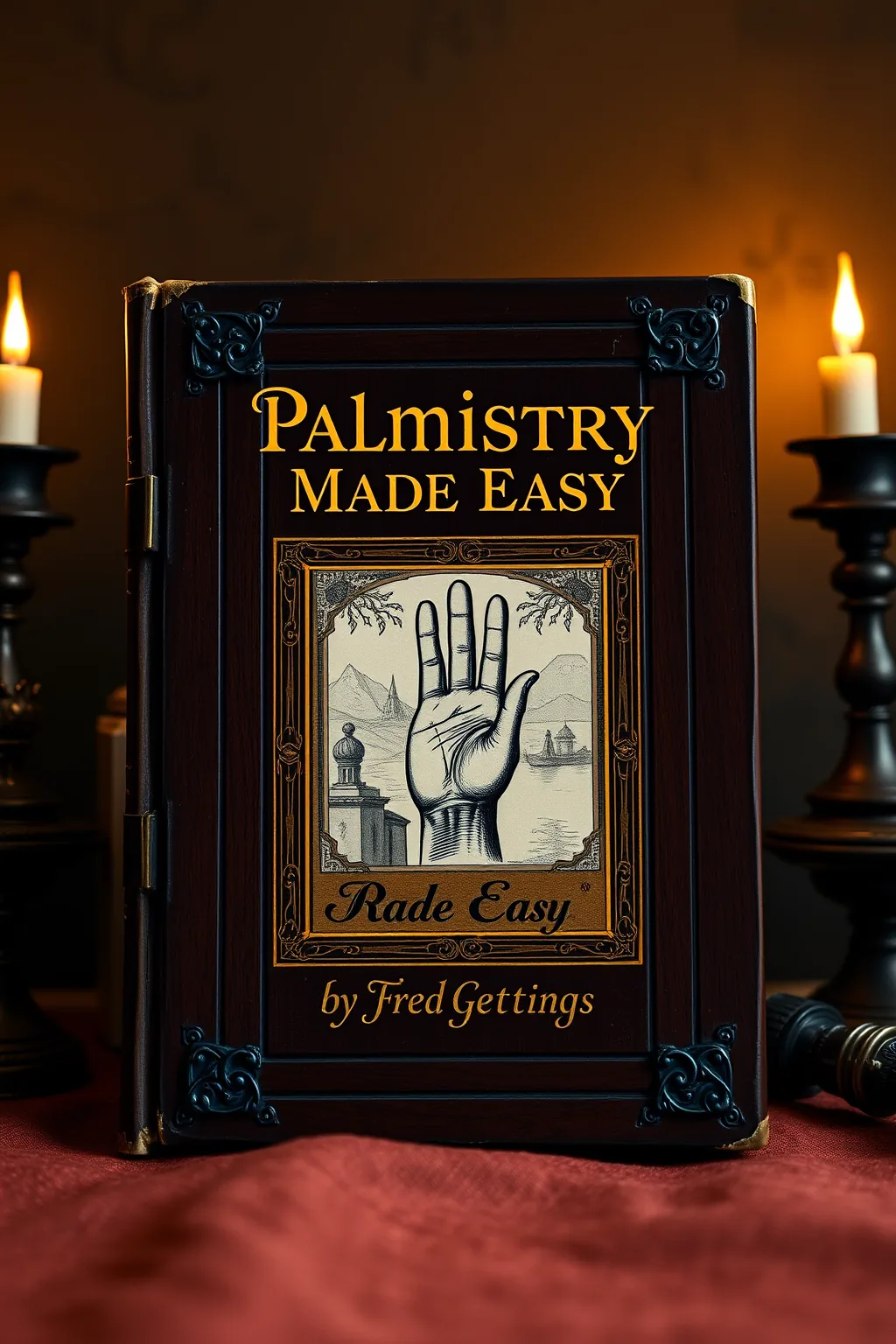
Palmistry Made Easy
 74
74

Palmistry Made Easy
Fred Gettings’ approach in Palmistry Made Easy is commendably thorough, eschewing the sensationalism that often plagues popular accounts of chiromancy. The book’s strength lies in its methodical presentation, breaking down the complex subject into digestible components. Gettings avoids the trap of definitive pronouncements, instead framing interpretations as potentials. However, the 1970 publication date means some illustrative examples or cultural references might feel dated to a contemporary reader. A particularly insightful passage details the subtle distinctions between the Life Line and the Vitality Line, illustrating how seemingly minor variations can suggest significant differences in physical energy and life experience. While valuable for its clarity, it occasionally leans towards a deterministic interpretation that could be seen as a limitation for those seeking purely psychological or symbolic readings. It remains a solid foundational text for understanding the mechanics of hand analysis.
📝 Description
74
Fred Gettings' Palmistry Made Easy, first published in 1970, offers a systematic guide to hand reading.
This volume presents a structured method for interpreting the hand, moving beyond simple fortune-telling to focus on characterological tendencies and self-understanding. Fred Gettings breaks down palmistry into its core components: the mounts, lines, fingers, and hand shape. Each element is linked to specific personality traits, life potentials, and psychological inclinations. The book emphasizes that palmistry reveals inherent potentials, not a predetermined destiny, suggesting these tendencies can be understood and influenced.
Intended for those curious about physiognomy and chiromancy, the book suits both beginners seeking a clear introduction and those with existing knowledge aiming to sharpen their interpretive skills. Readers interested in how physical characteristics can inform psychological understanding will find its approach particularly relevant. Gettings’ work aims to make the principles of palmistry accessible to a general audience interested in esoteric knowledge.
Published in 1970, Palmistry Made Easy appeared during a period of revived Western interest in occultism and esoteric studies. This era saw increased engagement with practices like astrology, tarot, and palmistry, partly fueled by movements such as Theosophy and emerging New Age philosophies. Gettings' book contributed to this resurgence by offering a clear, manual-style text. It stood apart from more academic or obscure treatments, aligning with a broader cultural exploration of alternative spiritualities and divinatory practices that questioned conventional norms.
💡 Why Read This Book?
• Learn the foundational principles of palmistry, including the significance of hand shapes and major lines like the Heart Line and Head Line, as detailed in Gettings' systematic approach. • Gain insight into interpreting the mounts of the hand, such as the Mount of Venus and the Mount of Jupiter, understanding their correlation to personality traits as presented in the text. • Explore the concept of palmistry as a tool for self-awareness rather than fixed prophecy, as Gettings outlines the potential implications of hand features for character development.
⭐ Reader Reviews
Honest opinions from readers who have explored this book.
❓ Frequently Asked Questions
When was Palmistry Made Easy first published?
Palmistry Made Easy by Fred Gettings was first published in 1970, a period marked by significant public interest in esoteric subjects and alternative forms of divination.
Does the book focus on predicting the future?
While palmistry is often associated with fortune-telling, Gettings frames it as a method for understanding character and potential tendencies rather than a rigid prediction of future events.
What are the main elements of palmistry covered in the book?
The book systematically covers hand shapes, the meaning of the major lines (like the Life Line, Head Line, and Heart Line), the mounts on the palm, and the significance of fingers.
Is this book suitable for complete beginners?
Yes, the title 'Palmistry Made Easy' suggests its aim is to provide a clear and accessible introduction for those new to the practice of reading palms.
Who is Fred Gettings?
Fred Gettings was an author and artist known for his works on occult subjects, including astrology, tarot, and palmistry, contributing to the popularization of these topics in the mid-20th century.
What is the historical context of this book's publication?
Published in 1970, Palmistry Made Easy emerged during a resurgence of interest in occultism and esoteric studies, making it part of a broader cultural exploration of non-traditional knowledge systems.
🔮 Key Themes & Symbolism
The Hand as a Microcosm
The work posits the hand as a detailed map of an individual's psyche and potential life trajectory. Gettings meticulously details how the various lines, mounts, and shapes of the hand are not arbitrary but reflect specific psychological complexes and inherent capabilities. This perspective elevates palmistry from mere prognostication to a sophisticated system of self-analysis, suggesting that by understanding the patterns on our palms, we can gain clear insights into our own nature and the forces that shape our lives.
Line Interpretation System
A core element is the detailed breakdown of the primary palmistry lines: the Life Line, Head Line, Heart Line, and Fate Line, among others. Gettings explains how the length, clarity, breaks, and formations of these lines offer clues to physical vitality, mental faculties, emotional disposition, and career paths. The book emphasizes that these lines are dynamic and can evolve, underscoring the interpretive rather than deterministic nature of the practice.
Mounts and Fingers
Beyond the lines, the book dedicates significant attention to the fleshy mounds (mounts) at the base of the fingers and the characteristics of the fingers themselves. Each mount—such as the Mount of Jupiter, Saturn, Apollo, and Venus—is linked to specific personality traits like ambition, intellect, artistic inclination, and sensuality. Similarly, the length and shape of the fingers are analyzed for their psychological correlations, offering a holistic view of the hand's symbolic language.
Palmistry as Self-Knowledge
Gettings strongly advocates for palmistry as a tool for personal growth and self-awareness. The book encourages readers to use the interpretations derived from their palms not as pronouncements of destiny, but as indicators of strengths to cultivate and challenges to address. This approach aligns with a more modern, psychological understanding of esoteric practices, promoting introspection and conscious development.
💬 Memorable Quotes
Direct passages from the work, attributed to the author.
“The hand is a mirror of the soul.”
— This captures the book's central thesis: that the physical characteristics of the hand serve as a symbolic representation of an individual's inner self, including their personality, potential, and psychological makeup.
“Lines on the palm are not immutable decrees but rather indicators of tendencies.”
— This highlights Gettings' nuanced view, suggesting that palmistry reveals potential pathways and inclinations rather than a fixed, unalterable future, empowering the reader with agency.
“The shape of the hand provides the foundation upon which the lines add detail.”
— This emphasizes the hierarchical nature of interpretation within the book, where the overall hand type sets the broad context for understanding the more specific meanings of the palm's lines.
“A clear Heart Line often indicates emotional straightforwardness.”
— This is a concrete example of a specific interpretation offered in the book, linking a visible feature (the Heart Line) to a personality trait (emotional honesty).
“The mounts reveal the areas of life where energy is most concentrated.”
— This points to the symbolic function of the palm's mounds, suggesting they are indicators of an individual's core drives, ambitions, and the spheres of life that hold the most personal significance.
🌙 Esoteric Significance
Tradition
Palmistry Made Easy draws from the Western esoteric tradition, particularly its roots in Renaissance and later European chiromancy. While not explicitly tied to a single lineage like Kabbalah or Hermeticism, it builds upon centuries of observational and interpretive practices concerning physiognomy and divination. Gettings' approach emphasizes the psychological and characterological aspects, aligning with a modern interpretation of esoteric arts that seeks self-understanding rather than purely predictive outcomes.
Symbolism
Key symbols include the major palm lines—Life Line, Head Line, and Heart Line—each representing fundamental aspects of existence: vitality and physical well-being (Life), intellect and cognitive processes (Head), and emotional life and relationships (Heart). The mounts, such as the Mount of Venus (love, sensuality) and Mount of Jupiter (ambition, leadership), also function as potent symbols, indicating areas of personal strength, drive, and potential influence.
Modern Relevance
Contemporary practitioners of psychological astrology, somatic experiencing, and even certain forms of coaching often find value in the detailed mapping of personality potential offered by Gettings' work. The emphasis on interpreting hand features as indicators of inherent traits and tendencies appeals to modern therapeutic approaches that explore self-awareness and personal development through symbolic systems.
👥 Who Should Read This Book
• Aspiring palmists seeking a clear, systematic introduction to the art of hand reading, moving beyond superficial fortune-telling to understand characterological analysis. • Individuals interested in physiognomy and esoteric psychology who wish to explore how physical features can correlate with personality traits and life potentials. • Students of Western esoteric traditions looking to understand a foundational text in mid-20th century chiromancy that bridges historical practice with accessible interpretation.
📜 Historical Context
Fred Gettings' Palmistry Made Easy, first published in 1970, arrived during a period of fervent interest in occult and esoteric disciplines. This era, often termed the 'occult revival,' saw a significant public embrace of practices like astrology, tarot, and palmistry, fueled by counter-cultural movements and a burgeoning New Age philosophy. Gettings’ work contributed to this trend by offering a structured, accessible manual that clarified chiromancy for a popular audience. It engaged with a lineage of palmistry texts while presenting the subject in a manner suitable for the contemporary reader. The work appeared amidst a cultural landscape that was increasingly receptive to alternative spiritualities and self-exploration methods, distinguishing itself from more academic or strictly traditional approaches prevalent in earlier decades.
📔 Journal Prompts
Analyze the significance of your own Head Line's clarity and any observed breaks.
Reflect on the correlation between the prominence of your Mount of Venus and your emotional expression.
Consider how the described tendencies of your finger shapes might influence your daily interactions.
Map the interpretation of your Heart Line against your personal relationship patterns.
Explore the potential implications of your Fate Line's presence or absence for your sense of purpose.
🗂️ Glossary
Chiromancy
The practice of reading palms to interpret character and predict future events, often referred to as palmistry.
Life Line
A major line on the palm, typically curving around the base of the thumb, often interpreted as relating to physical vitality, health, and major life events.
Head Line
A prominent line extending across the palm, generally believed to represent intellectual faculties, thinking processes, and communication style.
Heart Line
A horizontal line across the upper palm, usually read for insights into emotional nature, romantic relationships, and heart health.
Mounts
The fleshy, raised areas on the palm, located at the base of the fingers and below the thumb, each associated with specific planetary influences and personality traits.
Fate Line
A vertical line, often running up the center of the palm, interpreted as relating to career, destiny, and the major influences shaping one's life path.
Physiognomy
A field that claims to assess character and personality traits from outward physical appearance, particularly the face, but can extend to the body and hands.
🔮 Readers Also Liked
Browse all →








More by Fred Gettings
All books →




More Free Occult Philosophy Books
View all →