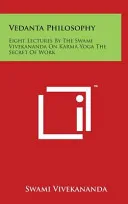
Vedanta Philosophy
 75
75

Vedanta Philosophy
Swami Vivekananda's Vedanta Philosophy is less a scholarly treatise and more a spirited exposition, channeling the energy of his famous lectures. Its strength lies in its directness; Vivekananda avoids academic jargon, aiming to convey the profound implications of Advaita Vedanta to a Western audience grappling with materialism. The section on Maya, for instance, effectively uses analogies to illustrate the veil of illusion. However, the book's reliance on transcribed speech means it can occasionally feel repetitive, lacking the crispness of carefully edited prose. A particularly striking passage discusses the inherent divinity within each individual, positing that realizing this is the ultimate spiritual goal, rather than seeking it externally. While powerful, the book sometimes assumes a familiarity with Indian philosophical terms that may require supplementary reading for complete comprehension. Nevertheless, it offers an accessible entry point to a complex philosophical system.
📝 Description
75
Swami Vivekananda's Vedanta Philosophy, published in 1912, explains Advaita Vedanta's core ideas.
This book presents the central doctrines of Advaita Vedanta, a school of Hindu philosophy. Swami Vivekananda's teachings, transcribed from lectures, focus on the Upanishads, Bhagavad Gita, and Brahma Sutras. The core idea is that reality is non-dual: the individual soul, Atman, is the same as the universal consciousness, Brahman. The text addresses the concept of Maya, the illusion that hides this fundamental unity.
Vivekananda also discusses paths to spiritual realization. Karma Yoga, the way of action performed without attachment to results, and Jnana Yoga, the path of wisdom, are explained as means to achieve this realization. The ultimate aim is Moksha, liberation from the cycle of birth and death, which is attained by recognizing the identity of Atman and Brahman. This work emerged from Vivekananda's lectures in America and Europe after his 1893 Parliament of Religions address.
Emerging from Swami Vivekananda's lectures in the West, this book grounds Advaita Vedanta in classical Indian scriptures like the Upanishads and the Bhagavad Gita. Vivekananda aimed to present the philosophical depth of Vedanta, distinguishing it from more syncretic spiritual movements gaining traction in the late 19th century. His approach emphasized the direct realization of non-duality, challenging prevailing Western dualistic and materialistic worldviews. This work contributed to the dissemination of a specific Vedantic tradition, focusing on intellectual understanding and direct experience of the unity of existence.
💡 Why Read This Book?
• Gain an understanding of Maya, the concept of cosmic illusion, as presented by Vivekananda in his lectures, offering a unique lens through which to view perceived reality. • Explore the principles of Karma Yoga, the path of selfless action, and its practical application as detailed in the text, providing a framework for ethical engagement with the world. • Grasp the core tenet of Atman-Brahman identity, a foundational concept of Advaita Vedanta discussed extensively, which challenges notions of individual separateness and points toward universal consciousness.
⭐ Reader Reviews
Honest opinions from readers who have explored this book.
❓ Frequently Asked Questions
When was Swami Vivekananda's Vedanta Philosophy first published?
While the original lectures that form the basis of Vedanta Philosophy were delivered in the late 19th and early 20th centuries, this specific edition was first published in 2014, reissuing content from the 1912 edition.
What is the central philosophical school discussed in Vedanta Philosophy?
The book primarily focuses on Advaita Vedanta, a prominent school of Hindu philosophy that emphasizes the non-dual nature of reality, asserting that the individual self is identical with the ultimate reality, Brahman.
What are the primary paths to spiritual realization mentioned by Vivekananda?
Vivekananda outlines several paths, notably Karma Yoga (the path of action) and Jnana Yoga (the path of knowledge), as means for individuals to realize their true nature and achieve liberation.
How does Vivekananda explain the perceived world?
He explains the perceived world through the concept of Maya, often translated as illusion. Maya is the power that veils the true, non-dual reality of Brahman and projects the appearance of a diverse, material world.
Is this book suitable for beginners in philosophy?
Yes, it is generally considered accessible for beginners interested in Eastern philosophy, though some familiarity with philosophical concepts can enhance the reading experience. Vivekananda's style is engaging and direct.
What historical event preceded Swami Vivekananda's lectures in the West?
Swami Vivekananda's impactful participation in the 1893 Parliament of Religions in Chicago significantly boosted Western interest in Hindu philosophy and paved the way for his subsequent lectures.
🔮 Key Themes & Symbolism
The Nature of Reality
This work expounds on the Vedantic concept of Brahman as the sole, unchanging reality underlying all existence. The perceived multiplicity of the universe is explained as Maya, a cosmic illusion that obscures this fundamental unity. Vivekananda uses analogies to illustrate how our senses and intellect create a world of separate objects and selves, while the ultimate truth is the singular, undifferentiated consciousness. Understanding Maya is presented as a crucial step toward transcending ordinary perception and realizing the non-dual nature of existence.
Paths of Liberation
Vivekananda outlines the principal Yogas, or paths, for achieving spiritual liberation (Moksha). Karma Yoga emphasizes performing one's duties without attachment to the results, purifying the mind through selfless action. Jnana Yoga focuses on intellectual discrimination and direct inquiry into the nature of the self and reality to attain knowledge of Brahman. Raja Yoga, though less detailed here, is also referenced as a path of mental discipline and meditation. These paths are presented not as exclusive but as complementary approaches to spiritual realization.
The Divinity Within
A central theme is the inherent divinity of the individual soul, Atman, which is identical to Brahman. The book argues against viewing God as an external entity to be appeased, instead positing that the divine resides within each person. Spiritual practice is therefore a process of uncovering this innate divinity, rather than acquiring something external. This understanding fosters self-reliance and a profound sense of self-worth, moving away from concepts of sin and towards the realization of one's true, eternal nature.
The Goal of Moksha
Moksha, or liberation, is presented as the ultimate aim of spiritual endeavor. It signifies freedom from the cycle of birth and death (Samsara) and the dissolution of ignorance that binds individuals to the illusory world. This liberation is not an afterlife reward but a present realization of one's true identity as Brahman. The book describes Moksha as the cessation of suffering and the attainment of infinite peace and bliss, achieved through the eradication of ego and the understanding of non-duality.
💬 Memorable Quotes
Direct passages from the work, attributed to the author.
“The goal is to know that 'I am the Infinite'”
— This statement captures the core of Advaita Vedanta: the realization of the individual self (Atman) as identical with the universal, infinite consciousness (Brahman). It signifies transcending the limitations of the ego and perceived individuality.
“All actions are to be performed without attachment to the fruits thereof”
— This principle defines Karma Yoga. It advocates for performing one's duties diligently and ethically, but without being driven by the desire for reward or the fear of failure, thus purifying the mind.
“The world is Maya”
— This is a concise expression of the concept of cosmic illusion. It suggests that the phenomenal world, with its apparent diversity and change, is not the ultimate reality but a veil obscuring the singular, unchanging Brahman.
“We are divine by nature”
— This assertion highlights the inherent spiritual essence within every being. It reframes spirituality not as an effort to become divine, but as a process of recognizing and realizing the divinity that already exists.
“Knowledge is the greatest purifier”
— This emphasizes the power of Jnana Yoga, the path of knowledge. True understanding and direct insight into the nature of reality are presented as the most potent means to overcome ignorance and achieve liberation.
🌙 Esoteric Significance
Tradition
This work is firmly rooted in the Advaita Vedanta tradition of Hinduism, a lineage tracing back to Adi Shankara. While Vedanta itself is a major philosophical system within Hinduism, its emphasis on non-duality, the illusory nature of the phenomenal world (Maya), and the identity of the individual soul with Brahman places it within a broader esoteric framework that seeks direct experiential knowledge of ultimate reality, often paralleling mystical traditions in other cultures.
Symbolism
Key symbolic concepts include Brahman, representing the Absolute, the unmanifest source of all existence, often described as Sat-Chit-Ananda (Being-Consciousness-Bliss). Maya symbolizes the veil of illusion that makes the One appear as many. The Atman, the inner self, is symbolically identical to Brahman, signifying that the divine is not external but inherent within. The Om symbol, though not explicitly detailed in this text, is foundational to Vedanta, representing the totality of existence and consciousness.
Modern Relevance
Vivekananda's articulation of Vedanta continues to influence contemporary spiritual thought and practice. Modern mindfulness and meditation movements often draw upon the principles of Raja Yoga and the understanding of consciousness he popularized. Thinkers in transpersonal psychology and non-dual spirituality frequently reference Vedanta concepts like Maya and the Atman-Brahman identity to explore subjective experience and the nature of selfhood. His accessible yet profound explanations remain a foundational text for many seeking to integrate Eastern philosophy into their lives.
👥 Who Should Read This Book
• Students of comparative philosophy and religion seeking to understand the core principles of Advaita Vedanta from a primary source. • Individuals interested in the history of spiritual exchange between East and West, particularly the impact of Swami Vivekananda's work in the late 19th and early 20th centuries. • Seekers of self-knowledge and spiritual liberation looking for a philosophical framework that posits inherent divinity and the non-dual nature of reality.
📜 Historical Context
Swami Vivekananda's Vedanta Philosophy emerged from an important moment in global intellectual history. Following his electrifying address at the 1893 Parliament of Religions in Chicago, a significant wave of Western interest in Indian thought surged. This period was characterized by a growing dissatisfaction with purely materialistic philosophies and a search for deeper spiritual meaning. Vivekananda’s teachings offered a sophisticated, non-dualistic metaphysical system that contrasted sharply with both prevailing Western empiricism and the more Theosophical interpretations of Eastern religions gaining traction at the time. His lectures, transcribed and compiled into works like this, provided direct access to Advaita Vedanta, bypassing intermediaries. Contemporaries like Max Müller, a prominent Indologist, were already engaged with translating and analyzing Indian texts, creating an intellectual climate receptive to such philosophical explorations, though Vivekananda's presentation was distinctly aimed at spiritual realization rather than purely academic study.
📔 Journal Prompts
The concept of Maya and its influence on perceived reality.
Reflections on performing actions without attachment to outcomes (Karma Yoga).
The implications of the Atman-Brahman identity for personal identity.
Distinguishing between the 'illusory' world and ultimate reality.
Exploring the path of knowledge (Jnana Yoga) toward self-realization.
🗂️ Glossary
Advaita Vedanta
A school of Hindu philosophy emphasizing non-duality, asserting that the individual soul (Atman) and the ultimate reality (Brahman) are one and the same.
Brahman
The ultimate, unchanging, infinite reality that is the source and sustainer of all existence in Hindu philosophy. It is considered beyond all attributes and descriptions.
Atman
The individual soul or self. In Advaita Vedanta, Atman is identical to Brahman, representing the true, eternal essence of a being.
Maya
A Sanskrit term often translated as 'illusion'. It refers to the cosmic power that conceals the true nature of reality (Brahman) and projects the appearance of the diverse, phenomenal world.
Moksha
Liberation or release from the cycle of birth, death, and rebirth (Samsara). It is the ultimate spiritual goal in Hinduism, achieved through self-realization.
Karma Yoga
The path of selfless action. It involves performing one's duties without attachment to the results, leading to spiritual purification.
Jnana Yoga
The path of knowledge. It emphasizes intellectual inquiry, discrimination, and direct experience to understand the nature of reality and the self.