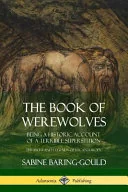
The Book of Werewolves: Being a Historic Account of a Terrible Superstition; The Myth and Legends of Lycanthropy
 71
71

The Book of Werewolves: Being a Historic Account of a Terrible Superstition; The Myth and Legends of Lycanthropy
Sabine Baring-Gould’s "The Book of Werewolves" offers a formidable compilation of historical accounts and folklore surrounding lycanthropy. Its strength lies in the sheer breadth of its research, unearthing obscure testimonies and legal proceedings from across Europe, dating back to antiquity. The author’s methodical approach, cataloging cases and examining the prevailing beliefs of different eras, provides a valuable resource for understanding how this particular superstition took hold and persisted. One notable aspect is the examination of specific trials, like those in 16th-century France, which reveals the tangible fear and societal mechanisms at play. However, the prose, while informative, can at times feel dense and dated, reflecting its 19th-century origins, occasionally leading to a less accessible read for a modern audience. The work effectively demonstrates the persistent human fascination with transformation and the blurred lines between myth, madness, and perceived reality. It remains a significant, albeit sometimes challenging, exploration of a primal fear.
📝 Description
71
Sabine Baring-Gould published 'The Book of Werewolves' in 1865, a historical survey of lycanthropy.
Sabine Baring-Gould's 1865 work, 'The Book of Werewolves', meticulously compiles historical accounts of lycanthropy from various cultures and time periods. The book examines alleged transformations, associated folklore, and legal proceedings related to werewolf beliefs. Baring-Gould investigates the psychological and social conditions that sustained this enduring superstition, drawing upon a wide range of sources including ancient writings, medieval records, and early modern testimonies. This volume serves as both a historical archive and a critical analysis of a widespread myth.
The book's content addresses lycanthropy as a phenomenon with roots in delusion, societal accusations, and cultural narratives. It discusses the influence of sorcery, demonic agreements, and the potential impact of hallucinogenic substances on perceived transformations. Baring-Gould also considers the role of disease, particularly ergotism, in shaping beliefs about werewolves. The work categorizes different types of werewolf legends and traces their transmission through oral tradition and written accounts.
Published in 1865, Baring-Gould's book emerged during a period of renewed academic and public interest in folklore, myth, and the supernatural. This era saw scholars like the Brothers Grimm collecting traditional tales and early anthropologists beginning systematic studies of belief systems. The late 19th century was also a time when older texts were being more widely published and scrutinized, often through nascent evolutionary or psychological frameworks. Baring-Gould's work fits within this broader intellectual current that sought to understand and categorize historical superstitions and their cultural underpinnings.
💡 Why Read This Book?
• Gain an understanding of historical werewolf trials, such as those documented in 16th-century France, to see how accusations of lycanthropy were treated legally and socially. • Explore the ancient origins of shapeshifting myths by examining references from classical authors like Virgil and Ovid, revealing the deep roots of the werewolf archetype. • Analyze the psychological and cultural factors, including sorcery and delusion, that contributed to the widespread belief in lycanthropy across different historical periods.
⭐ Reader Reviews
Honest opinions from readers who have explored this book.
❓ Frequently Asked Questions
When was Sabine Baring-Gould's "The Book of Werewolves" first published?
Sabine Baring-Gould's "The Book of Werewolves" was first published in 1865, making it a significant late 19th-century contribution to the study of folklore and superstition.
What ancient authors are referenced regarding lycanthropy in the book?
The book references classical authors such as Virgil, Ovid, Herodotus, and Pliny, who explored the concept of human transformation into wolves in their poetry and writings.
Does the book discuss specific historical werewolf trials?
Yes, the work details several historical cases and alleged transformations, including significant accounts from the Vosges region of France during the 16th century, illustrating the legal and social context of lycanthropy accusations.
What is the primary focus of "The Book of Werewolves"?
The book's primary focus is a historical and folkloric examination of lycanthropy, investigating its origins, manifestations in myth and legend, and its presence in documented historical accounts and accusations across various cultures and eras.
Is "The Book of Werewolves" available in the public domain?
Yes, as a work first published in 1865, "The Book of Werewolves" by Sabine Baring-Gould is in the public domain and is often available for free online.
What historical periods does Baring-Gould cover regarding werewolf legends?
Baring-Gould's work spans from ancient times, referencing Greek and Roman authors, through the medieval period, and into the early modern era, covering centuries of belief and reported incidents of lycanthropy.
🔮 Key Themes & Symbolism
The Persistence of Myth
Baring-Gould's work highlights how the myth of the werewolf has endured across millennia, appearing in ancient Greek narratives and persisting through medieval demonology and early modern accusations. The book illustrates that this archetype taps into fundamental human fears and fascinations with the wild, the predatory, and the transformation of the self. By tracing these threads, the author demonstrates the deep-seated nature of this superstition in the collective human psyche, suggesting a primal fear that transcends specific cultural contexts.
Sorcery and Demonic Influence
A significant theme is the attribution of lycanthropy to supernatural causes, particularly sorcery and demonic intervention. The book details historical beliefs where individuals were thought to gain wolf-like abilities through pacts with dark forces or by employing magical means. This section explores the theological and occult frameworks of the eras in question, revealing how fears of witchcraft and demonic possession intertwined with the werewolf phenomenon, shaping accusations and confessions during periods like the 16th-century trials.
Folklore and Legal Cases
The book meticulously documents both oral folklore and documented legal proceedings related to lycanthropy. Baring-Gould presents a catalog of alleged transformations and wolf-man encounters alongside actual court records where individuals were accused, tried, and sometimes punished for being werewolves. This juxtaposition reveals the societal impact of the superstition, showing how belief translated into tangible actions, persecution, and the construction of narratives that defined deviance and fear within communities.
Ancient Roots of Transformation
Baring-Gould traces the origins of lycanthropy back to classical antiquity, citing the works of Roman and Greek writers. Authors like Virgil and Ovid are presented as early chroniclers of shapeshifting tales, establishing a long lineage for the concept. This exploration underscores that the fear or fascination with human-animal transformation is not a medieval invention but a recurring motif in human storytelling, present even in the foundational literature of Western civilization.
💬 Memorable Quotes
Direct passages from the work, attributed to the author.
“The belief in lycanthropy was prevalent in many regions, often tied to accusations of witchcraft.”
— This statement expresses the book's exploration of how the fear of werewolves became entangled with the widespread panic surrounding witchcraft, particularly in the early modern period, leading to grim consequences for accused individuals.
“Ancient authors like Ovid and Virgil discussed transformations into wolves.”
— This highlights the book's effort to establish the deep historical roots of the werewolf myth, showing that the concept of humans changing into wolves existed in classical literature long before the medieval witch trials.
“Many cases involved confessions extracted under duress or influenced by hallucinogenic substances.”
— This points to Baring-Gould's critical examination of historical accounts, suggesting that perceived werewolf transformations were often the result of psychological distress, torture, or the effects of drugs, rather than actual supernatural events.
“The lore of the werewolf curse has been a persistent element of human folklore.”
— This reflects the overarching theme of the book: the enduring nature of the werewolf myth across different cultures and historical periods, demonstrating its deep connection to human psychology and storytelling traditions.
“Accusations of lycanthropy often occurred during times of social unrest or fear.”
— This interpretation suggests that the belief in werewolves served as a way for societies to externalize anxieties and fears, often targeting marginalized individuals or groups during periods of crisis.
🌙 Esoteric Significance
Tradition
While not strictly adhering to a single esoteric lineage, Baring-Gould's work touches upon themes common in Western esotericism, particularly those related to primal forces, transformation, and the darker aspects of the psyche. It aligns with the broader interest in folklore and occult phenomena prevalent in late 19th-century theosophical and occult revival circles. The book's cataloging of beliefs about sorcery and demonic pacts speaks to certain grimoire traditions and demonological studies, framing lycanthropy as a manifestation of forces beyond the mundane, often linked to a shadowy, untamed aspect of existence.
Symbolism
The central symbol is the werewolf itself, representing the duality of human nature—the civilized versus the wild, the rational versus the instinctual. In a broader symbolic context, the transformation signifies a loss of control, a descent into primal urges, or a deliberate embrace of darker, transformative powers through sorcery. The wolf form can symbolize untamed nature, predatory instinct, and the chaotic forces that threaten societal order, while the human aspect represents consciousness, reason, and the potential for both good and evil.
Modern Relevance
Contemporary thinkers in fields like psychoanalysis and cultural studies revisit Baring-Gould's work to understand the enduring archetype of the werewolf. Modern occultists and practitioners of folk magic might draw inspiration from the historical accounts of transformations and the perceived links to sorcery and shamanic practices. The book's detailed case studies continue to inform discussions on mass delusion, the psychology of fear, and the cultural construction of monsters in contemporary society, especially within horror literature and occult studies.
👥 Who Should Read This Book
• Students of folklore and comparative mythology seeking a foundational text on werewolf legends and their historical context. • Researchers of occult history and demonology interested in the intersection of superstition, witchcraft accusations, and alleged supernatural transformations. • Readers fascinated by the psychology of belief and societal anxieties, who want to understand how persistent myths like lycanthropy reflect deeper cultural fears and historical circumstances.
📜 Historical Context
Sabine Baring-Gould's "The Book of Werewolves" emerged in 1865, a period characterized by a burgeoning academic interest in folklore, mythology, and the comparative study of human beliefs. This era, following the romanticism of the early 19th century, saw scholars like Jacob Grimm and later E.B. Tylor engaging with ancient legends and superstitions, often through an evolutionary or anthropological lens. Baring-Gould's work stood within this intellectual current, aiming to collect and categorize the vast array of werewolf lore. It implicitly engaged with emerging scientific rationalism by presenting detailed historical accounts, yet it also explored the irrational persistence of myth. The book's detailed examination of medieval and early modern cases, such as the notorious Vosges trials, provided source material for later folklorists and historians of witchcraft. Its reception was generally positive within scholarly circles interested in the subject, though it predated more rigorous ethnographic methods.
📔 Journal Prompts
The concept of sorcery as a means of transformation.
Ancient authors' accounts of human-wolf metamorphosis.
The societal impact of 16th-century French werewolf trials.
Psychological factors contributing to lycanthropy beliefs.
The enduring archetype of the human-wolf hybrid in folklore.
🗂️ Glossary
Lycanthropy
The condition or practice of transformation into a wolf, either by supernatural means, witchcraft, or delusion. It is a central theme explored throughout the book.
Sorcery
The practice of magic, especially black magic, often associated with demonic pacts or malevolent intent. In the context of the book, it's frequently cited as a cause for werewolf transformations.
Folklore
The traditional beliefs, customs, and stories of a community, passed through generations by word of mouth. The book extensively documents werewolf folklore.
Demonology
The study of demons or beliefs about demons. This field informed many historical interpretations of lycanthropy as a demonic affliction.
Superstition
A belief or practice resulting from ignorance, fear of the unknown, or trust in magic or chance. Lycanthropy is examined as a historical superstition.
Archetype
A very typical example of a certain person or thing; a recurring symbol or motif in literature and mythology. The werewolf is presented as a potent archetype.
Testimony
A formal written or spoken statement, especially one given in a court of law. The book includes historical testimonies related to werewolf claims.
This book appears in 1 collection
🔮 Readers Also Liked
Browse all →






From the “Lycanthropy” Collection
View all →




More Free Occult Philosophy Books
View all →