Astral Travel For Beginners
 80
80

Astral Travel For Beginners
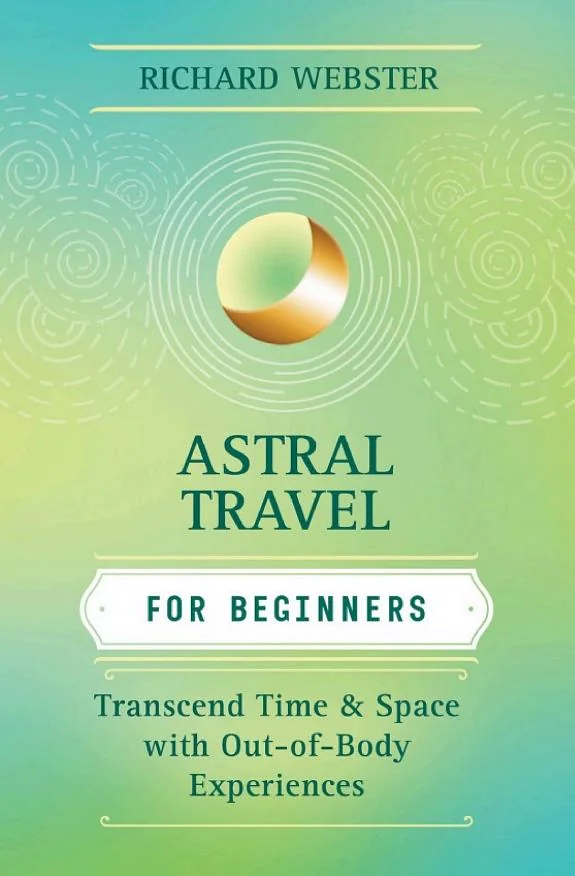
Richard Webster’s Astral Travel for Beginners attempts to systematize an often elusive phenomenon. The book’s strength lies in its methodical approach, offering fifteen distinct techniques that progress in complexity. This graded system is genuinely helpful, acknowledging the diverse learning curves of individuals attempting their first out-of-body experience. Webster wisely avoids overly mystical jargon, grounding the practice in achievable steps like deep relaxation and visualization, concepts familiar to many meditators. However, the book’s primary limitation is its reliance on assertion over deep exploration of the metaphysical implications. For instance, the discussion of the "astral cord" is presented as fact, with little exploration of its theoretical underpinnings or alternative interpretations within different esoteric traditions. One particularly useful passage details how to use a "waking dream" state as a bridge to astral projection, a concrete technique that bypasses common hurdles. Ultimately, it serves as a competent, if somewhat basic, primer for the aspiring astral traveler.
📝 Description
80
Richard Webster's 2012 book, Astral Travel for Beginners, makes astral projection an achievable skill.
This practical guide aims to demystify conscious out-of-body experiences (OBEs), presenting them as a skill anyone can learn. Webster offers actionable techniques to help individuals safely leave their physical bodies and explore non-physical realms. He acknowledges that different methods work for different people, so the book includes a series of graded exercises.
Astral Travel for Beginners is written for anyone curious about or seeking to begin astral travel. It is particularly helpful for those who have experienced spontaneous OBEs during sleep or lucid dreaming and want conscious control. The book is also suitable for skeptics interested in exploring consciousness beyond the physical, as well as for practitioners of meditation or lucid dreaming. As the title suggests, beginners are the main audience, requiring clear, step-by-step instruction.
Published in 2012, Webster's work follows a long tradition of literature on altered states of consciousness, with roots in figures like Emanuel Swedenborg and later Theosophy and Rosicrucianism. The late 20th and early 21st centuries saw renewed interest in OBEs, influenced by researchers such as Robert Monroe. Webster distinguishes his approach by focusing on accessible, self-guided methods, differentiating his work from more academic or institutionally focused studies.
💡 Why Read This Book?
• Gain a structured, step-by-step method for initiating conscious out-of-body experiences, moving beyond passive dreaming as outlined in the book's graded techniques. • Learn practical visualization and relaxation exercises, such as those described in Chapter 2, which are essential for safely separating the astral body from the physical form. • Understand the importance of intention and safety protocols, as detailed by Webster, to ensure a secure and controlled exploration of the astral realm, a concept reinforced throughout the guide.
⭐ Reader Reviews
Honest opinions from readers who have explored this book.
❓ Frequently Asked Questions
What is astral travel according to Richard Webster's guide?
Astral travel, as presented in Astral Travel for Beginners, is the conscious and intentional projection of one's awareness or 'astral body' out of the physical body to explore non-physical realms.
Is astral travel dangerous?
Webster emphasizes safety, suggesting that with proper preparation and intention, astral travel is not inherently dangerous. The book provides techniques to maintain a connection to the physical body and ensure a safe return.
How many methods for astral travel does the book offer?
The book presents fifteen distinct, time-tested methods for achieving astral travel, carefully graded to allow beginners to progress from simpler techniques to more advanced ones.
Can anyone learn astral travel from this book?
Yes, the book is specifically designed for beginners, acknowledging that different methods work for different people and offering a variety of techniques to suit individual learning styles and aptitudes.
What is the astral plane?
The astral plane is described as a non-physical dimension or realm that can be explored during an out-of-body experience, often considered a realm of consciousness, energy, and subtle matter.
When was Astral Travel for Beginners first published?
Astral Travel for Beginners by Richard Webster was first published on July 8, 2012.
🔮 Key Themes & Symbolism
Conscious Separation
The core of Webster's approach is achieving a conscious separation of the astral body from the physical vessel. This is presented not as a passive dream state but an active, intentional process. The book details techniques designed to facilitate this separation, emphasizing mental focus, deep relaxation, and overcoming the initial fear or doubt that often accompanies the first attempts at leaving the body. The goal is to transition from unconscious sleep travel to deliberate exploration.
Graded Techniques
Recognizing that a one-size-fits-all method is ineffective, Webster provides fifteen distinct techniques. These are carefully structured, starting with simpler exercises that build foundational skills like body relaxation and visualization, and progressing to more complex methods for achieving a full out-of-body experience. This graduated approach ensures that practitioners can find a method suited to their individual energetic and psychological makeup, fostering confidence and success.
Safety and Intent
Webster places significant emphasis on the safety and ethical considerations of astral travel. He discusses the importance of setting clear intentions before starting a journey and maintaining a strong energetic connection to the physical body, often referred to as the "astral cord." This focus aims to clarify the practice and assuage common fears about getting lost or encountering negative entities, framing astral travel as a controlled and secure exploration.
Exploration of the Astral Plane
The book guides readers on what to expect and how to read through the astral plane once separation is achieved. It touches upon the nature of this non-physical dimension, suggesting it's a realm accessible through consciousness. Webster encourages purposeful exploration, interaction with potential guides, and the acquisition of knowledge or experiences beyond the physical senses, framing it as a spiritual and personal development tool.
💬 Memorable Quotes
Direct passages from the work, attributed to the author.
“Achieving your first astral travel experience is always the most difficult.”
— This statement highlights the initial barrier to entry for astral projection, suggesting that overcoming the initial psychological and energetic hurdles is the primary challenge for newcomers to the practice.
“No single method will work for everyone.”
— Webster acknowledges the individual nature of consciousness and energetic alignment, implying that a diverse range of techniques is necessary to accommodate different people's aptitudes for astral projection.
“The techniques in this book are carefully graded to step by step through an actual out-of-body experience.”
— This emphasizes the structured, progressive nature of the book's instruction, designed to guide users from basic preparatory steps to the full experience of astral travel in a manageable sequence.
“You'll soon learn to leave your body and explore the astral realm with confidence and safety.”
— This expresses the book's core promise: to equip readers with the knowledge and skills needed to achieve safe and confident out-of-body experiences, transforming a potentially daunting prospect into an accessible skill.
“What you've done thousands of times in your sleep can now become a totally conscious experience.”
— This frames astral travel as an extension of natural, albeit unconscious, processes occurring during sleep, suggesting that the key difference lies in achieving full awareness and control over the experience.
🌙 Esoteric Significance
Tradition
This work fits within the broad Western Esoteric Tradition, particularly its modern interpretations focused on consciousness expansion and practical occultism. While not strictly tied to ancient Hermeticism or Kabbalah, it draws from the lineage of practical magic and spiritual development that seeks direct experience of non-physical realities. It shares common ground with Theosophical ideas about subtle bodies and planes of existence, but focuses more on the experiential technique of projection rather than theoretical cosmology.
Symbolism
The primary 'symbol' is the astral body itself, representing the subtle vehicle of consciousness separate from the physical form. The concept of the 'astral cord' functions symbolically as a lifeline, representing the essential energetic connection to physical embodiment, crucial for safe return. While not rich in complex visual symbols, the book uses the motif of 'leaving the body' as a potent metaphor for transcending limitations and exploring higher states of awareness.
Modern Relevance
Webster's guide remains relevant today for individuals exploring consciousness hacking, lucid dreaming, and non-ordinary states. Its practical, step-by-step methodology appeals to a generation seeking tangible results from spiritual practices. It can be seen as a precursor or companion to modern neuro-linguistic programming (NLP) techniques focused on visualization and altered states, and informs contemporary discussions on remote viewing and out-of-body phenomena within parapsychology and self-development communities.
👥 Who Should Read This Book
• Aspiring astral travelers seeking a structured, beginner-friendly introduction to conscious out-of-body experiences, who are looking for a variety of techniques beyond basic meditation. • Individuals interested in exploring the nature of consciousness and reality beyond the physical senses, particularly those who appreciate practical, step-by-step guidance rather than purely theoretical discussions. • Practitioners of lucid dreaming or other consciousness-altering techniques who wish to expand their abilities to include intentional astral projection and exploration of non-physical realms.
📜 Historical Context
Richard Webster's "Astral Travel for Beginners" (2012) entered a field already well-trodden by esoteric authors. The mid-to-late 20th century saw significant popularization of out-of-body experiences (OBEs) through figures like Robert Monroe, whose Monroe Institute pioneered experiential training in the 1970s. Webster's work builds upon this legacy but distinguishes itself by offering a more accessible, home-study approach. Unlike the more academic explorations or institutionalized training methods prevalent after Monroe's initial publications, Webster provides a practical, self-guided manual. His approach aligns with a broader resurgence of interest in consciousness studies and alternative spirituality that gained traction in the late 20th century, often intersecting with New Age movements. While contemporaries like William Buhlman were also publishing guides to OBEs around the same period, Webster's emphasis on a large number of distinct, graded techniques offered a specific pedagogical strategy aimed at clarifying the process for absolute novices.
📔 Journal Prompts
The concept of the astral cord: How does visualizing this energetic link affect your sense of safety during practice?
Beginner's fear: Describe the specific anxieties that arise when attempting to leave the physical body, as outlined in the book's introduction.
Visualization practice: Detail a recent visualization exercise, noting any sensations or unexpected experiences.
Personal astral guides: Reflect on the idea of encountering guides during astral travel. What qualities would you hope for in a guide?
The graded techniques: Which of the fifteen methods described seems most accessible to you initially, and why?
🗂️ Glossary
Astral Body
A subtle, non-physical body composed of finer matter, believed to be the vehicle of consciousness during astral travel and dreams. It is considered distinct from the physical body.
Astral Plane
A non-physical dimension or area of existence, often described as a plane of consciousness, energy, and subtle matter, accessible during out-of-body experiences.
Out-of-Body Experience (OBE)
A subjective experience where an individual feels their consciousness has left their physical body and is observing it or traveling in a non-physical space.
Astral Cord
An energetic or psychic link connecting the astral body to the physical body, believed to ensure the traveler's safe return and maintain life functions.
Visualization
The mental process of creating images, scenes, or sensations in the mind's eye, used as a key technique in astral travel to facilitate separation and navigation.
Relaxation
A state of deep physical and mental rest, considered essential for loosening the connection between the astral and physical bodies and preparing for projection.
Conscious Experience
An experience undertaken with full awareness and intentionality, as opposed to unconscious processes like regular sleep or dreaming.
This book appears in 1 collection
🔮 Readers Also Liked
Browse all →









From the “Out-of-Body Experience” Collection
View all →








More Free Occult Philosophy Books
View all →