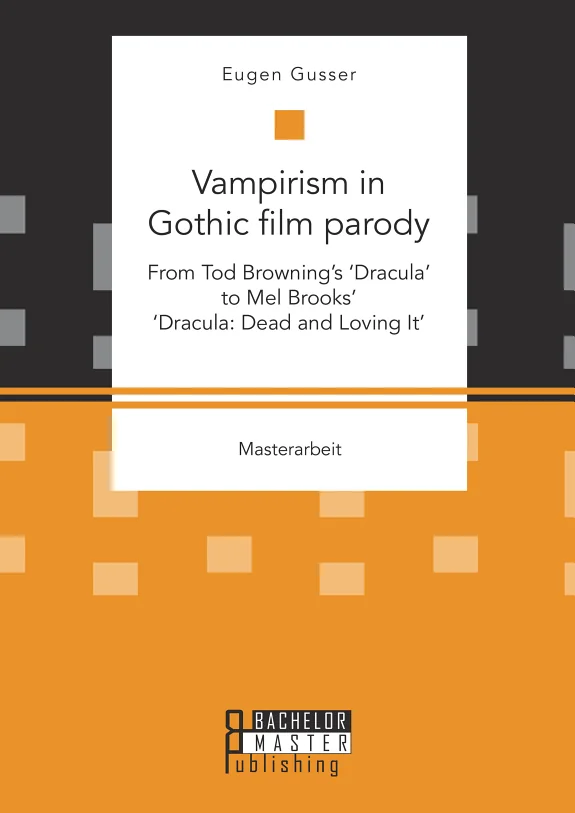
Vampirism in Gothic film parody: From Tod Browning’s ‘Dracula’ to Mel Brooks’ ‘Dracula: Dead and Loving It’
 82
82

Vampirism in Gothic film parody: From Tod Browning’s ‘Dracula’ to Mel Brooks’ ‘Dracula: Dead and Loving It’
Eugen Gusser’s thesis offers a precise, if somewhat dry, dissection of cinematic parody through the lens of vampirism. The application of Dan Harris’s six methods provides a robust framework for analyzing how Mel Brooks’ "Dracula: Dead and Loving It" both honors and subverts Tod Browning’s foundational 1931 film. Gusser’s strength lies in this systematic approach, meticulously detailing how specific comedic techniques function to reframe the Gothic horror archetype. A limitation, however, is the text's academic tone, which may alienate readers seeking a more accessible exploration of these films. The analysis of how "literalization" is used to expose the inherent absurdity in Dracula's traditional posturing, for instance, is a particularly sharp observation, demonstrating the thesis's potential for insightful commentary. Ultimately, this work serves as a valuable, if specialized, case study in the mechanics of film parody.
📝 Description
82
Eugen Gusser's 2023 book analyzes vampirism in parody film, comparing Browning's 'Dracula' to Brooks' spoof.
This study examines how cinematic vampire parodies reshape established tropes. Eugen Gusser focuses on Mel Brooks' 1995 film 'Dracula: Dead and Loving It' in relation to Tod Browning's 1931 'Dracula.' The analysis uses Dan Harris's six methods of parody: reiteration, inversion, misdirection, literalization, extraneous inclusion, and exaggeration. These tools help dissect the construction of parodic vampire figures and their associated mythologies.
The work is relevant for students and scholars in film studies, Gothic literature, and parody theory. It addresses the evolution of classic horror figures through comedy and how filmmakers adapt and subvert cinematic conventions. Readers interested in Universal horror and Mel Brooks' comedies will find value in the detailed comparison.
Gusser situates the study within film theory concerning parody and adaptation. It traces cinematic vampires from early Gothic horror to comedic deconstruction. The shift from the atmosphere of Browning's 'Dracula' to the slapstick in Brooks' film reflects changes in cinematic taste and cultural perceptions of horror archetypes.
While not strictly esoteric, this book engages with the enduring archetype of the vampire, a figure rich in occult and folkloric associations. It traces how this symbol, rooted in pre-Christian and medieval beliefs about the undead, has been reinterpreted across different eras of filmmaking. The study highlights the transformation of the vampire from a figure of primal fear in Gothic literature and early cinema to a subject of comedic subversion, reflecting cultural shifts in how societies process and understand ancient anxieties.
💡 Why Read This Book?
• Understand the specific techniques of cinematic parody by examining Dan Harris's six methods as applied to "Dracula: Dead and Loving It" and "Dracula" (1931). • Gain insight into the evolution of the vampire archetype in film, from its serious Gothic portrayal in Tod Browning's 1931 version to its comedic deconstruction. • Analyze how humor is generated through the subversion of established horror conventions, as detailed in the comparative study of these two iconic vampire films.
⭐ Reader Reviews
Honest opinions from readers who have explored this book.
❓ Frequently Asked Questions
What specific academic framework does Eugen Gusser use to analyze parody in vampire films?
The thesis utilizes Dan Harris's six methods of parody: reiteration, inversion, misdirection, literalization, extraneous inclusion, and exaggeration, to dissect the parodic constructions of vampirism in "Dracula: Dead and Loving It."
Which two specific films are central to the analysis of vampirism in Gothic film parody?
The core of the analysis focuses on Mel Brooks' "Dracula: Dead and Loving It" (1995) in relation to Tod Browning's "Dracula" (1931).
What is the primary goal of examining the juxtaposition of Tod Browning's and Mel Brooks' Dracula films?
The goal is to understand the parodic constructions of vampirism by contrasting the original Gothic horror motifs with their comedic subversions in the parody.
Beyond vampires, what broader cinematic concepts does this thesis explore?
The work explores broader concepts of film adaptation, subversion of genre conventions, and the mechanics of humor derived from recontextualizing classic horror figures.
When was Eugen Gusser's work on Vampirism in Gothic film parody first published?
This thesis was first published on March 1, 2019.
What is the relationship between the 1931 'Dracula' and the 1995 parody according to the thesis?
The thesis analyzes Mel Brooks' "Dracula: Dead and Loving It" as a direct parody that deconstructs and humorously reinterprets the motifs and narrative of Tod Browning's original "Dracula."
🔮 Key Themes & Symbolism
Parody Mechanics
The work meticulously applies Dan Harris's six methods—reiteration, inversion, misdirection, literalization, extraneous inclusion, and exaggeration—to dissect how Mel Brooks' "Dracula: Dead and Loving It" functions as a parody. It moves beyond simply identifying jokes to analyzing the structural and thematic techniques used to subvert the conventions of Tod Browning's original "Dracula" (1931). This systematic approach reveals how humor is derived from the manipulation of established Gothic horror tropes and character archetypes, offering a critical framework for understanding comedic deconstruction in film.
Vampire Archetype Evolution
This thesis traces the transformation of the cinematic vampire figure. It contrasts the brooding, genuinely terrifying Count Dracula presented by Tod Browning in 1931 with the buffoonish, often inept Count portrayed by Mel Brooks in 1995. The analysis highlights how parody recontextualizes the vampire from a symbol of primal fear and forbidden desire into a source of slapstick comedy and social commentary, reflecting shifts in audience expectations and the cultural field of horror.
Gothic Tropes in Comedy
Central to the study is the examination of how classic Gothic elements—such as castles, bats, hypnosis, and seductive allure—are repurposed for comedic effect. The thesis explores how "Dracula: Dead and Loving It" leverages the audience's familiarity with these tropes from films like Browning's "Dracula" to generate humor through exaggeration, anachronism, and inversion. It illustrates how comedic interpretations can simultaneously pay homage to and critique the very foundations of the Gothic horror genre.
Intertextuality and Adaptation
The work underscores the intertextual relationship between the two "Dracula" films. By analyzing the direct references, inversions, and exaggerations present in Brooks' film, Gusser demonstrates how parody functions as a form of critical commentary on its source material. This approach illuminates the dialogue between different cinematic eras and interpretations of the same iconic character, revealing how subsequent works engage with and reshape cinematic history.
💬 Memorable Quotes
Direct passages from the work, attributed to the author.
“Parodic constructions of vampirism are examined through reiteration, inversion, misdirection, literalization, extraneous inclusion, and exaggeration.”
— This expresses the core methodology, stating the specific analytical tools derived from Dan Harris's theory that are applied to understand how comedic vampire films rework traditional horror elements.
“The contrasting juxtaposition of Tod Browning’s ‘Dracula’ and Mel Brooks’ ‘Dracula: Dead and Loving It’ serves to provide the parodic constructions of vampirism.”
— This highlights the central comparative approach, emphasizing that the analysis hinges on the direct comparison and contrast between the serious Gothic original and its comedic reimagining.
“Motifs of vampirism in gothic film parodies are analyzed on the basis of Mel Brooks “Dracula: Dead and Loving it”.”
— This statement clearly defines the primary subject and focus of the thesis, indicating that Mel Brooks' film is the main case study for understanding comedic vampire tropes.
“The thesis analyzes motifs of vampirism in gothic film parodies.”
— A concise summary of the work's overarching objective, framing the study within the broader context of analyzing recurring elements of vampirism within the genre of Gothic film parody.
“The parodic constructions will be examined using six methods of parody by Dan Harris.”
— This emphasizes the theoretical foundation of the research, specifying the academic framework employed to dissect and understand the mechanisms of parody within the chosen films.
🌙 Esoteric Significance
Tradition
While primarily a film studies analysis, the study of vampirism touches upon esoteric traditions that explore themes of immortality, life-force transference, and the shadow self. The vampire archetype, particularly its connection to primal desires and the uncanny, has roots in folklore and occult symbolism that resonate with Gnostic ideas of parasitic forces or Hermetic concepts of transformation. Gusser’s work, by dissecting the comedic subversion of these motifs, indirectly engages with how deeply ingrained symbolic figures are processed and reinterpreted through cultural mediums.
Symbolism
The vampire itself is a potent symbol, representing repressed sexuality, death, and the alluring danger of the forbidden. In the context of Gothic literature and film, symbols like blood, darkness, the castle, and the hypnotic gaze carry significant weight, often linked to themes of spiritual corruption or the draining of vital energy. Gusser's analysis of parody, particularly through techniques like exaggeration and inversion, reveals how these potent symbols are stripped of their terror and rendered absurd, exposing their underlying theatricality or inherent strangeness.
Modern Relevance
Contemporary explorations of paranormal romance, urban fantasy, and even certain psychological theories of manipulation and control echo the symbolic territory of vampirism. While Gusser’s focus is cinematic parody, the enduring fascination with the vampire archetype speaks to ongoing cultural dialogues about power dynamics, life-force, and the nature of monstrosity. Thinkers and practitioners interested in how archetypes are culturally mediated and re-contextualized, even humorously, can find value in Gusser’s dissection of the vampire's cinematic journey.
👥 Who Should Read This Book
• Film studies students and scholars seeking rigorous analysis of parody techniques and genre subversion in cinema. • Enthusiasts of classic horror cinema, particularly fans of Tod Browning's "Dracula" (1931), interested in how its legacy is treated in later films. • Readers interested in the work of Mel Brooks and how his comedic style engages with and deconstructs established cinematic traditions.
📜 Historical Context
Eugen Gusser's thesis emerges from a scholarly landscape where film studies increasingly engaged with genre theory, parody, and the deconstruction of classic archetypes. Published in 2019, it follows decades of critical discourse on horror cinema and comedy, including seminal works by scholars like Noël Carroll and Rick Altman who examined the affective and structural qualities of these genres. The specific focus on Mel Brooks’ "Dracula: Dead and Loving It" (1995) places it within a wave of later-career parodies by the director, often analyzed for their relationship to the original sources. While not directly engaging with a specific competing school of thought in its blurb, the work implicitly dialogues with traditional horror criticism by dissecting how comedic reinterpretation challenges established notions of fear and the sublime associated with figures like Bram Stoker's Count Dracula, particularly as immortalized by Tod Browning’s 1931 film.
📔 Journal Prompts
The application of Dan Harris's six methods to vampire film parody.
The contrast between Tod Browning's 'Dracula' and Mel Brooks' comedic interpretation.
How cinematic tropes are literalized for comedic effect in vampire parodies.
The evolution of the vampire archetype from horror to comedy.
Analyzing the use of exaggeration in subverting Gothic horror conventions.
🗂️ Glossary
Gothic Film Parody
A film genre that imitates and exaggerates the conventions of Gothic horror films for comic effect, often referencing specific works like Tod Browning's 'Dracula'.
Vampirism Motifs
Recurring symbolic elements and themes associated with vampires in literature and film, such as immortality, blood-drinking, seduction, and nocturnal existence.
Dan Harris's Six Methods of Parody
A theoretical framework outlining six techniques used in parody: reiteration, inversion, misdirection, literalization, extraneous inclusion, and exaggeration.
Reiteration
A parody technique involving the repetition of elements from the source material, often to highlight their absurdity or significance.
Inversion
A parody technique that reverses or flips the meaning or function of elements from the source material for comedic or critical effect.
Literalization
A parody technique where figurative language or abstract concepts from the source are represented in a literal, often absurd, manner.
Exaggeration
A parody technique that amplifies characteristics, actions, or situations from the source material to an extreme degree for humorous impact.
This book appears in 1 collection
🔮 Readers Also Liked
Browse all →








From the “Vampirism” Collection
View all →






More Free Occult Philosophy Books
View all →