Vampires and Vampirism
 80
80

Vampires and Vampirism
Dudley Wright's "Vampires and Vampirism" attempts to catalog the historical and folkloric underpinnings of vampirism with a commendable breadth. The work's strength lies in its detailed exposition of pre-modern beliefs, particularly its discussion of ecclesiastical views on uncorrupted corpses and the associated spiritual disturbances. Wright's examination of the Greek Church's theological stance on excommunication and its relation to post-mortem phenomena provides a solid historical anchor. However, the book occasionally suffers from a lack of critical distance, presenting anecdotal evidence and historical accounts with a directness that borders on acceptance rather than rigorous analysis. A notable instance is the detailed recounting of alleged vampiric cases without sufficient contextualization regarding mass hysteria or local superstition. While Wright avoids sensationalism, a clearer distinction between folklore, historical reporting, and speculative belief would have enhanced its academic value. Ultimately, "Vampires and Vampirism" serves as a valuable, if sometimes uncritical, compendium of historical vampire lore.
📝 Description
80
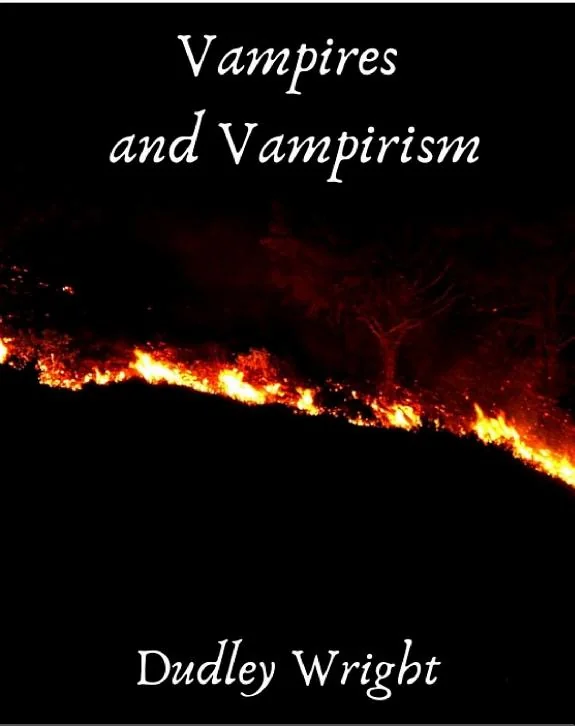
Dudley Wright's 1914 "Vampires and Vampirism" examines folklore and historical accounts of blood-drinking entities.
Dudley Wright's "Vampires and Vampirism" surveys folklore and historical accounts of vampiric entities. The book traces the origins of these legends across cultures, moving beyond sensationalism to analyze the societal fears and beliefs that fueled these myths. Wright applies a scholarly approach, grounding his analysis in historical records, theological discussions, and anthropological observations, treating the subject as more than mere fiction.
The text follows the concept of revenants and blood-drinkers through centuries of belief. It highlights early Christian doctrines, such as those from the Greek Church, which suggested that excommunicated individuals' bodies might not decay, allowing spirits to feed on the living. This perspective is key to understanding pre-modern anxieties and theological frameworks that shaped early vampiric lore, long before later literary interpretations.
Wright considers 'vampirism' not only as a supernatural affliction but as a label for individuals or beings thought to drain vital force. The book investigates historical cases, methods for confronting such beings, and the theological justifications or condemnations associated with these beliefs. It also addresses the idea of bodily non-corruption as a sign of vampirism and its societal implications.
This work situates itself within the study of occult history and comparative religion, examining how beliefs in vampirism intersect with broader spiritual and psychological phenomena. It looks at how ancient fears of the dead returning to prey on the living were codified within religious doctrines and societal anxieties. The book connects these historical beliefs to a persistent undercurrent in human thought regarding the nature of life, death, and the forces that might subsist between them, predating modern occult revivals but informing later esoteric interpretations.
💡 Why Read This Book?
• Gain insight into the theological underpinnings of early vampiric beliefs, such as the Greek Church's doctrines on excommunication and bodily non-corruption, which predated modern literary portrayals. • Understand the historical context of vampirism as a cultural phenomenon, examining societal fears and anxieties that contributed to the development of these legends across different eras. • Explore specific historical accounts and folkloric traditions that Wright details, providing concrete examples of how vampirism was understood and dealt with in pre-modern societies.
⭐ Reader Reviews
Honest opinions from readers who have explored this book.
❓ Frequently Asked Questions
What historical period does Dudley Wright's "Vampires and Vampirism" primarily focus on?
The book primarily focuses on historical accounts and folklore from periods predating the 20th century, examining early Christian doctrines and medieval beliefs regarding vampirism.
Does the book discuss the literary vampires of Bram Stoker?
While the book covers the historical and folkloric roots of vampirism, its primary focus is on older traditions, with later literary interpretations serving more as a cultural echo than a central theme.
What role does religion play in the historical accounts of vampirism presented in the book?
Religion, particularly early Christian theology and ecclesiastical rulings like those of the Greek Church, plays a significant role, explaining beliefs about uncorrupted bodies and the spiritual state of the deceased.
Are there specific geographical regions mentioned in relation to vampire folklore?
Yes, the book references various regions, including those influenced by the Greek Church, and discusses the prevalence of vampiric beliefs in Eastern Europe and other areas with distinct folkloric traditions.
Is "Vampires and Vampirism" a collection of fictional stories or a historical study?
The book is presented as a historical and folkloric study, examining real historical accounts, theological discussions, and cultural beliefs surrounding vampirism, rather than a collection of fictional narratives.
What is the significance of excommunication in the context of vampirism according to the book?
According to early teachings discussed in the book, the Greek Church believed that bodies of excommunicated individuals might not decompose until absolution was pronounced, suggesting a spiritual unrest linked to vampirism.
🔮 Key Themes & Symbolism
Theological Roots of Vampirism
Wright meticulously details how early religious doctrines, particularly within the Greek Church, contributed to the understanding of vampirism. The concept of non-decomposition of excommunicated bodies is presented not as mere superstition, but as a theological position that linked physical preservation with spiritual disturbance, suggesting the spirit of the deceased might roam and seek sustenance. This connection between ecclesiastical law, post-mortem states, and the vampiric entity forms a core pillar of the book's historical analysis.
Folklore and Societal Anxiety
The work maps the evolution of vampiric folklore across various cultures, demonstrating how these legends served as expressions of deeper societal anxieties. From fears of contagion and death to concerns about social order and the unknown, the vampire archetype reflects persistent human unease. Wright examines how accusations of vampirism often arose during times of plague or social upheaval, highlighting the role of folklore in processing collective fears.
Historical Accounts and Evidence
Beyond myth, "Vampires and Vampirism" compiles historical reports and testimonies concerning alleged vampiric activity. It presents accounts of exhumations, sightings, and societal responses to suspected vampires, drawing from local chronicles and testimonies. While presenting these narratives, Wright implicitly invites readers to consider the evidentiary basis and the socio-cultural context in which such events were reported and interpreted.
The Vampire as a Vital Force Drainer
The book explores the concept of vampirism as a form of vital force or life-energy extraction, extending beyond mere blood-drinking. This interpretation acknowledges a broader, more esoteric understanding of how such entities were believed to sustain themselves. It touches upon the idea of spiritual or energetic vampirism, a concept that speaks to various occult traditions concerning the depletion of life force.
💬 Memorable Quotes
Direct passages from the work, attributed to the author.
“The Greek Church at one time taught that the bodies of persons upon whom the ban of excommunication had been passed did not undergo decomposition after death until such sentence had been revoked by the pronouncement of absolution over the remains.”
— This statement highlights a specific theological belief that directly links spiritual status (excommunication) to physical post-mortem integrity, positing a connection to the vampiric phenomenon.
“The non-corruption of a body, however, was also held to be one of the proofs of a vampire.”
— This offers a direct evidentiary link within historical belief systems: the state of the corpse itself served as a primary indicator that the deceased might be a revenant or vampire.
“Interpretation: The book posits that historical accounts of vampires often arose during periods of plague or widespread illness.”
— This interpretation suggests a correlation between outbreaks of disease and the emergence of vampiric folklore, implying that such legends may have served to explain or cope with societal crises.
💡 Key Ideas
Editorial paraphrase of the work's core concepts — not direct quotes.
Interpretation: Early accounts of vampirism frequently involved accusations against individuals whose bodies failed to decompose after death.
This paraphrase emphasizes a recurring motif in historical vampire lore: the physical state of the deceased's body being a critical factor in identifying a suspected vampire.
Interpretation: The concept of a vampire was intertwined with theological notions concerning the spiritual state and post-mortem existence of individuals.
This paraphrased concept underscores the deeply religious and philosophical context surrounding historical vampire beliefs, rather than viewing them as purely superstitious tales.
🌙 Esoteric Significance
Tradition
While not strictly adhering to a single esoteric lineage, Wright's work taps into the broader currents of Western esotericism concerned with life force, the nature of the soul, and post-mortem existence. It intersects with folkloric traditions that have been reinterpreted by occultists seeking to understand energetic vampirism and the manipulation of vital energies. The book provides source material for those exploring the historical roots of concepts discussed in Theosophy or later occult revival movements.
Symbolism
The primary symbol explored is the 'uncorrupted body,' representing a state of unnatural preservation that signifies spiritual unrest or vampiric existence. Another motif is the 'drainage of vital force,' symbolizing the parasitic relationship between the living and the undead, reflecting a primal fear of energetic depletion. The act of 'blood-drinking' itself symbolizes the ultimate transgression against life and the violation of natural laws governing existence.
Modern Relevance
Contemporary practitioners of energy work, shadow work, and those exploring psychological archetypes of the predator and prey find resonance in Wright's historical catalog. Modern occultists and scholars of comparative mythology use this work to trace the lineage of concepts related to psychic vampirism and the energetic dynamics within spiritual traditions. It informs discussions on the shadow self and the primal fears that continue to manifest in modern spiritual and psychological discourse.
👥 Who Should Read This Book
• Folklore enthusiasts and comparative religion scholars seeking to understand the historical and theological roots of vampiric legends beyond modern fiction. • Occult history researchers interested in pre-modern beliefs about death, the afterlife, and entities that defy natural decomposition. • Students of esoteric traditions looking for source material on the historical concept of life force, its potential depletion, and the cultural manifestations of such fears.
📜 Historical Context
Dudley Wright's "Vampires and Vampirism" was first published in 2022, but it explores historical traditions that predate modern literary interpretations by centuries. The work engages with a period where religious doctrine, folklore, and nascent scientific inquiry intersected, particularly concerning death and the afterlife. Early modern Europe, especially regions influenced by the Orthodox Church, grappled with phenomena later categorized as vampirism. The book touches upon the theological debates within the Greek Church regarding excommunication and its effect on the body, a concept that predates and informs later, more secularized vampire myths. This era saw a strong undercurrent of belief in revenants and other undead entities, often fueled by misinterpretations of decomposition or the lingering effects of disease like plague. Wright's work situates these beliefs within a broader context of anthropological and historical inquiry, contrasting with the more romanticized portrayals that emerged later in literature, notably with authors like Bram Stoker in the late 19th century.
📔 Journal Prompts
The Greek Church's doctrine on excommunication and decomposition: explore its symbolic implications.
Vampirism as societal anxiety: identify a modern parallel for collective fears.
The uncorrupted body as proof: reflect on the power of physical evidence in belief systems.
Vital force drainage: consider personal experiences with energetic depletion.
Historical accounts of vampirism: analyze their construction and purpose.
🗂️ Glossary
Revenant
A figure in folklore believed to return from the dead, often to haunt or harm the living. This term broadly encompasses various undead entities, including vampires.
Excommunication
The formal exclusion of a person from the sacraments and services of a church, particularly the Christian Church. In historical contexts, it carried significant social and spiritual weight.
Absolution
The formal remission of sin by a priest or religious authority. In the context of the Greek Church's beliefs, it was crucial for the spiritual repose of the deceased.
Non-corruption
The state of a dead body that does not undergo decomposition. In historical vampiric lore, this was often seen as a sign that the deceased was not truly at rest.
Vital Force
An animating principle or energy believed to be inherent in living beings. Some traditions suggest this force can be drained or consumed by other entities.
Folklore
The traditional beliefs, customs, and stories of a community, passed through the generations by word of mouth. It often reflects societal values and fears.
Esoteric
Intended for or likely to be understood by only a small number of people with a specialized knowledge or interest. Pertaining to hidden or secret knowledge.
This book appears in 1 collection
🔮 Readers Also Liked
Browse all →









From the “Vampirism” Collection
View all →




More Free Occult Philosophy Books
View all →