Bhāmatī and Vivaraṇa Schools of Advaita Vedānta
 74
74

Bhāmatī and Vivaraṇa Schools of Advaita Vedānta
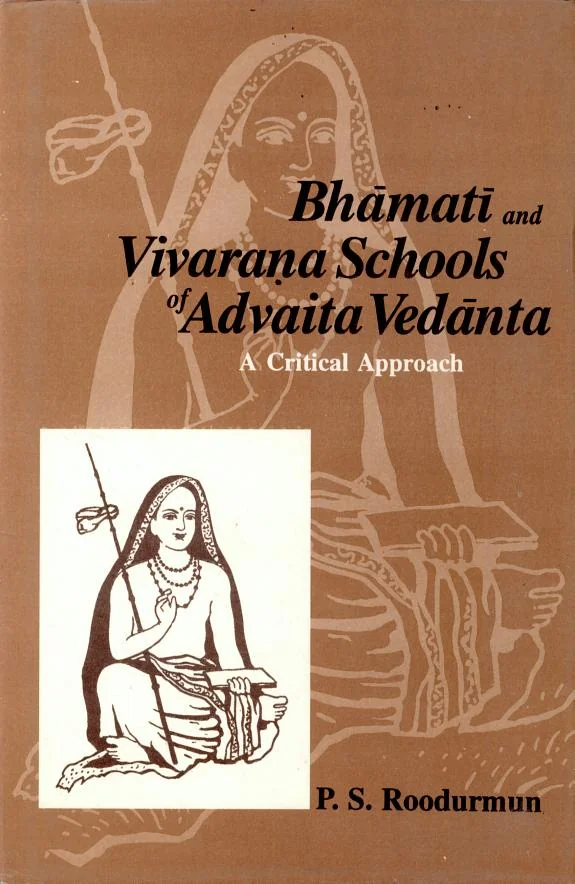
Pulasth Soobah Roodurmum's "Bhāmatī and Vivaraṇa Schools of Advaita Vedānta" is a rigorous academic examination, eschewing accessible summaries for direct engagement with textual exegesis. Its strength lies in the meticulous comparison of Vācaspati Miśra's Bhāmatī and Sureśvara's Vivaraṇa, illuminating subtle but crucial differences in their explanations of Brahman realization. The author's discussion of the locus of ignorance (adhishthana) is particularly sharp, demonstrating how these schools diverge on the fundamental substrate of cosmic illusion. However, the density of Sanskrit terminology and the reliance on specialized philosophical arguments may present a steep learning curve for those not already immersed in Vedāntic scholarship. While the historical survey offers context, it is the deep dive into interpretative differences that defines the book's contribution. It serves as an indispensable resource for specialists, offering a granular understanding of a pivotal debate within Indian metaphysics.
📝 Description
74
Pulasth Soobah Roodurmum's 2002 work analyzes the Bhāmatī and Vivaraṇa schools of Advaita Vedānta.
This 2002 scholarly work by Pulasth Soobah Roodurmum provides a comparative study of the Bhāmatī and Vivaraṇa schools within Advaita Vedānta. It examines the philosophical agreements and disagreements between these two significant interpretations of Adi Shankara's philosophy. The analysis draws on original Sanskrit texts to clarify fundamental non-dualistic concepts.
The book is suited for advanced students and scholars of Indian philosophy, particularly those focused on Vedānta. Practicing Advaitins interested in a critical look at historical interpretations will also find it valuable. A prior grasp of Indian philosophical ideas is beneficial for full comprehension.
Roodurmum places Advaita Vedānta within its historical development, from Vedic times to contemporary views. It highlights how these schools emerged as distinct approaches to interpreting Shankara's teachings. This historical context helps in understanding the philosophical differences.
Advaita Vedānta, the non dualistic school of Hindu philosophy, seeks to understand the unity of the individual soul (Atman) with the ultimate reality (Brahman). The Bhāmatī and Vivaraṇa traditions represent two major lineages of commentary on Adi Shankara's foundational texts. They developed distinct methods and interpretations concerning the nature of reality, illusion, and the path to liberation, shaping centuries of philosophical discourse.
💡 Why Read This Book?
• Gain a precise understanding of the distinctions between the Bhāmatī and Vivaraṇa schools, as presented through Roodurmum's analysis of their scriptural commentaries, allowing for a nuanced grasp of Adi Shankara's legacy. • Explore the foundational concepts of Advaita Vedānta, such as the nature of Maya and the substrate of ignorance (adhishthana), as debated and interpreted by these two major traditions since the medieval period. • Appreciate the historical development of Advaitic thought from the Vedas to modern times, contextualizing the intellectual milieu that fostered the Bhāmatī and Vivaraṇa interpretations.
⭐ Reader Reviews
Honest opinions from readers who have explored this book.
❓ Frequently Asked Questions
What is the primary difference between the Bhāmatī and Vivaraṇa schools of Advaita Vedānta?
The primary difference lies in their interpretation of the locus of ignorance (adhishthana) and the process of liberation. The Bhāmatī school, associated with Vācaspati Miśra, views the individual self as the locus, while the Vivaraṇa school, stemming from Sureśvara's work, posits Brahman itself as the substrate of ignorance.
Who were the key figures associated with the Bhāmatī and Vivaraṇa schools?
The Bhāmatī school is primarily associated with Vācaspati Miśra, who wrote the commentary 'Bhāmatī'. The Vivaraṇa school's lineage is often traced through Sureśvara, a direct disciple of Adi Shankara, and further developed by writers like Padmapāda and Prakāśātman.
When was Pulasth Soobah Roodurmum's book first published?
The book 'Bhāmatī and Vivaraṇa Schools of Advaita Vedānta' by Pulasth Soobah Roodurmum was first published on January 1, 2002.
Does this book cover the basic concepts of Advaita Vedānta?
Yes, the book discusses basic concepts of Advaita Vedānta, including Brahman, Atman, Maya, and Avidya, but focuses on how the Bhāmatī and Vivaraṇa schools interpret these concepts differently.
What is the historical scope of the book's survey of Advaitic thought?
The book surveys the historical development of Advaitic thought starting from the Vedas and extending through to the modern period, providing context for the emergence of the Bhāmatī and Vivaraṇa schools.
Is this book suitable for beginners in Advaita Vedānta?
While it discusses fundamental concepts, the book's critical analysis and reliance on original texts make it more suitable for advanced students and scholars of Indian philosophy rather than absolute beginners.
🔮 Key Themes & Symbolism
The Locus of Ignorance
A central theme is the differing views on the 'adhishthana' or substrate of avidya (ignorance). The Bhāmatī school, often interpreted as placing ignorance on the empirical self, contrasts with the Vivaraṇa school, which posits Brahman itself as the locus. This distinction profoundly impacts their understanding of reality, illusion, and the path to liberation, highlighting a core interpretive divergence within Shankara's non-dualism.
Exegetical Methodologies
The work scrutinizes the distinct approaches to interpreting Shankara's foundational texts, particularly the Brahma Sutra Bhashya. It examines how Vācaspati Miśra and the Vivaraṇa tradition employ different hermeneutical strategies, word meanings (shabda-bodha), and logical reasoning to establish their philosophical positions, revealing the evolution of Vedāntic scholarship.
The Nature of Maya
The book studies how the Bhāmatī and Vivaraṇa schools conceptualize Maya, the power that conceals reality and projects the phenomenal world. Their differing views on Maya's status—whether it is beginningless, its relation to Brahman, and its effects—are explored, offering insights into the ontology of illusion in Advaita Vedānta.
Path to Liberation (Moksha)
The comparative analysis extends to the means and nature of Moksha. The text examines how each school understands the role of jnana (knowledge) in overcoming ignorance and achieving liberation, and whether this liberation is a transformation of the existing state or a realization of one's already-existing true nature.
💬 Memorable Quotes
Direct passages from the work, attributed to the author.
“The Bhāmatī and Vivaraṇa schools offer divergent interpretations of Adi Shankara's philosophy.”
— This captures the book's core objective: to highlight and analyze the fundamental disagreements between these two major exegetical traditions that emerged to explain Shankara's non-dualistic Vedanta.
“The locus of avidya is a critical point of contention.”
— This refers to the debate about where ignorance resides—whether it is rooted in the Absolute Brahman or in the individual empirical self, a key philosophical divergence explored in detail.
“Understanding the historical development from the Vedas is essential.”
— The author emphasizes that appreciating the later philosophical schools requires tracing their lineage and conceptual evolution back to the earliest scriptural sources of Indian thought.
“Comparative analysis reveals subtle yet significant philosophical differences.”
— This highlights the book's methodology, showing that direct comparison of the Bhāmatī and Vivaraṇa views uncovers nuanced distinctions that shape their respective metaphysical frameworks.
“Original texts form the bedrock of this study.”
— The author grounds the entire comparative analysis in the primary Sanskrit sources, asserting the necessity of engaging directly with the foundational commentaries to accurately represent these philosophical schools.
🌙 Esoteric Significance
Tradition
This work engages deeply with the Advaita Vedānta tradition, a core part of Indian philosophical and spiritual thought, which posits a non-dual reality (Brahman) underlying all existence. While Advaita is often studied academically, its core tenets concerning liberation (Moksha) and the illusory nature of the perceived world hold profound esoteric implications for practitioners seeking self-realization and transcendence.
Symbolism
Key symbolic concepts include 'Brahman' representing the ultimate, undifferentiated consciousness; 'Atman' as the individual soul's identity with Brahman; and 'Maya,' the cosmic illusion that veils this unity. The text explores how the Bhāmatī and Vivaraṇa schools interpret these symbols, particularly Maya's role in creating the phenomenal universe and the spiritual significance of realizing the Atman's non-duality with Brahman.
Modern Relevance
Contemporary spiritual seekers and scholars continue to draw upon Advaita Vedānta, including the sophisticated analyses offered by the Bhāmatī and Vivaraṇa traditions. Modern interpreters and teachers often synthesize elements from these schools to articulate non-dual principles for contemporary audiences, influencing various schools of mindfulness, consciousness studies, and comparative mysticism.
👥 Who Should Read This Book
["• Advanced students of Indian philosophy: Those pursuing graduate studies or independent research in Vedānta will find a detailed textual analysis that deepens their understanding of Shankara's commentators.", '• Comparative religion scholars: Researchers interested in the development of monistic and non-dualistic thought across different religious traditions will benefit from this focused study.', '• Dedicated Advaita practitioners: Individuals committed to the practice and study of Advaita Vedānta seeking a critical, scholarly perspective on its major interpretive schools will gain valuable insights.']
📜 Historical Context
Published in 2002, Roodurmum's work entered an academic landscape where Advaita Vedānta scholarship was well-established, yet the specific nuances of the Bhāmatī and Vivaraṇa traditions often remained points of specialized study. This book emerged during a period of continued engagement with classical Indian philosophy in Western universities, following the foundational work of scholars like Surendranath Dasgupta and Radhakrishnan. It specifically addresses the intellectual lineage stemming from Adi Shankara, whose commentaries on the Upanishads, Brahma Sutras, and Bhagavad Gita laid the groundwork for centuries of debate. The Bhāmatī, by Vācaspati Miśra (c. 9th century CE), and the Vivaraṇa, initiated by Padmapāda (c. 8th-9th century CE) and elaborated by Prakāśātman (c. 10th century CE), represent two major, sometimes opposing, streams of commentary. Roodurmum's work provides a critical comparison, situating these schools against the backdrop of earlier Vedāntic developments and their ongoing influence.
📔 Journal Prompts
The divergence in understanding the locus of avidya between the Bhāmatī and Vivaraṇa schools.
The historical trajectory of Advaitic thought from the Vedas to the medieval period.
The specific hermeneutical strategies employed by Vācaspati Miśra.
The concept of Maya as presented within the Vivaraṇa tradition.
The ultimate goal of Moksha as conceptualized by both schools.
🗂️ Glossary
Advaita Vedānta
A school of Hindu philosophy asserting that Brahman (the ultimate reality) is the only reality, and the world perceived through the senses is illusory (Maya).
Brahman
The supreme, unchanging, infinite, impersonal spirit that is the source and sustainer of all existence in Hindu philosophy.
Atman
The individual soul or self, which Advaita Vedānta teaches is identical with Brahman.
Maya
Cosmic illusion or the power that conceals the true nature of reality and projects the phenomenal world as distinct from Brahman.
Avidya
Ignorance; the primal ignorance that obscures the true nature of reality and binds the individual soul to the cycle of birth and death.
Bhāmatī School
A major interpretive tradition of Advaita Vedānta, named after Vācaspati Miśra's commentary, known for its specific views on the locus of ignorance and the nature of liberation.
Vivaraṇa School
Another major interpretive tradition of Advaita Vedānta, stemming from Sureśvara and Padmapāda, characterized by its distinct approach to scriptural exegesis and metaphysical concepts like Maya.
This book appears in 1 collection
🔮 Readers Also Liked
Browse all →








From the “Vedanta” Collection
View all →





More Free Occult Philosophy Books
View all →