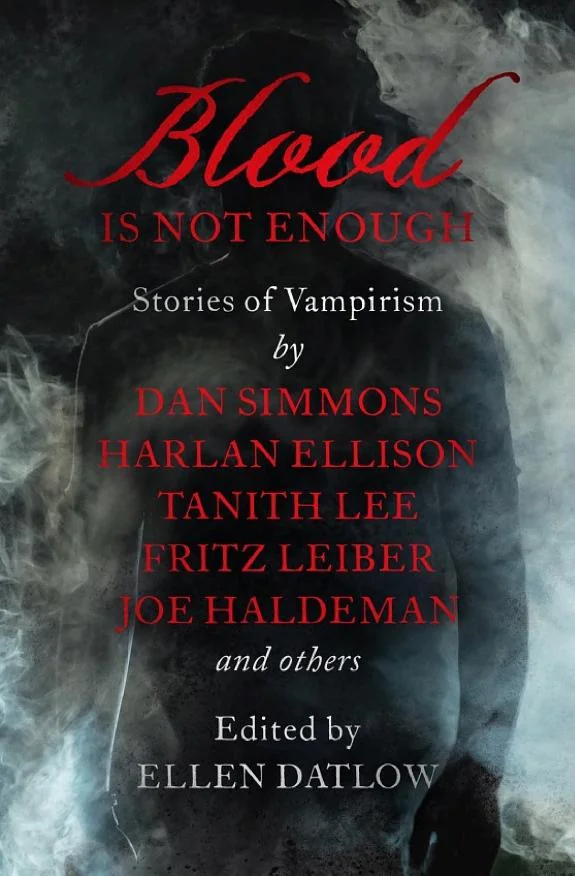
Blood Is Not Enough
 75
75

Blood Is Not Enough
Ellen Datlow's curation in *Blood Is Not Enough* offers a compelling survey of the vampire as a literary construct, showcasing its adaptability across genres. The strength lies in the sheer variety; one moment you're in a classic chilling scenario, the next you're encountering a vampire as a figure of dark romance or societal commentary. Simmons' own contribution, while fitting, feels somewhat conventional against the more experimental pieces. A particular standout is the reimagining of vampiric existence not just as a curse, but as a complex form of being, a departure from the simple monster trope. While the anthology successfully traces the genre's evolution, some stories feel more like historical markers than essential readings for today's reader. Still, for anyone seeking a deep dive into the literary vampire, this collection is a valuable, if occasionally uneven, exploration.
📝 Description
75
Seventeen vampire tales, from Gothic chills to postmodern twists, fill this 1990 anthology.
Blood Is Not Enough gathers seventeen vampire stories curated by Ellen Datlow. The selection moves beyond the familiar Gothic horror of Dracula to include postmodern satire, eroticism, and psychological depth. It features a range of authors who offer diverse views on the undead figure.
The anthology will appeal to readers interested in how vampire literature has evolved and its wide thematic range. Those who enjoy literary horror, dark fantasy, and stories that explore the inner lives of monstrous characters will find much to appreciate. Readers familiar with Harlan Ellison, Tanith Lee, and Fritz Leiber will recognize some voices, while encountering new takes on the genre.
The stories reflect the development of vampire narratives since Bram Stoker's Dracula, showing how the archetype has been adapted across different literary periods. This mirrors changes in societal anxieties and literary styles.
This collection places vampirism within a tradition of supernatural fiction that uses the undead figure to examine human desires, societal fears, and the nature of immortality. It traces the archetype's transformation from a figure of pure horror into a symbol for isolation, forbidden love, and the existential burdens of eternal life, reflecting broader shifts in occult and dark fantasy literature.
💡 Why Read This Book?
• Gain an understanding of the vampire archetype's evolution since Bram Stoker's *Dracula* (1897), exploring how its portrayal shifted from Gothic horror to postmodern satire. • Experience seventeen distinct narrative approaches to vampirism, from authors like Dan Simmons and Tanith Lee, revealing the breadth of its literary application. • Analyze the vampire as a symbolic figure representing complex themes of desire, immortality, and societal alienation, as presented through varied character interiors.
⭐ Reader Reviews
Honest opinions from readers who have explored this book.
❓ Frequently Asked Questions
What is the primary focus of the vampire stories in Blood Is Not Enough?
The anthology focuses on the evolution and diverse interpretations of the vampire archetype, moving from classic Gothic horror to contemporary, psychological, and satirical takes, exploring their inner lives.
Which notable authors are featured in Ellen Datlow's Blood Is Not Enough?
The collection features stories by Harlan Ellison, Dan Simmons, Gahan Wilson, Tanith Lee, Fritz Leiber, and others, showcasing a range of established voices in speculative fiction.
How does Blood Is Not Enough represent the historical development of vampire literature?
It illustrates the progression of vampire narratives from early influences like Bram Stoker's *Dracula* through to more modern, postmodern, and erotic variations, reflecting shifts in literary style and thematic concerns.
Are the stories in this collection purely horror, or do they explore other themes?
The stories explore a wide array of themes beyond pure horror, including eroticism, satire, psychological depth, and philosophical considerations of immortality and alienation.
What makes this collection unique compared to other vampire anthologies?
Its strength lies in Ellen Datlow's curated selection, deliberately charting the genre's historical arc and thematic expansion, offering a comprehensive look at the vampire's literary journey.
Besides Dan Simmons, are there other famous horror or fantasy authors included?
Yes, the anthology includes renowned authors such as Harlan Ellison, Tanith Lee, and Fritz Leiber, alongside Gahan Wilson, contributing to its literary weight.
🔮 Key Themes & Symbolism
The Evolving Vampire
This anthology charts the transformation of the vampire figure from its Gothic roots, exemplified by Bram Stoker's *Dracula* (1897), into a more complex, many-sided entity. The stories showcase how authors have adapted the archetype to reflect contemporary anxieties and literary trends, moving beyond simple horror to explore psychological depths, societal critiques, and even erotic dimensions. This evolution demonstrates the enduring adaptability of the vampire mythos in literature.
Inner Lives of the Undead
A significant focus is placed on exploring the internal experiences of vampires. Rather than portraying them solely as predatory monsters, many stories examine their motivations, desires, existential burdens, and the nature of their prolonged existence. This approach humanizes the inhuman, prompting reflection on themes of isolation, longing, and the psychological impact of immortality.
Vampirism as Metaphor
The collection utilizes vampirism as a potent metaphor for various societal and personal issues. It can represent predatory capitalism, parasitic relationships, forbidden desires, or the alienation experienced by outsiders. By examining these symbolic applications, the anthology highlights how the vampire narrative transcends genre to offer commentary on the human condition and societal structures.
Literary Lineage and Satire
The anthology implicitly and explicitly engages with the literary history of vampire fiction. It juxtaposes classical interpretations with postmodern deconstructions and satire, showing how authors both honor and subvert established tropes. This dialogue with literary predecessors, from Stoker to Rice, underscores the genre's ongoing conversation with itself and its cultural context.
💬 Memorable Quotes
Direct passages from the work, attributed to the author.
“These stories reflect the evolution of vampire literature from Bram Stoker to Anne Rice and beyond.”
— This statement from the original blurb positions the collection within a historical literary context. It suggests that the anthology serves as a survey, illustrating how the vampire myth has been reinterpreted and expanded upon by subsequent generations of writers.
“Resulting in a deeper exploration of their inner lives.”
— This phrase points to a key editorial goal: to move beyond superficial portrayals of vampires. It suggests that the selected stories offer psychological depth, examining the consciousness and motivations of these supernatural beings.
“An excellent collection of vampire stories.”
— A concise endorsement, likely from a review, that speaks to the quality and thematic focus of the anthology. It signals that the curated selection is well-regarded and offers a strong representation of the genre.
“Expanding the concept of vampirism.”
— This indicates that the anthology does not merely retread familiar ground. It aims to push the boundaries of what a vampire story can be, incorporating innovative ideas and perspectives that broaden the reader's understanding of the myth.
💡 Key Ideas
Editorial paraphrase of the work's core concepts — not direct quotes.
Seventeen variations on vampirism ranging from classically Gothic to postmodern satire.
This quote, originating from the Publishers Weekly review, accurately summarizes the anthology's scope. It highlights the editorial intent to present a broad spectrum of vampire narratives, indicating a deliberate move beyond a single stylistic or thematic approach.
🌙 Esoteric Significance
Tradition
While not explicitly aligned with a singular esoteric tradition like Hermeticism or Kabbalah, *Blood Is Not Enough* engages with themes that resonate within occult studies. The vampire, as a being that subsists on life force, touches upon concepts of energy exchange, immortality, and the shadow self, which are explored across various mystical philosophies. Its exploration of the 'other' and the boundaries of existence can be seen as a symbolic engagement with Gnostic ideas of alienness and transcendence.
Symbolism
The vampire in this collection functions as a potent symbol. Its nocturnal nature and aversion to sunlight can represent the hidden, the unconscious, or forces operating outside conventional morality and societal norms. The act of blood-drinking symbolizes a parasitic or symbiotic relationship with life itself, exploring themes of dependency, power dynamics, and the transgression of natural boundaries. Immortality, a common vampire trait, symbolizes the human desire to escape finitude and the potential existential dread that accompanies unending existence.
Modern Relevance
Contemporary thinkers and practitioners in fields like Jungian psychology, exploring the shadow archetype, find echoes in the vampire's dual nature—both monstrous and alluring. Modern occultists interested in energy work and the manipulation of vital forces may also find symbolic resonance in the vampire's sustenance. Furthermore, the anthology’s exploration of the vampire as a figure of alienation and 'otherness' remains relevant in discussions of identity, marginalization, and the construction of societal boundaries.
👥 Who Should Read This Book
• Students of comparative mythology and folklore interested in the evolution of the vampire archetype from its origins in Stoker's *Dracula* (1897) to contemporary interpretations. • Literary horror and dark fantasy enthusiasts seeking diverse narrative voices and thematic explorations beyond traditional Gothic tropes, as seen in works by Harlan Ellison and Tanith Lee. • Readers interested in symbolic literature who wish to examine the vampire as a metaphor for complex human desires, societal critiques, and existential themes like immortality and alienation.
📜 Historical Context
Published in 2019, *Blood Is Not Enough* arrives at a moment when vampire fiction has long since moved past the strictures of Gothic horror. Its roots, however, are firmly planted in the literary soil tilled by authors like Bram Stoker, whose *Dracula* terrified readers in 1897. The anthology acknowledges this lineage, tracing the archetype's evolution through various literary movements. By the mid-20th century, authors like Richard Matheson were already reimagining vampires in more psychological and even science-fictional terms, a trajectory continued by Anne Rice in the late 20th century, who popularized the introspective, romantic vampire. This collection, curated by Ellen Datlow, showcases seventeen distinct responses to this evolving figure, including contributions from masters of speculative fiction such as Harlan Ellison and Tanith Lee. It demonstrates how the vampire has been continually re-contextualized, serving as a lens for exploring everything from societal anxieties to profound existential questions, far removed from its initial spectral manifestations.
📔 Journal Prompts
The nature of the vampire's existence as depicted in the stories.
The symbolic representation of blood-drinking across the anthology.
How authors explore the vampire's 'inner life' beyond monstrous traits.
The shift from Gothic horror to postmodern satire in vampire tales.
Vampirism as a metaphor for societal or personal parasitism.
🗂️ Glossary
Gothic Horror
A literary genre characterized by settings like ancient castles, eerie atmospheres, and supernatural or psychological terror, often exploring themes of decay, madness, and the sublime.
Postmodern Satire
A form of satire that critiques contemporary culture and societal norms using irony, parody, and often deconstructing established literary conventions and genres.
Archetype
A recurring symbol, character, or motif that represents a universal pattern of human nature or experience, often found in mythology and literature.
Vampire Mythos
The collective body of lore, legends, and literary interpretations surrounding the figure of the vampire, encompassing its origins, characteristics, and cultural significance.
Life Force
In esoteric and fictional contexts, the vital energy or animating principle believed to sustain living beings, often depicted as being consumed or transferred.
Existential Dread
A feeling of anxiety or unease arising from the contemplation of fundamental questions about existence, meaning, freedom, and death.
Literary Evolution
The process by which literary genres, styles, and themes change and develop over time, influenced by historical, social, and artistic factors.
This book appears in 1 collection
🔮 Readers Also Liked
Browse all →









From the “Vampirism” Collection
View all →





More Free Occult Philosophy Books
View all →