Christian Thompson
 61
61

Christian Thompson


Sophia Crane (Associate Editor): Charlotte Day's curation of Christian Thompson's oeuvre is a revelation, offering a profound exploration of indigenous identity as a potent spiritual force. Thompson's command over diverse media, from the evocative self-portraits that serve as potent talismans to his sculptural embodiments of ancestral spirits, reveals a sophisticated understanding of symbolic language. This book is an essential text for anyone seeking to grasp the esoteric underpinnings of Australian contemporary art. It speaks to the power of reclaiming narrative and the interconnectedness of all beings, making it an invaluable resource for practitioners and scholars alike.
📝 Description
61
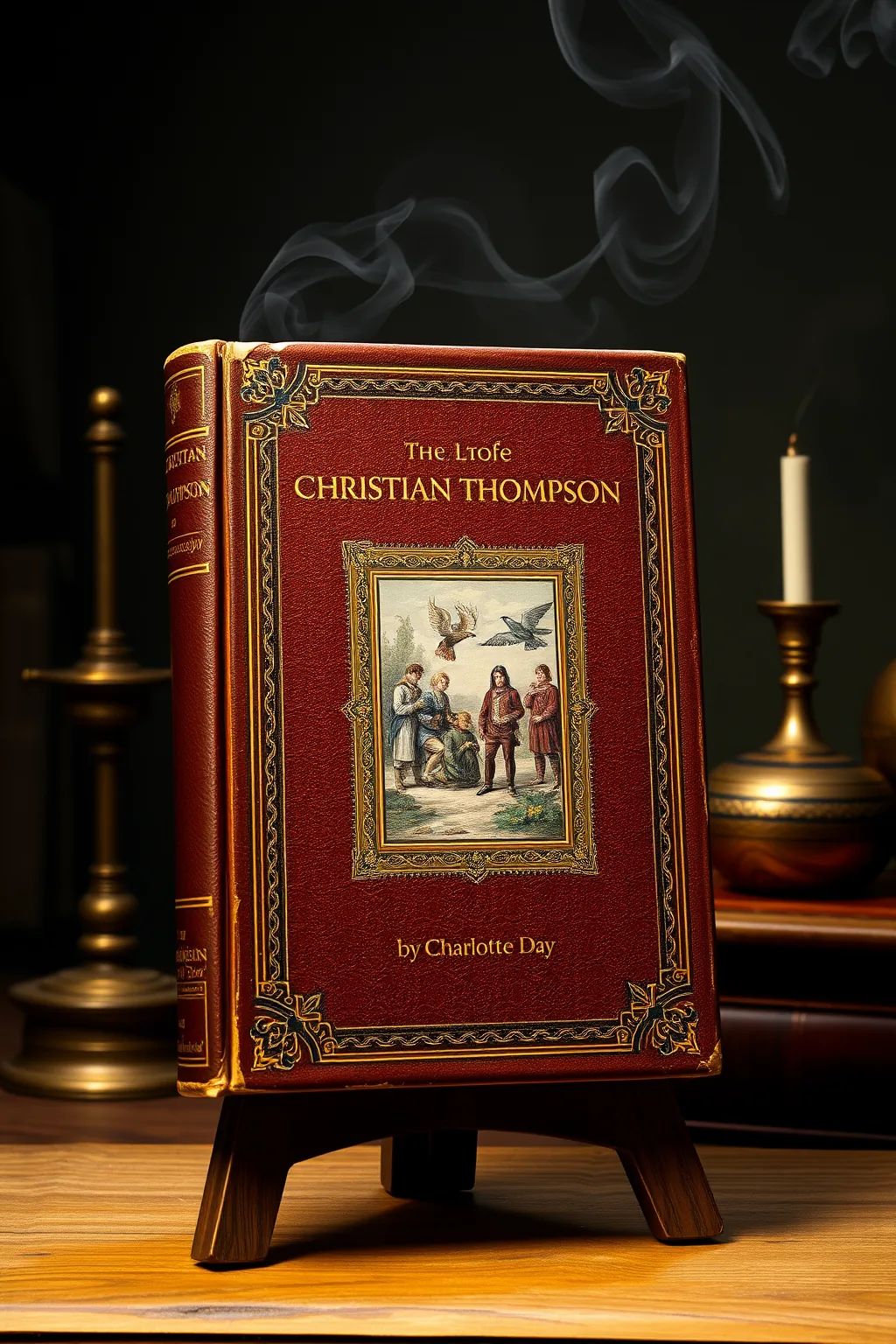
Charlotte Day's 2023 book examines the art of Christian Thompson.
This volume explores the artistic practice of Christian Thompson, a Bidjara artist whose work addresses identity, history, and the impact of Australia's colonial past. Thompson uses photography, video, sculpture, performance, and sound to combine ancestral knowledge with contemporary experiences. The book looks at how his art creates a dialogue between the self and place, and between tradition and modernity.
Each artwork is presented as a symbol intended to enhance the viewer's perception and create a connection to the land's history. The book is for those interested in metaphysical art and offers insight into the spiritual structure of Thompson's work. It encourages a new understanding of existence through a blend of ancient knowledge and modern artistic expression.
The book places Christian Thompson's art within a framework that connects visual representation to deeper spiritual currents. It suggests his works act as symbols that awaken inner perception and foster a visceral connection to the land's layered spirit. This approach aligns with esoteric traditions that seek to understand reality through symbolic language and direct spiritual experience, moving beyond conventional narratives to reveal veiled truths.
💡 Why Read This Book?
Uncover the mystical dimensions of identity and colonial history through the visionary art of Christian Thompson. This book offers a unique lens into Aboriginal Australian spirituality, providing esoteric insights into ancestral connections and the transformative power of artistic expression. Ideal for seekers of hidden knowledge, scholars of occult symbolism, and practitioners of contemporary ritual who wish to deepen their understanding of cross-cultural spiritual dialogues.
⭐ Reader Reviews
Honest opinions from readers who have explored this book.
❓ Frequently Asked Questions
What esoteric traditions does Christian Thompson's work engage with?
Thompson's art deeply resonates with ancient Aboriginal Australian spiritual traditions, emphasizing animism, ancestral connection, and the sacredness of the land. It also touches upon universal esoteric themes of identity transformation and the embodiment of spirit through artistic practice.
How does Thompson use symbolism in his art?
Thompson employs a rich lexicon of symbols, often drawing from both his Bidjara heritage and Western iconography. His self-portraits, in particular, act as potent symbolic representations of cultural collision and personal metamorphosis, inviting viewers to decode layers of meaning.
Is this book suitable for beginners in esoteric studies?
Yes, while it offers profound depth, the accessible nature of the visual art and Day's insightful commentary make it a welcoming entry point for those new to esoteric concepts within an artistic context.
What is the philosophical significance of Thompson's exploration of race and identity?
Thompson's work challenges Western notions of race and identity by asserting the enduring spiritual power and complexity of indigenous worldviews. It encourages a philosophical re-evaluation of selfhood and belonging in a post-colonial landscape.
Can this book be used for personal spiritual reflection or practice?
Absolutely. The evocative imagery and thematic depth provide ample material for contemplation, meditation, and journaling, allowing readers to connect with the book's spiritual resonance on a personal level.
🔮 Key Themes & Symbolism
Ancestral Resonance and Embodied Spirituality
Thompson's practice is a profound invocation of ancestral spirits and the potent energy that flows through the land. He bridges the chasm between the physical and spiritual realms, demonstrating how the past is not merely remembered but actively embodied in the present. His works become conduits, allowing the viewer to feel the pulse of ancient knowledge and the enduring presence of those who came before. This theme explores the interconnectedness of all life, the sacredness of ancestral lines, and the continuous dialogue between the living and the spectral, offering a powerful counter-narrative to materialist philosophies.
The Alchemy of Identity and Cultural Synthesis
Through the alchemical process of artistic creation, Christian Thompson deconstructs and reconstructs notions of identity, particularly within the context of colonial impact and cultural exchange. He uses his own image as a site of exploration, a canvas upon which diverse cultural narratives and personal experiences are layered and synthesized. This theme explores the transformative power of embracing multiplicity, the challenging yet ultimately liberating act of forging a unique self from disparate elements, and the esoteric concept of individuation within a complex global landscape.
Decolonizing the Gaze and Reclaiming Narrative
Thompson's work serves as a potent act of decolonization, challenging the dominant Western gaze and reclaiming the narrative of Aboriginal Australian experience. His art is an assertion of sovereignty, not just political but spiritual and cultural, revealing the profound esoteric wisdom that has been suppressed or misunderstood. This theme examines the power of art as a tool for liberation, the re-enchantment of the world through indigenous perspectives, and the esoteric significance of seeing and being seen authentically, free from the distortions of historical oppression.
💬 Memorable Quotes
Direct passages from the work, attributed to the author.
“My work is about the present, but it is informed by the past.”
— This statement highlights the temporal fluidity in Thompson's art, suggesting that the past is not a static entity but a living force actively shaping contemporary existence and identity.
“I use myself as a vessel to explore these complex ideas.”
— This reveals Thompson's approach to self-portraiture as a spiritual and intellectual practice, where his physical being becomes a symbolic site for investigating broader societal and existential themes.
“The land holds memory.”
— A profound acknowledgement of the earth's sentience and its capacity to retain the traces of history and ancestral presence, aligning with animistic beliefs.
“Culture is not static; it is a living, breathing entity.”
— This emphasizes the dynamic nature of cultural evolution and adaptation, suggesting that traditions are not rigid doctrines but fluid expressions that respond to new influences and contexts.
“To understand identity is to understand connection.”
— A philosophical assertion that true selfhood is found not in isolation but in the intricate web of relationships—with people, history, and the natural world.
🌙 Esoteric Significance
Tradition
Thompson's work is deeply rooted in the ancient and complex spiritual traditions of Aboriginal Australia, particularly those of the Bidjara people. These traditions are inherently holistic, viewing the physical and spiritual realms as inseparable, with the land itself as a living, conscious entity. His practice engages with concepts of ancestral dreaming, the sacredness of lineage, and the interconnectedness of all beings. It speaks to an animistic worldview where spirit permeates all aspects of existence, offering a profound esoteric perspective on creation, identity, and the cyclical nature of time.
Symbolism
The symbolism in Thompson's art is multi-layered and potent, drawing from both indigenous iconography and contemporary visual language. His self-portraits often function as symbolic talismans, adorned with elements that represent cultural heritage, personal transformation, and the collision of worlds. Objects, materials, and the very act of performance become imbued with symbolic meaning, acting as conduits for ancestral knowledge and spiritual energy. He masterfully employs symbols to articulate complex ideas about belonging, displacement, and the ongoing negotiation of identity in a post-colonial context, inviting viewers to decipher these visual prophecies.
Modern Relevance
In an increasingly fragmented and secularized world, Thompson's art offers a vital re-enchantment, reconnecting contemporary audiences with ancient spiritual wisdom and the profound interconnectedness of life. His exploration of identity, race, and colonial history resonates deeply with current global conversations about social justice, cultural reclamation, and the search for authentic selfhood. The esoteric insights embedded within his practice provide a powerful framework for understanding contemporary challenges through the lens of enduring spiritual principles, offering a path towards healing, reconciliation, and a more holistic understanding of existence.
👥 Who Should Read This Book
This volume is a treasure for the dedicated seeker of esoteric knowledge, offering a profound exploration of indigenous spirituality and its manifestation in contemporary art. Scholars of art history, cultural studies, and comparative religion will find invaluable insights into the decolonization of art and the nuanced intersection of identity and ancestral wisdom. For practitioners of spiritual disciplines, Thompson's work provides potent visual meditations and a deeper understanding of symbolic language as a tool for transformation. Beginners venturing into metaphysical concepts will find the accessible yet profound nature of the art and commentary an engaging introduction to cross-cultural spiritual dialogues.
📜 Historical Context
Christian Thompson's artistic journey unfolds against the backdrop of a global shift in understanding indigenous art and its profound cultural and spiritual significance. Emerging in the late 20th and early 21st centuries, his work gained prominence during a period where post-colonial discourse gained momentum, encouraging a critical re-examination of history and representation. This era saw a growing awareness of the artistic contributions of marginalized communities, moving beyond ethnographic curiosities to recognize indigenous art as sophisticated, contemporary, and deeply imbued with complex philosophical and spiritual traditions. Thompson's practice is situated within this evolving landscape, where artists like himself are reclaiming their narratives and challenging established art historical canons, often drawing upon ancient knowledge systems to speak to contemporary audiences about identity, race, and the enduring power of ancestral connection.
📔 Journal Prompts
Reflect on a personal symbol that represents a significant aspect of your identity. How does this symbol connect you to your past or future?
Consider a time when you felt a strong connection to the land. What spiritual or emotional resonance did that experience hold?
How can art act as a form of spiritual resistance or reclamation? Provide examples from Thompson's work or your own observations.
Explore the concept of 'ancestral memory.' What does it mean to you, and how might it influence your present-day actions and beliefs?
In what ways do you see the 'collision of cultures' impacting your own sense of self or community? How can this collision be a source of strength or transformation?
🗂️ Glossary
Bidjara People
An Aboriginal Australian people whose traditional lands are located in southwestern Queensland. Their cultural heritage and spiritual beliefs are central to Christian Thompson's artistic practice.
Animism
The belief that all natural objects, phenomena, and the universe itself possess an indwelling spirit or soul, a concept fundamental to many indigenous spiritual traditions.
Dreaming (or Dreamtime)
A complex spiritual concept in Aboriginal Australian culture referring to the creation period and the ongoing spiritual reality that underpins existence, encompassing ancestral beings, laws, and the sacredness of the land.
Post-colonial Discourse
An academic and critical field that examines the cultural, political, and economic legacies of colonialism, often focusing on issues of power, identity, and representation.
Talismans
Objects believed to possess magical properties, used to ward off evil, bring good luck, or provide spiritual protection. Thompson's self-portraits can be viewed as contemporary talismans.
This book appears in 2 collections
🔮 Readers Also Liked
Browse all →





From the “Ritual Magic” Collection
View all →






More Free Magic & Ritual Books
View all →