John Sinclair 395
 72
72

John Sinclair 395
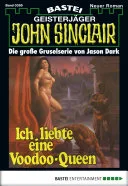
The initial blurb for John Sinclair 395 hints at the visceral, fear-inducing encounters that define the series. The description of a "Voodoo Queen" and a "rock-solid" man radiating menace immediately sets a tone of primal dread. It’s this raw, immediate threat that the series excels at portraying. However, the blurbs can sometimes lean into sensationalism, potentially overshadowing the more intricate plot developments or character nuances that might exist within the narratives. One particularly evocative element is the depiction of figures embodying "all the prejudices one could have against African warriors," which, while potentially exploitative, undeniably creates a stark, unsettling image of the antagonist. The challenge for this collection lies in presenting these classic, perhaps dated, portrayals in a way that acknowledges their historical context while still delivering the intended horror. It succeeds in its primary goal: evoking a sense of foreboding and drawing the reader into Sinclair's dangerous world.
📝 Description
72
John Sinclair 395 gathers tales from the original cult horror series, serialized between 1980 and 1989.
This volume collects stories from the John Sinclair horror series, originally published weekly in West Germany from 1973 through the 1980s. The book puts the adventures of ghostbreaker John Sinclair into a digital format for the first time. The stories follow Sinclair as he confronts supernatural events and forces beyond normal understanding. He pursues ghosts and other entities in dark city settings. The series was a commercial success, drawing on public interest in ghost stories and the paranormal during its run. This collection is for existing fans of the Sinclair saga who want to revisit the stories and for new readers interested in this German horror franchise. It will appeal to those who like supernatural detective fiction and horror that mixes urban environments with paranormal threats. Readers interested in serialized horror and the development of German horror literature will find value here.
John Sinclair 395 focuses on the 'ghostbreaker' concept. These narratives show Sinclair dealing with supernatural cases. The book presents a specific style of gothic horror that combines realistic city settings with otherworldly dangers. The stories often involve Sinclair's direct engagement with paranormal phenomena and his battles against dark powers.
The John Sinclair series emerged from a period of increased public interest in the occult and supernatural in West German popular culture during the late 20th century. The weekly installments tapped into a widespread fascination with ghost stories, horror, and paranormal phenomena. While not strictly an esoteric text in academic terms, its commercial success and sustained readership indicate a cultural resonance with themes of the uncanny and the hidden forces that lie beyond ordinary perception. The series presented these themes within a popular fiction framework, making them accessible to a broad audience interested in the darker, more mysterious aspects of existence.
💡 Why Read This Book?
• Gain insight into the serialized horror phenomenon of late 20th-century West Germany, specifically exploring the narrative techniques used in the original John Sinclair series between 1973 and 1989. • Experience the direct, confrontational style of supernatural investigation pioneered in the series, characterized by its depiction of a "ghostbreaker" facing tangible otherworldly threats. • Understand how the series blended urban realism with occult elements, offering a unique blend of detective fiction and horror that resonated with a large readership during its original run.
⭐ Reader Reviews
Honest opinions from readers who have explored this book.
❓ Frequently Asked Questions
When was the original John Sinclair series first published?
The original John Sinclair series of novels began publication in 1973 and continued throughout the 1980s, with this specific volume, John Sinclair 395, representing stories from that influential era.
What is the main role of John Sinclair in the books?
John Sinclair is a "ghostbreaker" who confronts and neutralizes supernatural entities and occult threats. He operates at the boundary between the mundane and the paranormal.
What kind of horror does John Sinclair 395 represent?
It represents a blend of urban horror and occult detective fiction, featuring direct confrontations with supernatural beings, curses, and demonic forces.
Is John Sinclair 395 suitable for new readers of the series?
Yes, this collection is designed to introduce new readers to the foundational stories of the cult horror series, offering a portal into its established world and characters.
What makes the original John Sinclair series historically significant?
Its massive success as a serialized horror publication in West Germany during the 1970s and 1980s made it a significant cultural phenomenon in popular literature.
Where can I find more information about the John Sinclair series?
Information can be found in collections like John Sinclair 395, dedicated fan forums, and academic analyses of popular German horror literature from the late 20th century.
🔮 Key Themes & Symbolism
The Ghostbreaker's Burden
The narratives frequently explore the psychological and existential weight carried by John Sinclair as a "ghostbreaker." This role places him in constant opposition to malevolent supernatural forces, demanding a resilience that borders on the superhuman. The stories examine the personal cost of such a life, where the boundaries between sanity and madness, life and death, become increasingly blurred. Sinclair's determination to confront these threats, often alone, highlights themes of duty, sacrifice, and the enduring struggle against encroaching darkness in the urban landscape.
Urban Occultism
A central theme is the pervasive presence of the occult within modern, urban environments. The series posits that beneath the veneer of everyday city life lie hidden areas of supernatural activity, ancient curses, and demonic influences. John Sinclair 395 showcases this by depicting Sinclair investigating phenomena in mundane settings that are suddenly transformed into battlegrounds for cosmic forces. This juxtaposition of the ordinary with the extraordinary serves to underscore the idea that the supernatural is not confined to remote locations but can manifest anywhere, at any time.
Confronting Primal Fears
The collection taps into deep-seated human fears, often personified by the antagonists Sinclair encounters. These can range from visceral, physical threats represented by monstrous entities to more insidious psychological manipulation orchestrated by dark sorcerers or demonic beings. The original blurb's mention of a figure embodying "all the prejudices one could have against African warriors" suggests an engagement with archetypal, and potentially problematic, representations of the 'other' as monstrous. The stories aim to evoke a primal sense of dread through these confrontations.
The Veil Between Worlds
A recurring motif is the concept of a thin veil separating the mundane world from the supernatural realm. The stories in John Sinclair 395 illustrate how this veil can be breached, allowing entities and influences from the other side to impact human lives. Sinclair's mission often involves reinforcing or repairing this barrier, preventing a complete descent into chaos. The narrative explores the fragility of reality and the constant, unseen struggle to maintain order against forces that seek to unravel it.
💬 Memorable Quotes
Direct passages from the work, attributed to the author.
“Although the man smiled at me, I felt as if he would speak my death sentence at any moment.”
— This interpretation highlights the deceptive nature of a villain, where outward pleasantries mask deadly intent. It speaks to a chilling psychological tension, where perceived safety is immediately undercut by a palpable aura of mortal danger.
“He embodied all the prejudices one could have against African warriors.”
— This interpretation points to the character's visual and perceived attributes, suggesting they were crafted to evoke stereotypical fears and biases associated with a particular group, creating an immediate sense of otherness and danger.
“I loved a Voodoo Queen.”
— This fragment suggests a narrative arc involving a complex relationship with a powerful, potentially dangerous figure from a Voodoo tradition. It hints at forbidden desires and entanglements with esoteric practices.
💡 Key Ideas
Editorial paraphrase of the work's core concepts — not direct quotes.
He stood on the threshold like a block of stone.
This paraphrased concept captures the imposing and unyielding presence of an antagonist, suggesting immense physical power and an unshakeable, perhaps terrifying, resolve. It evokes a sense of inevitable confrontation.
The man looked frightening, almost naked, clad only in a loincloth.
This paraphrase emphasizes the raw, primitive, and intimidating appearance of a character. The minimal clothing and fearsome demeanor suggest a being operating outside societal norms, embodying a wild, untamed threat.
🌙 Esoteric Significance
Tradition
The John Sinclair series draws loosely from Western esoteric traditions, particularly those concerning demonology, spiritism, and occult detective narratives. While not strictly adhering to a specific lineage like Hermeticism or Theosophy, it incorporates common tropes found in occult literature: spectral entities, curses, demonic pacts, and the battle between good and evil forces. The concept of a "ghostbreaker" can be seen as a secularized, action-oriented manifestation of an exorcist or spiritual warrior, operating with a practical, often violent, approach to supernatural disturbances.
Symbolism
Key symbols often include the pervasive darkness of urban nights, representing the hidden and unknown, and the spectral figures (ghosts, demons) that embody primal fears and unresolved earthly ties. The "Voodoo Queen" mentioned in the blurb likely invokes imagery of shamanic power, ritualistic magic, and potentially darker, more primal spiritual forces often associated with Afro-Caribbean traditions in Western occult imaginaries. Sinclair's own tools and investigative methods, though often mundane, become symbols of human reason and determination pitted against the chaos of the supernatural.
Modern Relevance
Contemporary urban fantasy and supernatural thriller genres owe a debt to the kind of serialized, action-oriented occult investigations pioneered by series like John Sinclair. While explicit adherents might be few, the narrative structure—a capable protagonist battling supernatural threats in everyday settings—is a blueprint for much modern genre fiction. Thinkers or practitioners interested in the popular reception and secularization of occult themes in 20th-century mass media find value in analyzing Sinclair's enduring appeal and how it reflects societal anxieties and fascinations with the paranormal.
👥 Who Should Read This Book
['• Long-time fans of the John Sinclair series seeking to access classic storylines in a modern digital format.', '• Readers of occult detective fiction and supernatural thrillers interested in foundational works of the genre from the late 20th century.', '• Enthusiasts of German popular culture and horror literature looking to explore a historically significant serialized fiction phenomenon.']
📜 Historical Context
The original John Sinclair series emerged in West Germany during a period of significant public appetite for supernatural and occult themes in popular culture. Launched in 1973 by Bastei Verlag, the weekly pulp novels quickly became a sensation, selling millions of copies and solidifying their place in German literary history. This era, the 1970s and 1980s, saw a general rise in gothic horror and paranormal investigation narratives across media. While authors like Stephen King were gaining international traction, the German market developed its own distinct flavor of horror serials. John Sinclair, with its blend of police procedural elements and explicit supernatural confrontations, tapped into this vein effectively. The series' longevity and continued popularity, evidenced by this 2015 digital re-release, underscore its impact. Notably, it competed with other popular German horror series like Geisterjäger John Sinclair (different character, similar theme) and shared the market's fascination with the paranormal that also fueled interest in figures like psychic Uri Geller.
📔 Journal Prompts
The Voodoo Queen's presence and the protagonist's reaction.
Sinclair's methods for confronting supernatural threats.
Interpreting the "frightening" appearance of the warrior figure.
The contrast between smiling menace and perceived danger.
Reflecting on the urban landscape as a site for occult encounters.
🗂️ Glossary
Ghostbreaker
An individual, like John Sinclair, whose profession or calling involves confronting, neutralizing, or banishing supernatural entities and phenomena. It implies an active, often combative, role against the paranormal.
Voodoo Queen
A term often used in fiction to describe a powerful female practitioner of Voodoo or similar Afro-Caribbean spiritual traditions, typically associated with significant magical abilities and influence.
Occult
Relating to supernatural, mystical, or magical powers, practices, or phenomena. In the context of the series, it refers to forces and beings beyond scientific understanding.
Lendenschurz
A loincloth, a minimal garment covering the genitals and buttocks, often associated with primitive or ancient cultures, or figures depicted in a state of raw, untamed nature.
Supernatural
Attributed to forces or events beyond the scientific explanation of the natural world, encompassing ghosts, demons, magic, and other paranormal occurrences.
Serial
A work, typically a book or story, published in installments over a period of time. The original John Sinclair novels were released weekly.
Cult Series
A work that has achieved significant popularity and devoted following, often outside mainstream recognition, characterized by passionate fans and enduring appeal.