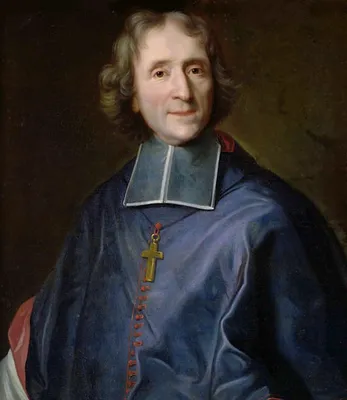
Robert François
François Fénelon was a French archbishop and writer, best known for 'The Adventures of Telemachus,' which subtly critiqued absolute monarchy.
François Fénelon, born in 1651, was a prominent French Catholic archbishop, theologian, poet, and writer. He is primarily remembered today for his 1699 publication, 'The Adventures of Telemachus.' Fénelon was a member of the Sulpician Fathers and received an extensive education in classical languages and theology, preparing him for a career in the Church.
His early career involved pastoral work and directing a community for young Huguenot girls, leading to his 1687 work, 'Treatise on the Education of Girls.' He later engaged in missionary work among Protestants following the revocation of the Edict of Nantes. Fénelon also served as a royal tutor to the Duke of Burgundy, for whom he wrote 'The Adventures of Telemachus.' This influential work, while ostensibly a novel, served as a veiled critique of Louis XIV's absolute monarchy. Fénelon's later years were marked by involvement in the Quietist controversy, where he defended the teachings of Madame Guyon.
Early Life and Education
Born in 1651 into a noble but financially modest family, François Fénelon received his initial education from private tutors, focusing on classical Greek and Latin literature. His intellectual promise led him to study rhetoric and philosophy at the University of Cahors, followed by theology at the Collège du Plessis in Paris. During his studies, he developed significant friendships and demonstrated exceptional talent, even delivering public sermons at a young age. Around the age of 21, he entered the Séminaire de Saint-Sulpice, the Sulpician seminary in Paris, further solidifying his path toward the priesthood.
Priesthood and Educational Work
Ordained a priest around 1675, Fénelon initially aspired to missionary work abroad but instead dedicated himself to pastoral duties and preaching within France. His reputation for eloquence grew, leading to his appointment in 1679 as the director of Nouvelles-Catholiques, an institution for young Huguenot girls converting to Catholicism. This role informed his influential 1687 pedagogical treatise, 'Treatise on the Education of Girls,' which garnered attention both domestically and internationally. He also held the position of prior at the monastery of Carennac from 1681 to 1695.
Missionary Efforts and Royal Tutelage
In the mid-1680s, following the revocation of the Edict of Nantes, Fénelon participated in missionary efforts aimed at persuading Protestants to return to Catholicism. While advocating for persuasion, he also indicated a willingness to employ force if necessary, believing coercion could lead to genuine consideration of religious truth. His association with influential figures like the Duc de Beauvilliers led to his appointment in 1689 as tutor to the young Duke of Burgundy, heir to the French throne. This position afforded him considerable influence at court.
Literary Contributions and Political Critique
As tutor to the Duke of Burgundy, Fénelon authored several works intended for his young charge, including fables and dialogues. His most significant work from this period is 'The Adventures of Telemachus,' written between 1693 and 1694. Ostensibly a novel, it functioned as a subtle critique of the absolute divine right monarchy prevalent in Louis XIV's France, contrasting with the views of his contemporary, Bossuet. The book achieved immense popularity, was widely translated, and inspired numerous other works and artistic depictions, influencing the imagination of the 18th century.
Quietism and Later Life
Fénelon became acquainted with Madame Guyon in 1688 and was deeply impressed by her spiritual teachings, later becoming a proponent of her brand of Quietism. In 1697, concerns about Madame Guyon's orthodoxy, particularly her perceived similarities to the condemned Quietism of Miguel de Molinos, led to an ecclesiastical examination. Fénelon, along with other prominent churchmen like Bossuet and de Noailles, was involved in assessing her teachings. This controversy eventually led to Fénelon's exile from court and the condemnation of his book 'Maxims of the Saints' by the Pope in 1699.
Key Ideas
- Critique of absolute monarchy through allegorical narrative
- Emphasis on spiritual guidance and character formation
- Defense of Quietist principles of spiritual passivity
Books by Robert François
2 free public domain books · Read online or download