Lucid Dreaming
 82
82

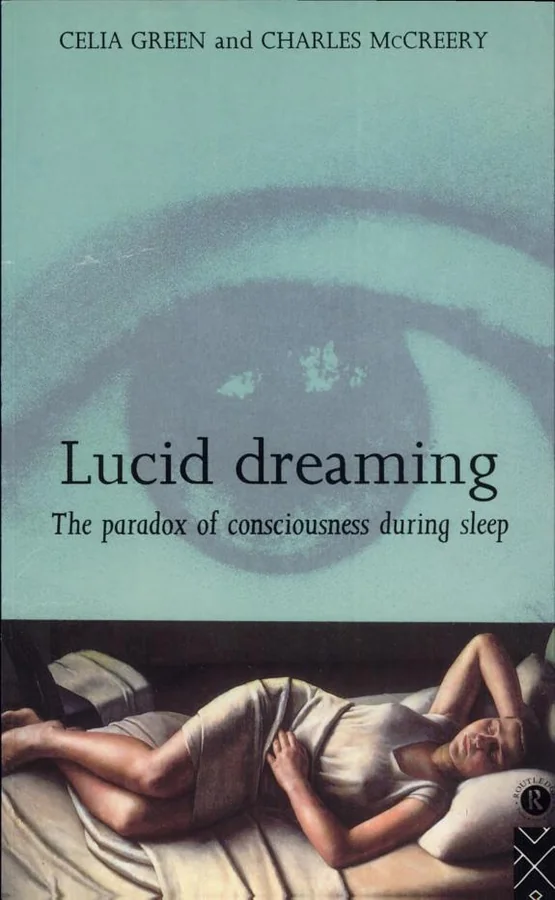
Lucid Dreaming
Celia Green and Charles McCreery's *Lucid Dreaming* presents a sober, almost clinical, examination of a phenomenon often shrouded in mystique. The book's strength lies in its systematic cataloging of experiences and its insistence on treating lucidity as a distinct state of consciousness, rather than simply a dream artifact. The authors’ meticulousness in distinguishing between different facets of lucid dreaming, such as the awareness of dreaming versus the ability to control the dream, is commendable. However, the text can sometimes feel overly detached, prioritizing description over interpretation, which may leave readers yearning for deeper engagement with the 'why' behind these experiences. The exploration of 'false awakenings' serves as a particularly compelling example of the disorienting yet fascinating nature of these states, highlighting the book's empirical rigor. Despite its occasional dryness, *Lucid Dreaming* remains a valuable resource for understanding the mechanics of conscious dreaming.
📝 Description
82
Celia Green and Charles McCreery published their investigation into lucid dreaming in 1994.
This book examines the phenomenon of lucid dreaming, the state of knowing one is dreaming while asleep. The authors, Celia Green and Charles McCreery, differentiate this awareness from simple fantasy or delusion, detailing how it transforms dreams from passive experiences into interactive ones. They argue that lucid dreams are not only intensely real but can also carry significant emotional weight, leading to feelings of euphoria and a deeper understanding of the self within the dream.
The work is intended for a wide audience, including those who study consciousness and general readers interested in the subject. It provides a starting point for individuals curious about the scientific and personal aspects of altered states of consciousness. Readers hoping to grasp the potential of the dreaming mind, explore their own psychological landscape, or gain a new perspective on reality will find it valuable.
Published in 1994, Green and McCreery's work emerged during a time when consciousness studies, including parapsychology, were gaining some academic attention. It stands apart from earlier, purely psychoanalytic dream interpretations. Instead, the authors focus on empirical observation and personal accounts of the lucid experience itself. This approach aligns with a phenomenological tradition that prioritizes direct subjective experience.
💡 Why Read This Book?
• Understand the precise definition and characteristics of dream lucidity as established by Celia Green's research, differentiating it from mere vivid dreaming. • Explore the concept of 'false awakenings' and their implications for distinguishing dream states from waking reality, as detailed in the book's observational accounts. • Gain insight into the potential for volitional control within lucid dreams, a key feature discussed by Green and McCreery in their exploration of dream autonomy.
⭐ Reader Reviews
Honest opinions from readers who have explored this book.
❓ Frequently Asked Questions
When was Celia Green's *Lucid Dreaming* first published?
Celia Green and Charles McCreery's foundational work on lucid dreaming was first published in 1994, contributing significantly to the scientific and experiential study of altered states of consciousness.
What is the primary difference between ordinary dreams and lucid dreams according to Green and McCreery?
The primary difference is the dreamer's awareness: in lucid dreams, individuals consciously recognize they are dreaming, a state distinct from the passive experience of ordinary dreams.
Are lucid dreams always emotionally intense?
The book notes that while lucid dreams can be intensely realistic and emotionally charged, often to the point of elation, the intensity can vary depending on the individual and the specific dream experience.
Who is Celia Green and what is her contribution to consciousness studies?
Celia Green is a British researcher known for her work on altered states of consciousness, particularly lucid dreaming and out-of-body experiences, through her informal research group at Oxford.
Does this book discuss how to induce lucid dreams?
While the book primarily focuses on describing and analyzing the phenomenon of lucid dreaming, it lays the groundwork for understanding its mechanics, which is essential for developing induction techniques.
Is *Lucid Dreaming* suitable for beginners in consciousness research?
Yes, the book is designed for both specialists and general readers, offering a clear introduction to the complex subject of dream lucidity without requiring prior specialized knowledge.
🔮 Key Themes & Symbolism
The Nature of Dream Awareness
This theme centers on the metacognitive state of recognizing one is dreaming. Green and McCreery meticulously differentiate this lucidity from simply having a vivid dream. The book emphasizes that this awareness is not merely intellectual but a profound shift in subjective experience, allowing for a unique form of consciousness to manifest within the dreamscape. It explores how this awareness impacts the dreamer's perception of reality and their interaction with the dream environment, setting the stage for deeper psychological exploration.
Phenomenology of Lucid Experience
The work details the subjective qualities of lucid dreams, often describing them as strikingly realistic and capable of evoking powerful emotions, from elation to intense focus. This theme addresses the characteristics that make lucid dreams distinct: their stability, the clarity of perception, and the potential for intentional action. By cataloging these experiences, the authors provide a framework for understanding the phenomenology of consciousness when detached from ordinary sensory input.
False Awakenings and Boundary States
A significant aspect explored is the phenomenon of false awakenings, where a dreamer wakes up within the dream, believing they have returned to normal consciousness. This theme highlights the slippery nature of reality perception and the complex interplay between waking and sleeping states. Green and McCreery use these instances to illustrate the challenges in distinguishing dream from reality and the potential for consciousness to occupy ambiguous states.
Volition and Control in Dreams
The book touches upon the degree to which dreamers can exert control over their actions and the dream environment once lucidity is achieved. While not solely a manual for dream control, it analyzes the potential for agency within these states. This theme examines how awareness can translate into intentionality, allowing dreamers to explore dream scenarios with a degree of self-direction, a key element distinguishing lucid dreaming from passive dream states.
💬 Memorable Quotes
Direct passages from the work, attributed to the author.
“Lucid dreams are characterized by the dreamer's awareness that they are dreaming.”
— This is the fundamental definition presented, distinguishing the core feature of lucidity from ordinary dream states where such self-awareness is absent.
“These dreams are often strikingly realistic and may be emotionally charged to the point of elation.”
— This highlights the profound subjective impact of lucid dreaming, emphasizing its vividness and the potential for intense positive emotional experiences.
“The authors explore the experience of lucid dreaming.”
— This indicates the book's focus on direct subjective experience and phenomenological description rather than purely theoretical or abstract interpretation.
“False awakenings can occur, creating confusion between dream states and waking reality.”
— This points to a specific, disorienting phenomenon within lucid dreaming, illustrating the complex boundaries of consciousness explored in the text.
“The work will appeal to the specialist and general reader alike.”
— This suggests the book's accessibility, aiming to bridge academic study with public interest in the nature of dreams and consciousness.
🌙 Esoteric Significance
Tradition
While not strictly adhering to a single esoteric lineage, Green and McCreery's work on lucid dreaming aligns with traditions that explore the nature of consciousness beyond the physical body and the manipulation of subjective reality. It shares common ground with Gnostic inquiries into awareness and illusion, and with Hermetic principles regarding the correspondence between macrocosm and microcosm, where the dream world can be seen as a plane of existence accessible through inner faculties.
Symbolism
The primary 'symbol' is the dream itself, representing the boundless potential of the subconscious and the mind's capacity to construct entire realities. Within the lucid state, dream imagery can become highly symbolic, reflecting the dreamer's inner landscape. Concepts like 'false awakenings' can symbolize the illusion of waking reality or the repetitive cycles of consciousness, while the act of achieving lucidity itself can represent spiritual awakening or self-mastery.
Modern Relevance
Contemporary practices in mindfulness, meditation, and lucid dreaming induction techniques often draw upon the systematic descriptions and analyses found in works like Green and McCreery's. Thinkers and practitioners in areas such as dream yoga, consciousness hacking, and psychedelic integration find value in the book's foundational research on dream states and awareness, applying these insights to personal growth and exploration of the mind.
👥 Who Should Read This Book
• Aspiring researchers of consciousness and altered states interested in empirically grounded descriptions of dream phenomena. • Individuals seeking to understand the subjective experience of lucidity and its potential psychological implications beyond pop psychology interpretations. • Students of parapsychology and psychical research looking for foundational texts on out-of-body experiences and related phenomena.
📜 Historical Context
Published in 1994, Celia Green and Charles McCreery's *Lucid Dreaming* emerged during a period of burgeoning interest in consciousness studies, distinct from the earlier Freudian psychoanalytic focus on dream interpretation. Green, associated with the Institute of Psychophysical Research, had already established herself with works like *The Human Evasion*. This period saw figures like Stephen LaBerge also popularizing lucid dreaming techniques through works like *Exploring the World of Lucid Dreaming* (1985). While academic psychology often remained skeptical, parapsychological and New Age circles embraced research into altered states. Green and McCreery's approach, emphasizing empirical observation and subjective reportage over mystical pronouncements, carved a unique niche. Their work provided a sober, descriptive foundation for understanding lucidity, contributing to a growing body of literature that sought to legitimize the study of non-ordinary consciousness.
📔 Journal Prompts
The distinction between dream awareness and ordinary dreaming.
The subjective realism and emotional charge of lucid experiences.
The phenomenon of false awakenings as described by Green and McCreery.
The potential for volitional control within the lucid dream state.
The boundary between waking consciousness and the dream world.
🗂️ Glossary
Lucid Dreaming
A state of dreaming in which the dreamer becomes aware that they are dreaming. This awareness can range from a fleeting recognition to a stable sense of consciousness within the dream.
Dream Lucidity
The quality or state of being lucid within a dream; the metacognitive awareness of dreaming while the dream is in progress.
False Awakening
An experience within a dream where the dreamer believes they have woken up into their normal waking environment, only to realize later (or upon waking again) that they are still dreaming.
Volition in Dreams
The capacity of a dreamer, particularly a lucid dreamer, to exert conscious control over their actions, thoughts, or the environment within the dream.
Phenomenology
The philosophical study of the structures of experience and consciousness as experienced from the first-person point of view.
Elation
A feeling of great happiness and exhilaration, often noted as a potential emotional component of intense lucid dreaming experiences.
Metacognition
Awareness and understanding of one's own thought processes; in this context, the awareness of one's own dreaming state.
This book appears in 1 collection
🔮 Readers Also Liked
Browse all →









From the “Lucid Dreaming” Collection
View all →






More Free Occult Philosophy Books
View all →