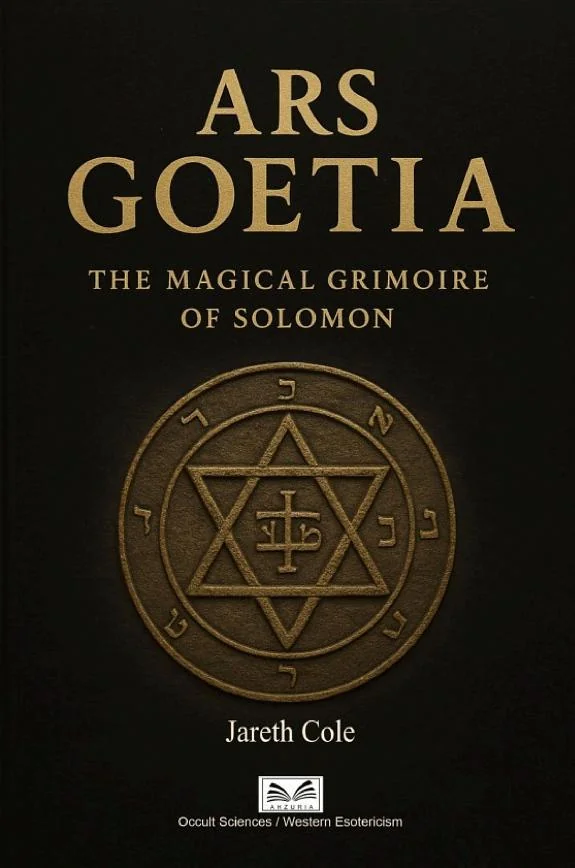
Ars Goetia
 76
76

Ars Goetia
The 2025 edition of Ars Goetia, authored by Jareth Cole and Luiz Santos, offers a structured pedagogical approach to a notoriously dense text. Its strength lies in demystifying the often-intimidating catalog of seventy-two Goetic demons, presenting their attributes and seals with a clarity that aids comprehension. The integration of practical exercises, as outlined in the course format, is commendable, moving beyond mere theoretical exposition. However, the work occasionally struggles with the inherent dangers of the subject matter; the practical guidance, while present, could benefit from more extensive warnings regarding the psychological and energetic risks involved. A particularly effective section details the process of creating the magical triangle of manifestation, illustrating the precise geometric and symbolic requirements for safely containing and communicating with entities. This edition serves as a functional, if not entirely comprehensive, guide for those entering this specific branch of ceremonial magic.
📝 Description
76
In the mid-17th century, a grimoire compiled the first section of the Lemegeton, detailing the command of seventy-two spirits.
This text, the Ars Goetia, presents a structured system for ceremonial magic, purportedly based on King Solomon's methods for commanding seventy-two distinct spiritual entities. It functions as a practical guide, outlining a framework for integrating spiritual practices with personal development. The work focuses on the direct application of these historical techniques for practitioners.
It is intended for serious practitioners of ceremonial magic and occult studies who aim to understand and engage with the spirits cataloged within the Goetia. Scholars of Western esotericism and historical magical traditions will also find it relevant. A prior grasp of magical theory and ritual practice is advisable for a full appreciation of the material.
The core of the Ars Goetia is its catalog of seventy-two demons, each with a specific rank, seal, and area of influence. It describes the necessary ritual tools, conjurations, and binding oaths to control these entities. The magician's authority, drawn from divine power, is central to the method for commanding these forces. The text also notes the importance of psychological preparation and self-mastery.
The Ars Goetia is the initial part of the Lemegeton, a grimoire from the mid-17th century. Although attributed to King Solomon, its content reflects Renaissance and early modern European occult beliefs, circulating alongside Kabbalistic and Hermetic texts. It belongs to a tradition of grimoires that aimed to organize angelic and demonic hierarchies for magical use, appearing during a period of both intense interest in and scrutiny of such practices.
💡 Why Read This Book?
• Gain a structured understanding of the seventy-two Goetic demons and their specific sigils, as presented in the course format by Cole and Santos, moving beyond mere lists to practical application. • Learn the ritualistic requirements and conjurations necessary for invoking these entities, as detailed in the Lemegeton's compilation, offering a historical perspective on ceremonial magic. • Develop techniques for strengthening magical authority and self-control, crucial elements for working with the Goetic hierarchy, emphasizing practical integration with personal development.
⭐ Reader Reviews
Honest opinions from readers who have explored this book.
❓ Frequently Asked Questions
What is the primary purpose of the Ars Goetia?
The Ars Goetia's primary purpose is to provide a systematic method for ceremonial magic, detailing the invocation and control of seventy-two specific spiritual intelligences attributed to King Solomon.
When was the Ars Goetia first compiled?
The Ars Goetia was compiled in the mid-17th century as part of the Lemegeton, though it is attributed to King Solomon from an earlier historical period.
What kind of entities are described in the Ars Goetia?
The text describes seventy-two distinct entities, commonly referred to as demons, each with a unique name, rank, seal, and specific magical abilities or knowledge they can impart.
Does the Ars Goetia require specific tools for its practice?
Yes, the text outlines the necessity of various ritual tools, including a magical triangle, specific garments, and the proper use of seals or sigils for each entity.
Is the Ars Goetia suitable for beginners in occult studies?
While this edition aims for a progressive approach, the subject matter is complex and potentially hazardous. A foundational understanding of magical theory and ritual is recommended for safe and effective engagement.
What is the connection between the Ars Goetia and King Solomon?
The Ars Goetia claims to contain the magical knowledge and methods used by King Solomon, the biblical figure renowned for his wisdom, to command spirits.
🔮 Key Themes & Symbolism
The Seventy-Two Spirits
This section studies the catalog of 72 distinct entities detailed in the Ars Goetia, presented with their assigned ranks (King, Duke, Marquis, etc.) and specific domains of influence. The text emphasizes understanding each spirit's unique characteristics and potential offerings, from granting knowledge to influencing relationships. It highlights the importance of recognizing their hierarchical structure within the Goetic system and the precise methods required to approach them.
Ceremonial Ritual Structure
Focuses on the meticulously defined ceremonial procedures for safely invoking and commanding the Goetic spirits. This includes the construction and use of the magical triangle, the preparation of the magician's attire and tools, and the recitation of specific conjurations and oaths. The emphasis is on creating a controlled environment and asserting divine authority to ensure the spirit's obedience and prevent harm.
Magical Authority and Willpower
Explores the concept that the magician's power to command spirits derives from their inner strength, discipline, and alignment with divine forces. The text posits that true magical efficacy is not just about knowing the rituals but about cultivating a strong will and a clear, focused intent. This theme underscores the necessity of self-knowledge and personal development as prerequisites for successful Goetic operations.
Practical Application and Integration
This theme centers on the progressive, course-like format of the book, which aims to guide the reader through the practical steps of Goetic magic. It stresses the integration of spiritual practices with self-improvement, suggesting that the study and application of these techniques lead to enhanced personal capabilities and a deeper understanding of the self and the cosmos.
💬 Memorable Quotes
Direct passages from the work, attributed to the author.
“Seventy-two spirits were bound by Solomon in a vessel of brass.”
— This refers to the legendary containment of the Goetic entities by King Solomon. The 'vessel of brass' symbolizes the physical or ritualistic means used to control these powerful beings, representing the structured magic described in the grimoire.
“The magician must stand within the triangle and wear the proper vestments.”
— This highlights the critical importance of ritualistic preparation and containment in Goetic magic. The triangle acts as a protective boundary, while specific attire signifies the magician's consecrated status and authority.
“Each spirit has a peculiar seal, which must be shown to them.”
— The seal is the unique identifier and sigil of a Goetic spirit. Presenting this symbol is essential for recognition and establishing a connection, serving as a key component in the invocation process.
“The goal is conscious control, not mere passive observation.”
— This emphasizes the active and authoritative nature of the magic described. The practitioner is not meant to be a spectator but an agent who wields power and directs spiritual forces with deliberate intent.
“Self-knowledge strengthens the will required for command.”
— This points to the psychological foundation of effective magic. A thorough understanding of one's own psyche and motivations is presented as essential for building the inner fortitude needed to influence external spiritual entities.
🌙 Esoteric Significance
Tradition
The Ars Goetia is a central to Western ceremonial magic, deeply rooted in the Solomonic magical tradition, which itself draws from Hermetic, Kabbalistic, and possibly earlier Near Eastern esoteric currents. It represents a codified system for interacting with a specific hierarchy of spiritual beings, distinct from angelic magic or elemental invocation, though often integrated with them in broader magical systems.
Symbolism
Key symbols include the seventy-two unique sigils, or seals, each representing a specific spirit and acting as a focus for invocation. The magical triangle of manifestation is another vital symbol, serving as a containment and conjuration circle, representing the divine order imposed upon chaos. The sword or wand, used by the magician, symbolizes divine authority and the power to command and direct.
Modern Relevance
Contemporary practitioners of Western esotericism, particularly those in traditions like the Hermetic Order of the Golden Dawn and its derivatives, frequently engage with the Ars Goetia. Modern occultists often adapt its methods, focusing on psychological interpretation or refined ritual techniques, viewing the spirits as archetypes or externalized aspects of consciousness as much as independent entities.
👥 Who Should Read This Book
['• Students of Western ceremonial magic: Those seeking to understand the foundational texts and practices of Goetic magic, including its historical context and ritual procedures.', '• Researchers of occult history: Scholars interested in the development of grimoires, demonology, and magical traditions in early modern Europe, specifically the Lemegeton.', '• Practitioners focused on spirit work: Individuals exploring methods for disciplined interaction with non-human intelligences within a structured magical framework.']
📜 Historical Context
The Ars Goetia, first appearing in its compiled form in the mid-17th century Lemegeton, emerged during a period of intense occult revival in Europe. This era saw a proliferation of grimoires, often synthesizing older magical traditions with contemporary Kabbalistic and Hermetic philosophies. While attributed to the biblical King Solomon (c. 10th century BCE), the text's actual content reflects Renaissance and early modern European magical thought. Its circulation occurred alongside the works of figures like John Dee, who engaged with angelic systems, and amidst intellectual currents that viewed magic as a legitimate, albeit often controversial, field of study. The grimoire tradition, including the Goetia, was met with suspicion by religious authorities, leading to periods of censorship and persecution for those associated with its practice. Despite this, the detailed cataloging of spirits and rituals proved influential within subsequent esoteric movements.
📔 Journal Prompts
The seven-pointed star as a symbol of divine authority, and its application in Goetic rituals.
Reflect on the concept of the 'vessel of brass' and its metaphorical implications for containment.
Analyze the assigned rank and abilities of a specific Goetic spirit, such as Bael or Paimon.
Consider the psychological preparation required before attempting any Goetic conjuration.
Document personal interpretations of the seventy-two spirits encountered in the text.
🗂️ Glossary
Lemegeton
A 17th-century grimoire compiled from earlier magical texts, of which the Ars Goetia is the first book. It details methods for commanding various spirits.
Goetia
The branch of ceremonial magic dealing with the invocation and command of demons, particularly the seventy-two listed in the Ars Goetia.
Sigil
A magical symbol or emblem, often unique to a specific spirit, used as a focus for invocation and identification in ceremonial magic.
Conjuration
A formal, ritualistic invocation or incantation, often used to summon or command spiritual entities.
Triangle of Manifestation
A specific geometric figure, usually drawn or inscribed, used in Goetic rituals as a space for the summoned spirit to appear and be contained.
Vestments
The ceremonial clothing worn by the magician during rituals, believed to imbue them with specific powers or signify their consecrated status.
Brass Vessel
A legendary container in which King Solomon purportedly bound the seventy-two Goetic spirits, symbolizing their controlled and ordered subjugation.
This book appears in 2 collections
🔮 Readers Also Liked
Browse all →








From the “Western Esotericism” Collection
View all →






More Free Occult Philosophy Books
View all →