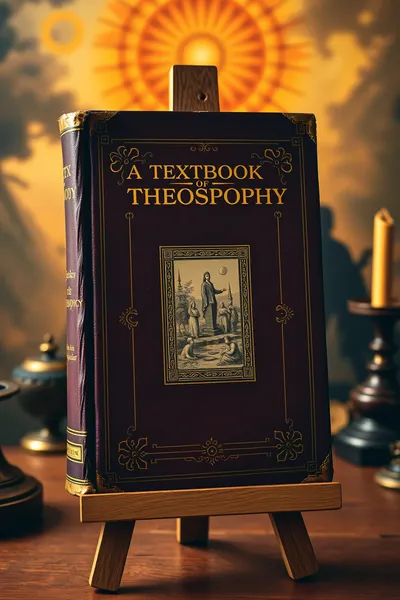
Theosophy
 82
82

Theosophy
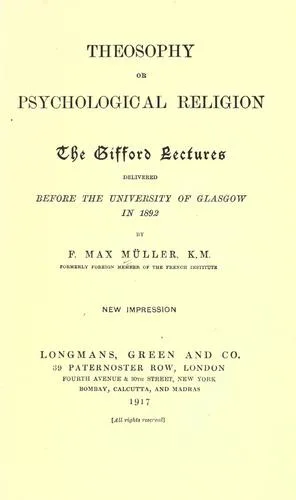
F. Max Müller's "Theosophy" provides a much-needed academic perspective on a movement often shrouded in mystique. The strength of this work lies in its meticulous tracing of intellectual lineage, particularly how Müller connects Theosophical tenets to earlier philosophical and religious traditions. He avoids the hagiography that often plagues studies of esoteric movements, presenting a balanced view. A particular passage that stands out is the analysis of Theosophy's engagement with Buddhism, highlighting both genuine insight and potential misinterpretations. However, the book’s academic rigor, while commendable, can sometimes render its prose dense, potentially alienating readers seeking a more accessible introduction. The dense academic prose is the primary limitation. Nevertheless, "Theosophy" offers a critical, informed account for serious students of the subject.
📝 Description
82
F. Max Müller's 2018 volume examines Theosophy, a spiritual movement synthesizing East and West.
This scholarly examination by F. Max Müller addresses the spiritual and philosophical movement known as Theosophy. Published in 2018, the book traces the core ideas and historical development of this system, which aimed to blend Eastern and Western esoteric traditions. It investigates the intellectual climate that fostered such syncretic philosophies.
Theosophy is aimed at students of comparative religion, philosophy history, and esoteric studies. Those interested in the roots of modern occultism, the impact of Eastern thought on Western spirituality, and the lives of key figures will find considerable material. The work is suitable for readers who value academic rigor when studying spiritual phenomena.
Müller situates Theosophy within the late 19th and early 20th centuries, a time of heightened interest in spiritualism and Eastern religions in the West. The book acknowledges the significant role of figures like Helena Blavatsky and the Theosophical Society, established in 1875. It also considers the intellectual environment that allowed such a movement to emerge and generate debate.
Theosophy emerged in the late 19th century, seeking to unify disparate spiritual and philosophical traditions. It drew heavily on Eastern concepts like karma and reincarnation, reinterpreting them within a Western framework. This movement aimed to uncover universal spiritual laws, often presented as a 'spiritual science' distinct from conventional religion and materialism. Müller's work places this endeavor within its historical context, noting the intellectual currents that made such a synthesis both appealing and controversial.
💡 Why Read This Book?
• Gain a clear understanding of the historical origins of Theosophy, including the establishment of the Theosophical Society in 1875, which provides crucial context for its subsequent influence. • Explore the specific syncretic approach of Theosophy, which sought to reconcile Eastern philosophies like Vedanta with Western esoteric thought, offering a unique lens on spiritual synthesis. • Grasp the core concepts of karma and reincarnation as articulated within Theosophical literature, providing a foundation for understanding their modern spiritual interpretations.
⭐ Reader Reviews
Honest opinions from readers who have explored this book.
❓ Frequently Asked Questions
What is the primary focus of F. Max Müller's "Theosophy"?
The book offers a scholarly examination of the Theosophical movement, tracing its intellectual origins, key figures, and foundational philosophical and religious concepts.
When was the Theosophical Society founded, and is this covered in the book?
Yes, the book discusses the founding of the Theosophical Society in 1875 by Helena Blavatsky and others, placing it within its historical context.
Does the book discuss Eastern influences on Theosophy?
Absolutely. A significant portion of the work is dedicated to exploring how Theosophy synthesized Eastern religious and philosophical ideas, such as those from Vedanta and Buddhism, with Western esoteric traditions.
Is "Theosophy" by F. Max Müller an introductory text for beginners?
While informative, the book's academic tone and depth make it more suitable for students of comparative religion, philosophy, and esoteric studies rather than absolute beginners seeking a light overview.
What kind of concepts does the book explore within Theosophy?
It delves into core Theosophical ideas including karma, reincarnation, the nature of consciousness, and the search for universal spiritual truths across different traditions.
What is the publication date of this edition?
This edition of "Theosophy" by F. Max Müller was first published in 2018.
🔮 Key Themes & Symbolism
Syncretism of Traditions
Müller's work meticulously dissects Theosophy's ambition to forge a unified spiritual science by drawing from disparate global traditions. It highlights how figures like Helena Blavatsky interpreted Vedic philosophies and Buddhist concepts through a Western esoteric lens. The book examines the intellectual project of finding common roots in diverse religious expressions, positioning Theosophy as a bridge between East and West in the late 19th century.
Karma and Reincarnation
The exploration of karma and reincarnation is central to understanding Theosophy's worldview. Müller details how these concepts, central to Indian religions, were adapted and popularized within Western esoteric circles. The book scrutinizes the Theosophical interpretation of these doctrines as universal laws governing spiritual evolution, impacting individual lives and collective destiny.
Esoteric vs. Exoteric Religion
A recurring theme is the distinction Theosophy makes between exoteric (outward, popular) religious forms and esoteric (inner, hidden) truths. Müller analyzes how Theosophists sought to reveal these deeper meanings, often criticizing established religions for losing touch with their original spiritual core. This pursuit of hidden wisdom forms a significant part of the movement's appeal.
The Search for Universal Truth
Theosophy, as presented by Müller, is fundamentally a quest for universal truths underlying all religions. The book examines this drive to identify a common spiritual essence, often termed the 'Ancient Wisdom,' which Theosophists believed was accessible through study, meditation, and intuition. This pursuit aimed to foster global understanding and spiritual progress.
💬 Memorable Quotes
Direct passages from the work, attributed to the author.
“Theosophy aimed to be a synthesis of science, religion, and philosophy.”
— This concisely captures the overarching ambition of the Theosophical movement as analyzed in the text. It highlights the attempt to bridge perceived divides between empirical knowledge, faith, and rational inquiry.
“The concept of reincarnation provided a framework for spiritual evolution.”
— This interpretation emphasizes how Theosophy utilized the doctrine of rebirth not merely as a belief, but as an explanatory model for personal growth and development across multiple lifetimes.
“Helena Blavatsky's writings were central in disseminating Theosophical ideas.”
— This points to the crucial role of Blavatsky as a primary conduit for Theosophical teachings, acknowledging her significant influence on the movement's formation and spread in the late 19th century.
“Theosophy critiqued the limitations of conventional religious dogma.”
— This highlights a critical aspect of the movement discussed in the book: its challenge to established religious structures and beliefs, advocating for a more profound, intuitive spiritual understanding.
💡 Key Ideas
Editorial paraphrase of the work's core concepts — not direct quotes.
The movement sought an underlying unity in diverse world religions.
This paraphrase underscores the syncretic nature of Theosophy, focusing on its effort to identify common spiritual threads and universal principles across varied religious traditions.
🌙 Esoteric Significance
Tradition
"Theosophy" by F. Max Müller engages directly with the Theosophical tradition, a modern esoteric movement founded in the late 19th century. This tradition sought to synthesize ancient wisdom from various religious and philosophical systems, particularly Eastern ones like Hinduism and Buddhism, with Western Hermetic and Neoplatonic ideas. Müller's work positions Theosophy as a distinct lineage, aiming to uncover a universal 'Ancient Wisdom' that predates all organized religions, departing from purely Western esoteric schools by its strong emphasis on Eastern cosmology and ethics.
Symbolism
The work explores symbols central to Theosophy, such as the 'All-Seeing Eye' often associated with divine omniscience and spiritual awakening, and the Ouroboros, representing cyclical existence, eternity, and the unity of all things. The Swastika, a symbol with deep roots in Hinduism and Buddhism, is also examined for its ancient meaning of well-being and auspiciousness, as reinterpreted within the Theosophical framework, distinct from its later negative associations.
Modern Relevance
Contemporary esoteric practitioners and scholars of religion continue to draw upon the foundational texts and concepts popularized by Theosophy. Thinkers in New Age spirituality, modern occultism, and comparative religion often reference Theosophical ideas on karma, reincarnation, and spiritual evolution. Schools of thought focusing on consciousness studies and perennial philosophy also echo Theosophical attempts to find universal spiritual truths, demonstrating the enduring influence of the movement Müller examines.
👥 Who Should Read This Book
• Students of comparative religion and philosophy seeking to understand the historical development and core tenets of modern esoteric movements. • Researchers interested in the impact of Eastern philosophies on Western thought during the late 19th and early 20th centuries. • Individuals curious about the origins of concepts like karma and reincarnation in Western esoteric discourse.
📜 Historical Context
F. Max Müller's "Theosophy" emerges from an era, the late 19th century, marked by a fervent Western interest in Eastern religions and a burgeoning occult revival. The founding of the Theosophical Society in 1875 by Helena Blavatsky, Henry Steel Olcott, and William Quan Judge provided a focal point for these currents. Müller situates Theosophy's rise against a backdrop of spiritualism, Swedenborgianism, and the increasing availability of translated Indian texts, often facilitated by scholars like Müller himself. This period also saw competing interpretations of Eastern philosophy; for instance, the more academic and less esoteric approaches to Buddhism and Hinduism offered by figures like Max Müller (the elder, F. Max Müller's namesake and relative) presented a contrast to the Theosophical Society's more mystical interpretations. The intellectual climate was ripe for syncretism, yet also prone to skepticism and criticism of phenomena perceived as pseudo-religious.
📔 Journal Prompts
Theosophy's concept of the 'Ancient Wisdom' as a unifying principle across religions.
The interpretation of karma and reincarnation within the Theosophical framework.
The synthesis of Eastern and Western esoteric traditions in Theosophy.
The role of Helena Blavatsky in disseminating Theosophical ideas.
Critiques of conventional religious dogma from a Theosophical perspective.
🗂️ Glossary
Theosophy
A spiritual philosophy aiming to reconcile Eastern and Western religions and philosophies, seeking an underlying universal truth or 'Ancient Wisdom'.
Karma
In Theosophy, the universal law of cause and effect, governing the cycle of reincarnation and spiritual evolution across lifetimes.
Reincarnation
The Theosophical belief that the soul is reborn into a new physical body after death, continuing a process of spiritual development.
Ancient Wisdom
The core Theosophical concept of a primordial, universal spiritual knowledge believed to be the source of all religions and philosophies.
Esoteric
Pertaining to hidden or secret knowledge, often related to spiritual or mystical traditions, accessible to initiates or those with specialized understanding.
Syncretism
The combination of different, often contradictory, beliefs and practices, particularly in philosophy or religion, as exemplified by Theosophy's approach.
Vedanta
A school of Hindu philosophy that emphasizes the Upanishads, exploring the nature of reality (Brahman) and the self (Atman).
🔮 Readers Also Liked
Browse all →






More by F. Max Müller
All books →




More Free Theosophy & Anthroposophy Books
View all →