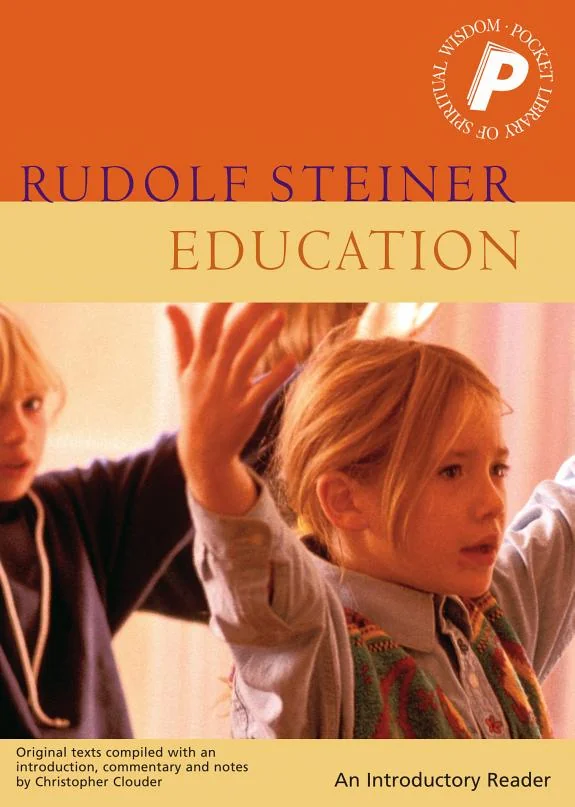
Education
 71
71

Education
Steiner’s "Education" presents a challenging yet vital perspective on human development and learning. The strength of this work lies in its radical departure from mechanistic views of the child, positing a spiritual dimension to growth that demands a correspondingly spiritual approach to teaching. Steiner’s detailed descriptions of developmental phases, particularly his concept of the etheric body's role in the early years, offer a unique lens. However, the abstract nature of his spiritual science can render practical application opaque for those unfamiliar with his broader philosophical system. The emphasis on the teacher's inner development, while crucial to his method, requires significant personal commitment beyond standard pedagogical training. "Education" remains a seminal text for understanding the philosophical underpinnings of Waldorf pedagogy, though its accessibility is a notable hurdle.
📝 Description
71
Rudolf Steiner's "Education" presents a unique view of child development rooted in early 20th-century lectures.
Rudolf Steiner's "Education" collects lectures that lay out his pedagogical philosophy. He proposed a holistic method for developing children, aiming to unite their intellectual, emotional, and spiritual capacities. Steiner believed education should align with a child's natural growth phases, offering fitting challenges and stimulation from infancy through young adulthood. His approach advocated for a curriculum that cultivates creativity and inner autonomy, moving away from purely memorization based or materialistic instruction.
This work is relevant for educators, parents, and anyone interested in different educational systems. It is especially useful for those wanting to grasp the basis of Waldorf education, which draws directly from Steiner's thought. Readers curious about how spiritual science connects to practical societal applications will find it informative. Students of esoteric philosophy seeking its influence on social structures will also find value here.
Rudolf Steiner, a key figure in Theosophy before founding Anthroposophy in 1913, developed this educational philosophy within a broader spiritual science framework. His ideas emerged during a period of intense intellectual and societal change, engaging with contemporary materialism and spiritual movements. The lectures forming this book reflect his attempt to integrate spiritual understanding with practical applications in human life, particularly in education, aiming to foster individual freedom and spiritual awareness.
💡 Why Read This Book?
• Gain an understanding of the seven-year developmental cycles that form the bedrock of Waldorf pedagogy, enabling you to observe and support children's growth stages more effectively. • Explore Steiner's concept of the four etheric bodies, offering a unique esoteric framework for understanding vitality and consciousness beyond purely biological terms. • Discover the importance of artistic and rhythmic activities as central to learning, providing practical insights into fostering creativity and holistic development through methods described in the early lectures.
⭐ Reader Reviews
Honest opinions from readers who have explored this book.
❓ Frequently Asked Questions
What is the historical origin of Rudolf Steiner's "Education"?
The ideas in "Education" originate from lectures Rudolf Steiner delivered in the early 20th century, primarily between 1904 and 1924. The book itself was compiled and published posthumously in 2003 from these lecture transcripts.
How does Steiner's "Education" relate to Waldorf schools?
Rudolf Steiner is the founder of Waldorf education, also known as Steiner education. This book lays out the fundamental philosophical and developmental principles upon which all Waldorf schools worldwide are based.
What are the key developmental stages Steiner outlines?
Steiner divides human development into distinct seven-year periods, each with unique physical, emotional, and intellectual characteristics and educational needs. These cycles guide the curriculum and pedagogical approach.
What is the role of the teacher in Steiner's educational philosophy?
In Steiner's view, the teacher is not merely an instructor but a spiritual guide who understands the child's developmental path and cosmic individuality. The teacher's own inner development is crucial for effective pedagogy.
Is "Education" suitable for parents with no prior knowledge of Steiner?
Yes, while some concepts are rooted in his broader spiritual science, the book offers foundational insights into child development and learning that can be valuable for any parent seeking a holistic approach.
What does Steiner mean by 'etheric bodies' in education?
Steiner posits that beyond the physical body, humans possess 'etheric' or 'life' bodies that govern growth, vitality, and formative processes. Understanding these is key to his approach to early childhood education.
🔮 Key Themes & Symbolism
Holistic Child Development
Steiner's "Education" centers on the understanding that a child develops holistically across physical, emotional, and spiritual dimensions. The book details distinct seven-year phases, arguing that education must align with these natural stages. This approach contrasts with purely academic or materialist educational models, proposing instead that learning should nurture the whole being, fostering inner capacities for creativity, imagination, and moral development. The work emphasizes the importance of rhythm, artistic expression, and environmental harmony in supporting this integrated growth process.
The Role of the Teacher
Within Steiner's pedagogical framework, the teacher holds a profound responsibility that extends beyond imparting knowledge. "Education" portrays the educator as a guide and artist, tasked with understanding the unique spiritual and developmental trajectory of each child. This requires significant self-awareness and inner development on the part of the teacher. The book suggests that teachers must cultivate their own imaginative capacities and spiritual perception to effectively meet the needs of growing children, acting as facilitators for their unfolding potential.
Spiritual Science in Pedagogy
A core tenet of "Education" is the integration of spiritual science into the educational process. Steiner posits that understanding the subtle bodies (etheric, astral, and ego) provides crucial insights into a child's health, learning, and overall development. This esoteric perspective informs the curriculum, suggesting that educational practices should address not only the intellect but also the vital forces and the developing spiritual core of the individual. The book thus offers a counterpoint to purely secular or materialistic educational theories prevalent in the early 20th century.
The Seven-Year Cycles
The concept of seven-year cycles is fundamental to the educational philosophy presented in "Education." Steiner observed distinct qualitative shifts in human development occurring roughly every seven years, from infancy through adolescence. Each cycle, he argued, presents unique challenges and opportunities for learning and inner transformation. The book outlines the characteristics of each phase, advocating for an educational approach that respects these natural rhythms and provides age-appropriate activities, content, and pedagogical methods to support healthy maturation.
💬 Memorable Quotes
Direct passages from the work, attributed to the author.
“Education must consider the spiritual nature of the human being.”
— This interpretation underscores Steiner's core assertion that human beings are not solely physical or intellectual entities. True education, in his view, must acknowledge and cultivate the spiritual dimension, integrating it with mental and physical development for a complete and balanced formation.
“The teacher must develop inner perception and artistic capacity.”
— This reflects Steiner's view of the educator's role. It implies that effective teaching requires more than academic knowledge; it demands a cultivated inner life and artistic sensibility to truly understand and guide the child's developmental journey.
“Rhythm and artistic activity are essential for learning.”
— This points to the pedagogical methods Steiner advocated. He believed that incorporating regular rhythms and creative, artistic activities into the learning process supports children's natural development and enhances their capacity to absorb and integrate knowledge.
💡 Key Ideas
Editorial paraphrase of the work's core concepts — not direct quotes.
The child's development unfolds in periods of about seven years.
This paraphrased concept highlights Steiner's foundational belief in distinct developmental stages. It suggests that educational methods and content should be tailored to the specific needs and capacities of children within each seven-year cycle, rather than applying a uniform approach.
The etheric body influences growth and vitality.
This statement summarizes a key esoteric concept Steiner applied to pedagogy. It suggests that understanding the subtle life forces, or etheric body, is crucial for comprehending a child's physical development and overall well-being, influencing how educators approach health and learning.
🌙 Esoteric Significance
Tradition
Steiner's work in "Education" stems from the Western esoteric tradition, specifically Anthroposophy, which he developed from Theosophy and earlier Hermetic, Gnostic, and Kabbalistic currents. Anthroposophy seeks to bridge the spiritual and material worlds through a rigorous, experiential path of inner development and cognition. This work fits within that lineage by applying spiritual-scientific principles to a practical domain—education—offering a view of the human being as a multi-layered entity (physical, etheric, astral, ego) whose development can be understood and guided through esoteric knowledge.
Symbolism
The concept of the 'seven-year cycles' functions as a symbolic framework for human development, representing stages of transformation and growth, much like alchemical phases or astrological ages. The 'etheric body' (or life body) symbolizes the animating, formative forces of life, distinct from the purely physical. Its health and integration are crucial for physical well-being and development, representing the subtle, vital energies that education should nurture. The emphasis on artistic activity, such as drawing, painting, and music, also carries symbolic weight, representing pathways to accessing and expressing inner spiritual realities.
Modern Relevance
Steiner's educational ideas continue to be highly relevant, most notably through the global network of Waldorf schools, which are a direct manifestation of the principles discussed in "Education." Contemporary thinkers in fields like integral psychology and developmental science often engage with Steiner's cyclical view of development, even if not explicitly Anthroposophical. Practices emphasizing mindfulness, creativity, and holistic well-being in mainstream education echo some of Steiner's core concerns, demonstrating a growing societal interest in approaches that address the full spectrum of human experience beyond mere academic achievement.
👥 Who Should Read This Book
• Educators and parents seeking a holistic, spiritually informed approach to child development, particularly those interested in the foundations of Waldorf pedagogy. • Students of esoteric philosophy and spiritual science looking to understand the practical applications of Anthroposophy in social and cultural spheres. • Researchers in comparative education or developmental psychology interested in alternative pedagogical models and their historical context.
📜 Historical Context
Rudolf Steiner's "Education" draws from lectures given in the early 20th century, a period marked by burgeoning interest in spiritual and alternative approaches to life, partly as a reaction against the perceived limitations of scientific materialism. Steiner, a significant figure in Anthroposophy, presented these ideas within a broader cultural milieu that also included movements like Theosophy and various philosophical explorations of consciousness. His work stood in contrast to prevailing educational philosophies that often prioritized cognitive development and rote learning. While figures like John Dewey were also advocating for progressive education in America, Steiner’s approach was distinctly spiritual, emphasizing the human being’s cosmic and spiritual dimensions. The Anthroposophical Society, which Steiner founded in 1913, became the primary vehicle for disseminating these ideas. Reception was often polarized, with proponents seeing a revolutionary approach to human potential and critics dismissing it as esoteric or unscientific.
📔 Journal Prompts
The seven-year cycles of development as presented in "Education": how do these phases manifest in your own life or observations?
Reflecting on the teacher's role: what does it mean to be a 'spiritual guide' in contemporary educational settings?
The integration of artistic activity and rhythm in learning: identify a specific practice from the book and consider its potential application.
Steiner's concept of the etheric body: explore how life forces and vitality might be understood beyond purely physical explanations.
Consider the balance between intellectual, emotional, and spiritual education: where do you see this balance achieved or lacking in current systems?
🗂️ Glossary
Anthroposophy
A spiritual philosophy founded by Rudolf Steiner, aiming to explore the spiritual world through systematic inner development and cognitive processes. It seeks to understand the human being and the cosmos from both material and spiritual perspectives.
Etheric body
In Anthroposophy, one of the subtle bodies or 'life bodies' that interpenetrates the physical body. It is considered the seat of life forces, growth, reproduction, and formative processes, distinct from the purely physical form.
Astral body
In Anthroposophy, the second subtle body, associated with consciousness, feeling, instinct, and the capacity for sensation and movement. It is considered the bearer of the soul's life.
Ego
In Anthroposophy, the highest spiritual principle of the human being, representing individuality, self-awareness, and the capacity for conscious thinking and spiritual development. It is seen as developing over time.
Seven-year cycles
Rudolf Steiner's concept of distinct developmental phases in human life, each lasting approximately seven years. Each cycle is characterized by specific physical, emotional, and intellectual needs and capacities that should inform education.
Waldorf education
A holistic educational movement founded by Rudolf Steiner, based on Anthroposophical principles. It emphasizes the integration of academic, artistic, and practical learning tailored to distinct developmental stages.
Spiritual science
Steiner's term for his method of investigating the spiritual world through disciplined, conscious awareness and inner development, aiming for verifiable insights analogous to those of natural science.
This book appears in 1 collection
🔮 Readers Also Liked
Browse all →









From the “Anthroposophy” Collection
View all →





More Free Theosophy & Anthroposophy Books
View all →