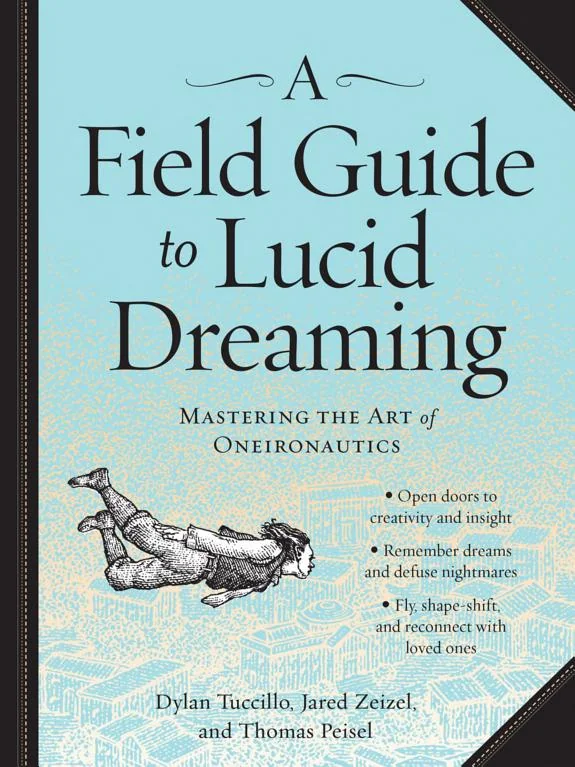
A Field Guide to Lucid Dreaming
 73
73

A Field Guide to Lucid Dreaming
The primary strength of Dylan Tuccillo, Jared Zeizel, and Thomas Peisel's "A Field Guide to Lucid Dreaming" lies in its systematic approach to a phenomenon often shrouded in mysticism. It offers concrete, actionable steps that demystify the process, presenting lucid dreaming not as an arcane art but as a learnable skill. The chapter detailing "reality checks" provides a practical framework for increasing dream awareness during waking life, a concept directly applicable to the reader's daily routine. However, the book occasionally leans towards a slightly prescriptive tone, which might not accommodate the highly individual nature of dream experiences for all readers. For instance, the emphasis on controlling dream elements, while a core aspect of lucidity, sometimes overshadows the potential for emergent insights that arise from less directed dream states. Despite this minor quibble, the guide serves as an excellent, grounded introduction to conscious dreaming.
📝 Description
73
Published in 2012, this guide presents lucid dreaming as a tool for psychological exploration and creative expansion.
A Field Guide to Lucid Dreaming introduces the practice of becoming aware within a dream. It moves beyond simple novelty, framing lucid dreaming as a sophisticated method for self-discovery and creative problem-solving. The text details techniques for developing this awareness, differentiating between passively observing the dream and actively shaping its environment. It serves as an introduction for those new to the concept and a reference for individuals wishing to advance their skills. The book is for anyone curious about the potential of their minds during sleep, including artists seeking new ideas, psychologists studying the subconscious, and individuals pursuing greater self-knowledge. The methods are presented clearly, making them accessible to beginners and experienced dreamers alike who wish to improve their dream recall and control. The guide covers core techniques like reality testing and mnemonic induction of lucid dreams. It explains how to sustain lucidity, remember dreams accurately, and use the dream state for addressing personal anxieties, practicing skills, and solving problems. The authors also address the ethical aspects and potential difficulties associated with lucid dreaming.
The practice of lucid dreaming has historical roots, with early accounts found in Tibetan Buddhism's Dzogchen tradition. This ancient practice predates modern Western psychological interest. While Western scientific investigation began in the mid-20th century, notably with figures like Keith Hearne and Stephen LaBerge in the 1970s, this book synthesizes contemporary understanding with practical application, building on decades of research and experience.
💡 Why Read This Book?
• Gain practical, repeatable techniques like MILD (Mnemonic Induction of Lucid Dreams) to reliably enter a state of conscious awareness within your dreams, directly from the methods outlined in the guide. • Learn specific reality testing protocols, as detailed in the book's early chapters, to distinguish waking life from dream states, enhancing your present-moment awareness. • Discover how to interpret and utilize dream imagery for problem-solving and personal growth, drawing on the practical exercises presented for post-dream analysis.
⭐ Reader Reviews
Honest opinions from readers who have explored this book.
❓ Frequently Asked Questions
What is the earliest known historical reference to lucid dreaming?
While the concept of conscious dreaming has ancient roots, explicit references appear in Tibetan Buddhist texts concerning the practice of 'dream yoga' within the Dzogchen tradition, predating Western scientific inquiry by centuries.
Are there scientific studies supporting lucid dreaming?
Yes, scientific interest surged in the 1970s with researchers like Keith Hearne and Stephen LaBerge using electroencephalography (EEG) to detect eye movements in sleeping subjects, confirming voluntary control during REM sleep.
How can reality testing help with lucid dreaming?
Reality testing involves regularly questioning your state of consciousness during waking hours. By performing actions like trying to push a finger through your palm, you train your mind to perform these checks within a dream, triggering lucidity.
What is the MILD technique for lucid dreaming?
MILD, or Mnemonic Induction of Lucid Dreams, involves setting an intention to remember that you are dreaming before falling asleep and visualizing yourself becoming lucid in a dream.
Can lucid dreaming be used for personal development?
Absolutely. The book suggests using lucid dreams for creative problem-solving, confronting fears in a safe environment, rehearsing skills, and exploring personal psychology by interacting consciously with dream figures and scenarios.
What are potential challenges in lucid dreaming?
Challenges can include difficulty recalling dreams, maintaining lucidity once achieved, and managing expectations. The guide addresses these through techniques for dream journaling and stabilizing the dream environment.
🔮 Key Themes & Symbolism
Consciousness and Self-Awareness
This work posits that consciousness is not confined to waking life but can be intentionally cultivated within the dream state. It explores the nature of self-awareness during sleep, distinguishing between passive dreaming and active, lucid participation. The book frames lucid dreaming as a method for expanding one's understanding of the self, treating the dreamscape as a valid arena for introspection and personal discovery, akin to meditative practices that aim for heightened awareness.
Dream Recall and Interpretation
Accurate dream recall is presented as foundational to lucid dreaming practice. The guide offers systematic methods for improving memory of dream content, including dream journaling and specific pre-sleep and post-wake routines. Beyond mere recollection, it touches upon the interpretive potential of dreams, suggesting that the symbols and narratives encountered in lucid states can offer unique insights into the dreamer's psyche, albeit from a practical, rather than strictly psychoanalytic, perspective.
Psychological Exploration and Growth
The book positions lucid dreaming as a potent tool for psychological work. It details how individuals can use the dream state to confront anxieties, rehearse challenging situations, and foster creativity by consciously interacting with the dream environment. This approach views the dream world not as a passive projection but as an interactive space where personal issues can be addressed and resolved, leading to tangible benefits in waking life, such as increased confidence and problem-solving abilities.
Techniques for Induction and Stabilization
Central to the guide are the practical methodologies for inducing and maintaining lucid dreams. Techniques such as reality testing, MILD (Mnemonic Induction of Lucid Dreams), and WBTB (Wake Back To Bed) are explained with step-by-step instructions. The text also provides strategies for stabilizing the dream once lucidity is achieved, preventing premature awakening or the dream from dissolving, thereby maximizing the potential for exploration and conscious engagement.
💬 Memorable Quotes
Direct passages from the work, attributed to the author.
“The ability to know you are dreaming while you are in a dream.”
— This concise definition expresses the core of lucid dreaming, distinguishing it from ordinary dreaming by highlighting the crucial element of self-awareness within the dream state.
“Imagine being able to use this power to be more creative, solve problems, and discover a deep sense of well-being.”
— This interpretation frames lucid dreaming not merely as a curious phenomenon but as a practical tool for enhancing waking life, suggesting tangible benefits for creativity, problem-solving, and emotional health.
“Performing reality checks regularly during the day.”
— This refers to a key practical technique where dreamers repeatedly question their state of reality while awake, intending to carry this habit into their dreams and trigger lucidity.
“Mnemonic Induction of Lucid Dreams (MILD).”
— This acronym denotes a specific, intention-based technique designed to prime the mind for dream lucidity, often involving visualization and affirmations before sleep.
“Confronting fears or practicing skills within the dreamscape.”
— This describes the application of lucid dreaming for personal development, suggesting the dream environment can be a safe and effective space for psychological work and skill rehearsal.
🌙 Esoteric Significance
Tradition
While not strictly adhering to a single esoteric lineage, this work draws parallels with traditions that explore consciousness beyond the physical body, such as certain interpretations of Hermeticism or Gnosticism which emphasize inner knowledge and the potential for expanded awareness. It aligns with the Western esoteric interest in mastering inner states for personal transformation, treating the dream world as a subtle realm accessible through disciplined practice.
Symbolism
The dreamscape itself functions as a primary symbol, representing the subconscious or the imaginal realm. Within this, specific dream figures or scenarios can symbolize unresolved psychological issues, archetypal energies, or latent potentials. The act of flying, often achievable in lucid dreams, symbolizes freedom, transcendence, and a departure from ordinary limitations, a recurring motif in many mystical traditions.
Modern Relevance
Contemporary practices in mindfulness, consciousness studies, and even certain therapeutic modalities echo the principles presented in this guide. Thinkers and practitioners exploring neuroplasticity, virtual reality's impact on perception, and the therapeutic applications of altered states often find value in the structured approach to dream control and awareness offered here. It informs modern explorations into the mind's capacity for self-directed experience.
👥 Who Should Read This Book
• Aspiring practitioners of altered states of consciousness seeking a grounded, practical introduction to lucid dreaming techniques. • Individuals interested in psychology and neuroscience who wish to explore the untapped potential of the sleeping mind for creativity and problem-solving. • Anyone curious about self-exploration and personal growth, looking for methods to gain deeper self-understanding through their own dream experiences.
📜 Historical Context
Published in 2013, "A Field Guide to Lucid Dreaming" emerged at a time when scientific and popular interest in consciousness, altered states, and dream research was steadily growing. This period saw a confluence of academic studies, particularly building on the work of Stephen LaBerge who pioneered empirical research into lucid dreaming in the late 1970s and 1980s. The book arrived in a landscape where earlier popularizations, such as those by Robert Monroe, had already established a baseline understanding. It distinguishes itself by offering a comprehensive, practical manual that synthesizes research with accessible techniques. While not facing overt censorship, the field of parapsychology and dream research has historically contended with skepticism from mainstream academic psychology, making accessible guides like this crucial for broader engagement with the subject matter.
📔 Journal Prompts
The intention to become lucid in a dream.
Dream figures encountered during a lucid state.
The sensation of flight within a dream.
Reality testing and its impact on waking awareness.
Interpreting symbols from a recorded lucid dream.
🗂️ Glossary
Lucid Dreaming
The state of becoming aware that one is dreaming while the dream is in progress, allowing for conscious interaction with the dream environment.
Reality Testing
A technique involving regularly questioning one's state of consciousness during waking life to develop a habit that can trigger lucidity within a dream.
MILD
Mnemonic Induction of Lucid Dreams, a technique that involves setting a strong intention to remember that you are dreaming before falling asleep.
WBTB
Wake Back To Bed, a technique where one wakes up after several hours of sleep, stays awake for a short period, and then returns to sleep with the intention of becoming lucid.
Dream Journal
A record of dreams, typically kept by writing them down upon waking, used to improve dream recall and identify recurring themes or patterns.
Dream Stabilization
Methods used to maintain lucidity and prevent the dream from fading or the dreamer from waking up prematurely once lucidity has been achieved.
Dream Control
The ability to consciously influence or alter the elements, narrative, or environment within a lucid dream.
This book appears in 1 collection
🔮 Readers Also Liked
Browse all →









From the “Lucid Dreaming” Collection
View all →







More Free Occult Philosophy Books
View all →