Dreaming Your Real Self

 82
82

Dreaming Your Real Self
Joan Mazza's "Dreaming Your Real Self" offers a refreshing counterpoint to the often-impersonal nature of universal dream symbol dictionaries. By insisting on the primacy of individual meaning, Mazza empowers readers to become their own dream interpreters. The book’s strength lies in its practical exercises and its encouragement of personal exploration, moving beyond rote memorization of symbols. I particularly appreciated the section on differentiating between a symbol’s conventional meaning and its specific personal resonance; this is crucial for authentic self-understanding.
A limitation, however, is that the book’s focus on the individual might, for some, initially feel like a lack of grounding. Without some initial awareness of psychological archetypes or common symbolic patterns, a reader might struggle to recognize when a symbol *could* have broader implications beyond their personal association. Despite this, Mazza provides sufficient guidance to navigate this potential pitfall.
Read more ↓
Mazza's insistence on the dreamer as the ultimate authority on their symbols is a significant contribution. The work serves as a vital tool for anyone wishing to unlock the unique messages within their subconscious, fostering a more intimate dialogue with the self.
📝 Description
82
Joan Mazza's 1998 book argues that dream symbols are uniquely personal, not universal.
Dreaming Your Real Self, published in 1998, challenges traditional dream interpretation by asserting that symbols carry deeply personal meanings tied to individual experience. Mazza moves away from universal archetypes, encouraging readers to uncover the specific significance of dream images for themselves. This introspective approach aims to foster greater self-understanding through a personalized examination of nocturnal narratives.
The book is suited for anyone who finds generic dream dictionaries insufficient. It appeals to those seeking a more individualized spiritual or psychological practice, especially those interested in Jungian ideas but wanting a self-directed application. Readers who journal their dreams and look for deeper connections to their subconscious will find a useful framework here. Mazza's work emerged in the late 1990s, a period of flourishing self-help literature, offering a practical method for laypeople to engage with their dreams beyond prevailing universalist theories.
Published in 1998, Joan Mazza's work aligns with a trend in spiritual development that emphasizes individual experience over prescribed doctrines. It offers a practical approach to dream interpretation that resonates with traditions valuing inner knowing and self-discovery. By focusing on the dreamer's unique associations, the book connects with esoteric thought that views the psyche as a primary source of wisdom, distinct from external dogma or purely academic analysis.
💡 Why Read This Book?
• You will learn to identify your personal symbolic language, moving beyond generic dream dictionaries to understand symbols like the 'personal symbol' as uniquely relevant to your own life, a concept explored in detail within the book’s framework. • Gain a practical method for interpreting dreams that prioritizes your individual psyche, enabling you to access self-knowledge unavailable through generalized psychological theories or archetypal analyses. • Discover how to distinguish between universal dream motifs and your private associations with them, a skill critical for unlocking the specific messages of your 'real self,' as presented in Mazza's 1998 publication.
⭐ Reader Reviews
Honest opinions from readers who have explored this book.
❓ Frequently Asked Questions
What is the core difference between Joan Mazza's approach and traditional dream interpretation?
Mazza's "Dreaming Your Real Self" (1998) emphasizes that dream symbols are primarily personal, not universal. Unlike traditional methods that rely on shared meanings, her approach encourages readers to discover the unique significance each symbol holds for their individual life.
How does this book help in understanding the 'real self'?
The book posits that dreams are messages from your 'real self,' your core identity. By interpreting symbols based on your personal associations, you can uncover hidden aspects of yourself, leading to greater self-awareness and integration.
What kind of exercises does Joan Mazza provide?
Mazza offers exercises designed to help readers identify their personal connections to dream images. This involves journaling, exploring personal memories associated with symbols, and consciously differentiating between common meanings and individual significance.
Is prior knowledge of psychology needed to read this book?
No, prior formal knowledge is not strictly required. Mazza’s approach is designed to be accessible, guiding readers step-by-step through the process of personal dream analysis without relying heavily on complex psychological jargon.
When was 'Dreaming Your Real Self' first published?
Joan Mazza's "Dreaming Your Real Self" was first published in 1998, offering its unique perspective on dream interpretation during a period of burgeoning interest in personal psychology and self-discovery.
Can this book be used alongside Jungian psychology?
Yes, while departing from a strict universalist interpretation of archetypes, the book's focus on the individual psyche and the exploration of inner meaning aligns well with Jungian principles, offering a practical application.
🔮 Key Themes & Symbolism
Personal Symbolism
The central theme is the radical idea that dream symbols are not universal but deeply personal. Mazza guides readers to recognize that a common symbol like a 'house' might represent a childhood home for one person, a current professional ambition for another, or a feeling of insecurity for a third. The book advocates for a rigorous personal inventory of associations, memories, and emotional responses to symbols to unlock their true meaning for the individual dreamer.
The 'Real Self'
Mazza posits that dreams are communications from the 'real self,' the authentic core of one's being. This 'real self' is distinct from the ego or the persona presented to the world. By learning to interpret dreams through personal symbolism, the reader can access this deeper, truer self, fostering psychological integration and a more authentic existence. It's a journey towards wholeness guided by one's own inner wisdom.
Empowered Interpretation
This work shifts the authority of dream interpretation from external experts or dictionaries to the dreamer themselves. The book provides a framework and tools, but ultimately empowers the reader to trust their own inner knowing. It encourages a proactive engagement with dreams, viewing them not as passive messages but as an active dialogue with the subconscious mind that the dreamer can learn to conduct effectively.
Bridging Psychology and Esotericism
While rooted in psychological principles of self-exploration, Mazza's approach inherently touches upon esoteric concepts by focusing on the subjective experience of consciousness and the symbolic language of the soul. It bridges the gap between clinical psychology and personal spiritual development, suggesting that understanding one's dreams is a vital path to both mental well-being and spiritual insight.
💬 Memorable Quotes
Direct passages from the work, attributed to the author.
“Dreams are not a universal language, but a personal one.”
— This statement captures Mazza's core argument. It challenges the idea of a shared dream dictionary, asserting that each symbol's meaning is forged within the unique context of the individual dreamer's life and experiences.
“The goal is to find the symbol's meaning for *you*, not for anyone else.”
— This emphasizes the subjective nature of dream interpretation. It directs the reader to prioritize their personal associations and emotional responses over external definitions, making the interpretation process deeply individual.
“Your dream symbols are like a personal code waiting to be deciphered.”
— This metaphorical interpretation highlights the hidden potential within dreams. It suggests that with the right approach, the seemingly random images in dreams can be understood as a structured, personal communication system.
“Differentiate between the common meaning and your specific meaning.”
— This is a practical directive for interpretation. It urges readers to actively question whether a symbol's dictionary definition applies to them, or if their personal history and feelings offer a more accurate interpretation.
“The dream is a message from your 'real self'.”
— This core tenet positions dreams as vital communications from the authentic, deepest part of the personality. Understanding these messages is presented as key to self-knowledge and personal growth.
🌙 Esoteric Significance
Tradition
While not overtly tied to a single esoteric lineage like Hermeticism or Theosophy, Mazza's work appeals to traditions emphasizing inner gnosis and direct subjective experience. It aligns with the Gnostic principle of seeking knowledge of the self as a divine spark and with mystical traditions that view the dream state as a liminal space for spiritual communication. The emphasis on personal symbolism can be seen as a modern, psychological interpretation of the alchemical axiom 'as above, so below,' applied to the inner landscape.
Symbolism
The book’s primary symbolic concept is the 'personal symbol,' which acts as a unique identifier for the dreamer's inner landscape, distinct from universal archetypes. Another motif is the 'dream state' itself, viewed not merely as random neural activity but as a sacred, communicative space. The 'real self' functions as a guiding symbolic presence, the authentic core that dreams aim to reveal or reintegrate into waking consciousness.
Modern Relevance
Mazza's emphasis on personalized interpretation has found fertile ground in contemporary wellness and mindfulness movements, particularly within digital spaces. Online communities and apps dedicated to dream journaling often encourage users to develop their own symbol dictionaries. Therapists and coaches working with clients on self-discovery and trauma integration also draw upon this individualistic approach, seeing it as a powerful tool for unlocking personal narratives and fostering self-empowerment in the 21st century.
👥 Who Should Read This Book
• Individuals seeking a personalized approach to dream interpretation who find universal dream dictionaries too generic or unhelpful. • Practitioners of self-exploration and personal growth who wish to deepen their understanding of their subconscious mind through their dreams. • Those interested in Jungian psychology but looking for a more self-directed and less theoretical method of applying dream analysis to their lives.
📜 Historical Context
Joan Mazza's "Dreaming Your Real Self," published in 1998, emerged during a period when the range of popular psychology and self-help was evolving. While Carl Jung's theories of archetypes and the collective unconscious remained influential, there was a growing interest in more personalized psychological approaches. Mazza's work offered a practical counterpoint to the more universalist interpretations of dream symbols, which had been prominent in earlier psychological discourse. The late 1990s saw a surge in literature focusing on individual empowerment and self-discovery, often blending psychological insights with accessible spiritual or esoteric frameworks. Mazza’s book fit this trend by providing a method that placed the dreamer at the center of interpretation, moving away from the sometimes rigid application of universal symbol meanings found in some Jungian circles or more mainstream dream dictionaries. Its reception was generally positive among those seeking a more introspective path to understanding their dreams, resonating with readers who found traditional methods insufficient.
📔 Journal Prompts
Your personal association with the symbol of 'water' in your dreams.
How does the concept of the 'real self' manifest in your recent dreams?
Reflect on a dream symbol that holds significant personal meaning for you.
Contrast the common meaning of a recurring dream symbol with your individual interpretation.
The role of a specific object from your waking life appearing in a dream.
🗂️ Glossary
Personal Symbol
A symbol within a dream whose meaning is derived from the individual dreamer's unique life experiences, memories, and associations, rather than a universal definition.
Real Self
The authentic, core identity of an individual, distinct from the ego or the persona. Mazza suggests dreams are communications from this deeper, truer self.
Dream Dictionary
A reference book or list that assigns fixed, universal meanings to various dream symbols, often contrasted with Mazza's personal approach.
Individual Interpretation
The process of understanding a dream symbol based on the dreamer's personal context, emotions, and life events, rather than relying on external sources.
Symbolic Language
The unique, often metaphorical, way in which the subconscious mind communicates through images, themes, and narratives in dreams.
Archetype
In Jungian psychology, a universal, archaic pattern or image that derives from the collective unconscious and is the psychic counterpart of an instinct. Mazza encourages differentiating these from personal symbols.
Conscious vs. Unconscious
The distinction between what a person is aware of (conscious) and the vast reservoir of thoughts, feelings, and memories outside of awareness (unconscious), which dreams tap into.
This book appears in 1 collection
🔮 Readers Also Liked
Browse all →








From the “Lucid Dreaming” Collection
View all →




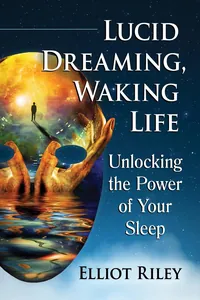


More Free Occult Philosophy Books
View all →