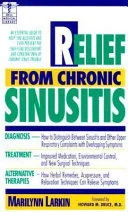
Relief from Chronic Sinusitis
 80
80

Relief from Chronic Sinusitis
Marilynn Larkin’s Relief from Chronic Sinusitis, a product of 1993, offers a direct, no-nonsense approach to a condition that plagues a significant portion of the population. Its strength lies in its clear articulation of the problem and its promise of tangible solutions, moving beyond the often-frustrating cycle of conventional treatments. Larkin’s straightforward prose is accessible, avoiding overly technical jargon while still conveying essential medical information. A notable passage details the potential role of environmental irritants, a concept explored with practical advice for home and workplace modification. However, the book’s primary limitation is its age; while the fundamental understanding of sinusitis remains, some of the specific treatment modalities or research cited may be dated by contemporary medical standards. Despite this, the work serves as a valuable historical document in patient-led health advocacy and remains a sensible guide for those seeking to understand and manage their sinus health from a more comprehensive perspective.
📝 Description
80
Marilynn Larkin's 1993 book offers practical solutions for chronic sinusitis sufferers.
Published in 1993, Relief from Chronic Sinusitis by Marilynn Larkin addresses ongoing sinus inflammation and its symptoms. The book aims to move beyond simple symptom relief by examining underlying causes and proposing a comprehensive strategy for lasting improvement. It combines medical knowledge with complementary methods to present a complete view of sinus health. This volume is for individuals experiencing chronic sinusitis, marked by recurring pain and pressure that disrupt daily life. It appeals to those looking for alternatives or additions to standard medical treatments, especially if conventional methods have not been fully effective. Readers interested in the body's functions and the energetic dimensions of illness will find it useful, along with those seeking concrete steps to enhance their well-being.
Larkin's work appeared at a time when Western medicine was beginning to recognize the limits of treating chronic conditions solely through symptoms. As traditional ear, nose, and throat medicine concentrated on surgery and drugs, interest in complementary and alternative medicine grew. Books like this contributed to a wider discussion on holistic health, influenced by New Age ideas and a renewed focus on traditional healing. This period saw figures like Andrew Weil promote integrated health practices, placing Larkin's book within a larger cultural movement toward greater patient control and varied wellness approaches.
Published in 1993, Larkin's book emerged during a period of increasing interest in complementary and alternative medicine (CAM). It tapped into a broader cultural shift influenced by New Age philosophies and a resurgence of traditional healing practices. This era saw a growing dialogue around holistic health and patient empowerment, moving beyond purely conventional Western medical approaches. The book reflects this move towards integrating diverse wellness strategies, suggesting that understanding the energetic aspects of illness could complement physical treatments.
💡 Why Read This Book?
• Understand the physiological underpinnings of chronic sinusitis, including the inflammatory cascade, as detailed in Larkin's explanations of sinus anatomy, enabling a deeper grasp of the condition's mechanics. • Discover potential environmental and dietary triggers that may contribute to your specific sinus issues, as explored in the book's sections on irritants and lifestyle factors, offering personalized avenues for investigation. • Gain actionable strategies for managing sinus health beyond medication, as presented in the practical advice sections, empowering you with self-care techniques first outlined around 1993.
⭐ Reader Reviews
Honest opinions from readers who have explored this book.
❓ Frequently Asked Questions
When was Marilynn Larkin's Relief from Chronic Sinusitis first published?
Marilynn Larkin's Relief from Chronic Sinusitis was first published in 1993. This publication date places it within a period of growing interest in holistic health approaches.
What kind of treatments does Relief from Chronic Sinusitis suggest?
The book suggests a range of treatments including understanding the body's inflammatory response, identifying environmental triggers, and making lifestyle adjustments, alongside conventional medical guidance.
Who is the intended audience for this book?
The primary audience is individuals suffering from chronic sinusitis who are seeking comprehensive understanding and practical solutions to alleviate pain and irritation.
Does the book offer alternative medicine approaches?
While rooted in understanding the medical condition, the book integrates complementary strategies by exploring lifestyle, environmental, and potentially dietary factors that can impact sinus health.
How many Americans experienced chronic sinus trouble according to the original blurb?
The original blurb states that more than 33 million Americans experience sinus trouble on a chronic basis.
What is the main goal of Relief from Chronic Sinusitis?
The main goal is to help sufferers end the pain and irritation of sinusitis and enable them to live a more active and pleasurable life by providing new treatments and cures.
🔮 Key Themes & Symbolism
Holistic Sinus Health
This book frames chronic sinusitis not merely as a localized nasal issue but as a condition intertwined with the body's overall well-being. It moves beyond the conventional focus on surgical or pharmaceutical interventions, which were prominent in 1993, to explore how environmental factors, diet, and the body's internal environment contribute to persistent inflammation. Larkin encourages readers to view their sinus health within a broader context of systemic balance, suggesting that true relief comes from addressing multiple facets of their health rather than isolated symptoms. This approach aligns with emergent holistic health philosophies of the late 20th century.
Inflammatory Response Management
A central theme is understanding and managing the body's inflammatory response, a key factor in chronic sinusitis. The work details how prolonged inflammation can lead to the debilitating pain and discomfort described in the original blurb. Larkin guides readers to identify personal triggers—whether allergens, infections, or other irritants—that provoke this response. The emphasis is on proactive management through lifestyle adjustments and informed choices, aiming to reduce the frequency and severity of inflammatory episodes. This focus on the body's internal mechanisms reflects a growing awareness of psychosomatic connections in health.
Patient Empowerment Through Knowledge
Relief from Chronic Sinusitis empowers readers by providing them with comprehensive information about their condition. By detailing the anatomy, potential causes, and various treatment avenues, the book aims to clarify chronic sinusitis. This knowledge equips individuals to engage more effectively with healthcare providers and make informed decisions about their treatment plans. The original blurb's promise of ending pain and irritation is presented as achievable through active participation and understanding, shifting the paradigm from passive patient to informed self-advocate, a significant aspect of health literature in the 1990s.
💬 Memorable Quotes
Direct passages from the work, attributed to the author.
“More than 33 million American experience sinus trouble on a chronic basis, frequently suffering debilitating pain that interferes with work and leisure activities alike.”
— This statement immediately grounds the book in a widespread reality, validating the reader's experience and highlighting the significant impact of chronic sinusitis on daily life and productivity.
“The good news is that recent medical attention to this widespread affliction has developed remarkable new treatments and cures.”
— This offers a crucial element of hope, suggesting that advancements available at the time of publication (1993) provided tangible pathways toward resolution for a condition often perceived as intractable.
“You can end the pain and irritation of sinusitis - and start living a more active and pleasurable life!”
— This is a direct call to action and a promise of transformation, emphasizing that the book's guidance can lead to a restored quality of life, free from the limitations imposed by chronic sinus issues.
“Remarkable new treatments and cures have been developed for this widespread affliction.”
— This interpretation highlights the forward-looking aspect of the book, pointing to medical progress around 1993 that offered genuine hope and potential solutions for those struggling with sinus problems.
💡 Key Ideas
Editorial paraphrase of the work's core concepts — not direct quotes.
Chronic sinusitis is frequently suffering debilitating pain that interferes with work and leisure activities alike.
This paraphrase emphasizes the severity and pervasive impact of the condition, underscoring how it disrupts not just physical comfort but also one's ability to engage fully in life's pursuits.
🌙 Esoteric Significance
Tradition
While not explicitly rooted in a single esoteric lineage like Hermeticism or Kabbalah, Larkin's work aligns with the broader esoteric principle of holism. It shares common ground with naturopathic and vitalist traditions that emphasize the body's inherent ability to heal when supported by appropriate environmental and lifestyle conditions. The book's focus on interconnectedness—how the sinuses relate to the entire system and external factors—reflects the Hermetic maxim 'As Above, So Below,' suggesting that internal states reflect external influences and vice versa. It represents a secularized application of vitalistic thought popular in the late 20th century.
Symbolism
The sinus passages themselves can be viewed symbolically as channels or pathways, representing the flow of energy, breath, and thought. Chronic blockage or inflammation in these 'channels' can thus symbolize impediments to clear perception, communication, or spiritual insight. The book’s emphasis on clearing these passages suggests a desire to restore unimpeded flow, enabling clearer 'seeing' and 'breathing' both physically and metaphorically. Allergens or irritants acting as external 'corruptors' of these channels also represent the intrusion of disharmonious external forces into the body's sacred space.
Modern Relevance
Larkin's work, despite its 1993 publication, remains relevant to contemporary discussions on integrative health and the microbiome's role in inflammation. Modern practitioners in functional medicine and integrative otolaryngology often echo the book's emphasis on identifying triggers, managing inflammation holistically, and empowering patients. Thinkers in the wellness sphere continue to explore the mind-body connection, a concept implicitly addressed by understanding how stress or environmental factors impact physical health, resonating with the book's foundational principles.
👥 Who Should Read This Book
['• Individuals experiencing persistent sinus pain and pressure seeking practical, actionable advice beyond standard medical prescriptions.', '• Readers interested in understanding the interplay between environmental factors, diet, and chronic inflammatory conditions like sinusitis.', '• Those exploring holistic health approaches who wish to integrate self-care strategies with conventional medical guidance for managing their health.']
📜 Historical Context
Published in 1993, Marilynn Larkin's Relief from Chronic Sinusitis arrived during a burgeoning era for complementary and alternative medicine (CAM) in the United States. While mainstream otolaryngology continued to advance surgical techniques and pharmaceutical options, books like Larkin's tapped into a growing public demand for more holistic and patient-centered approaches. This period saw figures like Dr. Andrew Weil gaining prominence for advocating integrative health, blending conventional medicine with evidence-based traditional remedies. Larkin's work contributed to this shift by providing accessible information on managing a common ailment through a wider lens. Its reception was part of a broader cultural movement that questioned solely symptom-focused treatments, reflecting an increasing desire for understanding the root causes of chronic conditions and empowering patients with knowledge, a stark contrast to the more paternalistic medical models prevalent decades prior.
📔 Journal Prompts
Sinus inflammation as a symbol of blocked perception.
Environmental triggers and their energetic parallels.
The body's inflammatory response and its message.
Lifestyle adjustments for unimpeded energetic flow.
Restoring clear breathing and clear thinking.
🗂️ Glossary
Sinusitis
Inflammation of the mucous membrane lining the sinuses, which are air-filled cavities in the skull connected to the nasal passages. This condition can cause pain, pressure, and difficulty breathing.
Chronic
Persisting for a long time or constantly recurring. In the context of sinusitis, it typically refers to inflammation lasting 12 weeks or longer.
Inflammatory Response
The body's complex biological reaction to harmful stimuli like pathogens, damaged cells, or irritants. It is a protective attempt to remove the injurious stimulus and initiate healing.
Allergens
Substances that can trigger an allergic reaction in susceptible individuals, often leading to inflammation. Common examples include pollen, dust mites, and certain foods.
Holistic Health
An approach to wellness that considers the whole person—mind, body, and spirit—recognizing that these aspects are interconnected and influence overall health and well-being.
Otolaryngology
A medical specialty that deals with the ear, nose, and throat (ENT). Physicians specializing in this field are called otolaryngologists or ENTs.
Vitalism
A doctrine that the processes of life are not explicable by the same chemical and physical laws as are the processes of inanimate matter; an assertion of a vital principle or 'vital force' distinct from chemical or physical forces.
This book appears in 1 collection
🔮 Readers Also Liked
Browse all →









From the “Affirmations” Collection
View all →








More Free Occult Philosophy Books
View all →