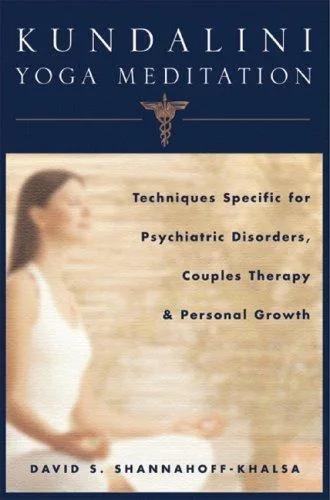
Kundalini yoga meditation
 83
83

Kundalini yoga meditation
David Shannahoff-Khalsa's "Kundalini Yoga Meditation" presents a rigorous, almost clinical, approach to a subject often shrouded in mysticism. The strength of this work lies in its methodical breakdown of complex yogic practices, offering precise instructions that aim to demystify the process of Kundalini awakening. The author's background in psychology and yoga research lends a unique credibility, particularly in his detailed explanations of physiological and energetic correlations. However, the text’s dense, technical prose can be a barrier for those not already steeped in yogic terminology or comfortable with abstract energetic concepts. A notable passage details specific breath retention ratios for influencing the nervous system, illustrating the book's practical, albeit demanding, orientation. While it may lack the poetic flair of some spiritual texts, it offers a valuable, systematic manual for dedicated practitioners.
This book is a highly technical manual for serious Kundalini Yoga practitioners.
📝 Description
83
David Shannahoff-Khalsa's 2006 book details specific yogic practices for awakening Kundalini energy.
Kundalini Yoga Meditation, published in 2006, focuses on the precise techniques and theoretical background for practitioners aiming to awaken and direct Kundalini. The work moves beyond general yoga descriptions, detailing methods for internal energetic manipulation. It addresses the mechanics of yogic practice, emphasizing specific approaches for energetic control.
This text is for serious yoga and meditation students who want to go beyond introductory levels. It is particularly useful for those interested in advanced Kundalini Yoga, offering a structured, systematic approach for practitioners who may have encountered the concept elsewhere. Individuals with a background in yogic philosophy or physiology will find the detailed explanations valuable, as will those curious about the physiological and energetic outcomes of dedicated yogic practice.
Published in 2006, this book emerged during a period of increased academic and clinical study into yoga and meditation. While Kundalini Yoga had a global presence, Shannahoff-Khalsa's work provided a more systematic and detailed account of its internal mechanics. It sits within a tradition of yogic science that seeks to understand and systematically influence consciousness and vital energies through specific practices, connecting to broader research trends in mindfulness and its effects.
💡 Why Read This Book?
• Gain precise, step-by-step instructions for advanced Kundalini meditations, moving beyond generalized advice to actionable techniques as detailed in chapters focusing on specific kriyas. • Understand the physiological underpinnings of yogic practices, as Shannahoff-Khalsa, drawing on his background, links breathwork and energy manipulation to nervous system effects. • Learn specific pranayama techniques, such as detailed breath retention ratios mentioned in the text, to cultivate focused internal energy and altered states of consciousness.
⭐ Reader Reviews
Honest opinions from readers who have explored this book.
❓ Frequently Asked Questions
What is Kundalini Yoga Meditation according to David Shannahoff-Khalsa?
It is a systematic approach to awakening and directing the primal life force, Kundalini, through precise yogic techniques, including specific pranayama, mantra, and meditation sequences detailed in the book.
Is this book suitable for beginners in yoga?
Likely not. The book presumes a foundational understanding of yoga and meditation, focusing on advanced techniques and energetic concepts rather than introductory principles.
When was Kundalini Yoga Meditation first published?
The book was first published in 2006, placing it within a period of increasing academic interest in the scientific aspects of yoga and meditation.
What kind of practices are covered in the book?
It covers specific meditations, pranayama (breath control) techniques, and kriya sequences, with a focus on their energetic and physiological effects.
Does the book explain the chakras and nadis?
Yes, the work explores the concepts of chakras, nadis, and the central Kundalini energy, detailing their functional roles within the context of yogic practice.
What is the author's background?
David Shannahoff-Khalsa has a background in both yoga and psychology, which informs his systematic and research-oriented approach to the subject matter.
🔮 Key Themes & Symbolism
Pranayama as Energetic Control
The book emphasizes pranayama not merely as breathing exercises but as sophisticated tools for manipulating internal energy. Shannahoff-Khalsa details specific breath ratios and retention techniques, linking them directly to influencing the nervous system and awakening Kundalini. This systematic application of breath control is presented as fundamental to achieving the advanced states discussed, moving beyond simple relaxation to active energetic cultivation.
Systematic Kundalini Awakening
Unlike more generalized spiritual texts, this work offers a methodical framework for the Kundalini awakening process. It breaks down complex energetic shifts into discrete, actionable steps, providing practitioners with a roadmap. The focus is on the practical application of specific meditations and kriyas, aiming for predictable energetic and psychological outcomes rather than relying solely on spontaneous experiences.
Energetic Anatomy of Yoga
Shannahoff-Khalsa looks at the subtle body, explaining the interplay of chakras, nadis, and the central Kundalini force. These concepts are not treated as mere metaphors but as functional components of the yogic system. The book provides a detailed map of this internal landscape, crucial for understanding how specific practices are intended to interact with and transform the practitioner's energetic constitution.
Psychology and Energetic States
The author's background in psychology informs his exploration of the mind-body connection within advanced yogic practices. He discusses how specific techniques can induce altered states of consciousness and influence psychological well-being. This intersection of esoteric yogic science and psychological understanding offers a unique perspective on the transformative potential of Kundalini meditation.
💬 Memorable Quotes
Direct passages from the work, attributed to the author.
“The precise application of breath control is key to influencing the nervous system.”
— This highlights the book's emphasis on pranayama as a scientific tool for internal regulation and energy manipulation, rather than just a relaxation technique.
“The chakras function as energetic centers influencing both physical and mental states.”
— This interpretation points to the book's view of the chakras as active components within the yogic system, integral to the practitioner's overall experience.
“Specific sequences of posture, breath, and mantra are designed to produce particular energetic effects.”
— This reflects the book's detailed approach to kriya yoga, where combinations of practices are presented with specific, intended outcomes for the practitioner.
💡 Key Ideas
Editorial paraphrase of the work's core concepts — not direct quotes.
Kundalini energy requires directed techniques for safe and effective awakening.
This paraphrase underscores the book's focus on methodology and safety, suggesting that the potent force of Kundalini is best approached with structured practice.
Understanding the nadis is crucial for mapping the flow of vital energy.
This paraphrase emphasizes the importance of the subtle energy channels (nadis) as pathways described in the book, essential for comprehending energy circulation during practice.
🌙 Esoteric Significance
Tradition
This work aligns with the Tantric and Hatha Yoga traditions, specifically focusing on the energetic anatomy and practices designed to awaken Kundalini Shakti. It departs from purely devotional or philosophical interpretations by offering a more technical, almost physiological, breakdown of these ancient practices. Shannahoff-Khalsa's approach can be seen as an attempt to codify and present these esoteric methods in a structured, accessible format for contemporary practitioners seeking direct experience.
Symbolism
Key symbols include the Sushumna nadi, the central channel through which Kundalini ascends, often depicted as a hollow reed. The chakras, visualized as lotuses or wheels of light at specific spinal locations, represent energetic vortexes that Kundalini activates. The coiled serpent at the base of the spine is the most potent symbol of dormant Kundalini energy, representing immense potential awaiting activation and upward movement.
Modern Relevance
Contemporary yoga teachers and students interested in the deeper energetic aspects of practice often reference Shannahoff-Khalsa's systematic approach. His work informs more advanced Hatha and Kundalini yoga classes that focus on subtle body mechanics and precise energetic manipulation, distinguishing them from purely physical fitness-oriented yoga styles.
👥 Who Should Read This Book
• Dedicated practitioners of Kundalini or Hatha Yoga seeking a deeper, more technical understanding of energetic practices. • Students of esoteric traditions interested in the physiological and psychological effects of advanced yogic techniques. • Yoga therapists and instructors aiming to refine their knowledge of pranayama and subtle energy manipulation for therapeutic or teaching purposes.
📜 Historical Context
Published in 2006, David Shannahoff-Khalsa's "Kundalini Yoga Meditation" entered a landscape where yoga was increasingly scrutinized through scientific and psychological lenses. While the popularization of Kundalini Yoga by Yogi Bhajan had already established a global presence by the late 20th century, this book emerged in an era seeking more detailed, systematic explanations. It contrasted with the more broadly philosophical or devotional approaches prevalent in some circles. The early 2000s saw a rise in research into mindfulness and its neurological impacts, creating a receptive, albeit critical, environment for work that explored the specific mechanisms of yogic techniques. Shannahoff-Khalsa's background in psychology allowed him to bridge traditional yogic concepts with a more analytical framework, distinguishing his work from purely spiritual or anecdotal accounts. The book’s detailed, technical nature positioned it as a resource for serious practitioners rather than a general introduction.
📔 Journal Prompts
The concept of the Sushumna nadi and its role in energy flow.
Specific pranayama ratios for influencing the nervous system.
The energetic function of the chakras as described.
How specific kriyas aim to awaken Kundalini.
The interplay between psychological states and yogic practice.
🗂️ Glossary
Kundalini
A primal, potent spiritual energy believed to reside at the base of the spine, which yogic practices aim to awaken and direct upwards through the central energetic channel.
Pranayama
The yogic science of breath control, involving specific techniques of inhalation, exhalation, and retention to regulate vital energy (prana) and influence consciousness.
Chakras
Energetic centers within the subtle body, typically aligned along the spine, believed to govern various physical, emotional, and spiritual functions.
Nadis
Subtle energetic channels or pathways throughout the body through which prana flows, with the Sushumna, Ida, and Pingala being the most prominent.
Kriya
A specific set of yogic postures, breathwork, mantra, and meditation sequences designed to achieve a particular energetic or psychological effect.
Sushumna Nadi
The central energetic channel in the subtle body, running along the spinal column, through which Kundalini energy is said to ascend.
Prana
The vital life force or energy that permeates all living beings, regulated and cultivated through practices like pranayama.
🔮 Readers Also Liked
Browse all →









More by David Shannahoff-Khalsa
All books →

More Free Occult Philosophy Books
View all →