The works of Francis Bacon

 70
70

The works of Francis Bacon


Review by Aurelia Blackwood (Occult Philosophy Critic) — Francis Bacon's collected works are a masterclass in esoteric philosophy. His ability to weave together scientific inquiry with mystical symbolism is unparalleled. Bacon's exploration of the hermetic tradition and its implications for modern thought is particularly enlightening. This collection is essential reading for anyone interested in the deeper meanings of life and the universe. The strength of Bacon's work lies in its timeless relevance, making it a valuable resource for both novice and seasoned practitioners of the occult.
📝 Description
70
Francis Bacon's collected writings reveal his engagement with Renaissance hermeticism and natural philosophy.
This collection presents the writings of Francis Bacon, a figure who straddled the worlds of early modern science and older traditions of thought. Bacon's works engage with concepts that touch upon alchemy and hermetic philosophy, linking them to his broader investigations into the natural world. He sought to understand the underlying order of things, a pursuit that informed both his scientific methodology and his reflections on human conduct. The writings encourage a close examination of reality and the principles that govern it.
Readers will find Bacon's thoughts on ethics and the practicalities of life alongside his more speculative inquiries. He offers a framework for understanding the world and one's place within it, addressing the challenges of human existence. This volume serves as a comprehensive resource for those interested in the intellectual currents of the Renaissance, particularly where empirical inquiry met with more mystical or symbolic interpretations of nature.
Francis Bacon's writings are situated within the late Renaissance intellectual milieu, a period where classical, alchemical, and hermetic traditions were still influential among scholars. While Bacon is often credited with laying groundwork for the scientific method, his own work shows an awareness of and engagement with these older systems of thought. He sought a new understanding of the natural world, one that moved beyond mere scholasticism, and his philosophical projects often incorporated ideas related to hidden correspondences and the systematic study of phenomena, echoing concerns found in hermetic and alchemical literature.
💡 Why Read This Book?
Why read this book? The Works of Francis Bacon is a must-read for seekers of hidden knowledge and scholars of esoteric philosophy. It offers deep insights into the hermetic tradition and its practical applications. Ideal for those interested in the intersection of science and mysticism, this collection provides a rich tapestry of ideas that can inspire and transform.
⭐ Reader Reviews
Honest opinions from readers who have explored this book.
❓ Frequently Asked Questions
What is the significance of Bacon's works in the realm of alchemy and hermeticism?
Bacon's works are pivotal in the study of alchemy and hermeticism, offering profound insights into the symbolic and mystical dimensions of these traditions.
Who is the intended audience for this collection?
This collection is intended for scholars, spiritual seekers, and practitioners of the occult who are interested in the deeper meanings of life and the universe.
What makes Bacon's writings unique?
Bacon's writings are unique in their ability to blend scientific inquiry with mystical symbolism, providing a holistic view of reality.
How does Bacon's work influence modern thought?
Bacon's work continues to influence modern thought by offering timeless insights into the nature of existence and the pursuit of knowledge.
What are some key themes in Bacon's writings?
Key themes in Bacon's writings include the interconnectedness of all things, the pursuit of hidden knowledge, and the ethical implications of scientific discovery.
🔮 Key Themes & Symbolism
Hermetic Philosophy
Bacon's writings delve deeply into the hermetic tradition, exploring the hidden layers of reality and the interconnectedness of all things. This theme is central to understanding Bacon's philosophical significance.
Scientific Inquiry
Bacon's work bridges the gap between scientific inquiry and mystical symbolism, providing a unique perspective on the pursuit of knowledge and the nature of existence.
Ethical Implications
Bacon's exploration of ethics and the conduct of life offers a moral compass for those working through the complexities of existence, highlighting the importance of ethical considerations in scientific discovery.
💬 Memorable Quotes
Direct passages from the work, attributed to the author.
“Knowledge is power.”
— This famous quote underscores Bacon's belief in the transformative power of knowledge.
“The true and legitimate goal of the sciences is this: that human life be endowed with new discoveries and powers.”
— Bacon's vision for science is one of empowerment and enlightenment.
“Reading maketh a full man.”
— Bacon emphasizes the importance of reading and learning in the development of a complete individual.
“Knowledge itself is power.”
— This reiterates Bacon's central theme that true power comes from understanding and knowledge.
💡 Key Ideas
Editorial paraphrase of the work's core concepts — not direct quotes.
The secrets of nature become more accessible when they are sought with purity of mind.
This quote highlights the importance of ethical and spiritual purity in the pursuit of knowledge.
🌙 Esoteric Significance
Tradition
Bacon's works belong to the hermetic tradition, which seeks to uncover the hidden knowledge and mysteries of the universe. This tradition emphasizes the interconnectedness of all things and the pursuit of spiritual enlightenment through the study of nature.
Symbolism
Key symbols in Bacon's writings include the serpent, representing wisdom and transformation, and the microcosm-macrocosm relationship, which illustrates the reflection of the universe in the individual. These symbols are central to understanding his esoteric philosophy.
Modern Relevance
Bacon's works remain relevant today for practitioners of the occult and seekers of hidden knowledge. His insights into the hermetic tradition and its practical applications continue to inspire and transform modern thought.
👥 Who Should Read This Book
Beginners in the field of esoteric philosophy will find Bacon's works to be an excellent starting point, offering foundational insights into the hermetic tradition. Scholars will appreciate the depth and breadth of Bacon's explorations, while spiritual seekers will find inspiration in his pursuit of hidden knowledge. Practitioners of the occult will benefit from his practical applications of esoteric principles, making this collection a valuable resource for all seekers of truth.
📜 Historical Context
Francis Bacon's works were written during a time of significant intellectual and scientific discovery. The 16th and 17th centuries saw the rise of the scientific method and the quest for empirical knowledge. Bacon's writings were instrumental in shaping this era, bridging the gap between traditional mystical thought and the emerging scientific paradigms. His influence can be seen in the works of subsequent philosophers and scientists, making his contributions timeless and foundational to modern thought.
📔 Journal Prompts
How does Bacon's concept of knowledge as power resonate with your own beliefs?
In what ways can scientific inquiry and mystical symbolism be integrated in your life?
What ethical considerations should be taken into account when pursuing knowledge?
How does the hermetic tradition influence your understanding of the universe?
What symbols in Bacon's writings do you find most meaningful and why?
🗂️ Glossary
Hermeticism
A philosophical and spiritual tradition based on the writings of Hermes Trismegistus, emphasizing the pursuit of hidden knowledge and spiritual enlightenment.
Alchemy
An ancient practice combining elements of chemistry, physics, and mysticism, aimed at transforming base materials into gold and achieving spiritual transformation.
Microcosm-Macrocosm
The concept that the individual (microcosm) reflects the universe (macrocosm), emphasizing the interconnectedness of all things.
Scientific Method
A systematic approach to acquiring knowledge through observation, experimentation, and reasoning.
Esoteric Philosophy
A branch of philosophy that deals with hidden knowledge and mystical truths, often requiring specialized study and initiation.
This book appears in 3 collections
🔮 Readers Also Liked
Browse all →








More by Francis Bacon
All books →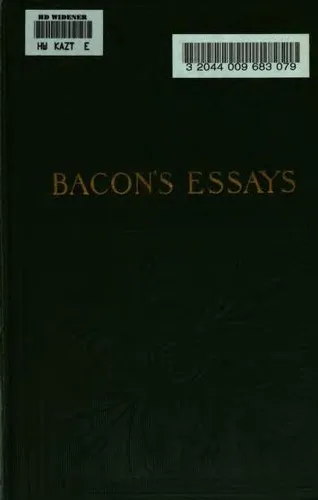
From the “Hermeticism” Collection
View all →








More Free Alchemy & Hermeticism Books
View all →