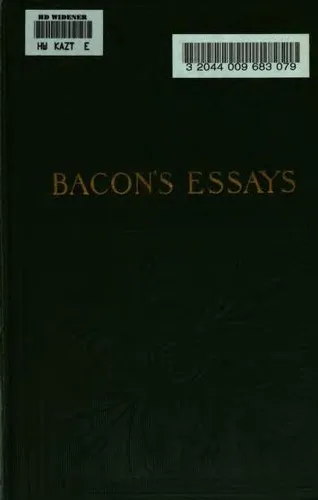
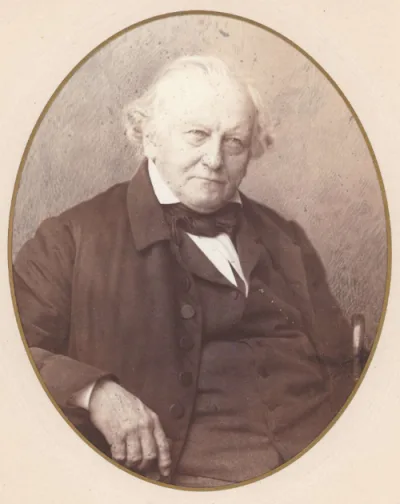
✍️ Author Biography
Francis Bacon
📅 1558 – 1601
🌍 English
📚 2 free books
Francis Bacon was an English philosopher and statesman, a key figure in the Scientific Revolution and father of empiricism.
Francis Bacon (1561–1626) was a prominent English philosopher, statesman, and lawyer, widely recognized for his advocacy of empirical methods and his foundational role in the Scientific Revolution. He served in high legal and political offices under King James I, including Attorney General and Lord Chancellor. Bacon championed a new approach to natural philosophy, emphasizing inductive reasoning and meticulous observation of nature. He believed that by employing a skeptical and methodical approach, humanity could achieve reliable scientific knowledge and avoid self-deception. Though his specific "Baconian method" did not endure in its details, his emphasis on a systematic, doubt-driven methodology remains a cornerstone of scientific thought. Bacon also promoted scientific experimentation as a means to understand God's creation and fulfill religious texts.
Beyond his scientific contributions, Bacon was a patron of libraries and devised a system for categorizing books. He also had a significant political career, advocating for legal reform, the union of England and Scotland, and closer constitutional ties within the British Isles. Despite his intellectual achievements and political service, Bacon experienced periods of financial difficulty and professional setbacks. His legacy is multifaceted, encompassing his philosophical impact on science, his organizational ideas for knowledge, and even speculative theories about his authorship of Shakespearean plays.
Philosophical Foundations of Empiricism
Francis Bacon is celebrated as the father of empiricism, a philosophical stance that knowledge primarily derives from sensory experience. He argued forcefully for the necessity of inductive reasoning, where specific observations are used to formulate general principles. Bacon believed that science should be built upon careful, methodical observation of the natural world, eschewing reliance on ancient authorities or abstract speculation. He proposed a systematic approach, often termed the Baconian method, designed to guide researchers in avoiding logical fallacies and personal biases. This emphasis on a rigorous, skeptical, and observational framework laid crucial groundwork for the development of the modern scientific method, profoundly influencing the trajectory of the Scientific Revolution.
Advocacy for Scientific Inquiry and Knowledge Organization
Bacon viewed scientific experimentation not merely as a means of discovery but also as an act of devotion, a way to understand and glorify God's work. He was a proponent of promoting scientific endeavors, seeing them as essential for human progress and societal benefit. His interest extended to the organization of knowledge itself. Bacon developed a tripartite system for classifying books, dividing them into categories of History, Poetry, and Philosophy, with further subdivisions for specific topics. This structured approach reflected his broader vision for systematizing and advancing human understanding. He famously described his philosophy on engaging with books: "Some books are to be tasted; others swallowed; and some few to be chewed and digested," highlighting a nuanced approach to learning and knowledge acquisition.
Political Career and Legal Reform
Beyond his philosophical pursuits, Francis Bacon had a distinguished career in law and politics. He served in various capacities, including Member of Parliament, Queen's Counsel, and ultimately as Attorney General and Lord Chancellor under King James I. Bacon was known for his reformist ideas, advocating for simplification and modernization of the law. He often championed liberal causes, opposing religious persecution and feudal privileges. He supported the union of England and Scotland and later advocated for the integration of Ireland, believing that closer constitutional ties would enhance peace and strength. Despite his service, his political ascent was not without challenges, including periods of exclusion from court favor and financial difficulties.
Key Ideas
- Empiricism: Knowledge derived from sensory experience.
- Inductive Reasoning: Generalizing from specific observations.
- Scientific Method: A systematic, skeptical approach to inquiry.
- Classification of Knowledge: Organizing information into structured categories.
Notable Quotes
“Some books are to be tasted; others swallowed; and some few to be chewed and digested.”