The Witch's Altar Book
 78
78

The Witch's Altar Book
The Witch's Altar Book presents a commendably broad view of altar construction, aiming to encompass the diverse needs of contemporary witches. Its strength lies in the collaborative effort of Squire, Weiss, and Patterson, who bring distinct generational perspectives, echoing the Maiden, Mother, and Crone archetypes. This generational layering is particularly evident in discussions around integrating modern tools and aesthetics alongside traditional elements. However, the book occasionally feels stretched thin by its ambition to be definitive for every witch. For instance, while it touches upon various magical traditions, the depth of exploration for each specific path, such as sea or kitchen witchcraft, can feel introductory rather than exhaustive. A particularly effective section details the symbolic placement of items, explaining how a carefully chosen crystal might anchor a specific intention, moving beyond mere decoration. Ultimately, it serves as a useful, if broad, primer for those seeking to establish or refine their sacred space.
📝 Description
78
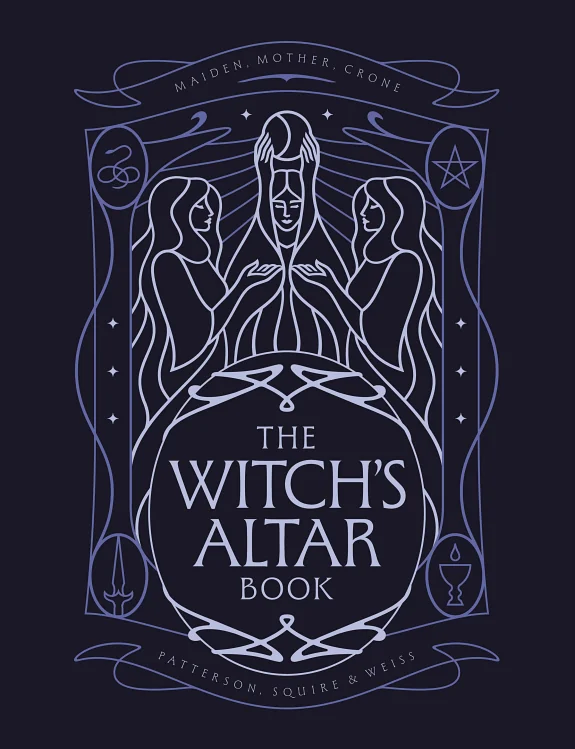
Published in 2025, The Witch's Altar Book by Squire, Weiss, and Patterson details altar creation for modern witchcraft.
This volume addresses the altar as the central point of modern witchcraft. Lindsay Squire, Nicole Weiss, and Rachel Patterson guide readers in building and using this sacred space. The book provides practical advice for a personalized altar that aids spellwork and ritual, emphasizing its role as a focus for intention and energy.
The guide is for witches of all generations and experience levels, including hedge, eclectic, sea, and kitchen witches. It speaks to those who wish to strengthen their practice by creating and maintaining a dedicated altar. The authors’ generational perspectives, representing Maiden, Mother, and Crone archetypes, also appeal to interested readers.
The altar is presented as a dynamic, personal tool for witchcraft. Its function as a sacred anchor and energy conduit is examined.
Published in 2025, The Witch's Altar Book continues a long tradition of practical magic manuals. Its approach to the altar as a flexible, individual space shows a modern shift from older, more structured ceremonial systems. The book emerges during a time when witchcraft is experiencing renewed interest, with practitioners increasingly favoring personal interpretation and varied paths over the unified approaches of earlier occult revivals.
💡 Why Read This Book?
• Learn practical, step-by-step guidance for constructing a functional altar, drawing on the specific advice for various witch types outlined in the book, ensuring your sacred space actively supports your magical aims. • Gain insight into the generational perspectives offered by Lindsay Squire, Nicole Weiss, and Rachel Patterson, understanding how the Maiden, Mother, and Crone archetypes inform altar design and ritual practice for a richer, more nuanced approach. • Discover how to imbue your altar with personal meaning by exploring the symbolic significance of various components, as detailed in sections discussing the integration of elements relevant to eclectic, hedge, sea, and kitchen witchcraft.
⭐ Reader Reviews
Honest opinions from readers who have explored this book.
❓ Frequently Asked Questions
What is the primary purpose of an altar according to The Witch's Altar Book?
The book posits that an altar serves as the central nexus for modern witchcraft practice, functioning as a sacred space for spells and rituals. It's designed to be a focal point for intention, energy, and personal connection to the craft.
Which types of witches are specifically addressed in this guide?
The Witch's Altar Book is inclusive, catering to hedge witches, eclectic witches, sea witches, and kitchen witches, among others. It aims to provide relevant altar advice for a wide spectrum of magical practitioners.
Who are the authors of The Witch's Altar Book?
The authors are Lindsay Squire, Nicole Weiss, and Rachel Patterson. Their collaboration represents different generational viewpoints, framed as the Maiden, Mother, and Crone.
When was The Witch's Altar Book first published?
The book was first published on September 30, 2025. This contemporary publication date reflects current trends and perspectives in witchcraft.
Is the book heavily illustrated, as suggested in its original blurb?
Yes, the blurb mentions the book is "beautifully illustrated throughout," indicating a strong visual component designed to enhance the reader's understanding and engagement with altar setup.
Does the book focus on a single tradition of witchcraft?
No, The Witch's Altar Book aims to be inclusive of various modern witchcraft paths, including hedge, eclectic, sea, and kitchen witchcraft, rather than adhering to a singular tradition.
🔮 Key Themes & Symbolism
The Altar as Sacred Space
This theme centers on the altar as the core of personal witchcraft practice. The book details how to establish this space, emphasizing its role as a focal point for intention, ritual, and spellcasting. It moves beyond mere aesthetics to explore the altar's energetic function, providing practical advice on its placement, consecration, and maintenance. The concept is presented as adaptable to various witch types, from kitchen to sea witches, ensuring the sacred space is deeply personal and effective.
Generational Witchcraft Perspectives
The collaboration between Lindsay Squire, Nicole Weiss, and Rachel Patterson introduces a unique intergenerational dialogue. By framing their contributions through the Maiden, Mother, and Crone archetypes, the book offers a multi-faceted view of witchcraft. This approach ensures that different life stages and experiences are considered in the practice of building and using an altar, suggesting that the altar's evolution can mirror the witch's own life journey.
Diverse Magical Paths
The Witch's Altar Book explicitly acknowledges and caters to a wide array of contemporary witchcraft traditions. It provides guidance tailored for hedge witches, eclectic witches, sea witches, and kitchen witches, among others. This inclusivity highlights the modern range of magic, where practitioners often blend traditions or focus on specific elemental or practical applications, demonstrating the versatility required of a modern witch's altar.
Symbolic Integration and Personalization
A significant theme is the importance of imbuing the altar with personal meaning through symbolic objects. The book explores how elements like crystals, herbs, tools, and imagery can represent specific intentions, deities, or aspects of the witch's path. This focus on personalization transforms the altar from a generic setup into a potent, individualized tool that actively reflects and amplifies the witch's unique magical work.
💬 Memorable Quotes
Direct passages from the work, attributed to the author.
“An altar is not merely decorative; it is the energetic anchor of your magical practice.”
— This statement underscores the functional, energetic purpose of the altar, positioning it as a critical component for effective spellwork and ritual, rather than just an aesthetic arrangement.
“Each generation brings a distinct lens to the practice, enriching the collection of witchcraft.”
— This highlights the value of intergenerational collaboration among the authors, suggesting that combining different life experiences and perspectives leads to a more comprehensive understanding of modern witchcraft.
“Whether hedge, sea, or kitchen, your altar must resonate with your specific path.”
— This emphasizes the need for personalization in altar creation, asserting that the space should be tailored to the individual witch's chosen magical tradition and practices.
“The Maiden, Mother, and Crone archetypes offer a framework for understanding the evolving witch's altar.”
— This suggests that the altar can be viewed through the lens of life stages, reflecting the practitioner's growth and changes over time, mirroring the cyclical nature often associated with witchcraft.
“Careful curation of altar elements transforms a table into a sacred working space.”
— This points to the intentional process of selecting and arranging items on the altar, indicating that thoughtful choices are key to its magical efficacy and sacred nature.
🌙 Esoteric Significance
Tradition
The work situates itself within the broad field of modern, eclectic witchcraft, drawing implicitly from traditions that emphasize personal practice and symbolic representation. It departs from rigid ceremonial magic structures by prioritizing adaptability and individual expression. While not strictly aligned with a single lineage like Hermeticism or Gnosticism, it carries the universal magical principle of creating a sacred locus, a concept found across many esoteric traditions that emphasize the power of focused intention and symbolic environment.
Symbolism
Key symbols explored include the altar itself as a microcosm of the universe or the witch's inner world. Candles represent light, transformation, and elemental fire; incense signifies prayer, purification, and the element of air. The book likely discusses the incorporation of personal totems, deity representations, and natural elements (stones, herbs, water) to anchor specific energies and intentions, reflecting ancient practices of nature veneration and sympathetic magic.
Modern Relevance
This book speaks directly to contemporary practitioners engaged with the burgeoning online witchcraft communities and the broader neo-pagan landscape. Thinkers and practitioners focusing on intersectional spirituality, generational wisdom, and the decolonization of spiritual practices would find its inclusive and adaptable approach relevant. It provides a foundational text for those exploring modern interpretations of witchcraft that blend traditional elements with 21st-century lifestyles and concerns.
👥 Who Should Read This Book
• New practitioners seeking a foundational understanding of altar setup and its significance in witchcraft, benefiting from the clear, practical advice suitable for diverse magical paths. • Experienced witches looking to refresh or re-evaluate their altar practices, gaining new perspectives from the intergenerational collaboration and focus on personalization. • Students of comparative religion or esoteric studies interested in contemporary magical practices and how traditions evolve to meet modern needs and diverse practitioner backgrounds.
📜 Historical Context
Published in 2025, The Witch's Altar Book arrives during a period of continued expansion and diversification within contemporary witchcraft. This era follows decades marked by the Wiccan resurgence and the subsequent rise of eclectic and neo-pagan movements starting in the mid-20th century. The book's emphasis on personalized altars and its appeal across generational lines (Gen X, Y, Z) reflects a departure from the more codified practices seen in earlier occult revival circles, such as the Hermetic Order of the Golden Dawn, which often dictated specific ritualistic arrangements. Unlike earlier grimoires that might have focused on singular, authoritative magical systems, Squire, Weiss, and Patterson's work embraces a pluralistic approach. This reflects the broader cultural trend towards individual spiritual seeking and the accessibility of diverse esoteric knowledge online and through various subcultures, moving away from the centralized teachings that characterized earlier esoteric societies.
📔 Journal Prompts
Reflect on the Maiden, Mother, and Crone archetypes in relation to your evolving altar.
Identify three symbolic objects from your home that could be incorporated into your altar space.
Consider the energetic purpose of your altar: What intentions does it primarily serve?
How does your chosen witchcraft path (e.g., hedge, kitchen) influence the design of your altar?
Document the process of consecrating your altar space for the first time.
🗂️ Glossary
Altar
The central sacred space within a witch's practice, used as a focal point for spells, rituals, and connection to the divine or magical energies.
Hedge Witch
A type of witch whose practice is often solitary, focused on folk magic, herbalism, and working with the energies of the natural world, often at the boundaries between realms.
Eclectic Witch
A practitioner who combines elements from various magical traditions and belief systems to create a personalized spiritual path and practice.
Sea Witch
A witch whose practice is deeply connected to the energies, elements, and spirits of the ocean, coastlines, and water bodies.
Kitchen Witch
A practitioner who focuses on magic within the domestic sphere, particularly through cooking, baking, and the use of herbs and spices in food preparation.
Consecration
The ritual act of dedicating a space, object, or tool for sacred use, often involving purification and blessings to imbue it with spiritual significance.
Ritual
A set of actions performed according to a prescribed order, often for religious or mystical purposes, designed to create a specific energetic or spiritual effect.
This book appears in 1 collection
🔮 Readers Also Liked
Browse all →







From the “Grimoires” Collection
View all →




More Free Magic & Ritual Books
View all →