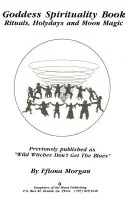
Goddess Spirituality Book
 73
73

Goddess Spirituality Book
Ffiona Morgan's *Goddess Spirituality Book*, first published in 1995, offers a structured approach to a subject often characterized by fluid interpretation. Its strength lies in its attempt to synthesize diverse historical and cultural threads into a coherent narrative, particularly in its examination of the Maiden, Mother, and Crone archetypes. However, the book occasionally feels more like a catalog of concepts than a deeply experiential guide. For instance, the section on the suppression of Goddess worship, while important, could benefit from more specific examples of resistance or adaptation beyond general historical trends. Morgan's work is valuable for its clear presentation of foundational ideas for newcomers, though seasoned practitioners might find it a bit too generalized. It serves as a solid primer, laying groundwork for further personal exploration rather than dictating a singular path.
📝 Description
73
Ffiona Morgan's book traces Goddess spirituality from ancient roots to its 20th-century revival.
This volume examines the concept of Goddess spirituality, detailing its historical presence and its resurgence in recent times. Morgan looks at how the divine feminine has been understood across different cultures and eras, including periods of suppression and later revival. The book offers a way to understand and reconnect with this ancient archetype.
It is written for those interested in feminist theology, comparative mythology, and earth-based spiritual practices. Readers will find insights into the historical and cultural roles of female deities and explore alternative spiritual paths focused on the divine feminine. The work serves as an introduction to the subject.
The book places Goddess spirituality within the late 20th-century spiritual and feminist movements. It notes the increased interest from the 1970s onward in pre-patriarchal religions, influenced by archaeology and new interpretations of old texts. This era prompted a significant reevaluation of religious history and women's place within it.
This book engages with the Neopagan and Goddess movement, which gained momentum in the latter half of the 20th century. It reflects a broader interest in reclaiming pre-Christian European spiritual traditions and reinterpreting mythology through a feminist lens. The work connects with scholarship that re-examines ancient religions, often informed by archaeological discoveries and a desire to find alternative spiritual narratives outside of patriarchal religious structures.
💡 Why Read This Book?
• Learn about the cyclical nature of divine feminine archetypes, specifically the Maiden, Mother, and Crone phases, as detailed in Morgan's framework, providing a unique lens for personal development. • Understand the historical suppression of Goddess worship, gaining context from the book's discussion of patriarchal religious shifts and their impact. • Explore the concept of immanence—the divine within nature and the self—as presented in the book, offering a direct pathway to embodied spirituality distinct from transcendent models.
⭐ Reader Reviews
Honest opinions from readers who have explored this book.
❓ Frequently Asked Questions
When was the Goddess Spirituality Book first published?
The Goddess Spirituality Book by Ffiona Morgan was first published in 1995, reflecting a surge of interest in feminist spirituality and ancient matriarchal traditions during the late 20th century.
What are the main archetypes discussed in the book?
The book prominently discusses the triple Goddess archetypes: the Maiden, representing youth and new beginnings; the Mother, symbolizing nurturing and creation; and the Crone, embodying wisdom and endings.
Does the book focus on a specific cultural tradition?
No, the Goddess Spirituality Book aims for a broader perspective, exploring the concept of the Divine Feminine across various cultures and historical periods, rather than focusing on a single tradition.
Is this book suitable for beginners in spirituality?
Yes, its structured approach and clear explanations make it a suitable introduction for beginners interested in understanding the core concepts of Goddess spirituality and its historical context.
What is the book's stance on patriarchal religions?
The book examines the historical suppression of Goddess worship within the rise of patriarchal religions, presenting it as a key factor in the decline of earlier forms of divine feminine reverence.
Can this book help with personal spiritual practice?
The book offers conceptual frameworks, such as the archetypes of the Maiden, Mother, and Crone, and the idea of immanence, which can serve as starting points for personal reflection and spiritual practice.
🔮 Key Themes & Symbolism
The Triple Goddess Archetypes
Central to the book is the exploration of the Maiden, Mother, and Crone as distinct yet interconnected phases of the feminine divine. The Maiden represents new beginnings, potential, and youthful energy, often associated with spring and waxing moons. The Mother embodies nurturing, fertility, abundance, and mature power, linked to summer and full moons. The Crone signifies wisdom, transformation, endings, and the mysteries of death and rebirth, connected to winter and the waning moon. This tripartite model offers a cyclical understanding of life and the divine feminine's many-sided nature throughout a woman's life and the seasons.
Immanence vs. Transcendence
The work emphasizes the concept of immanence, positing that the divine feminine resides within all aspects of existence—nature, the human body, and everyday life—rather than being a distant, transcendent entity. This contrasts with many patriarchal religious systems that often locate divinity outside the material world. By focusing on immanence, Goddess spirituality invites practitioners to find sacredness in the physical realm, the earth's cycles, and personal experience, fostering a sense of connection and embodiment.
Historical Suppression and Revival
A significant theme is the historical narrative of Goddess worship being suppressed or overshadowed by patriarchal religions. The book examines how archaeological evidence and reinterpreted ancient texts suggest a widespread reverence for female deities in prehistory and antiquity. It then discusses the modern revival of Goddess spirituality as a conscious effort to reclaim these traditions, challenging dominant religious narratives and re-centering the divine feminine in spiritual discourse and practice.
The Divine Feminine in Nature
The book strongly links the divine feminine to the natural world, viewing earthly cycles—seasons, lunar phases, birth, death, and rebirth—as manifestations of Goddess energy. It encourages readers to observe and connect with these natural rhythms as a way to understand and experience the Goddess. This perspective fosters an eco-spiritual outlook, promoting reverence for the planet and advocating for a harmonious relationship between humanity and the environment, seeing the Earth itself as a divine presence.
💬 Memorable Quotes
Direct passages from the work, attributed to the author.
“The Goddess is not a single entity but a principle present in all creation.”
— This highlights the immanent nature of the divine feminine, suggesting it's a pervasive force woven into the fabric of existence rather than a singular, external deity.
“The cycles of the moon mirror the phases of the feminine divine.”
— This points to the deep connection between lunar rhythms and the archetypal stages of the Goddess—Maiden, Mother, Crone—emphasizing natural cycles as sacred.
“Reclaiming the Goddess involves recognizing her presence in our bodies and the Earth.”
— This emphasizes embodiment and ecospirituality, suggesting that reconnecting with the divine feminine requires honoring the physical self and the natural world.
“Patriarchal religions often displaced earlier Goddess traditions.”
— This addresses the historical narrative of suppression, suggesting a deliberate shift in religious focus away from female deities towards male-centric ones.
“The Crone represents not just an end, but the wisdom gained from transformation.”
— This redefines the Crone archetype beyond mere decline, highlighting her role as a source of profound knowledge and the transformative power of aging and experience.
🌙 Esoteric Significance
Tradition
This work fits within the modern Pagan and New Age traditions, specifically drawing from Neopaganism's focus on Goddess worship and earth-based spirituality. It departs from purely academic or historical accounts by framing the Divine Feminine as a living, accessible spiritual principle for contemporary practice. While not strictly Hermetic or Gnostic, it shares with them an interest in immanent divinity and symbolic interpretation, offering a distinct path focused on feminine archetypes.
Symbolism
Key symbols include the triple moon (representing the Maiden, Mother, Crone cycle), the Earth as a living Goddess (emphasizing immanence and ecological connection), and the sacred feminine body (reclaiming physicality as divine). These symbols serve to re-center feminine power and connect practitioners to natural rhythms and the inherent divinity within themselves and the world.
Modern Relevance
Contemporary eco-feminist movements, contemporary witchcraft covens, and individuals exploring embodied spirituality often draw upon the conceptual frameworks presented in this book. Thinkers focusing on ecopsychology and reclaiming indigenous spiritualities also find resonance with its emphasis on nature and immanence, continuing the dialogue on the Divine Feminine's role in personal and planetary healing.
👥 Who Should Read This Book
• Aspiring practitioners of modern Paganism and Neopaganism seeking foundational knowledge of Goddess-centered beliefs and practices. • Students of comparative religion and mythology interested in understanding the historical and cultural significance of female deities and feminist theological perspectives. • Individuals exploring personal spiritual growth who wish to connect with the Divine Feminine through archetypal understanding and nature-based spirituality.
📜 Historical Context
Published in 1995, *Goddess Spirituality Book* emerged during a period of significant resurgence for feminist spirituality and New Age thought. Following the academic and popular groundwork laid by scholars like Marija Gimbutas in the 1970s and 80s, which proposed theories of ancient matriarchal cultures, this era saw a burgeoning interest in reclaiming pre-patriarchal religious traditions. Morgan's work participated in a broader intellectual current that sought to challenge the dominance of patriarchal religious structures and reinterpret history through a feminine lens. Contemporaries like Starhawk were also influential in popularizing Goddess-centered practices. While not facing overt censorship, the academic establishment often viewed these theories with skepticism, and popular reception varied, with some embracing it as liberation and others dismissing it as speculative history.
📔 Journal Prompts
The Maiden, Mother, Crone cycle as reflected in your personal life stages.
Manifestations of immanence observed in the natural world around you.
Historical narratives of Goddess worship and their potential suppression.
Personal embodiment as a sacred practice connecting to the Divine Feminine.
The wisdom offered by the Crone archetype in contemporary challenges.
🗂️ Glossary
Immanence
The philosophical or theological concept that divinity is present within the material world and all of creation, rather than existing only outside of it (transcendence).
Maiden
An archetype of the Triple Goddess representing youth, new beginnings, potential, and burgeoning sexuality; often associated with spring and the waxing moon.
Mother
An archetype of the Triple Goddess embodying nurturing, fertility, creation, abundance, and mature power; associated with summer and the full moon.
Crone
An archetype of the Triple Goddess representing wisdom, transformation, endings, death, and rebirth; associated with winter and the waning moon.
Divine Feminine
A spiritual concept referring to the sacred feminine principle, encompassing qualities, energies, and archetypes traditionally associated with women and the feminine aspect of creation.
Patriarchal Religions
Religious systems characterized by male leadership, theological emphasis on male deities, and social structures that grant men dominant authority.
Neopaganism
A modern religious movement that draws inspiration from pre-Christian European polytheistic traditions, often emphasizing nature worship, Goddess spirituality, and ritual practice.
This book appears in 1 collection
🔮 Readers Also Liked
Browse all →







From the “Ritual Magic” Collection
View all →









More Free Magic & Ritual Books
View all →