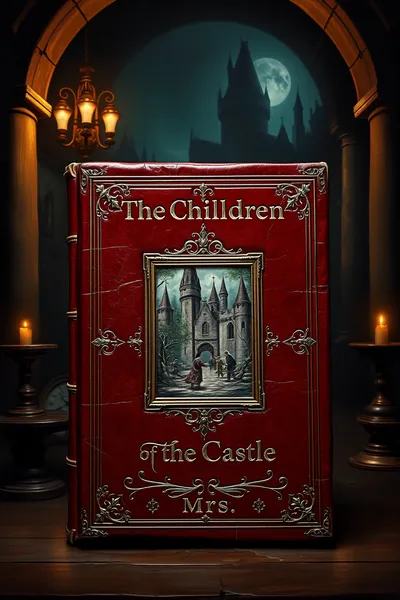
Xi xue gui xue yuan

 74
74

Xi xue gui xue yuan
Richelle Mead’s "Xi xue gui xue yuan" offers a detailed exploration of vampire society, moving beyond simplistic archetypes. The series' strength lies in its meticulously crafted social hierarchy and the compelling tension between the Moroi's vulnerability and the Dhampir's protective role. The introduction of the Strigoi as a tangible, terrifying threat provides a consistent undercurrent of danger. However, the narrative occasionally falters under the weight of its own intricate world-building, sometimes slowing the pace to explain complex rules. A particularly effective passage involves the depiction of a Moroi's struggle to control their magic during a moment of extreme duress, highlighting the personal cost of their power. While it leans into established paranormal tropes, the series provides a solid framework for exploring the consequences of power and duty. It’s a well-executed entry in the genre, particularly for its engagement with societal structures.
📝 Description
74
Richelle Mead's 'Xi xue gui xue yuan,' published in 2010, depicts a hidden vampire society with complex social strata.
This series, known in English as 'Bloodline,' centers on the intricate social structures and long-standing conflicts among different vampire factions. It details the lives of the Moroi, a race of living vampires who wield magic, and the Dhampirs, their human-vampire hybrid guardians. The narrative also acknowledges the existence of the Strigoi, an undead and inherently evil faction. Mead's work examines the political tensions and personal dangers that arise from these divisions within a young adult paranormal fiction framework.
The story appeals to readers who value character development and focus on relationships. It delves into themes of moral complexity, the allure of forbidden love, and the constant struggle for survival. The detailed world building provides a rich backdrop for these conflicts. Readers interested in the darker aspects of vampire mythology and the dynamics of power within a structured supernatural society will find much to engage with.
Published in 2010, 'Xi xue gui xue yuan' arrived during a peak in young adult supernatural fiction. It built upon established vampire lore but distinguished itself by creating a detailed social and political system for its vampiric world. The series examined the consequences of power and societal roles, particularly for its Dhampir characters who occupied a unique space between human and vampire existence. This engagement with structured supernatural societies and the inherent conflicts within them places it within a modern tradition of paranormal fiction that explores societal anxieties through mythic frameworks.
💡 Why Read This Book?
• Gain insight into a unique vampire social structure, differentiating between Moroi, Strigoi, and Dhampir roles as established in the early 2010s paranormal boom. • Understand the concept of "bloodlines" and their impact on destiny and power dynamics within the fictional world, a recurring motif. • Experience the tension between duty and personal desire through the struggles of Dhampir guardians, a core conflict throughout the series.
⭐ Reader Reviews
Honest opinions from readers who have explored this book.
❓ Frequently Asked Questions
What is the main conflict in Richelle Mead's "Xi xue gui xue yuan"?
The primary conflict revolves around the eternal struggle between the living vampires (Moroi) and the evil, immortal ones (Strigoi), with Dhampir guardians caught in the middle, protecting the Moroi from destruction.
When was the "Xi xue gui xue yuan" series first published?
The series, known internationally as "Bloodlines" and "Vampire Academy" in its earlier iterations, began publication in 2010.
Are there different types of vampires in the "Xi xue gui xue yuan" series?
Yes, the series features three main supernatural groups: the Moroi (living, magic-wielding vampires), the Strigoi (undead, evil vampires), and the Dhampirs (half-human, half-vampire guardians).
What is the significance of "bloodlines" in the series?
Bloodlines are crucial, determining lineage, inherent magical abilities, and often, one's destined role within the Moroi society, influencing character arcs and plot developments.
Does the series "Xi xue gui xue yuan" have a connection to other Richelle Mead works?
Yes, "Xi xue gui xue yuan" is a spin-off series connected to Mead's earlier "Vampire Academy" novels, exploring the same world but focusing on different characters and timelines.
What kind of magic do the Moroi possess in the series?
Moroi vampires possess elemental magic, with each individual typically aligned to one of the five main elements: fire, water, earth, air, or spirit.
🔮 Key Themes & Symbolism
Moroi Society and Magic
The series meticulously details the structure of Moroi society, a civilization of living vampires who possess elemental magic. Each Moroi is typically attuned to one of five elements—fire, water, earth, air, or spirit—which dictates their magical capabilities and often their social standing. This system is not merely a plot device but a core aspect of their culture, influencing their politics, defenses, and daily lives. The narrative explores the responsibilities and limitations that come with such powers, particularly when facing the existential threat of the Strigoi. The intricacies of elemental magic and its application are central to the characters' growth and the unfolding events.
Dhampir Guardianship
Central to the narrative is the role of the Dhampirs, a race of half-human, half-vampire individuals bred and trained as elite guardians. Their existence is dedicated to protecting the Moroi from the Strigoi, the undead and malevolent vampires. This theme explores the concept of duty, sacrifice, and the inherent conflict of being perpetually caught between two worlds. Dhampirs often grapple with their identity, their mortality, and the ethical dilemmas of their position. The series examines the personal cost of this perpetual vigilance and the bonds formed through shared purpose and danger.
The Strigoi Threat
The Strigoi represent the antithesis of the Moroi – undead, powerful, and driven by an insatiable hunger and a desire to kill. They are the primary antagonists, embodying the dangers of unchecked power and eternal undeath. The constant threat posed by the Strigoi fuels much of the series' tension and action. Their existence highlights the fragility of the Moroi society and the necessity of the Dhampir guardians. The narrative looks at the nature of the Strigoi, their origins, and their motivations, presenting them not just as monsters but as a force that shapes the entire supernatural world.
Bloodlines and Destiny
The concept of "bloodlines" is fundamental to the series' lore, referring to the lineage and inherent traits passed down through generations of vampires. These bloodlines often dictate magical affinities, social status, and even predestined roles within Moroi society. Characters grapple with the weight of their ancestry, facing expectations and limitations imposed by their lineage. The interplay between inherited destiny and individual choice is a recurring theme, as characters strive to forge their own paths despite the legacies they carry. This exploration of fate versus free will adds depth to the supernatural setting.
💬 Memorable Quotes
Direct passages from the work, attributed to the author.
“The Strigoi were a plague, a blight upon the world.”
— This statement emphasizes the extreme danger and malevolence associated with the Strigoi, portraying them as an existential threat that the Moroi and Dhampirs must constantly combat.
“Moroi could wield elements, but they were still bound by their own desires.”
— This highlights the internal struggles of the Moroi vampires, suggesting that despite their magical abilities, they are susceptible to human-like emotions and temptations, which can complicate their existence.
💡 Key Ideas
Editorial paraphrase of the work's core concepts — not direct quotes.
Dhampirs were the best. Strong, fast, and with a killer instinct.
This line expresses the core identity and function of Dhampirs within the series' lore, highlighting their physical prowess and their role as formidable protectors of the Moroi.
Bloodlines determined everything, from power to the path one walked.
This paraphrase speaks to the overarching theme of destiny and inheritance within the series, where a character's lineage significantly influences their capabilities and life trajectory.
Guardians lived and died protecting others.
This concisely summarizes the ultimate purpose and sacrifice inherent in the Dhampir role, underscoring their selfless dedication to the safety of the Moroi.
🌙 Esoteric Significance
Tradition
While not directly rooted in a specific historical esoteric tradition like Hermeticism or Kabbalah, the "Xi xue gui xue yuan" series engages with archetypal themes common in Western occultism. The structured hierarchy of supernatural beings (Moroi, Strigoi, Dhampir) can be seen as a fictionalized echo of angelic or demonic hierarchies found in grimoires and occult texts. The concept of elemental magic wielded by the Moroi aligns with Neoplatonic and Hermetic principles of elemental correspondences, albeit presented in a YA fantasy context. The series taps into a modern fascination with the 'hidden world' and supernatural orders.
Symbolism
The primary symbols revolve around the vampire archetypes themselves. The Moroi represent the 'living' or 'spiritual' vampire, often associated with life force and elemental control, akin to alchemical principles of transformation through natural forces. The Strigoi embody the corrupted, undead force, symbolizing death, stagnation, and primal hunger—a dark mirror to life. The Dhampir figures are potent symbols of duality and liminality, existing between human and vampire, life and undeath, duty and personal desire, representing the perpetual struggle for balance.
Modern Relevance
Contemporary urban fantasy and paranormal romance continue to draw inspiration from Mead's intricate world-building and character archetypes. The series' exploration of complex supernatural societies, the ethics of power, and the dynamics of forbidden relationships remains relevant to authors and readers alike. Thinkers and practitioners interested in fictionalized explorations of magical systems, societal structures within supernatural contexts, and the perennial conflict between light and shadow find elements of these themes in modern occult-inspired fiction.
👥 Who Should Read This Book
• Young adult readers interested in intricate supernatural world-building and character-driven plots, particularly those fascinated by vampire lore. • Fans of Richelle Mead's earlier "Vampire Academy" series seeking to expand their understanding of that fictional universe and its characters. • Enthusiasts of paranormal romance and urban fantasy looking for stories that balance action, romance, and complex societal dynamics within a non-human context.
📜 Historical Context
Richelle Mead’s "Xi xue gui xue yuan" (Bloodlines series) arrived in 2010, a period of intense popularity for young adult paranormal fiction. The market was saturated, following the massive success of franchises like Stephenie Meyer's "Twilight" (concluded in 2008) and Charlaine Harris's "The Southern Vampire Mysteries," which had been adapted into the HBO series "True Blood" in 2008. Mead's earlier "Vampire Academy" (2007-2010) had already carved out a niche with its more complex vampire society and its focus on Dhampir guardians. The "Bloodlines" series, a spin-off, deepened this world-building, offering a more intricate look at vampire politics and relationships, distinguishing itself from simpler human-vampire romances. While not facing direct censorship, the genre itself was scrutinized for its romanticization of potentially problematic power dynamics, a conversation that implicitly surrounded works like Mead's.
📔 Journal Prompts
The Moroi's elemental magic and its limitations.
Dhampir identity and the burden of guardianship.
The nature of the Strigoi threat and its symbolic representation.
The influence of bloodlines on character destiny.
Interactions between Moroi, Strigoi, and Dhampir societies.
🗂️ Glossary
Moroi
A race of living vampires in the series who possess magical abilities tied to the elements. They require blood to survive but are not inherently undead.
Strigoi
Undead, evil vampires who crave human and Moroi blood, possess immense strength and speed, and are the primary antagonists in the series.
Dhampir
Offspring of a human and a Moroi vampire, possessing enhanced physical abilities and serving as guardians to protect the Moroi from Strigoi attacks.
Bloodlines
Refers to the lineage and inherited traits of vampires, which often dictate their magical affinities, social status, and potential roles within Moroi society.
Elemental Magic
The supernatural abilities possessed by Moroi vampires, allowing them to control specific elements such as fire, water, earth, air, or spirit.
Guardian
A Dhampir trained from a young age to protect Moroi individuals and communities from the threat of the Strigoi.
Tificat
A ritualistic process where a Moroi turns a human into a Strigoi, involving a deadly exchange of blood and a soul-binding process.
🔮 Readers Also Liked
Browse all →









More by Richelle Mead
All books →




More Free Magic & Ritual Books
View all →