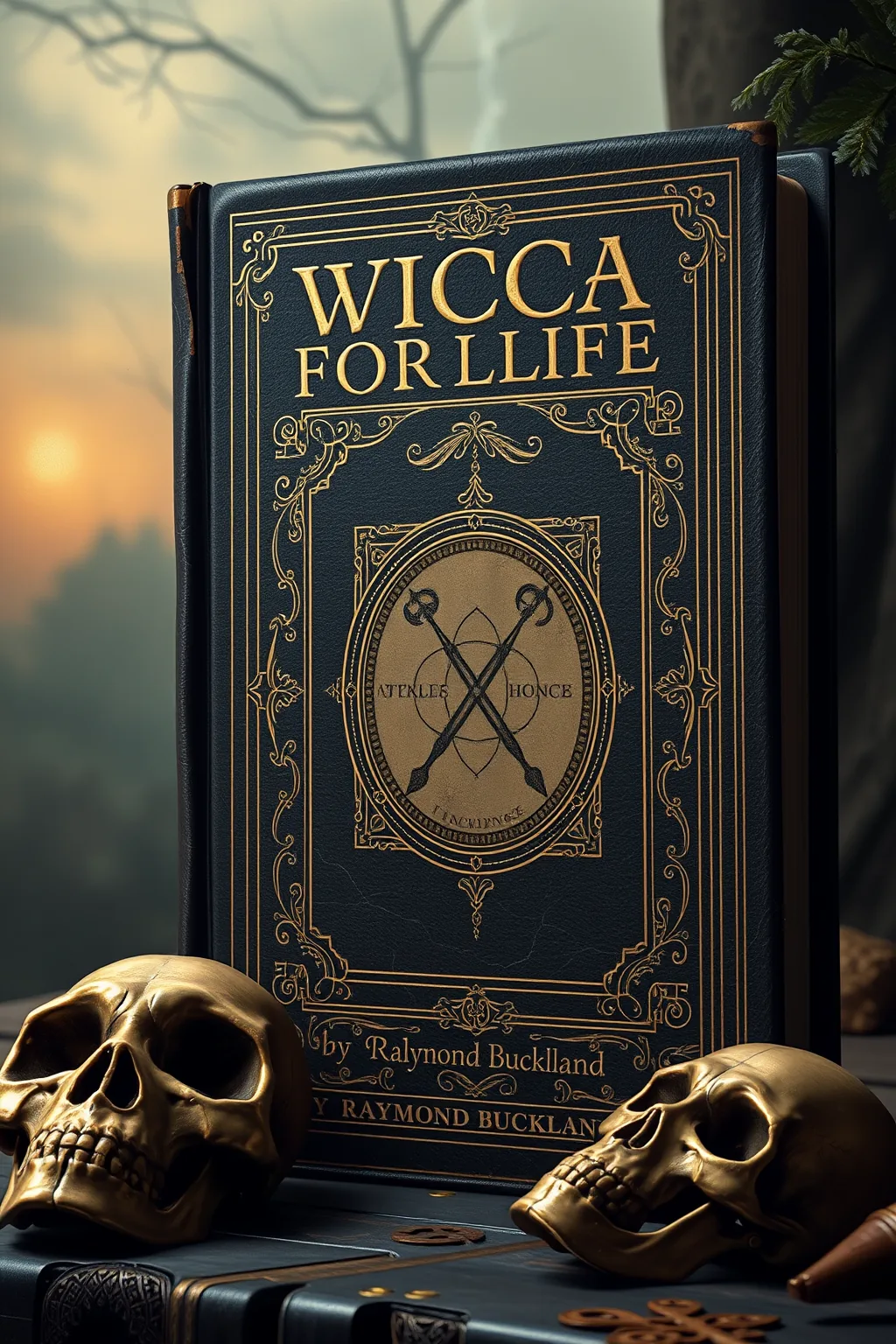
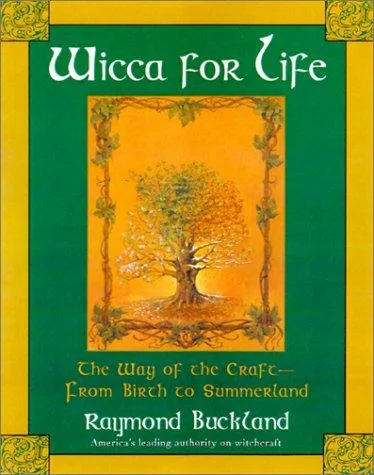
Wicca For Life
 81
81

Wicca For Life
Raymond Buckland's "Wicca For Life" offers a solid, if conventional, framework for sustained engagement with the Craft. Its strength lies in its systematic organization, particularly in detailing the cyclical nature of Wiccan observance through the Wheel of the Year. Buckland's pragmatic approach to ritual and ethics, exemplified in his clear exposition of the Wiccan Rede, provides a stable foundation. However, for readers familiar with the breadth of modern Wiccan literature, the material may feel somewhat familiar, adhering closely to established paths without significant departures. A notable passage on the creation of personal altars underscores the book's emphasis on building a tangible connection to the spiritual. Ultimately, "Wicca For Life" serves as a dependable, thorough guide for those committed to a long-term Wiccan path.
📝 Description
81
Raymond Buckland published Wicca For Life in 2001, moving beyond beginner concepts in Witchcraft.
Wicca For Life, published in 2001, offers a detailed guide to Wiccan practice for those ready to deepen their commitment. It moves beyond introductory ideas to focus on the core tenets and rituals of the Craft, aiming to provide a structured path for individuals seeking a lasting connection to Wiccan spirituality. The book covers everything from fundamental beliefs to the practical application of Wiccan principles in everyday life.
This book is for practitioners who have moved past initial learning and want to build a consistent, long-term practice. It gives tools for personal growth and spiritual development to those who wish to weave Wiccan principles into their daily existence. It is useful for solitary practitioners and members of covens looking for a reference on established traditions.
Buckland details essential Wiccan concepts like the Wheel of the Year, magical principles, the Wiccan Rede, and the nature of deities. He explains ritual structure, the use of tools, and how to develop psychic abilities. The author stresses a balanced approach, connecting the spiritual and practical sides of living a Wiccan life, and fostering a connection with nature and the divine.
Published in 2001, Wicca For Life appeared as Neopaganism saw significant growth and diversification. It followed the foundational work of Gerald Gardner and the popularization efforts of authors like Scott Cunningham. Buckland's book contributed to a more organized and accessible presentation of Wiccan philosophy, arriving at a time when many were seeking to solidify their understanding of the Craft amidst growing public interest and a variety of interpretations.
💡 Why Read This Book?
• Gain a structured understanding of the Wheel of the Year, moving beyond seasonal celebrations to grasp its deeper spiritual implications for consistent practice, as detailed in Buckland's work. • Learn to apply the ethical framework of the Wiccan Rede not just as a moral code, but as a practical guide for daily decision-making and magical work. • Discover methods for personalizing your spiritual space and practice, with specific advice on creating altars that foster a continuous connection to the divine.
⭐ Reader Reviews
Honest opinions from readers who have explored this book.
❓ Frequently Asked Questions
When was Raymond Buckland's 'Wicca For Life' first published?
Raymond Buckland's 'Wicca For Life' was first published in 2001, offering a comprehensive guide to Wiccan practice during a period of growing interest in Neopaganism.
What is the core philosophy presented in 'Wicca For Life'?
The book centers on the philosophy of integrating Wiccan principles into daily life, emphasizing ethical conduct, connection with nature, and consistent spiritual development throughout the year.
Does 'Wicca For Life' cover Wiccan deities?
Yes, the work explores the nature of Wiccan deities, typically the Horned God and the Triple Goddess, and their significance in ritual and personal devotion.
Is this book suitable for absolute beginners in Wicca?
While comprehensive, 'Wicca For Life' is best suited for those who have some foundational knowledge and are seeking to deepen their commitment and structure their practice long-term.
What is the 'Wiccan Rede' as explained in the book?
The book explains the Wiccan Rede as a primary ethical guideline, famously summarized as 'An it harm none, do what ye will,' guiding actions and magical intent.
How does 'Wicca For Life' address magical practices?
It addresses magical practices by explaining their principles and ethical considerations, focusing on developing personal power and intention within a Wiccan framework.
🔮 Key Themes & Symbolism
The Wheel of the Year
Buckland meticulously details the eight Sabbats that comprise the Wheel of the Year, framing them not merely as holidays but as integral points in a continuous cycle of spiritual observance and connection with natural energies. Each Sabbat—Yule, Imbolc, Ostara, Beltane, Litha, Lughnasadh, Mabon, and Samhain—is presented with its associated themes, rituals, and symbolic meanings. This cyclical understanding is presented as fundamental to living a Wiccan life, fostering an awareness of life, death, and rebirth that mirrors the earth's own rhythms and influences personal growth throughout the year.
Wiccan Ethics and the Rede
Central to the book's philosophy is the principle of the Wiccan Rede, particularly its most recognized tenet: 'An it harm none, do what ye will.' Buckland elaborates on this ethical cornerstone, exploring its implications for personal conduct, magical workings, and interpersonal relationships. The concept emphasizes personal responsibility and the understanding that actions, especially those involving magic, carry consequences. This ethical framework guides practitioners toward actions that are constructive, respectful of free will, and aligned with natural law, forming the bedrock of a responsible Wiccan path.
Personal Practice and Tools
The work provides practical guidance on establishing and maintaining a personal Wiccan practice. This includes advice on setting up sacred space, such as creating a dedicated altar, and the use and significance of various ritual tools like the athame, wand, and chalice. Buckland explains how these elements are not merely decorative but serve as focal points for intention and energy manipulation. The emphasis is on empowering the individual practitioner to cultivate their own spiritual connection and develop their innate magical abilities through consistent effort and focused intent.
Deities and Spirituality
Buckland explores the traditional Wiccan dualistic divinity—the Horned God and the Triple Goddess—as representations of the masculine and feminine principles of the universe. Their roles in creation, nature, and human life are discussed, providing context for devotional practices and ritual work. The book encourages a personal relationship with these deities, seeing them as guides and archetypes that help practitioners understand the sacred within themselves and the natural world. This spiritual dimension is presented as essential for a fulfilling and meaningful Wiccan life.
💬 Memorable Quotes
Direct passages from the work, attributed to the author.
“The Wheel of the Year turns, bringing its own lessons and blessings.”
— This statement highlights the cyclical nature of Wiccan spiritual life, emphasizing that each season and festival offers unique opportunities for learning, growth, and connection with divine energies.
“Magic is the art of changing consciousness in accordance with will.”
— This defines magic not as external manipulation but as an internal process of focused intent and altered perception, underscoring the practitioner's role in shaping reality.
“Harm none, do what ye will.”
— This core tenet of the Wiccan Rede is presented as the fundamental ethical principle, guiding practitioners to act with awareness of potential consequences and respect for others' autonomy.
“The altar is the heart of your sacred space.”
— This emphasizes the importance of the altar as a focal point for ritual and personal devotion, serving as a tangible representation of one's spiritual commitment and connection.
“Know thyself, and know thy God.”
— This aphorism points to the interconnectedness of self-awareness and spiritual understanding in Wiccan practice, suggesting that true knowledge begins with introspection.
🌙 Esoteric Significance
Tradition
Buckland's work is firmly rooted in the Gardnerian and Alexandrian traditions of Wicca, which themselves draw from earlier occult revivals and folklore. It aligns with the Western Esoteric tradition, particularly its focus on nature-based spirituality, ritual magic, and a dualistic divinity. While not strictly Hermetic or Kabbalistic, it incorporates concepts like the Four Elements and the use of symbolism common in broader Western occultism. It represents a lineage that sought to reconstruct and practice what was believed to be an ancient pagan religion, emphasizing initiation, covens, and a direct experience of the divine through nature.
Symbolism
Key symbols in "Wicca For Life" include the Pentacle, representing the five elements (Spirit, Earth, Air, Fire, Water) and protective energies, often worn with points upward to signify the dominance of spirit. The Triple Goddess (Maiden, Mother, Crone) and the Horned God are central divine symbols, embodying natural cycles of life, death, and rebirth, as well as the sacred masculine and feminine energies. The Wheel of the Year itself is a potent symbol, marking the sacred points of the sun's journey and the earth's seasonal transformations, guiding ritual and practice.
Modern Relevance
Buckland's systematic approach continues to influence contemporary solitary practitioners and covens seeking a structured understanding of Wiccan fundamentals. His emphasis on ethics, the Wheel of the Year, and practical ritual provides a stable reference point in a diverse spiritual landscape. Modern Wiccan authors and educators often reference Buckland's foundational texts, either to build upon his teachings or to offer alternative perspectives. The clarity of his explanations on concepts like the Wiccan Rede and deity representation remains valuable for newcomers and experienced practitioners alike seeking a coherent framework.
👥 Who Should Read This Book
• Individuals seeking a long-term, structured path in Wicca who are ready to move beyond introductory concepts and establish consistent practices. • Solitary practitioners desiring a comprehensive reference guide for understanding Wiccan ethics, rituals, and the cyclical nature of the Wheel of the Year. • Students of comparative religion and Western Esotericism interested in understanding the development and core tenets of modern Wicca as presented by a key figure.
📜 Historical Context
Raymond Buckland's "Wicca For Life" arrived in 2001, a significant time for the popularization of Wicca. The preceding decades, particularly the 1970s and 1980s, saw a surge in Neopaganism, influenced by figures like Gerald Gardner and Doreen Valiente, and later by Scott Cunningham's more accessible works. Buckland, already an established author in the field since the 1970s, built upon this foundation. His "Wicca For Life" appeared as Wicca was moving from a counter-cultural movement to a more mainstream spiritual option, facing both increased public curiosity and persistent, often sensationalized, media portrayals. While not facing overt censorship, the growing visibility of Wicca sometimes met with societal skepticism. Buckland's work aimed to provide a clear, structured approach, distinguishing it from more eclectic or individualistic interpretations that were also emerging, and sought to solidify a particular understanding of the Craft for a growing number of practitioners.
📔 Journal Prompts
Reflect on the significance of the current phase of the Wheel of the Year in your personal life.
How does the principle of 'An it harm none' apply to a recent decision you made?
Describe a personal symbol that embodies the energy of the Triple Goddess or Horned God.
Outline the steps you would take to create or enhance your sacred space and altar.
Consider a personal challenge and how the concept of changing consciousness through will might apply.
🗂️ Glossary
Sabbats
The eight major festivals celebrated in Wicca, marking significant points in the solar and agricultural year, including Yule, Imbolc, Ostara, Beltane, Litha, Lughnasadh, Mabon, and Samhain.
Wiccan Rede
The ethical code central to Wicca, famously summarized by the phrase 'An it harm none, do what ye will,' guiding practitioners' actions and magical intent.
Pentacle
A five-pointed star, often enclosed in a circle, symbolizing the five elements (Earth, Air, Fire, Water, Spirit) and used as a protective amulet or ritual symbol in Wicca.
Triple Goddess
A primary deity in many Wiccan traditions, representing the feminine divine in her three aspects: Maiden (youth), Mother (maturity), and Crone (wisdom and old age).
Horned God
The male deity in many Wiccan traditions, often depicted with horns, representing virility, nature, the hunt, and the masculine principle, often seen as consort to the Triple Goddess.
Athame
A ritual knife, typically with a black handle and unsharpened blade, used for directing magical energy and consecrating tools, but not for cutting physical objects.
Wheel of the Year
A diagram representing the cyclical progression of the seasons and the eight major Wiccan festivals (Sabbats), symbolizing the continuous pattern of life, death, and rebirth.
🔮 Readers Also Liked
Browse all →






More by Raymond Buckland
All books →


More Free Magic & Ritual Books
View all →