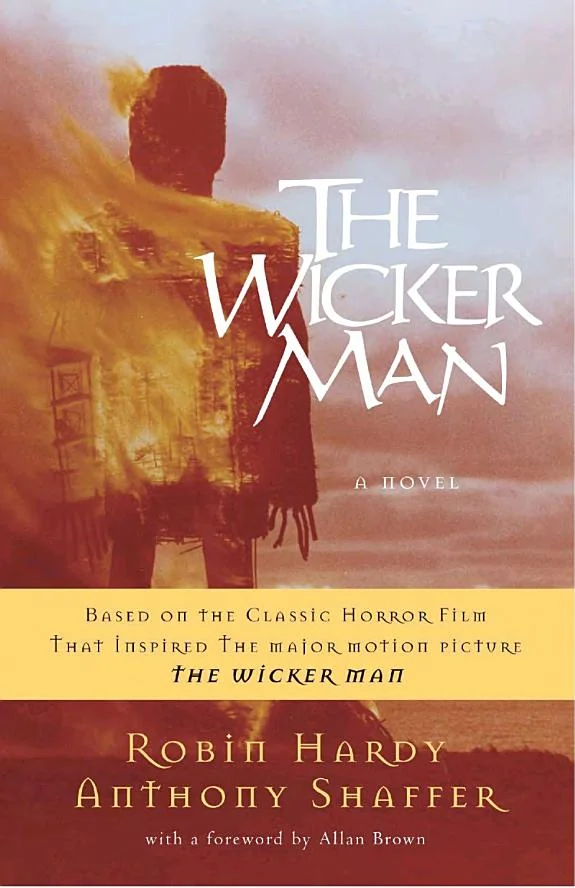
The Wicker Man
 81
81

The Wicker Man
The Wicker Man, adapted from the 1973 film, presents a chillingly effective portrayal of pagan resurgence clashing with rigid Christianity. The strength of this narrative lies in its slow-burn dread, meticulously building Sergeant Howie's isolation and desperation as he confronts the insular, unsettling faith of Summerisle. The islanders’ syncretic paganism, a blend of historical folk practices, is depicted with an almost anthropological detail that lends it a disturbing authenticity. Anthony Shaffer and Robin Hardy’s original screenplay, expanded here, excels at portraying a community united by a secret, ancient pact. A notable limitation is the sometimes heavy-handed exposition of Christian doctrine through Howie, which occasionally feels more like a device to highlight the pagan counterpoint than organic character development. The final sequence, the burning of the wicker man, remains a potent, unforgettable image of faith’s ultimate extremity. It’s a dark, compelling examination of belief systems and the societal structures that support them.
📝 Description
81
The 1973 film screenplay by Anthony Shaffer and Robin Hardy forms the basis of this narrative.
Set on the remote Scottish island of Summerisle, the story follows Sergeant Neil Howie, a Christian policeman investigating a child's disappearance. His inquiry brings him into conflict with the islanders' syncretic paganism, a faith tied to agricultural cycles and fertility rites. This blend of ancient practices, drawn from pre-Christian European traditions, contrasts sharply with Howie's own beliefs.
The narrative builds tension as Howie uncovers the islanders' devotion to their old gods and their belief that prosperity depends on ancient rituals. The central conflict revolves around their practice of sacrifice, culminating in the use of the titular wicker man, a large effigy. The story examines faith, tradition, and the lengths communities go to ensure survival.
Summerisle itself shapes the insular culture, where inhabitants led by Lord Summerisle have preserved and adapted pagan traditions. The narrative shows how such practices persist in secrecy, shielded by geography and a commitment to ancestral ways. The islanders' worldview, dictated by natural cycles, opposes Howie's monotheistic certainty.
This narrative engages with themes of folk magic and folk religion, specifically focusing on a syncretic form of paganism that blends older European traditions with a unique island culture. It depicts a community that actively maintains ancient practices, emphasizing their connection to natural cycles and fertility. The story highlights the perceived necessity of such rituals for community well-being and prosperity, a common concern in many pre-modern and esoteric belief systems that sought to align human life with cosmic and terrestrial forces.
💡 Why Read This Book?
• Understand the esoteric roots of rural paganism: Explore how ancient fertility rites and nature worship, as depicted in the islanders' practices on Summerisle, continue to inform certain modern occult traditions. • Analyze the clash of belief systems: Witness the stark confrontation between Sergeant Howie's 20th-century Christianity and Summerisle's deeply ingrained, syncretic paganism, offering a case study in spiritual conflict. • Examine the symbolism of sacrifice: Contemplate the narrative's depiction of the wicker man ritual, understanding it as a symbolic act of appeasement and renewal central to the islanders' survival.
⭐ Reader Reviews
Honest opinions from readers who have explored this book.
❓ Frequently Asked Questions
What is the origin of The Wicker Man narrative?
The Wicker Man originated as the screenplay for the 1973 film directed by Robin Hardy, with the screenplay credited to Anthony Shaffer and Robin Hardy. This book likely represents an expansion or novelization of that original script.
What kind of paganism is practiced on Summerisle?
Summerisle practices a syncretic paganism, blending elements of ancient Celtic, Norse, and other European folk traditions. It emphasizes fertility, nature worship, and agricultural cycles, distinct from modern Wicca.
Who is Lord Summerisle?
Lord Summerisle is the aristocratic, charismatic leader of the island community. He is a proponent of the island's pagan traditions and orchestrates the fertility rites, believing they are essential for the island's prosperity.
What is the significance of the wicker man?
The wicker man is a colossal effigy, traditionally made of woven branches. In the narrative, it serves as a ritualistic vessel for human sacrifice, intended to appease the pagan gods and ensure a bountiful harvest for Summerisle.
Is The Wicker Man based on historical events?
While inspired by historical pagan practices and archaeological findings like iron age wicker figures, the specific narrative of The Wicker Man is fictional. It draws upon scholarly ideas about ancient European religions and folk customs.
What is the central theme explored in The Wicker Man?
The central theme is the clash between traditional, nature-based paganism and organized monotheistic religion, exploring faith, sacrifice, community, and the potential for extreme belief systems.
🔮 Key Themes & Symbolism
Syncretic Paganism
The narrative explores a unique, syncretic form of paganism on Summerisle, distinct from organized religions. This island faith draws from a blend of historical European folk traditions, Celtic, and Norse influences, focusing intensely on agricultural cycles, fertility, and appeasing nature deities. The islanders' adherence to these 'old ways' is presented as a conscious preservation effort against the encroaching influence of Christianity and modernity, highlighting how ancient beliefs can persist and adapt in isolated communities.
The Nature of Faith and Sacrifice
A core theme is the exploration of faith's extreme manifestations, particularly concerning sacrifice. Sergeant Howie’s rigid Christian beliefs are pitted against the islanders' pragmatic, cyclical view of sacrifice as necessary for communal survival and prosperity. The narrative questions the morality and logic behind such acts, presenting the islanders' willingness to perform the ultimate sacrifice not as pure malice, but as a deeply ingrained religious imperative tied to their survival and spiritual worldview.
Cultural Isolation and Secrecy
The isolated setting of Summerisle is crucial to the narrative, fostering a unique cultural identity and enabling the clandestine practice of ancient rites. The island serves as a microcosm where pagan traditions have been maintained and evolved over generations, shielded from external judgment or interference. This isolation contributes to the unsettling atmosphere and the difficulty Howie faces in comprehending or combating the islanders' unified, secretive devotion to their ancestral faith.
Christianity vs. Paganism
The story functions as a stark allegory for the historical conflict between Christianity and indigenous pagan beliefs. Sergeant Howie embodies the zealous, monotheistic perspective, while the islanders represent a resurgent, nature-centric spirituality. This juxtaposition highlights the differing cosmologies, moral frameworks, and the perceived threats each belief system poses to the other, exploring themes of cultural dominance and resistance through religious conviction.
💬 Memorable Quotes
Direct passages from the work, attributed to the author.
“Our Lord of the Harvest is not a God of vengeance, but a God of bounty.”
— This statement from Lord Summerisle captures the islanders' pragmatic, fertility-focused paganism. It contrasts sharply with the Abrahamic concept of a judgmental deity, framing their rituals as acts of appeasement for prosperity, not punishment.
“The child is not dead. The child has been sacrificed.”
— This chilling declaration reveals the core of the islanders' ritualistic practices. It reframes the disappearance not as a crime in the conventional sense, but as a necessary religious act for the community's well-being.
“It is the ancient way. It is the only way.”
— This sentiment, likely echoed by various islanders, underscores their unwavering commitment to their ancestral traditions. It highlights the power of deeply ingrained cultural and religious practices over external societal norms or laws.
“I'm a Christian, I believe in the resurrection.”
— Sergeant Howie's assertion of his faith highlights the fundamental ideological divide. It represents the clash between his belief in a singular, transcendent divinity and resurrection, versus the islanders' immanent, nature-bound spirituality and sacrificial practices.
💡 Key Ideas
Editorial paraphrase of the work's core concepts — not direct quotes.
The mainlanders have forgotten the old ways. They have forgotten the earth.
This line reflects the islanders' perception of themselves as guardians of a lost, primal spirituality. It suggests a deliberate separation from the modern world, which they view as having become spiritually barren and disconnected from nature.
🌙 Esoteric Significance
Tradition
The Wicker Man, while fictional, draws heavily from pre-Christian European folk traditions and what might be termed 'immanentist' paganism. It doesn't align strictly with established Hermetic, Gnostic, or Kabbalistic lineages but rather with a more animistic and nature-centric spiritual worldview. It reflects a historical, albeit dramatized, understanding of practices aimed at appeasing earth spirits and deities for agricultural prosperity, a theme present in various folk magic and shamanic traditions across Europe.
Symbolism
The most prominent symbol is the Wicker Man itself—a colossal effigy representing a vessel for sacrifice, symbolizing the cyclical nature of death and rebirth essential for harvest. The Island of Summerisle symbolizes an isolated, self-contained spiritual microcosm, a sanctuary for ancient ways. The recurring motif of the land's fertility, intrinsically linked to ritualistic acts, underscores the pagan belief in the divine presence within nature and the reciprocal relationship between humanity and the earth.
Modern Relevance
Contemporary practitioners of folk magic, traditional witchcraft, and nature-based spiritualities often reference The Wicker Man for its atmospheric depiction of an isolated pagan community. It serves as a touchstone for discussions on the revitalization of ancient European rites, the ethics of sacrifice in spiritual practice, and the tension between modern secularism and enduring folk beliefs. Thinkers exploring the resurgence of paganism and its cultural impact often cite its influence on popular imagination.
👥 Who Should Read This Book
• Students of comparative religion and folklore: Individuals interested in how ancient European pagan beliefs, particularly concerning fertility and sacrifice, are historically understood and popularly imagined. • Scholars of esoteric movements: Researchers examining the cultural impact of pagan revivals and the portrayal of alternative spiritualities in 20th-century media. • Fans of folk horror and occult cinema: Those who appreciate narratives that blend unsettling atmosphere, ritualistic elements, and a clash of deeply held belief systems.
📜 Historical Context
The Wicker Man emerged in the early 1970s, a period marked by a resurgence of interest in paganism, folklore, and alternative spiritualities in the West. This era saw the rise of figures like Gerald Gardner and the formalization of Wicca, alongside a broader fascination with ancient European religions and Celtic revivalism. The film's screenplay, by Anthony Shaffer and Robin Hardy, tapped into this zeitgeist, contrasting the perceived spiritual sterility of post-war Britain with a vibrant, albeit terrifying, reimagining of pre-Christian folk practices. The narrative implicitly engaged with debates surrounding the decline of traditional Christianity and the appeal of nature-based spiritualities. While not directly referencing specific academic works, it echoed broader anthropological discussions about ritual sacrifice and fertility cults. Its reception was notable for its controversial subject matter and graphic climax, challenging cinematic norms of the time and solidifying its status as a cult classic that reflected and influenced contemporary esoteric interests.
📔 Journal Prompts
The islanders' devotion to the Lord of the Harvest.
Sergeant Howie's rigid Christian perspective versus Summerisle's paganism.
The symbolism of the wicker man as a sacrificial vessel.
Summerisle's isolation as a facilitator of ancient rites.
The perceived connection between sacrifice and agricultural bounty.
🗂️ Glossary
Paganism
A broad term for indigenous, nature-based religious beliefs and practices, often polytheistic or animistic, predating or existing outside of Abrahamic religions. It emphasizes reverence for nature and cyclical life processes.
Fertility Rites
Rituals performed to ensure the productivity of the land, livestock, and humans. These often involve symbolic acts related to procreation, growth, and the cyclical renewal of nature.
Syncretism
The merging or blending of different religious beliefs, myths, or practices. In Summerisle's context, it refers to the integration of various ancient traditions into a unique island faith.
Wicker Man
A large human-shaped figure made of woven branches, historically associated with Celtic and Germanic peoples. In the narrative, it serves as a structure for ritualistic human sacrifice.
Esoteric
Relating to or understood by a select group of people with a special interest or knowledge. In religion and philosophy, it refers to inner, mystical teachings beyond the exoteric or public understanding.
Summerisle
The fictional remote Scottish island setting of The Wicker Man, characterized by its isolated community and adherence to ancient pagan traditions.
Lord Summerisle
The aristocratic, charismatic leader of the island community who champions and orchestrates the pagan fertility rites.
This book appears in 1 collection
🔮 Readers Also Liked
Browse all →




From the “Paganism” Collection
View all →







More Free Witchcraft & Paganism Books
View all →![Practicae novae imperialis Saxonicae rerum criminalium pars I.[-III.] ... Editio quarta correctior, ... 1658: Iss 198](/img/thumb/practicae-novae-imperialis-saxonicae-rerum-criminalium-pars-i-iii-editio-quarta-correctior-1658-iss-198-carpzov-benedict-1595-1666.webp)