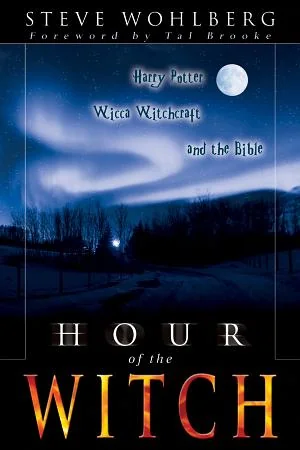
Hour of the Witch
 79
79

Hour of the Witch
Steve Wohlberg's Hour of the Witch offers a stark, unvarnished interpretation of Revelation's prophetic warnings concerning spiritual deception. Its strength lies in its direct confrontation with contemporary occultism, attempting to map specific movements onto biblical prophecy. Wohlberg doesn't shy away from declaring certain practices as dangerous, a clarity appreciated by readers seeking definitive answers.
However, the book's primary limitation is its rigid adherence to a single interpretive framework. The broad brushstrokes used to categorize diverse spiritual traditions under "sorcery" may alienate readers who appreciate nuance or hold different theological views. A passage discussing the alleged influence of occultism on youth culture, while forceful, could benefit from more specific, verifiable examples beyond generalized claims. Ultimately, Hour of the Witch functions as a polemic, a forceful argument for a specific eschatological reading rather than a balanced survey of spiritual phenomena.
📝 Description
79
Steve Wohlberg's 2005 book connects end-times prophecy to sorcery and deception.
Hour of the Witch offers a theological reading of biblical prophecy, specifically the book of Revelation. Author Steve Wohlberg asserts that sorcery plays a significant role in the end-times prophecies, acting as a primary tool of deception.
The book examines various occult and spiritual movements, presenting them as literal fulfillments of scriptural warnings about widespread deception. Wohlberg focuses on Revelation 18:23, the verse stating "Through sorcery all nations were deceived," as a key prediction for the final days. He identifies contemporary practices like witchcraft, psychic phenomena, and Eastern mysticism as manifestations of this predicted sorcery.
This work is for readers interested in a literal interpretation of biblical eschatology. It will particularly appeal to those concerned with the spiritual aspects of contemporary occultism and New Age movements, and who seek a theological framework for understanding global spiritual trends.
Published in 2005, Hour of the Witch entered a cultural moment marked by renewed public interest in paranormal and New Age topics, as well as ongoing discussions about millennial prophecies. Wohlberg's book engages with specific evangelical interpretations of biblical end-times events. It critiques burgeoning occult subcultures and the rise of esoteric practices by framing them within a prophetic, theological narrative of spiritual deception, aligning with a tradition of apocalyptic literature that views supernatural and occult phenomena through a lens of divine warning.
💡 Why Read This Book?
• Gain a specific interpretation of Revelation 18:23 as a prophecy of widespread spiritual deception in the end-times, as argued by Wohlberg. • Understand Wohlberg's theological framework for identifying contemporary occult and New Age movements as fulfillments of biblical end-times warnings. • Explore a particular perspective on the spiritual landscape of the early 2000s, as analyzed through Wohlberg's specific biblical eschatology.
⭐ Reader Reviews
Honest opinions from readers who have explored this book.
❓ Frequently Asked Questions
What is the primary biblical passage Steve Wohlberg focuses on in Hour of the Witch?
The book's central focus is Revelation 18:23, which states, "Through sorcery all nations were deceived." Wohlberg interprets this verse as a literal prediction of widespread spiritual deception in the end-times.
What kind of contemporary spiritual movements does Wohlberg discuss?
Wohlberg addresses a range of movements, including witchcraft, New Age spirituality, psychic phenomena, and certain forms of Eastern mysticism, categorizing them under the umbrella of 'sorcery' as described in Revelation.
When was Hour of the Witch first published?
The book was first published on April 1, 2005. This timing places it within a period of heightened interest in both prophetic interpretations and contemporary occult and New Age trends.
What is the author's main argument regarding deception in the end-times?
Wohlberg's core argument is that a significant component of end-times prophecy involves deception orchestrated through various forms of sorcery, leading nations astray from a specific theological understanding of truth.
Who is Tal Brooke and what is his connection to the book?
Tal Brooke, President of Spiritual Counterfeits Project and author of 'One World and Avatar of Night,' provided an early endorsement for Hour of the Witch, calling it an "urgent warning" from "heavenly vision."
Does the book offer practical advice for dealing with perceived deception?
While the book focuses on identifying and interpreting perceived deception through biblical prophecy, its primary aim is analysis and warning rather than providing a detailed guide for practical spiritual defense.
🔮 Key Themes & Symbolism
Biblical End-Times Prophecy
The central theme revolves around the interpretation of biblical prophecies, particularly those found in the book of Revelation. Wohlberg focuses on the concept of "sorcery" as a key element of end-times deception, arguing that various contemporary spiritual movements fulfill this prophetic warning. The work aims to provide readers with a theological framework for understanding global spiritual trends as part of a larger prophetic narrative leading to the final days.
Spiritual Deception
This theme explores how, according to Wohlberg's interpretation of Revelation 18:23, nations are deceived through 'sorcery.' The book identifies a broad spectrum of occult practices and New Age philosophies as manifestations of this deception. It posits that these movements are not merely alternative spiritual paths but are actively involved in misleading individuals and societies on a global scale as part of a divine end-times plan.
Contemporary Occultism and New Age
Hour of the Witch analyzes modern spiritual phenomena, including witchcraft and New Age beliefs, through the lens of biblical prophecy. Wohlberg seeks to demonstrate how these contemporary movements align with his understanding of scriptural warnings about widespread spiritual deception. The book serves as a critique of these movements, framing them as significant indicators of the approaching end-times as foretold in religious texts.
Theological Interpretation
The work is fundamentally an exercise in theological interpretation, specifically within a dispensationalist or evangelical eschatological framework. It prioritizes a literal reading of prophetic texts to understand current events and spiritual trends. The book's approach is to apply a specific theological lens to contemporary spiritual movements, offering a distinct perspective on their significance within a divinely ordained historical timeline.
💬 Memorable Quotes
Direct passages from the work, attributed to the author.
“Through sorcery all nations were deceived”
— This direct quote from Revelation 18:23 forms the a core part of Wohlberg's argument, serving as the primary proof text for his thesis on end-times deception.
“Steve Wohlberg has glimpsed the horizon and issued an urgent warning.”
— Provided by Tal Brooke, this endorsement frames Wohlberg's work as a timely and critical alert concerning future spiritual events.
“Kids, teenagers, and adults around the world have become fascinated with mysteri...”
— This fragment suggests the book addresses the growing appeal of occult and esoteric subjects across all age groups, linking this fascination to broader end-times concerns.
“Gazing down to Earth's last days with heavenly vision, the Bible's last book predicts...”
— This framing emphasizes the author's perspective of divine revelation and prophecy, positioning the biblical text as a direct foretelling of future events.
“This is no fictitious pronouncement, but the ominous truth about the end-times.”
— Wohlberg asserts the literal and serious nature of biblical prophecy, distinguishing his interpretation from fictional narratives and emphasizing the gravity of the subject matter.
🌙 Esoteric Significance
Tradition
While Wohlberg's work engages with concepts often discussed in esoteric circles, it does not originate from or directly align with a specific esoteric tradition like Hermeticism or Gnosticism. Instead, it functions as a critique and reinterpretation of esoteric phenomena through the lens of a particular evangelical Christian eschatological framework. It positions itself outside of, and often in opposition to, the very traditions it discusses.
Symbolism
The primary symbolic element is the concept of "sorcery" itself, as presented in Revelation 18:23. In Wohlberg's framework, this is not merely ritual magic but a broader symbol for spiritual deception and manipulation designed to lead humanity astray from divine truth. Other symbolic motifs would include the "nations" being deceived, representing global populations ensnared by false spiritual systems in the final epoch.
Modern Relevance
Wohlberg's work finds relevance today among specific evangelical and fundamentalist Christian communities who continue to interpret contemporary spiritual movements through a literal prophetic lens. Thinkers or groups focused on biblical eschatology and the critique of New Age or occult practices often draw upon arguments similar to those presented in Hour of the Witch to support their views on end-times events.
👥 Who Should Read This Book
• Students of biblical prophecy and eschatology seeking a literalist interpretation of end-times events and the role of spiritual deception. • Individuals interested in understanding specific theological critiques of contemporary occultism, witchcraft, and New Age movements from a particular Christian perspective. • Readers concerned with the spiritual implications of global cultural trends who wish to examine them through the framework of biblical end-times warnings.
📜 Historical Context
Published in 2005, Steve Wohlberg's Hour of the Witch emerged amidst a resurgence of interest in apocalyptic literature and eschatological interpretations within certain Christian circles. The early 2000s saw a significant growth in New Age and neo-pagan movements, creating a cultural backdrop ripe for theological responses. Wohlberg's work engaged directly with these trends, positioning them as fulfillments of biblical prophecy, particularly Revelation 18:23. While competing schools of thought, such as more allegorical or historical-critical interpretations of Revelation, offered different perspectives, Wohlberg’s approach aligned with a literalist, dispensationalist reading prevalent in some evangelical communities. The book implicitly debated against the perceived normalization of occultism and alternative spiritualities, presenting a counter-narrative rooted in traditional biblical interpretation.
📔 Journal Prompts
The concept of "sorcery" as global deception: How does Wohlberg's interpretation of Revelation 18:23 challenge conventional views?
Reflecting on the "fascination" with mystical subjects across age groups mentioned in the text, what underlying societal factors might be at play?
Consider the author's claim that "all nations were deceived." What are the implications of such a sweeping prophetic statement?
Analyze the author's categorization of various spiritual movements under the umbrella of "sorcery." What are the strengths and weaknesses of this approach?
How does Wohlberg's perspective on end-times deception compare to other theological or philosophical views on spiritual truth and falsehood?
🗂️ Glossary
Sorcery
In the context of Hour of the Witch, 'sorcery' is interpreted not just as magical practices but as a pervasive spiritual deception used to mislead nations, as described in Revelation 18:23.
End-Times (Eschatology)
The theological study of final events in history, often concerning the culmination of history, the return of a deity, and the establishment of a final kingdom. Wohlberg focuses on a specific interpretation of these events.
Revelation 18:23
A specific verse from the biblical Book of Revelation that Wohlberg uses as a central text, stating: "Through sorcery all nations were deceived."
New Age Movement
A broad spiritual movement characterized by eclectic beliefs and practices, often drawing from Eastern religions, mysticism, and alternative therapies. Wohlberg views it as a component of end-times deception.
Witchcraft
Historically, the practice of magic or sorcery. In Wohlberg's analysis, it is presented as a specific manifestation of the 'sorcery' prophesied to deceive nations in the final days.
Spiritual Counterfeits Project (SCP)
An organization founded by Tal Brooke that aims to analyze and critique various religious and spiritual movements. Brooke's endorsement of Wohlberg's book comes from his leadership role in this organization.
Tal Brooke
President of the Spiritual Counterfeits Project and author, known for his critiques of spiritual movements. He provided a strong endorsement for Wohlberg's Hour of the Witch.















![BAILEY, Michael D. Historical Dictionary Of Witchcraft. [inglês]](/img/thumb/bailey-michael-d-historical-dictionary-of-witchcraft-ingl-s.webp)