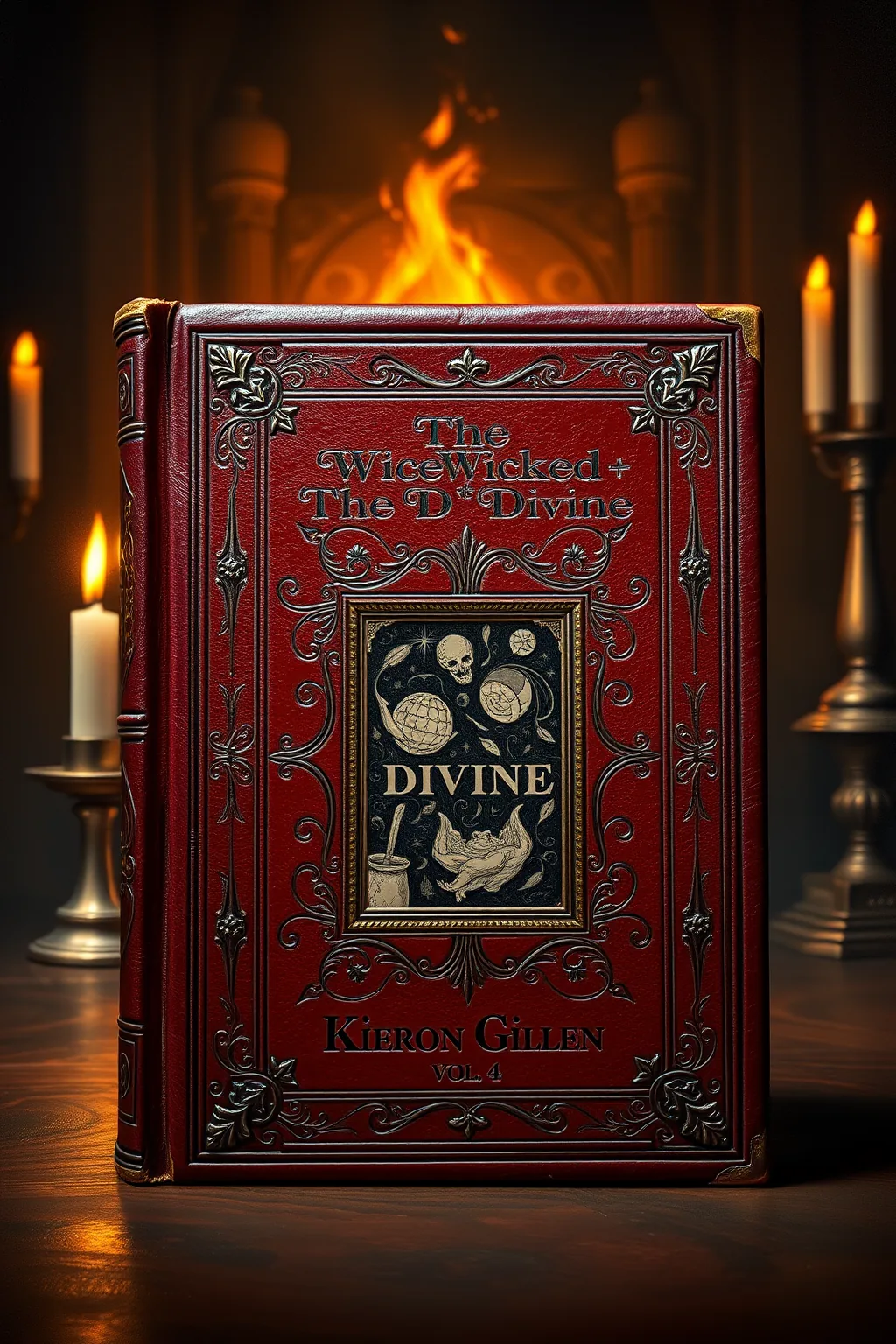
The Wicked + The Divine, Vol. 4
 71
71

The Wicked + The Divine, Vol. 4
Volume 4 of The Wicked + The Divine, 'Imperial Phase Part 1,' offers a sharp, often brutal, look at power dynamics within the Pantheon. Gillen and McKelvie continue to excel at portraying the gods not as distant deities, but as flawed, often narcissistic, celebrities grappling with their divine mandates and mortal limitations. The narrative's strength lies in its intricate plotting; the political machinations and betrayals feel earned and character-driven. However, the sheer density of characters and ongoing subplots can occasionally make the pacing feel slightly congested, particularly for readers not intimately familiar with every previous beat. A standout moment involves the chillingly pragmatic discussions of the gods' inevitable demise, highlighting their self-preservation instincts. The volume successfully builds tension, setting the stage for further conflict, but leaves the reader longing for more immediate resolution. It remains a compelling, if demanding, examination of divinity as performance.
📝 Description
71
Published in 2016, The Wicked + The Divine Vol. 4, 'Imperial Phase Part 1,' continues its examination of divinity and pop culture.
This installment, illustrated by Jamie McKelvie and Matthew Wilson, deepens the ongoing conflict surrounding the Pantheon. These twelve gods manifest every 90 years for two years of fame before their inevitable death. The narrative focuses on the political machinations and hidden agendas within this divine hierarchy. The current gods face challenges to their authority and their very existence.
'Imperial Phase Part 1' is for long-time followers of Kieron Gillen's comic series. Readers invested in the complex character dynamics and the overarching mythology will find this volume rewarding. It appeals to those interested in how modern archetypes and celebrity culture intersect with ancient divine concepts. Those who appreciate intricate plotting, morally ambiguous characters, and commentary on fame, fandom, and the cyclical nature of power will find much to engage with.
The series places itself within a modern esoteric tradition that reinterprets ancient mythological structures through contemporary phenomena like celebrity culture and mass media. The 'Recurrence,' where divine power manifests in human hosts, mirrors concepts of divine incarnation and the cyclical nature of spiritual powers. This approach draws parallels to historical esoteric ideas of divine presence and human potential, but grounds them in the ephemeral nature of modern fame and the destructive consequences of immense power.
💡 Why Read This Book?
• You will learn about the cyclical nature of divine power and its intersection with modern celebrity culture, as depicted in the 'Recurrence' concept, offering a unique lens on power structures. • You will feel the weight of manufactured divinity and the human cost of eternal fame, particularly through the internal conflicts of characters like the Emperor and their struggle to maintain control. • You will gain a deeper appreciation for narrative deconstruction of mythology, understanding how Kieron Gillen uses the divine Pantheon to comment on the ephemeral nature of fame and influence in the 21st century.
⭐ Reader Reviews
Honest opinions from readers who have explored this book.
❓ Frequently Asked Questions
What is the 'Recurrence' in The Wicked + The Divine, Vol. 4?
The 'Recurrence' is the central premise where twelve gods are reincarnated into human hosts every 90 years. These gods, embodying aspects of popular culture, live for two years before their inevitable death, a cycle explored extensively in Volume 4.
Who are the main gods featured in 'Imperial Phase Part 1'?
While the entire Pantheon is present, Volume 4 heavily features the Emperor, the current leader of the gods, and delves into their efforts to maintain control and navigate internal dissent among the divine hosts.
What is the significance of the 'Imperial Phase' in the series?
The 'Imperial Phase' represents a period where the gods attempt to solidify their authority and control their public image, often through propaganda and suppression of dissent, reflecting themes of authoritarianism and manufactured consent.
What artistic styles are prominent in this volume?
The volume showcases the distinctive art style of Jamie McKelvie, known for his clean lines and dynamic character designs, complemented by Matthew Wilson's vibrant coloring, which enhances the pop-art aesthetic.
Does Volume 4 require prior knowledge of the series?
While it functions as a continuation, 'Imperial Phase Part 1' assumes a familiarity with the core concepts and characters established in earlier volumes. New readers may find it beneficial to start from Volume 1.
What themes does Volume 4 explore beyond divinity and fame?
It delves into themes of political maneuvering, the nature of power, legacy, and the personal cost of maintaining a divine facade, examining how these gods cope with their finite time and the pressures of their roles.
🔮 Key Themes & Symbolism
Divinity as Celebrity
The series consistently frames the gods as akin to pop stars, subject to the whims of fame, public perception, and intense scrutiny. Volume 4 pushes this further, showing the gods engaging in political maneuvering and propaganda to maintain their 'brand' and control narratives, mirroring celebrity culture's obsession with image management. The short lifespans of the gods, a core tenet of the 'Recurrence,' highlight the ephemeral nature of fame, forcing them to prioritize immediate impact and legacy over long-term stability.
Power and Corruption
The 'Imperial Phase' is inherently about the consolidation and maintenance of power. This volume examines how divine authority, when coupled with mortal ambition and the pressures of a short, intense existence, can lead to corruption and authoritarian tendencies. Characters vie for control not just of their own destinies but of the Pantheon's collective narrative, employing manipulation, coercion, and strategic alliances. The work questions whether true divinity is compatible with unchecked power or if it inevitably corrupts, even those with divine origins.
Mortality and Legacy
Despite their divine status, the gods are acutely aware of their impending death, which occurs every 90 years. This looming mortality drives much of their behavior in Volume 4, forcing them to confront their legacies. The 'Imperial Phase' can be seen as an attempt to secure a lasting impact before their inevitable demise. The narrative explores the human desire for remembrance and the desperate measures individuals might take to achieve it, even when possessing godlike power, blurring the lines between divine purpose and mortal fear.
Mythology Reimagined
The Wicked + Divine fundamentally reimagines mythological archetypes for a contemporary audience. Instead of traditional pantheons, Gillen creates gods embodying modern cultural forces like music, internet fame, and art. Volume 4 continues this deconstruction, using the framework of divine succession and power struggles to comment on modern societal structures and the way we mythologize public figures. It offers a meta-commentary on storytelling itself, questioning how myths are created, perpetuated, and ultimately consumed.
💬 Memorable Quotes
Direct passages from the work, attributed to the author.
“The gods are dead. Long live the gods.”
— This paradoxical statement expresses the cyclical nature of the series' premise: the old gods die, but new ones are always reborn. It speaks to the unending, yet transient, nature of divine power and the constant reinvention required to maintain it.
“This isn't about saving people. It's about winning.”
— This stark declaration reveals the self-serving nature of the gods and their priorities. It shifts the focus from heroic divine intervention to a brutal competition for power and survival, challenging traditional heroic narratives.
“We all have our roles to play. Some of us just play them better.”
— This statement reflects the inherent archetypal nature of the gods and their performances. It suggests a fatalistic acceptance of their predetermined roles within the 'Recurrence,' while also hinting at the competitive drive to excel within those confines.
💡 Key Ideas
Editorial paraphrase of the work's core concepts — not direct quotes.
We're the Emperor's people. We do what the Emperor says.
This line highlights the authoritarian structure within the Pantheon during the 'Imperial Phase.' It demonstrates the blind obedience and the cult of personality that the Emperor cultivates to maintain control, reflecting themes of political manipulation.
Two years. That's all we ever get.
This quote underscores the central tragedy of the gods: their divine power is coupled with an extremely short lifespan. It reflects their desperation, ambition, and the pressure to make their brief existence count, driving the narrative's conflict.
🌙 Esoteric Significance
Tradition
While not adhering strictly to a single esoteric tradition, The Wicked + The Divine draws heavily from Gnostic ideas concerning divine sparks trapped in flawed human vessels and the cyclical nature of creation and destruction. The concept of the 'Recurrence' echoes cyclical cosmologies found in various mythologies and esoteric systems, suggesting a predetermined pattern of divine manifestation and demise. The series departs from traditional esoteric paths by framing divine power not through spiritual attainment but through the ephemeral, often corrupting, lens of modern celebrity and pop culture.
Symbolism
The number twelve is a recurring symbolic motif, representing the twelve gods who manifest during the 'Recurrence,' mirroring the twelve Olympians or the twelve signs of the zodiac. The act of 'the Merge' – where a god possesses a human host – can be interpreted through a Gnostic lens of divine essence contained within flawed material existence. Furthermore, the visual iconography of each god, tied to specific forms of popular culture (music, art, internet), acts as modern hieroglyphs, representing abstract concepts and archetypes in a readily digestible, contemporary format.
Modern Relevance
Contemporary thinkers and practitioners interested in the intersection of mythology, celebrity culture, and power structures find resonance in Gillen's work. The series is often cited in discussions about how modern society constructs divinity through fame and media. Its exploration of manufactured personas and the cyclical nature of influence speaks to current trends in digital culture and the creation of online 'idols.' It provides a framework for analyzing the 'gods' of our own time – the celebrities, politicians, and influencers – and the narratives we build around them.
👥 Who Should Read This Book
• Fans of Kieron Gillen's previous works like 'Phonogram' and 'Young Avengers,' who appreciate his meta-commentary on culture and genre. • Students of comparative mythology and religious studies seeking modern interpretations of divine archetypes and cyclical narratives. • Readers interested in the deconstruction of celebrity culture and the exploration of power dynamics within fictional universes that mirror contemporary societal concerns.
📜 Historical Context
Published in 2016, The Wicked + The Divine, Vol. 4: Imperial Phase Part 1, emerged within a thriving independent comic book scene that increasingly championed creator-driven narratives and complex thematic explorations. Kieron Gillen, already known for his work on titles like Phonogram and Journey Into Mystery, was part of a cohort of writers pushing the boundaries of the medium. The series, which debuted in 2014, coincided with a cultural moment where deconstructing mythology and reinterpreting ancient figures through the lens of contemporary pop culture was gaining significant traction across various media. While not directly engaging with a specific competing school of thought, the series offered a distinct perspective from more traditional heroic narratives or straightforward mythological retellings. Its reception was largely positive, with critics praising its ambition and artistic execution, though its intricate plotting demanded close attention from readers. The work can be seen in dialogue with broader trends in media studies and cultural criticism that examine the construction of celebrity and the nature of belief in a secular age.
📔 Journal Prompts
The Emperor's methods for control during the Imperial Phase.
The personal sacrifices demanded by a god's brief, intense existence.
Divine power as a form of performance art.
The concept of the 'Recurrence' as a societal cycle.
The tension between immortality and a two-year lifespan.
🗂️ Glossary
The Recurrence
The central premise of the series: twelve gods are reborn into human hosts every 90 years, living for two years before dying.
The Pantheon
The collective group of twelve gods who manifest during the Recurrence, embodying aspects of popular culture.
Imperial Phase
A specific period within the gods' two-year lifespan where they attempt to consolidate power, control narratives, and solidify their rule.
The Merge
The act by which a god possesses a human host, granting them divine powers and a temporary physical form.
The Emperor
The current leader of the Pantheon during the 'Imperial Phase' storyline, focused on maintaining authority.
The Great Darkness
A prophesied event or force that poses a threat to the gods and their existence, a looming concern throughout the series.
The Norns
Fates who oversee the cycle of the gods, appearing as mysterious figures who know the gods' destinies.
🔮 Readers Also Liked
Browse all →








More by Kieron Gillen
All books →




More Free Occult Philosophy Books
View all →