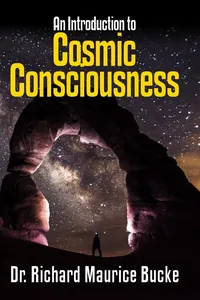
Cosmic Consciousness

 82
82

Cosmic Consciousness
Richard Maurice Bucke's attempt to catalogue and codify "Cosmic Consciousness" is ambitious, presenting a fascinating collection of testimonies from historical figures who experienced profound, often ineffable, states of being. The book's strength lies in its extensive compilation of examples, ranging from Buddha and Jesus to more contemporary figures known to Bucke. However, Bucke's classification system, while detailed, can feel somewhat rigid, attempting to fit disparate experiences into a pre-defined mold. His personal experience in London in 1872, which seems to have catalyzed the work, is described with a particular intensity that highlights the deeply subjective nature of the phenomenon he seeks to objectify. The limitation lies in the inherent difficulty of objectively measuring or defining such subjective states, a challenge Bucke acknowledges but does not entirely overcome. The work offers a valuable historical perspective on the study of mystical experience before the widespread influence of psychology.
📝 Description
82
Richard Maurice Bucke's 1901 book describes a specific order of human experience marked by sudden illumination and moral elevation.
Published in 1901, Richard Maurice Bucke's "Cosmic Consciousness" details a particular state of human awareness. Bucke defines this state, which he calls "cosmic consciousness," as a higher faculty characterized by sudden insight, a sense of moral certainty, and intellectual clarity. He argues that this is a distinct stage of human development, beyond ordinary consciousness, and meticulously gathers accounts from historical figures and contemporaries who he believed attained it. The book seeks to categorize and explain these experiences, differentiating them from mere emotionalism or intellectual pursuits.
Bucke, a physician and friend of Walt Whitman, wrote "Cosmic Consciousness" during a period of significant interest in spiritual and psychological phenomena. The late 19th century saw a rise in movements like Theosophy and an increased focus on subjective experience, partly in response to prevailing scientific materialism. Bucke's work fits within this milieu, examining human potential and altered states of awareness from a perspective that bridged medicine and mysticism. He presents his findings not as religious dogma but as a natural, though uncommon, aspect of human evolution.
Bucke's work emerged from the late 19th-century esoteric revival, a time when thinkers explored spiritual evolution and consciousness beyond conventional scientific frameworks. It engaged with ideas circulating in spiritualist and theosophical circles, which examined altered states and latent human capacities. Bucke sought to establish "cosmic consciousness" as a verifiable, natural progression, drawing on historical religious figures and mystics to illustrate his theory. His approach, while grounded in observation, positioned these experiences within a broader spiritual and evolutionary narrative.
💡 Why Read This Book?
• Understand the specific characteristics of "Cosmic Consciousness" as Bucke defined them, such as the "inner light" and "sense of immortality," to better identify and analyze such states in historical accounts or personal reflection. • Examine Bucke's biographical accounts of figures like Walt Whitman, who he believed embodied aspects of this higher consciousness, offering a unique lens on historical personalities. • Gain insight into the intellectual climate of the late 19th century, particularly the burgeoning interest in spiritual evolution and consciousness studies, as evidenced by the book's 1901 publication date.
⭐ Reader Reviews
Honest opinions from readers who have explored this book.
❓ Frequently Asked Questions
What is 'Cosmic Consciousness' according to Richard Maurice Bucke?
Bucke defines 'Cosmic Consciousness' as a distinct, higher faculty of the human mind. It's characterized by sudden illumination, a subjective experience of light, moral elevation, intellectual insight, and a profound sense of immortality, often leading to a loss of fear of death and sin.
When was 'Cosmic Consciousness' first published?
The original publication date for Richard Maurice Bucke's 'Cosmic Consciousness' was 1901, making it a significant text from the turn of the 20th century.
What kind of experiences does Bucke document in the book?
Bucke documents experiences of individuals he believed attained 'Cosmic Consciousness.' These accounts include figures from religious history, philosophy, and literature, describing moments of profound insight and spiritual awakening.
Did Richard Maurice Bucke experience 'Cosmic Consciousness' himself?
Yes, Bucke recounts a pivotal experience in London in 1872, which he described as a fleeting moment of 'Cosmic Consciousness,' providing a personal anchor for his theoretical exploration of the subject.
What is the significance of Bucke's work in the study of consciousness?
Bucke's work is significant for its early attempt to systematically study and categorize experiences of higher consciousness. It predates much of modern psychology's exploration into mystical and altered states of awareness.
Is 'Cosmic Consciousness' a religious text?
While Bucke discusses religious figures, 'Cosmic Consciousness' is presented as a natural, evolutionary development of the human mind rather than a strictly religious doctrine. It explores universal states of awareness.
🔮 Key Themes & Symbolism
The Evolutionary Leap
Bucke posits "Cosmic Consciousness" as the next stage in human mental evolution, a faculty beyond the "Simple Consciousness" of animals and the "Self Consciousness" of modern man. He meticulously traces historical figures who he believed exemplified this leap, suggesting it is a natural, albeit rare, development. This evolutionary perspective frames spiritual awakening not as supernatural intervention, but as an inherent potential within humanity, awaiting its broader emergence. The work implies a teleological drive towards higher states of awareness.
Subjective Illumination
A core characteristic Bucke identifies is the subjective experience of light, an 'inner illumination' that accompanies the onset of cosmic consciousness. This is not merely a visual hallucination but a manifestation of profound intellectual and moral clarity. This internal radiance signifies a fundamental shift in perception, where the individual experiences a direct apprehension of truth and beauty, transcending ordinary sensory input and rational deduction. It's a form of knowing that is immediate and absolute.
Immortality and Transcendence
The sense of immortality is a crucial hallmark of cosmic consciousness. Bucke describes individuals experiencing a profound loss of the fear of death, coupled with an intuitive certainty of continued existence beyond the physical body. This is often accompanied by a loss of the sense of sin, suggesting a state of being where the individual is aligned with a higher order or universal consciousness. This transcendence of mortal limitations and moralistic guilt is a key indicator of the elevated state.
The Catalogue of the Enlightened
A significant portion of the book is dedicated to cataloging individuals throughout history—from ancient prophets and religious founders like Buddha and Jesus to poets like Walt Whitman—who Bucke believed possessed or exhibited signs of cosmic consciousness. This historical survey serves as evidence for his theory, presenting a lineage of awakened minds whose experiences, though varied, share common threads of clear insights and transformation.
💬 Memorable Quotes
Direct passages from the work, attributed to the author.
“The vision of the human race as one man, and the sense of immortality, are the most important of all the gifts of the literary man.”
— Here, Bucke connects the literary or artistic temperament with the highest forms of consciousness. The perception of humanity as a unified entity and the intuitive grasp of immortality are presented as clear insights achievable through elevated creative and spiritual faculties.
“A certain number of men and women, from the beginning of the world until now, have been born with the faculty of the literary sense, the sense of beauty, the sense of beauty, the sense of morality, and the sense of immortality.”
— This statement defines the individuals who are predisposed to or have attained cosmic consciousness. Bucke argues that these individuals possess a heightened sensitivity across aesthetic, moral, and existential dimensions, setting them apart from the general populace.
“The man who has entered into the literary sense, and has been born into the higher grades of it, has entered into the literary sense of immortality.”
— Bucke links the development of the 'literary sense'—interpreted broadly as a deep, intuitive understanding of life and existence—directly to the experience of immortality. This suggests that true comprehension of the human condition inherently involves transcending the fear of death.
💡 Key Ideas
Editorial paraphrase of the work's core concepts — not direct quotes.
The first sign of the new faculty is a momentary enjoyment of the great light, accompanied by a sense of intellectual illumination, and loss of the sense of sin.
This quote expresses the initial, often fleeting, manifestation of cosmic consciousness. Bucke highlights the interplay between visual perception (light), cognitive understanding (intellectual illumination), and a shift in moral perspective (loss of sin), suggesting these elements are intrinsically linked in the experience.
It is not only the poet, but the scientist, the philosopher, the prophet, the saint, who have this gift.
This quote broadens the scope of who can achieve cosmic consciousness, moving beyond purely artistic or religious figures. Bucke includes scientists and philosophers, indicating that profound intellectual and empirical pursuits can also lead to or be informed by this elevated state of awareness.
🌙 Esoteric Significance
Tradition
Bucke's work occupies a unique space, drawing from but also departing from established esoteric traditions. While it echoes Gnostic and Hermetic ideas about higher knowledge and awakened states, its primary framework is evolutionary and psychological rather than strictly theological or magical. He aligns with the Theosophical movement's interest in spiritual evolution and higher planes of consciousness but offers a more secularized, almost scientific, approach to documenting these phenomena. His emphasis on a natural, observable faculty distinguishes it from purely mystical or divinely revealed traditions.
Symbolism
The primary symbol Bucke explores is the 'Inner Light,' representing direct apprehension of truth and the divine. This motif appears across many esoteric traditions, symbolizing enlightenment and spiritual awakening. Another key symbolic element is the 'Sense of Immortality,' which transcends the fear of death and represents a merging with the eternal or universal consciousness. This symbolizes the dissolution of the ego's boundaries and the realization of a larger, enduring existence beyond temporal limitations.
Modern Relevance
Bucke's concept of "Cosmic Consciousness" continues to influence contemporary discussions in transpersonal psychology, consciousness studies, and spiritual inquiry. Thinkers and practitioners exploring altered states, peak experiences, and the higher potentials of human awareness often reference his foundational work. His attempt to categorize and study these experiences provides a historical anchor for modern research into non-ordinary states of consciousness, meditation, and spiritual development, influencing fields like Integral Theory.
👥 Who Should Read This Book
• Students of consciousness and altered states: Those researching the history of ideas about mysticism, enlightenment, and the evolution of human awareness will find Bucke's extensive catalog of cases invaluable. • Seekers of spiritual understanding: Individuals exploring the nature of higher consciousness, personal transformation, and the potential for profound existential insight will appreciate Bucke's detailed descriptions and theoretical framework. • Comparative religion and philosophy scholars: Researchers examining the common threads in spiritual experiences across different cultures and historical periods will find "Cosmic Consciousness" a significant primary source for understanding early modern interpretations.
📜 Historical Context
Published in 1901, "Cosmic Consciousness" emerged from a late Victorian and Edwardian era ripe with intellectual ferment concerning the nature of the mind and spirit. The rise of psychical research societies, Theosophy, and the burgeoning interest in Eastern philosophies provided fertile ground for Bucke's work. While mainstream science largely adhered to materialism, a significant counter-current explored human potential beyond the physical. Bucke's physician background lent authority to his observations, yet his subject matter placed him alongside thinkers like William James, who was also investigating religious and mystical experiences in his "The Varieties of Religious Experience" (1902). Bucke's classification of consciousness stages can be seen as an early attempt to map what would later be explored in depth by humanistic and transpersonal psychology, though his framework was rooted in a more spiritual evolutionary model.
📔 Journal Prompts
The subjective experience of light described by Bucke: when have you perceived an inner illumination?
The sense of immortality and loss of fear of death: how does the awareness of mortality shape your present?
Bucke's classification of consciousness faculties: how does your 'self-consciousness' engage with moments of deeper awareness?
The moral elevation accompanying cosmic consciousness: reflect on a time when ethical understanding felt profoundly clear.
Richard Maurice Bucke's central 1872 experience: what elements of sudden, transformative insight are present in your life?
🗂️ Glossary
Cosmic Consciousness
A higher order of consciousness described by Bucke, characterized by sudden illumination, moral elevation, intellectual insight, and a sense of immortality. It is presented as the next stage in human mental evolution.
Simple Consciousness
The basic level of awareness possessed by animals, characterized by sensation and instinctual response, lacking self-awareness or complex thought.
Self Consciousness
The consciousness characteristic of modern humans, involving awareness of oneself as a distinct individual, capable of introspection, reason, and abstract thought.
Inner Light
A subjective visual phenomenon often accompanying the onset of cosmic consciousness, representing a profound internal illumination and clarity.
Subjective Immortality
The profound feeling of eternal existence experienced by those in a state of cosmic consciousness, often accompanied by a loss of the fear of death.
Literary Sense
Bucke uses this term broadly to refer to a heightened faculty encompassing the sense of beauty, morality, and immortality, often associated with poets and those capable of clear insights.
Moral Elevation
A key characteristic of cosmic consciousness, involving a heightened sense of ethical understanding and a profound feeling of rightness or goodness.
This book appears in 1 collection
🔮 Readers Also Liked
Browse all →









From the “Cosmic Consciousness” Collection
View all →





More Free Occult Philosophy Books
View all →