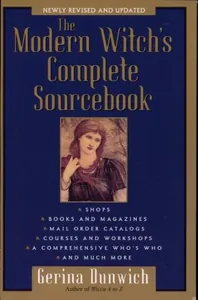
The Wicca source book

 83
83

The Wicca source book
Gerina Dunwich's The Wicca Source Book, despite its 1996 publication date, offers a grounded perspective on Wicca that still holds relevance. Unlike many texts that lean into sensationalism, Dunwich provides a structured, almost academic, overview of the religion's history and practices. Her explanation of the different Wiccan traditions, differentiating between Gardnerian, Alexandrian, and others, is particularly useful for newcomers trying to make sense of the landscape. However, the book occasionally feels encyclopedic rather than experiential. For instance, while the section on ritual structure is informative, it lacks the evocative language that might convey the felt sense of participating in a ceremony. The strength lies in its clear, factual presentation; its limitation is a certain dryness that might not appeal to those seeking immediate spiritual connection. Ultimately, it serves as a reliable, if not always inspiring, reference for understanding Wicca's framework.
📝 Description
83
Gerina Dunwich's The Wicca Source Book, published in 1996, offers a detailed overview of Wiccan history and practice.
This volume provides a thorough introduction to the beliefs and practices of Wicca, moving beyond superficial accounts to examine its theological foundations, ethical guidelines, and varied traditions. Dunwich traces the development of Wiccan thought, highlighting influences from earlier pagan revivals and occult movements. The book aims to give readers a solid understanding of this nature-based spiritual path, especially those new to its concepts or beginning their exploration. It is well-suited for individuals seeking a structured entry into Wiccan principles and history. Beginners will find clear explanations of central ideas, while those interested in comparative religion or the history of Western esotericism will also find value. Readers hoping to grasp Wicca without popular misunderstandings will appreciate its detailed approach, and it also helps those who want to investigate the origins of modern paganism and its unique customs.
Published in the mid-1990s, The Wicca Source Book emerged during a period of significant growth and diversification within Neopaganism. The preceding decades had seen a surge in interest following the works of figures like Gerald Gardner and Doreen Valiente, but also a proliferation of disparate interpretations and sometimes conflicting information. Dunwich's book aimed to consolidate and present a more coherent, historically informed overview, distinguishing between various Wiccan traditions and addressing the need for accessible, yet accurate, educational material for a burgeoning community. It arrived in an era where esoteric knowledge was increasingly accessible outside of closed coven structures.
💡 Why Read This Book?
• Gain a clear understanding of Wiccan history and its divergence into distinct traditions, as detailed in the sections discussing figures like Gerald Gardner and the development of various covens. • Learn the foundational principles and ethical guidelines of Wicca, including the Wiccan Rede and the concept of the God and Goddess, providing a solid basis for further study. • Explore the symbolic meaning behind key rituals and practices, such as the observance of sabbats and the use of ritual tools, offering insight into the structure of Wiccan spiritual life.
⭐ Reader Reviews
Honest opinions from readers who have explored this book.
❓ Frequently Asked Questions
When was The Wicca Source Book first published?
The Wicca Source Book by Gerina Dunwich was first published in 1996, positioning it within a key period of Neopagan growth and literature development.
What are some of the main Wiccan traditions discussed in the book?
The book explores various Wiccan traditions, including Gardnerian Wicca, Alexandrian Wicca, and others, differentiating their historical origins and practices.
Does the book cover Wiccan ethics?
Yes, The Wicca Source Book discusses core Wiccan ethics, most notably the Wiccan Rede, which serves as a primary moral guideline for practitioners.
Is this book suitable for complete beginners to Wicca?
Absolutely. The book is structured to provide a foundational understanding, explaining concepts, history, and practices in an accessible manner for those new to Wicca.
What historical influences on Wicca does Dunwich explore?
Dunwich examines influences from earlier pagan revivals, occult movements, and the foundational work of figures like Gerald Gardner in shaping modern Wiccan practices.
Does the book discuss solitary Wiccan practice?
Yes, while it covers coven structures and initiation, the book also acknowledges and discusses the path of solitary practitioners within Wicca.
🔮 Key Themes & Symbolism
Evolution of Wiccan Traditions
Dunwich meticulously traces the lineage and divergence of various Wiccan paths that emerged in the 20th century. She highlights the foundational contributions of Gerald Gardner and the subsequent development of traditions like Alexandrian and Gardnerian Wicca. The work clarifies how these groups, while sharing common roots, developed distinct practices, hierarchies, and theological nuances, providing a valuable map for understanding the diversity within modern Witchcraft. This historical perspective is crucial for appreciating Wicca not as a monolithic entity, but as a living, evolving spiritual movement influenced by its founders and practitioners.
Core Principles and Ethics
Central to the book is an exploration of the fundamental tenets that guide Wiccan practitioners. This includes the concept of the Divine as both God and Goddess, embodying masculine and feminine energies, and the cyclical understanding of life, death, and rebirth mirrored in seasonal festivals (Sabbats) and lunar phases (Esbats). The Wiccan Rede, with its famous injunction 'An it harm none, do what ye will,' is presented as a core part of Wiccan ethics, emphasizing personal responsibility and mindful action within the community and the natural world.
Ritual and Practice
The book offers detailed explanations of common Wiccan ritual practices and their symbolic significance. It covers the consecration of sacred space, the casting of circles, the use of ritual tools such as the athame, wand, and chalice, and the importance of invocation and evocation. Dunwich explains that these elements are not mere ceremony but are designed to facilitate altered states of consciousness, connect practitioners with the Divine, and manifest intentions. The emphasis is on understanding the 'why' behind the 'what' of ritual, moving beyond rote action to meaningful engagement.
Historical Roots and Influences
Dunwich situates Wicca within a broader context of Western Esotericism and pagan revivals. The work discusses potential influences from ceremonial magic, folklore, and ancient pagan traditions, while also acknowledging the debates and scholarly perspectives surrounding these connections. The book addresses the efforts to reconstruct or reinterpret pre-Christian European beliefs and practices, placing Wicca's emergence in the mid-20th century as a significant development within this ongoing engagement with ancestral spiritualities.
💬 Memorable Quotes
Direct passages from the work, attributed to the author.
“The Wiccan Rede's central tenet is 'An it harm none, do what ye will.'”
— This is a foundational ethical principle in Wicca, emphasizing personal freedom balanced with the responsibility to avoid causing harm to oneself or others.
“Wicca recognizes the Divine in both masculine (God) and feminine (Goddess) aspects.”
— This highlights the dualistic yet complementary nature of the Divine in Wiccan theology, reflecting the balance of energies found in nature and humanity.
“Initiation into a coven signifies a formal commitment to the Craft.”
— This points to the structured progression within many Wiccan traditions, where formal initiation marks a deeper level of involvement and acceptance into a community.
“Sabbats celebrate the eight major turning points of the Wheel of the Year.”
— This refers to the observance of seasonal festivals in Wicca, which mark the solstices, equinoxes, and cross-quarter days, connecting practitioners to natural cycles.
“Ritual tools are consecrated to serve specific spiritual purposes.”
— This explains that items like the athame or wand are not just objects but are imbued with symbolic meaning and purpose within ritual practice.
🌙 Esoteric Significance
Tradition
The Wicca Source Book fits within the modern Western Esoteric tradition, specifically the branch concerned with Neopaganism and contemporary Witchcraft. It draws implicitly from earlier occult revivals and nature-based spiritualities, attempting to synthesize historical threads into a coherent practice. While not strictly Hermetic or Kabbalistic, it shares with these traditions an emphasis on ritual, symbolism, and the exploration of hidden knowledge. Its departure lies in its explicit focus on a nature-centric theology and the Goddess-oriented cosmology, which distinguishes it from more male-dominated esoteric systems.
Symbolism
Key symbols explored include the Pentacle, representing the five elements (Earth, Air, Fire, Water, Spirit) and protection, often worn as an amulet or used in ritual. The Wheel of the Year, depicting the eight seasonal festivals (Sabbats), symbolizes the cyclical nature of life, death, and rebirth, connecting practitioners to the earth's rhythms. The concepts of the God and Goddess represent the divine masculine and feminine principles, embodying the complementary forces present in the universe and within individuals.
Modern Relevance
Contemporary practitioners of Wicca and related Neo-Pagan paths continue to draw upon foundational texts like Dunwich's for understanding the historical development and core tenets of their traditions. Thinkers and writers in the modern Pagan movement often reference such works when discussing the evolution of Witchcraft, the ethics of magical practice, and the significance of seasonal celebrations. Its clear explanations of ritual structure and theological concepts remain relevant for individuals exploring solitary practice or seeking to join established covens, serving as a reliable entry point into the study of contemporary Witchcraft.
👥 Who Should Read This Book
• Aspiring practitioners of Wicca seeking a foundational text that clearly outlines historical development, core beliefs, and ethical guidelines. • Students of comparative religion and Western Esotericism interested in understanding the emergence and structure of modern Neopagan movements. • Individuals curious about Wicca beyond popular stereotypes, looking for an informative and historically grounded overview of its practices and philosophy.
📜 Historical Context
The Wicca Source Book arrived in 1996, a period when Neopaganism was rapidly expanding beyond its initial, often secretive, circles. The preceding decades had seen figures like Gerald Gardner, Doreen Valiente, and Raymond Buckland establish foundational texts and practices, yet a clear, consolidated understanding of Wicca remained elusive for many. Dunwich's work emerged to meet this need, offering a structured overview amidst a burgeoning but often fragmented field of beliefs and practices. It was published during a time when alternative spiritualities were gaining more mainstream attention, yet still faced significant misunderstanding and prejudice. The book aimed to differentiate Wicca from broader, often sensationalized, notions of witchcraft, providing historical context and delineating various traditions, thereby contributing to a more informed public perception and serving as a vital educational resource for a growing number of seekers.
📔 Journal Prompts
Reflect on the concept of the Wiccan Rede and its implications for personal decision-making.
Consider the symbolism of the Wheel of the Year and how its cycles might relate to your own life.
Explore the dualistic representation of the God and Goddess in Wiccan theology.
Analyze the purpose and symbolism of at least two ritual tools discussed in the text.
Contemplate the historical context of Wicca's emergence in the mid-20th century.
🗂️ Glossary
Wiccan Rede
The primary ethical code in Wicca, famously summarized as 'An it harm none, do what ye will,' emphasizing personal freedom coupled with responsibility to avoid causing harm.
Sabbats
The eight major seasonal festivals observed in Wicca, marking the solstices, equinoxes, and cross-quarter days, celebrating the turning of the Wheel of the Year.
Esbats
Monthly rituals often held during the full moon in Wicca, focused on honoring the Goddess and drawing down her energy.
Coven
A group of Wiccans, typically numbering around thirteen members, who practice together under the guidance of a High Priestess and/or High Priest.
Athame
A ritual dagger, typically double-edged, used in Wiccan practice for directing energy, marking sacred space, and symbolizing the element of Fire or Air.
Wheel of the Year
A Wiccan and Neo-Pagan seasonal calendar representing the cycle of the year, marked by the eight Sabbats, symbolizing the continuous flow of life, death, and rebirth.
God and Goddess
The divine masculine and feminine principles central to many Wiccan traditions, representing complementary cosmic forces and often invoked in ritual.
🔮 Readers Also Liked
Browse all →






![Cruels effets de la vengeance du Cardinal de Richelieu, ou Histoire des diables de Loudun, de la possession des religieuses ursulines, et de la condamnation et du suplice [sic] d'Urbain Grandier, curé de la même ville. 1716: Iss 53](/img/thumb/cruels-effets-de-la-vengeance-du-cardinal-de-richelieu-ou-histoire-des-diables-de-loudun-de-la-possession-des-religieuses-ursulines-et-de-la-condamnation-et-du-suplice-sic-d-urbain-grandier-cur-de-la-.webp)
More by Gerina Dunwich
All books →




More Free Witchcraft & Paganism Books
View all →