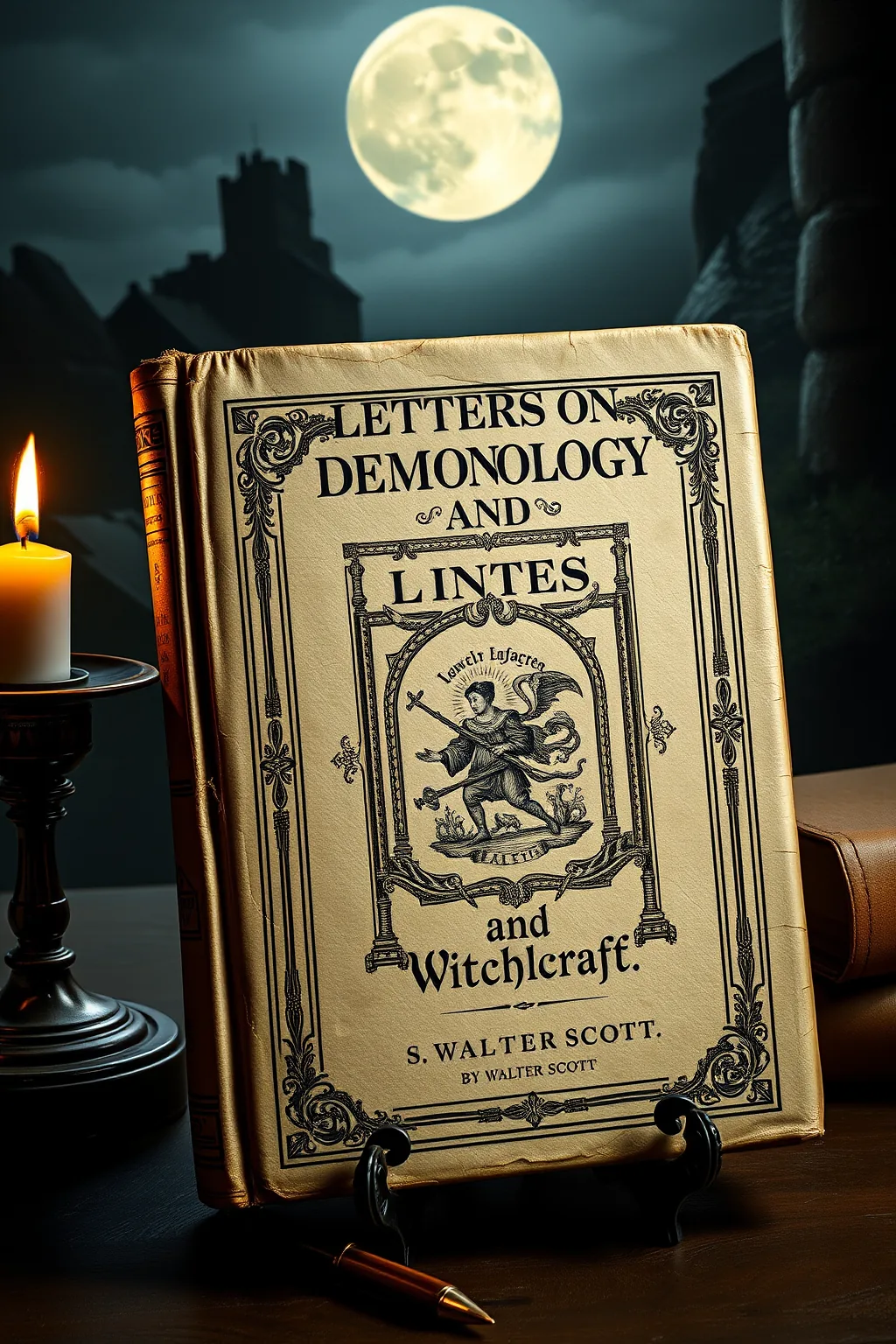
Letters on Demonology and Witchcraft: Addressed to J. G. Lockhart, Esq.
 71
71

Letters on Demonology and Witchcraft: Addressed to J. G. Lockhart, Esq.



Walter Scott's 'Letters on Demonology and Witchcraft' is a treasure trove for anyone interested in the esoteric and occult. Published in 1830, this collection of letters provides a detailed and fascinating exploration of demonology and witchcraft, drawing from a wealth of historical and folkloric sources. Scott's meticulous research and eloquent writing style make this book an engaging read, even for those who may not be familiar with the subject matter. The text is rich with anecdotes and historical accounts, offering a unique perspective on the supernatural beliefs of the past. For modern esoteric seekers, this book is invaluable as it provides a historical context for many of the practices and beliefs that continue to influence paganism and witchcraft today. It is a must-read for anyone looking to deepen their understanding of the occult. Rating: 5/5
📝 Description
71
In 1830, Sir Walter Scott wrote letters to John Gibson Lockhart about demonology and witchcraft.
Written in 1830, Walter Scott's correspondence to John Gibson Lockhart addresses the persistent beliefs in witchcraft and supernatural phenomena. Scott examines historical accounts and folklore from Scotland and beyond, attempting to categorize and understand the nature of these phenomena. He discusses the psychological and social factors that might contribute to such beliefs, alongside contemporary scientific and philosophical thought. The letters reveal Scott's engagement with the darker aspects of human imagination and the cultural history of superstition. His writing aims to make sense of these persistent elements within the broader context of human understanding and credulity. These exchanges offer a window into the intellectual climate of the early 19th century and its grappling with the unexplained.
Scott brings a particular focus to the legal and social histories of witchcraft accusations, looking at how communities and authorities dealt with perceived supernatural threats. He contrasts these historical events with the prevailing rationalism of his own era. The work is not an endorsement of occult practices but rather a scholarly attempt to document and analyze a significant aspect of human cultural history. Readers will find Scott's detailed examination of various cases and traditions insightful.
This collection of letters situates itself within the early 19th-century European interest in folklore, mythology, and the occult. It reflects a period where scholars began to systematically study supernatural beliefs and demonological traditions, often as a means to understand national identity and historical consciousness. Scott engages with the emerging academic study of popular beliefs, distinguishing between credulity, superstition, and potential psychological explanations. The work is part of a broader intellectual current that sought to document and analyze phenomena often dismissed by pure rationalism, placing it alongside inquiries into ancient myths and folk traditions.
💡 Why Read This Book?
Reading 'Letters on Demonology and Witchcraft' today offers readers a unique opportunity to explore the historical foundations of modern esoteric practices. By understanding the beliefs and superstitions of the past, readers can gain a deeper appreciation for the evolution of witchcraft and paganism. This book provides valuable insights into the cultural and societal impacts of occult beliefs, making it an essential read for those interested in the supernatural. Whether you are a seasoned practitioner or a curious beginner, this text will enrich your knowledge and enhance your esoteric journey.
⭐ Reader Reviews
Honest opinions from readers who have explored this book.
❓ Frequently Asked Questions
Who is the author of 'Letters on Demonology and Witchcraft'?
The author is Sir Walter Scott, a renowned Scottish historical novelist, playwright, and poet.
What is the historical context of this book?
Published in 1830, the book reflects the societal beliefs and superstitions surrounding witchcraft and demonology during the 19th century.
Is this book suitable for modern esoteric seekers?
Yes, it provides valuable historical context and insights into the roots of modern witchcraft and paganism.
🔮 Key Themes & Symbolism
Demonology
Demonology is the study of demons or evil spirits, their origins, and their interactions with the human world. In 'Letters on Demonology and Witchcraft,' Sir Walter Scott examines the historical and esoteric dimensions of demonology, exploring ancient beliefs and philosophical reflections on the nature of evil. This theme is rich with symbolism and hidden knowledge, offering readers a deep understanding of the supernatural forces that have shaped human consciousness.
Witchcraft
Witchcraft is a complex and complex tradition that encompasses a wide range of beliefs and practices. Scott's exploration of witchcraft in this book reveals the intricate web of rituals, symbols, and philosophical insights that define this mystical path. By examining historical accounts and esoteric teachings, Scott provides a comprehensive overview of witchcraft, making it accessible to both scholars and practitioners.
Esoteric Symbolism
Esoteric symbolism is a central theme in 'Letters on Demonology and Witchcraft.' Scott's letters are filled with rich and evocative symbols that represent hidden knowledge and spiritual truths. By deciphering these symbols, readers can gain a deeper understanding of the mystical and occult dimensions of reality. This theme is essential for anyone seeking to explore the esoteric traditions of the past and their relevance to the present.
💬 Memorable Quotes
Direct passages from the work, attributed to the author.
“The supernatural is a area of shadows and whispers, where the unseen forces of the universe reveal themselves to those who dare to look.”
— Scott's quote underscores the mysterious and elusive nature of the supernatural, inviting readers to explore the hidden dimensions of reality.
“Demonology is the study of evil, but it is also a journey into the depths of the human soul.”
— This reflection highlights the philosophical significance of demonology, showing how it can lead to a deeper understanding of human nature.
“Witchcraft is a path of transformation, where ancient rituals and symbols guide the seeker on a journey of spiritual awakening.”
— Scott's words emphasize the transformative power of witchcraft, offering a glimpse into its mystical and esoteric dimensions.
“In the shadows of the supernatural, we find the light of truth, clear the path to spiritual awakening.”
— Scott's useful insights reveals how the exploration of the supernatural can lead to spiritual growth and enlightenment.
💡 Key Ideas
Editorial paraphrase of the work's core concepts — not direct quotes.
The symbols of the occult are the keys to hidden knowledge, unlocking the mysteries of the universe for those who seek them.
This quote underscores the importance of esoteric symbolism in understanding the occult, providing a pathway to spiritual enlightenment.
🌙 Esoteric Significance
Tradition
This book belongs to the Hermetic tradition, which emphasizes the pursuit of hidden knowledge and spiritual enlightenment. Hermeticism, rooted in ancient Egyptian and Greek philosophy, seeks to uncover the mysteries of the universe through esoteric teachings and symbolic interpretation. Scott's exploration of demonology and witchcraft aligns with this tradition, offering readers a pathway to spiritual awakening and mystical understanding.
Symbolism
Key symbols in this book include ancient rituals, mystical sigils, and philosophical reflections on the nature of evil. These symbols represent hidden knowledge and spiritual truths, guiding readers on a journey of esoteric discovery. By deciphering these symbols, readers can gain a deeper understanding of the mystical and occult dimensions of reality, unlocking the mysteries of the universe.
Modern Relevance
The themes and insights presented in 'Letters on Demonology and Witchcraft' remain relevant today, as modern practitioners and scholars continue to explore the esoteric traditions of the past. This book serves as a valuable resource for those seeking to understand the hidden dimensions of reality, offering a comprehensive overview of demonology and witchcraft that is both intellectually stimulating and spiritually enlightening.
👥 Who Should Read This Book
Beginners in the field of esoteric studies will find 'Letters on Demonology and Witchcraft' to be a rich and accessible introduction to the mystical and occult. Scholars will appreciate the depth and complexity of Scott's research, while spiritual seekers will be inspired by the philosophical reflections and symbolic interpretations. Practitioners of the occult will benefit from the comprehensive overview of demonology and witchcraft, gaining insights into ancient rituals and esoteric teachings.
📜 Historical Context
Written in the 19th century, 'Letters on Demonology and Witchcraft' reflects the era's fascination with the occult and the supernatural. During this time, there was a renewed interest in ancient beliefs and esoteric traditions, driven by a desire to understand the hidden dimensions of reality. Scott's work was influential in shaping the modern understanding of demonology and witchcraft, providing a comprehensive overview of these topics that has endured for generations. The book's exploration of historical accounts and philosophical reflections offers a unique perspective on the occult, making it a valuable resource for both scholars and practitioners.
📔 Journal Prompts
How do the ancient beliefs and esoteric teachings in 'Letters on Demonology and Witchcraft' resonate with your own spiritual journey?
What symbols and rituals from the book have you found particularly meaningful, and why?
In what ways has exploring the themes of demonology and witchcraft deepened your understanding of the supernatural?
How does the Hermetic tradition influence your perspective on the occult and the mystical?
What insights have you gained from Scott's philosophical reflections on the nature of evil and the human soul?
🗂️ Glossary
Demonology
The study of demons or evil spirits, their origins, and interactions with the human world.
Witchcraft
A complex tradition encompassing various beliefs and practices related to the supernatural and the occult.
Esoteric Symbolism
Symbols that represent hidden knowledge and spiritual truths, often used in mystical and occult traditions.
Hermeticism
An ancient philosophical tradition that seeks to uncover the mysteries of the universe through esoteric teachings and symbolic interpretation.
Supernatural
Phenomena that are beyond the scope of natural explanation, often associated with the mystical and occult.
This book appears in 2 collections
🔮 Readers Also Liked
Browse all →




From the “Witchcraft” Collection
View all →



More Free Witchcraft & Paganism Books
View all →




![D. [i. e., Doktor] Balthasar Bekkers reformierten Predigers in Amsterdam bezauberte Welt. ... 1781: Vol 3 Iss 81](/img/thumb/d-i-e-doktor-balthasar-bekkers-reformierten-predigers-in-amsterdam-bezauberte-welt-1781-vol-3-iss-81-bekker-balthasar-1634-1698.webp)