The Modern Witch's Complete Sourcebook
 80
80

The Modern Witch's Complete Sourcebook
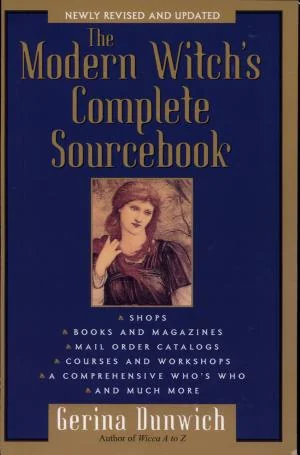
Gerina Dunwich’s *The Modern Witch's Complete Sourcebook* offers a pragmatic approach to navigating the landscape of 21st-century Wicca and Neopaganism. Its strength lies in its sheer comprehensiveness as a directory, a function that remains valuable even in the digital age. The detailed listings of shops, books, and organizations provide a concrete starting point for those seeking community or specific resources. However, its primary limitation is its age; while the foundational information is sound, the dynamic nature of these communities means some listings may be outdated. A particular passage detailing the emergence of various coven structures in the late 20th century underscores the work's value as a historical snapshot. Ultimately, it serves as a well-organized, if time-bound, foundational reference for the serious student.
📝 Description
80
Gerina Dunwich published The Modern Witch's Complete Sourcebook in 2001.
Published in 2001, The Modern Witch's Complete Sourcebook acts as a detailed directory for those interested in Wicca and Neopaganism. It moves beyond theory to provide practical information for practitioners and seekers alike. The book helps readers find specific organizations, relevant books, and spiritual networks. It is useful for both experienced individuals and newcomers to these paths. Dunwich's work appeared as interest in alternative spiritualities grew at the start of the 21st century. Before the internet made such information readily available, this sourcebook gathered scattered resources into one accessible volume. It aimed to consolidate information for a growing community.
This sourcebook emerged during a time of increased public awareness of Neopaganism. It addressed the need for structured information as these traditions moved into the mainstream. By compiling details on covens, groups, and printed materials, Dunwich created a reference point for a developing spiritual movement. It reflects the shift towards making esoteric knowledge more organized and discoverable for a wider audience, moving away from purely oral or localized traditions.
💡 Why Read This Book?
• Gain immediate access to a curated list of shops, books, and organizations, providing concrete starting points for your spiritual exploration that are difficult to replicate in a single curated volume. • Understand the organizational structures of Wiccan and Neopagan communities as they existed around 2001, offering a valuable historical perspective on the movement's development. • Discover key texts and resources identified by Dunwich, helping you build a foundational library and understand the intellectual currents influencing practitioners at the turn of the millennium.
⭐ Reader Reviews
Honest opinions from readers who have explored this book.
❓ Frequently Asked Questions
What kind of organizations does 'The Modern Witch's Complete Sourcebook' list?
The book lists a wide array of organizations relevant to Wiccans and Neopagans, including covens, groves, and broader spiritual or educational societies that support these paths.
Is this book suitable for someone completely new to Wicca?
Yes, as a sourcebook, it's excellent for beginners looking to find resources like shops and books. It helps orient new practitioners within the available community structures and literature.
How does this book compare to online directories available today?
Published in 2001, it predates the ubiquity of online resources. While online directories are more current, Dunwich's work offers a curated, historically grounded perspective and detailed descriptions that online listings may lack.
Does the book focus on a specific tradition within Neopaganism?
No, it aims for breadth, covering both Wicca and a wider range of Neopagan paths, acknowledging the diversity within the modern Pagan revival.
What types of books are recommended in the sourcebook?
It recommends foundational texts on Wicca, Neopaganism, witchcraft history, mythology, and related esoteric subjects, serving as a guide to essential reading material.
Are there any sections on ethical practices or philosophy?
While primarily a directory, the book implicitly guides users toward understanding the community and its resources, which often contain ethical frameworks and philosophical underpinnings.
🔮 Key Themes & Symbolism
Community and Organization
The sourcebook underscores the vital role of community in modern witchcraft and Neopaganism. It meticulously lists various organizations, from established covens to emergent groups, facilitating connection and shared practice. This focus highlights the shift from solitary pursuits to collective spiritual expression that characterized the late 20th and early 21st centuries. The detailed directory serves as a practical map for finding like-minded individuals and established structures, emphasizing that spiritual growth often thrives within a supportive network.
Resource Accessibility
A primary function of this work is to clarify and consolidate access to essential resources. Dunwich identifies key books, catalogs, and even physical shops catering to the Neopagan community. This emphasis on tangible resources—printed matter and brick-and-mortar locations—provided a crucial anchor point for practitioners before the widespread adoption of the internet for such purposes. It recognizes that knowledge and spiritual tools are foundational to practice.
Diversity of Neopagan Paths
While prominently featuring Wicca, the sourcebook acknowledges the broader spectrum of Neopaganism. It implicitly recognizes that modern Paganism is not monolithic, encompassing diverse traditions, beliefs, and practices. By cataloging resources relevant to various paths, the book encourages exploration and understanding of this rich diversity, moving beyond singular definitions to embrace a complex spiritual landscape.
Historical Snapshot of the Movement
Published in 2001, the book serves as a valuable historical document, capturing a specific moment in the development and organization of the Wiccan and Neopagan movements. It reflects the resources and structures available at the turn of the millennium, offering insights into how practitioners found community, education, and supplies before the digital age fully reshaped these aspects. It provides context for understanding the evolution of these traditions.
💬 Memorable Quotes
Direct passages from the work, attributed to the author.
“A guide to shops, books, catalogs, covens and organizations for Wiccans and Neopagans.”
— This straightforward description from the original blurb captures the book's core utility: a practical, comprehensive directory designed to connect practitioners with the essential elements of their spiritual communities and resources.
“The work explores the various organizational structures within the modern Pagan movement.”
— This highlights the book's focus on community building, detailing how different groups, such as covens and broader organizations, function and interact, offering insight into the social fabric of Neopaganism.
“Essential literature for understanding contemporary witchcraft and Wiccan traditions.”
— This emphasizes the book's role in guiding readers toward foundational and influential texts, recognizing the importance of scholarly and practical writings in the development of personal and communal practice.
“Identifying key physical locations and mail-order services relevant to practitioners.”
— This points to the book's practical, ground-level approach, acknowledging the importance of tangible resources like specialty shops and catalogs in supporting the spiritual needs of its readership.
“The sourcebook serves as a directory for diverse spiritual paths.”
— This indicates the book's broad scope, aiming to encompass not just Wicca but the wider array of beliefs and practices found within the Neopagan revival, fostering an inclusive view of modern esoteric traditions.
🌙 Esoteric Significance
Tradition
While not strictly adhering to a single esoteric lineage, this sourcebook functions within the broader context of modern Western esotericism, particularly its Neopagan and Wiccan branches. It draws from the practical and organizational developments within these traditions that gained momentum in the latter half of the 20th century. It departs from more theoretical or initiatory lineages by focusing on the infrastructure and accessibility of resources for practitioners.
Symbolism
The sourcebook itself, as a directory, symbolizes accessibility and connection. Its primary 'symbols' are the listings themselves: a shop represents material manifestation and tangible practice; a book signifies knowledge and theoretical grounding; a coven or organization represents community and shared spiritual endeavor. These elements collectively map the external field of modern Paganism.
Modern Relevance
Contemporary practitioners, particularly those new to Wicca and Neopaganism, still find value in the historical grounding this book provides. It’s referenced in discussions about the evolution of Pagan infrastructure and resource accessibility. While specific listings require updating, its foundational approach to mapping community resources remains relevant for understanding how these spiritual movements organized and disseminated information.
👥 Who Should Read This Book
• Aspiring Wiccans and Neopagans seeking to find local or online communities, shops, and essential reading materials to begin their spiritual journey. • Established practitioners looking for a historical reference point to understand the resource field of the early 2000s and how it has evolved. • Researchers of religious movements and alternative spiritualities interested in the organizational structures and resource dissemination within modern Paganism.
📜 Historical Context
Gerina Dunwich’s *The Modern Witch's Complete Sourcebook*, released in 2001, emerged at an important moment for Neopaganism. The late 20th century had seen a significant surge in public awareness and practice of Wicca and related traditions, moving them from fringe subcultures towards more visible, albeit still niche, spiritual movements. This period was marked by the growth of organizations like The Covenant of the Goddess (COG), founded in 1975, and the increasing availability of books and magazines, yet a centralized, comprehensive directory was still lacking. Dunwich's work filled this void, offering a much-needed compendium of shops, covens, books, and organizations. It provided a practical guide for a growing number of individuals seeking to connect with these paths, predating the fully established online field of today. While authors like Starhawk had already established significant bodies of work, Dunwich’s contribution was unique in its encyclopedic, resource-focused approach, consolidating fragmented information for a burgeoning community.
📔 Journal Prompts
The structure of covens and organizations as detailed in this sourcebook.
My personal library of essential Neopagan literature, inspired by Dunwich's recommendations.
The role of physical shops and mail-order catalogs in supporting spiritual practice.
Identifying key figures or movements influential in the Neopagan scene around 2001.
Mapping potential community connections based on the organizational types listed.
🗂️ Glossary
Wicca
A modern Pagan, esoteric religion with a diverse set of beliefs and practices, often characterized by reverence for nature, the divine as both God and Goddess, and the practice of magic.
Neopaganism
A broad category of modern spiritual paths inspired by historical Pagan beliefs and practices, encompassing diverse traditions beyond Wicca, often emphasizing polytheism, nature reverence, and magic.
Coven
A group or congregation of Witches or Pagans, typically numbering between three and thirteen members, who gather for ritual and practice.
Catalog
A printed list or booklet detailing available goods or services, often used by specialty shops to reach customers who cannot visit in person.
Organization
An organized group or structure formed for a particular purpose, in this context referring to associations, societies, or networks supporting Neopagan and Wiccan practitioners.
Esoteric
Relating to or accessible only by a relatively small number of people with a specialized knowledge or interest; often pertaining to hidden meanings or spiritual truths.
Sourcebook
A book containing factual information, such as statistics or practical guidance, compiled from various sources, intended as a reference.
This book appears in 2 collections
🔮 Readers Also Liked
Browse all →






From the “Wicca” Collection
View all →




More Free Occult Philosophy Books
View all →