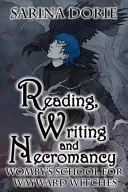
Reading, Writing and Necromancy
 75
75

Reading, Writing and Necromancy
Sarina Dorie’s "Reading, Writing and Necromancy" offers a compelling premise, placing an unsuspecting arts teacher at the heart of a deadly mystery within a school for witches. Clarissa Lawrence’s investigation into Derrick’s disappearance and the subsequent staff deaths is propelled by a palpable sense of unease, particularly surrounding the enigmatic librarian, Thatch, and his suspected ties to the Raven Court. The novel’s strength lies in its ability to ground supernatural events within a relatable, almost domestic, setting. However, the pacing occasionally falters, with some plot threads feeling less developed than others. The exploration of Thatch’s duplicity and the Raven Court’s influence, while intriguing, could have benefited from more direct exposition earlier in the narrative. Dorie’s writing effectively builds suspense, but the resolution feels somewhat compressed. It is a story that promises dark secrets and delivers them, albeit with a few narrative detours. Ultimately, the book provides an entertaining, if occasionally uneven, foray into magical academia and its hidden dangers.
📝 Description
75
Clarissa Lawrence's life as an arts and crafts teacher at Womby's School for Wayward Witches unravels when her rediscovered love vanishes and staff members start dying.
Sarina Dorie's 2018 novel centers on Clarissa Lawrence, a teacher at Womby's School for Wayward Witches. Her ordinary existence shatters when her rekindled romance with Derrick is interrupted by his disappearance and a series of staff deaths. Suspicion quickly falls on Thatch, the school's librarian, who harbors secrets connected to the enigmatic Raven Court.
The story unfolds as Clarissa is drawn into a world of hidden societies and dark magic. She must confront conspiracies lurking within the seemingly normal halls of the school. The narrative blends elements of urban fantasy with a mystery plot, focusing on themes of witchcraft and magical intrigue. Clarissa's journey forces her to uncover dangerous truths and deal with supernatural threats that have infiltrated her everyday life.
Published in 2018, Reading, Writing and Necromancy aligns with a contemporary trend of reinterpreting folkloric and occult themes within speculative fiction. It taps into a renewed interest in witchcraft narratives, merging classic archetypes with modern storytelling. The book fits within a decade that saw many stories about magical academies and secret magical communities, exploring how ordinary individuals confront extraordinary, often dark, magical circumstances.
💡 Why Read This Book?
• Learn about the clandestine operations of organizations like the Raven Court and their potential influence within magical institutions, as depicted in Clarissa's discoveries. • Explore the narrative's interpretation of witchcraft and necromancy through the eyes of an everyday individual thrust into supernatural conflict. • Understand the dynamics of secret-keeping and betrayal within a magical school setting, exemplified by the librarian Thatch's role and his relationship with Clarissa.
⭐ Reader Reviews
Honest opinions from readers who have explored this book.
❓ Frequently Asked Questions
What is the main conflict in Reading, Writing and Necromancy?
The main conflict arises when Clarissa Lawrence's love interest, Derrick, disappears and staff members at Womby's School for Wayward Witches begin dying, leading her to suspect the librarian, Thatch, and the Raven Court.
Who is Clarissa Lawrence in the book?
Clarissa Lawrence is the protagonist and an arts and craft teacher at Womby's School for Wayward Witches, who finds herself embroiled in a dangerous mystery.
What role does the Raven Court play?
The Raven Court is presented as a potentially sinister magical organization with which the librarian, Thatch, is suspected of having dealings, adding a layer of external threat to the school's internal problems.
When was Reading, Writing and Necromancy first published?
Reading, Writing and Necromancy was first published on July 30, 2018.
What genre does Reading, Writing and Necromancy belong to?
The book falls into the urban fantasy and mystery genres, with elements of witchcraft and the occult.
Is Thatch a benevolent or malevolent character?
Thatch, the librarian, is presented as a potentially malevolent character, suspected of harboring secrets and being involved with the Raven Court, creating suspicion and conflict for Clarissa.
🔮 Key Themes & Symbolism
Hidden Magical Societies
The novel explores the pervasive influence of clandestine organizations like the Raven Court within seemingly ordinary institutions. It suggests that powerful, hidden magical factions operate just beneath the surface of everyday life, manipulating events and individuals for their own inscrutable purposes. Clarissa's investigation into Thatch's secrets directly confronts this theme, revealing the potential dangers of such hidden powers.
Confronting the Unknown
Fundamentally, the book is about an individual, Clarissa Lawrence, forced to confront supernatural forces and dark magic when her personal life is disrupted. Her journey from arts teacher to amateur detective highlights the theme of ordinary people facing extraordinary, terrifying circumstances, and the courage required to seek truth amidst deception and death.
The Ethics of Necromancy
The title itself points to necromancy as a central theme, implying an exploration of its practices and consequences within the narrative. The book likely examines the moral implications and potential darkness associated with raising or communing with the dead, particularly as Clarissa uncovers more about the sinister activities at Womby's School.
Deception and Betrayal
The narrative is steeped in an atmosphere of suspicion and deceit. Characters like the librarian Thatch are revealed to be keeping secrets, and Clarissa must question who she can trust. This theme of betrayal, particularly within a close-knit community like a school, underscores the dangers of hidden agendas and the difficulty of discerning truth.
💬 Memorable Quotes
Direct passages from the work, attributed to the author.
“Clarissa learns Thatch has been keeping secrets from her.”
— This highlights a crucial turning point where the protagonist realizes the extent of deception surrounding her, fueling her determination to uncover the truth about Thatch and the school's dark undercurrents.
“Staff members at the school start unexpectedly dying.”
— This stark statement introduces the immediate peril and escalating mystery, framing the narrative's central conflict and raising the stakes for Clarissa and the school community.
“Happily ever after is short-lived for Clarissa Lawrence.”
— This opening sentiment immediately establishes a sense of foreboding and dashed hopes, indicating that the protagonist's personal peace will be violently interrupted by supernatural events.
“Derrick disappears mysteriously.”
— This concise phrase serves as the inciting incident, launching the plot and initiating Clarissa's quest to find her lost love, which becomes intertwined with the darker mysteries of the school.
💡 Key Ideas
Editorial paraphrase of the work's core concepts — not direct quotes.
Clarissa sees that the wicked librarian is up to no good.
This line captures the immediate suspicion directed towards Thatch, establishing him as a likely antagonist and setting the stage for Clarissa's investigation into his hidden activities.
🌙 Esoteric Significance
Tradition
While not explicitly tied to a single, formalized esoteric tradition like Hermeticism or Theosophy, "Reading, Writing and Necromancy" draws upon popular modern interpretations of witchcraft and occultism. It reflects a contemporary approach to fantasy that incorporates elements of folk magic, secret societies (like the fictional Raven Court), and darker magical practices such as necromancy, often divorced from strict historical or traditional frameworks. The work fits within a lineage of modern fiction that popularizes and reinterprets esoteric concepts for a broader audience.
Symbolism
The 'wicked librarian' Thatch can be seen as a symbol of hidden knowledge and gatekeeping within the magical world, representing the dangerous potential of information controlled by those with dark intentions. The Raven Court itself symbolizes clandestine power and a threat lurking beyond the perceived safety of the school, embodying external forces that interfere with personal lives and academic settings. The act of teaching arts and crafts by Clarissa, contrasted with the necromancy, symbolizes the tension between creation and destruction, order and chaos.
Modern Relevance
Contemporary authors exploring urban fantasy, magical realism, and occult thrillers often build upon the narrative structures and thematic explorations found in works like Dorie’s. Thinkers and practitioners interested in the intersection of folklore, modern witchcraft, and speculative fiction find resonance in its depiction of hidden magical communities and their influence. The book's appeal lies in its accessible portrayal of magic within everyday settings, a trend seen in many current fantasy series focused on uncovering supernatural secrets.
👥 Who Should Read This Book
• Fans of urban fantasy and mystery looking for a blend of magical intrigue and suspense. • Readers interested in narratives featuring witchcraft, hidden magical societies, and protagonists who uncover dark secrets. • Students of contemporary speculative fiction who enjoy exploring themes of deception and supernatural conflict within academic settings.
📜 Historical Context
Published in 2018, Sarina Dorie’s "Reading, Writing and Necromancy" entered a literary landscape marked by a robust appetite for fantasy narratives featuring witches and magical schools. This period saw a significant resurgence in occult fiction, often blending traditional folklore with contemporary settings and character archetypes. Authors like V.E. Schwab and Naomi Novik were actively publishing works that explored magic systems and the complexities of magical societies, creating a receptive audience for Dorie's tale. The book’s publication occurred during a time when discussions around female agency in fantasy were also gaining prominence, with many readers seeking stories centered on capable female protagonists navigating dangerous supernatural worlds. While not directly engaging with a specific named contemporary scholar or facing overt censorship, the novel participates in the broader cultural conversation around witchcraft, mystery, and speculative fiction that characterized the late 2010s.
📔 Journal Prompts
Clarissa's suspicions regarding the librarian Thatch.
The role of the Raven Court in the unfolding events.
The unexpected deaths of staff members at Womby's School.
Derrick's mysterious disappearance and its implications.
The contrast between Clarissa's role as an arts teacher and the dark magic she encounters.
🗂️ Glossary
Womby's School for Wayward Witches
The primary setting of the novel, a fictional institution for young witches where the main events and mysteries unfold.
Raven Court
A mysterious and potentially sinister organization that the librarian, Thatch, is suspected of being involved with, representing an external threat.
Necromancy
A form of magic involving the manipulation of death or the dead, suggested by the book's title and likely a significant element in the plot.
Derrick
Clarissa Lawrence's long-lost love interest, whose mysterious disappearance serves as a catalyst for the novel's central conflict.
Thatch
The school librarian who becomes a primary suspect due to his secretive nature and suspected ties to the Raven Court.
Clarissa Lawrence
The protagonist, an arts and craft teacher at Womby's School, who investigates the mysterious deaths and disappearances.
Wayward Witches
Refers to the students at Womby's School, implying a group that may be unconventional or difficult to manage, adding to the school's unique atmosphere.