Sabriel

 74
74

Sabriel
Garth Nix's Sabriel, a 1996 publication, presents a world governed by the stark dichotomy of Free Magic and Charter Magic, a foundational concept that drives its narrative. The novel's strength lies in its unique approach to necromancy through the Abhorsen, a figure tasked with returning the dead to their graves, rather than exploiting them. This subversion of typical fantasy tropes offers a genuinely fresh perspective. The protagonist, Sabriel, is compelling in her reluctant acceptance of a dangerous legacy. However, the pacing in the middle section occasionally falters, with certain journey segments feeling protracted. A particular conceptual highlight is the intricate system of bells used by the Abhorsen, each with specific properties for controlling the Dead, a detail that underscores the novel's imaginative depth. Ultimately, Sabriel is a distinguished entry into fantasy literature that rewards patient readers with its originality.
📝 Description
74
Published in 1996, Garth Nix's Sabriel established a unique fantasy world governed by Free Magic and Necancy.
Sabriel, the first novel in the Old Kingdom series, follows a young woman as she enters a dangerous realm to rescue her father, the Abhorsen. This journey forces her to confront a rising magical threat within the Old Kingdom, a land where the dead do not stay dead. Nix's narrative is driven by a strong protagonist and a well-defined magical system that separates wild magic from the more structured Charter Magic.
The novel appeals to those who enjoy character-focused fantasy with a distinct atmosphere and carefully constructed magical laws. It touches on themes of responsibility, loss, and the separation between life and death, offering relatable elements for younger readers while engaging adults with its philosophical depth. The concept of the Abhorsen, a figure who guides the dead rather than raising them, provides a unique take on necromancy.
Sabriel appeared in 1996, a time when young adult fantasy was seeing new developments. Nix's work distinguished itself with mature themes and its specific magic system, differing from more conventional quest stories. The book's handling of death and the afterlife, especially the Abhorsen's role, offered a novel perspective and set the stage for the rest of the Old Kingdom series.
The Old Kingdom series engages with concepts of spiritual planes and the afterlife, particularly through the River of the Dead and the role of the Abhorsen. The Abhorsen functions as a necromancer, but one tasked with laying the dead to rest rather than manipulating them. This contrasts with traditional depictions of necromancy, framing it instead as a duty to maintain order between the living and the dead. The magic system itself, divided into wild Free Magic and rule-bound Charter Magic, reflects a common esoteric trope of opposing, fundamental forces.
💡 Why Read This Book?
• Gain an understanding of the unique Charter Magic and Free Magic systems, distinct from common fantasy magic, as explored through Sabriel’s journey across the Old Kingdom. • Experience the nuanced portrayal of necromancy via the Abhorsen, a role that redefines the concept of dealing with the dead, particularly in relation to the seven bells. • Witness the narrative explore themes of duty and lineage, exemplified by Sabriel’s inheritance of her father’s dangerous role and her confrontation with the Death Gate.
⭐ Reader Reviews
Honest opinions from readers who have explored this book.
❓ Frequently Asked Questions
What is the primary conflict in Sabriel?
The central conflict involves Sabriel’s quest to rescue her father, the Abhorsen, from the Old Kingdom, while simultaneously confronting a dangerous magical entity known as the Destroyer who threatens to unleash the Dead upon the living.
Who is the Abhorsen and what is their role?
The Abhorsen is a necromancer who does not raise the dead but rather lays them to rest, ensuring they stay in their graves. They possess a unique set of bells to control the Dead and guard the Death Gate, a boundary between the living and the dead.
What are the main types of magic in the Old Kingdom?
The Old Kingdom operates under two main magical forces: Free Magic, which is wild and unpredictable, and Charter Magic, which is bound by strict laws and symbols, often wielded by those in positions of authority.
Is Sabriel a standalone novel or part of a series?
Sabriel is the first book in Garth Nix's Old Kingdom series. It is followed by 'Lirael' and 'Abhorsen', among other related works, though it can be enjoyed as a self-contained story.
What is the significance of the bells in Sabriel?
The bells are crucial tools for the Abhorsen. Each of the seven bells has a specific purpose, from warding off the Dead to compelling them to act, and are essential for controlling the forces of death.
What is the Death Gate?
The Death Gate is a metaphysical barrier or portal that separates the realm of the living from the realm of the Dead. It is a focal point of the magical struggle in the Old Kingdom.
🔮 Key Themes & Symbolism
The Nature of Death
Sabriel confronts death not as an end, but as a transition governed by specific magical laws. The role of the Abhorsen, tasked with managing the Dead and their passage, offers a unique perspective on mortality. The River of the Dead and the Death Gate are potent symbols of this liminal state, explored through Sabriel's direct interactions with the deceased and the spectral planes. This engagement with the mechanics of death sets it apart from typical fantasy narratives.
Duality of Magic
The novel meticulously distinguishes between Free Magic and Charter Magic. Free Magic represents the wild, untamed forces of the world, while Charter Magic is structured, lawful, and often associated with societal order. This dichotomy isn't merely a plot device; it reflects a philosophical tension between chaos and control, instinct and reason, which permeates the narrative and the characters' choices. Sabriel must learn to navigate both.
Inheritance and Duty
Sabriel’s journey is largely driven by the unexpected inheritance of her father’s responsibilities as the Abhorsen. She grapples with a destiny she did not initially seek, facing the moral and practical burdens of her lineage. The narrative examines the weight of ancestral roles and the personal sacrifices required to uphold them, particularly when those duties involve confronting the supernatural and the forces of undeath.
Guardianship and Boundaries
The concept of guardianship extends beyond the Abhorsen. Characters and places act as barriers against encroaching dangers, both magical and mortal. The Old Kingdom itself, separated from the Ancelstierre by a magical boundary, serves as a potent symbol of these divisions. Sabriel’s role is to maintain these boundaries, especially the critical boundary at the Death Gate, preventing the Dead from overwhelming the living.
💬 Memorable Quotes
Direct passages from the work, attributed to the author.
“She was not a princess. She was not a queen. She was a daughter. She was a daughter of the Abhorsen.”
— This statement highlights Sabriel's initial self-perception versus her imposed destiny. It underscores the theme of lineage and duty, emphasizing that her identity is intrinsically tied to her father's role, a burden she must eventually embrace.
“The Dead are not to be treated as possessions, or as tools. They are to be laid to rest.”
— This captures the core philosophy of the Abhorsen. It contrasts with typical fantasy necromancy, presenting a more respectful and structured approach to the deceased, focusing on peace rather than manipulation.
“There are powers in this world that are beyond our understanding, and beyond our control.”
— This reflects the presence of Free Magic, which operates outside the predictable rules of Charter Magic. It suggests a universe where forces exist that cannot be fully comprehended or mastered, adding an element of awe and danger.
“The bells were very old. They had been forged in the time when the Dead first walked, and they had been made to keep the Dead in their graves.”
— This points to the ancient origin and potent power of the Abhorsen's bells. Their creation in response to the earliest emergence of the undead signifies their fundamental importance in maintaining the balance between life and death.
“She had to go into the Old Kingdom. She had to find her father. She had to do it because she was the Abhorsen.”
— This internal monologue captures Sabriel's reluctant acceptance of her fate. It’s a clear articulation of her duty-bound motivation, acknowledging that her identity as the Abhorsen compels her actions.
🌙 Esoteric Significance
Tradition
Sabriel does not explicitly align with a single esoteric tradition but draws parallels with Gnostic concepts of separation and boundary maintenance, as well as Hermetic principles of correspondence and the balance of opposing forces (Free vs. Charter Magic). The meticulous cataloging of magical items (bells, Charter Stones) and their functions evokes alchemical or Kabbalistic approaches to understanding hidden forces through structured systems. The journey into the Old Kingdom can be seen as an archetypal descent into the underworld or a confronting of the shadow self.
Symbolism
The seven bells wielded by the Abhorsen are potent symbols of control and transition, representing mastery over the forces of death and the elements of magical influence. The Death Gate functions as a threshold, a liminal space between worlds akin to the Veil in spiritualism or the Bardo in Tibetan Buddhism, guarding the boundary between the living and the deceased. The River of the Dead symbolizes the continuous flow of souls and the spiritual journey after physical cessation.
Modern Relevance
Contemporary fantasy authors continue to explore complex magical systems and morally ambiguous roles, a path cleared by works like Sabriel. Modern spiritual or magical practitioners might draw inspiration from the structured approach to magic, the emphasis on boundaries, and the nuanced portrayal of death. The novel's exploration of inherited responsibility and the confrontation with existential forces remains relevant in discussions of personal agency and confronting the unknown.
👥 Who Should Read This Book
• Young adults interested in fantasy novels that explore darker themes and complex magical rules, offering a protagonist who must grow into a challenging, inherited role. • Students of comparative mythology and folklore seeking unique interpretations of necromancy and the afterlife, particularly through the distinct concepts of the Old Kingdom and Charter Magic. • Readers who appreciate intricate world-building and meticulously defined magical systems, providing a rich setting for adventure and personal discovery.
📜 Historical Context
Published in 1996, Sabriel arrived during a fertile period for young adult fantasy, a genre increasingly pushing narrative and thematic boundaries. Garth Nix’s novel distinguished itself by presenting a mature, intricate magical system with the stark dichotomy of Free Magic and Charter Magic, and a unique take on necromancy through the Abhorsen. This was a departure from many contemporary fantasy works that often featured more conventional magic or less morally ambiguous portrayals of death-related powers. The novel was published by Allen & Unwin in Australia and by Simon & Schuster in the US and UK, receiving positive critical attention for its imaginative scope and strong protagonist. While not a direct engagement with a specific intellectual movement, its exploration of life, death, and the forces governing them resonated with a growing interest in darker, more complex fantasy narratives that followed in the late 1990s and early 2000s, alongside authors like Philip Pullman.
📔 Journal Prompts
The seven bells of the Abhorsen: their specific functions and potential symbolic meanings.
Sabriel's journey across the Old Kingdom and the challenges of navigating its borders.
The contrast between Free Magic and Charter Magic and their respective implications.
The Death Gate as a symbol of the boundary between life and death.
The legacy of the Abhorsen and the burden of inherited duty.
🗂️ Glossary
Abhorsen
The title of a necromancer in the Old Kingdom whose duty is to lay the dead to rest and prevent them from rising. The Abhorsen uses seven magical bells to control the Dead.
Charter Magic
A form of magic in the Old Kingdom that is bound by strict rules, symbols, and rituals. It is often associated with order and established authority, contrasting with Free Magic.
Free Magic
The wild, unpredictable, and often dangerous magical force that exists outside the structured rules of Charter Magic. It is inherent in nature and can manifest in various potent ways.
The Dead
Spirits or reanimated corpses of those who have passed away. In the Old Kingdom, the Dead are a constant threat, and their passage is governed by the Abhorsen.
The River of the Dead
A metaphysical 'river' or plane through which souls travel after death. It is a significant concept in the Old Kingdom's understanding of the afterlife and the passage of souls.
The Death Gate
A powerful magical barrier or portal that separates the area of the living from the area of the Dead. It is a critical point of contention and defense.
Ancelstierre
The country in the Old Kingdom where Charter Magic is more prevalent and the Dead are largely kept at bay. It is contrasted with the more magically volatile regions of the Old Kingdom.
🔮 Readers Also Liked
Browse all →








More by Garth Nix
All books →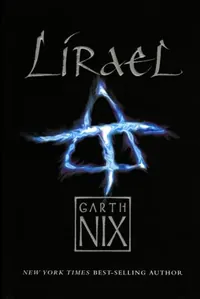
More Free Spiritualism & Afterlife Books
View all →