The Golem's Eye
 72
72

The Golem's Eye
The return to Nathaniel and Bartimaeus in The Golem's Eye offers a satisfying continuation of their fraught alliance. Stroud excels at depicting the intricate workings of a magical bureaucracy, the P.A.W.C.S., which feels both fantastical and disturbingly plausible. Nathaniel's ambition is palpable, making his increasing reliance on the ancient djinni Bartimaeus a compelling focal point for exploring the corrupting nature of power. However, the pacing occasionally falters, particularly in the middle sections where the political machinations, while detailed, can feel slightly drawn out before the action escalates again. A standout element remains Bartimaeus's sardonic narration, providing a crucial counterpoint to Nathaniel's youthful arrogance and the rigid societal structures. The book effectively portrays the precarious balance between magical control and the chaos it seeks to suppress. The Golem's Eye is a solid, engaging entry that deepens the series' mythology and character dynamics.
📝 Description
72
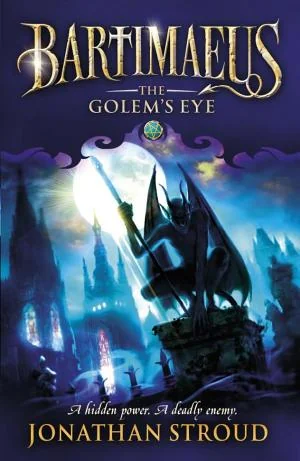
The Golem's Eye, published in 2010, sees young magician Nathaniel face golem attacks in London.
Jonathan Stroud's 2010 novel, The Golem's Eye, picks up the story from The Amulet of Samarkand, following Nathaniel's rise within London's arcane government. His career and the city face peril when a series of mysterious golem attacks begin. Nathaniel must protect his position and London's safety.
The book appeals to readers who like intricate magic systems, fantasy politics, and the relationship between powerful magical beings and their human handlers. Those familiar with Stroud's previous work on magic and demonology will recognize recurring ideas. The story looks at the costs of ambition and the moral choices power requires, all within a rising supernatural threat.
This novel examines the ethics of using summoned creatures, such as djinni like Bartimaeus, and their difficult ties to magicians. It also looks at the dangers of ambition, shown through Nathaniel's pursuit of power. The golem itself acts as a symbol of uncontrolled magical creation.
Published in 2010, The Golem's Eye fits within urban fantasy that blends magical lore with contemporary settings. It expands on the established world of The Amulet of Samarkand, detailing the Political and Administrative Wizardry and Control Service (P.A.W.C.S.) and how magic integrates into society. The novel's focus on summoned beings and the moral quandaries they present connects to broader occult themes of control and consequence in magical practice.
💡 Why Read This Book?
• Gain insight into the P.A.W.C.S. (Political and Administrative Wizardry and Control Service), understanding how magical governance and political ambition intersect within a detailed fantasy world. • Witness the evolving, often strained, partnership between the ambitious magician Nathaniel and the ancient, sarcastic djinni Bartimaeus, exploring themes of power, control, and moral compromise. • Experience the intricate world-building of 2010s urban fantasy, where summoned entities and magical laws create a unique societal structure and drive the narrative's escalating conflict.
⭐ Reader Reviews
Honest opinions from readers who have explored this book.
❓ Frequently Asked Questions
What is the main conflict in The Golem's Eye?
The primary conflict involves Nathaniel confronting a mysterious golem that is randomly attacking London. This threat endangers the city and forces Nathaniel to rely on the djinni Bartimaeus, jeopardizing his reputation and position within the magical government.
Who is Bartimaeus in Jonathan Stroud's series?
Bartimaeus is a powerful, ancient djinni who has been summoned and bound to serve magicians. He is known for his immense magical abilities, his long and cynical perspective on human affairs, and his sarcastic, often rebellious, commentary.
What magical government is mentioned in The Golem's Eye?
The book features the P.A.W.C.S. (Political and Administrative Wizardry and Control Service), London's elite magical government. Nathaniel is a rising figure within this organization, which controls and regulates magical practice.
Is The Golem's Eye a standalone novel?
No, The Golem's Eye is part of a series. It follows The Amulet of Samarkand and is part of the Bartimaeus Sequence, continuing the story of Nathaniel and Bartimaeus.
What are golems in the context of this book?
In The Golem's Eye, golems are magically animated constructs, typically made from clay or other materials, that are used for various purposes, including labor and warfare. They can become dangerous if uncontrolled or corrupted.
When was The Golem's Eye originally published?
The Golem's Eye was first published in 2010, two years after the events of The Amulet of Samarkand, continuing the narrative arc of the Bartimaeus Sequence.
🔮 Key Themes & Symbolism
Ambition and Corruption
Nathaniel's relentless drive to ascend the ranks of the P.A.W.C.S. is a central theme. The work explores how the pursuit of power, even for ostensibly good reasons like protecting London, can lead to morally compromised decisions and a reliance on ethically dubious magical forces, such as binding powerful djinni like Bartimaeus. This ambition creates a dangerous path where the ends begin to justify increasingly questionable means, highlighting the corrupting influence of unchecked desire for control and status.
Power Dynamics and Servitude
The relationship between magicians and summoned entities, particularly the djinni Bartimaeus, is a core element. It examines the complex power dynamic where humans wield magical authority through summoning rituals, yet are often dependent on the very beings they enslave. Bartimaeus's ancient perspective and sardonic wit constantly challenge Nathaniel's assumptions about control, revealing the inherent instability and ethical quandaries of such master-servant relationships in a magical society.
The Uncontrolled Threat
The golem serves as a physical manifestation of chaos and uncontrolled magical forces threatening the established order of London. Its random attacks symbolize the unpredictable consequences of magic when it deviates from the controlled channels maintained by the P.A.W.C.S. This theme contrasts the perceived order and security provided by the magical government with the primal, destructive potential that lies just beneath the surface, requiring desperate measures to contain.
Reputation and Consequence
Nathaniel's primary motivation is not just to save London but to protect his reputation and career. The novel examines how societal standing and the perception of success can drive individuals to take extreme risks. The consequences of his actions, especially his reliance on Bartimaeus, loom large, demonstrating that even in a world of magic, social and political repercussions are potent forces that shape a magician's fate.
💬 Memorable Quotes
Direct passages from the work, attributed to the author.
“Nathaniel's ambition was a driving force.”
— This interpretation focuses on Nathaniel's core motivation. His relentless pursuit of power and status within the P.A.W.C.S. dictates his actions, often leading him to make difficult ethical choices and rely on the formidable, yet troublesome, djinni Bartimaeus.
“The P.A.W.C.S. maintained magical order in London.”
— This statement captures the role of the Political and Administrative Wizardry and Control Service. It is presented as the governing body responsible for regulating magic and ensuring the safety and stability of the city against supernatural threats.
💡 Key Ideas
Editorial paraphrase of the work's core concepts — not direct quotes.
The golem's attacks were random and brutal.
This paraphrased concept highlights the chaotic nature of the threat facing London. Unlike a targeted magical assault, the golem's indiscriminate violence represents an unpredictable force that disrupts the established magical order and poses a pervasive danger to the populace.
Bartimaeus's ancient perspective offered a cynical view of human endeavors.
This paraphrased concept captures Bartimaeus's characteristic voice. His millennia of existence provide him with a detached, often sarcastic, outlook on the fleeting ambitions and dramas of human magicians, contrasting sharply with Nathaniel's urgent aspirations.
The perils of summoning were ever-present.
This paraphrased concept refers to the inherent dangers associated with magical summoning, particularly of powerful entities like djinni. It underscores the risks involved in binding such beings, hinting at potential backlash or loss of control that could have severe consequences.
🌙 Esoteric Significance
Tradition
The work draws loosely from Western esoteric traditions, particularly concerning the summoning and binding of elemental or spiritual entities, akin to goetic magic or djinn lore found in Islamic folklore. However, it recontextualizes these elements within a modern, bureaucratic magical society. It departs from strict adherence by focusing on the political and personal ramifications rather than purely ritualistic or theological aspects, creating a combination of occult concepts and political intrigue.
Symbolism
The golem itself is a potent symbol, representing artificial life created through magical means, often associated with themes of creation, servitude, and the potential for uncontrolled power. The 'eye' in the title suggests a focal point of power or vision, perhaps alluding to the source of the golem's animation or a magical artifact central to its control. Bartimaeus, as a djinni, embodies ancient, chaotic forces bound by human will, symbolizing the inherent dangers and ethical compromises involved in wielding powerful, non-human magic.
Modern Relevance
Contemporary practitioners and enthusiasts of urban fantasy and occult fiction often cite Stroud's series for its imaginative world-building and nuanced portrayal of power dynamics. Thinkers interested in the ethics of AI and artificial life may find parallels in the golem's existence. Modern occultists exploring the practicalities and consequences of summoning rituals, even in fictional contexts, can find inspiration in the detailed depiction of magical bureaucracy and the complex relationships between summoners and summoned entities.
👥 Who Should Read This Book
• Aspiring authors of urban fantasy seeking to understand how to integrate political structures and complex magic systems into their narratives. • Readers interested in the ethical considerations of power and control, particularly concerning artificial beings or subservient magical entities like djinni. • Young adults and adult fantasy fans who enjoy fast-paced plots, morally ambiguous characters, and detailed world-building set in a magical version of London.
📜 Historical Context
The Golem's Eye, published in 2010, arrived at a time when the young adult fantasy genre was thriving, with authors like J.K. Rowling having already redefined its landscape. Jonathan Stroud's Bartimaeus Sequence, which this book continues, tapped into the growing appetite for complex magic systems and morally grey protagonists. The series built upon the foundations laid by earlier urban fantasy works, offering a sophisticated take on magic within a recognizable London setting. It emerged in a literary environment where authors like Philip Pullman had already explored themes of free will, authority, and the nature of supernatural beings. While not directly engaging in a public debate with a specific contemporary, Stroud's work implicitly responded to the broader trend of challenging traditional heroic archetypes and exploring the darker consequences of power. The series' reception was generally positive, praised for its intricate world-building and Bartimaeus's unique narrative voice, solidifying its place within the popular fantasy canon of the early 21st century.
📔 Journal Prompts
Bartimaeus's cynical observations on human ambition.
The ethical implications of Nathaniel's reliance on the P.A.W.C.S.
The golem as a symbol of uncontrolled magical forces.
The power dynamics inherent in the master-djinni relationship.
The concept of magical bureaucracy and its constraints.
🗂️ Glossary
Golem
A magically animated automaton, often constructed from clay or other inanimate materials, created to serve a specific purpose or follow commands. In this context, a rogue golem poses a significant threat.
Djinni
A powerful supernatural creature from Arabian and Islamic mythology, often possessing magical abilities and capable of being summoned and bound to serve a magician. Bartimaeus is a prominent example.
P.A.W.C.S.
The Political and Administrative Wizardry and Control Service. This is the elite magical government organization in London responsible for regulating magic and maintaining order.
Summoning
The magical act of calling forth and binding supernatural entities, such as djinni or demons, to perform tasks for the summoner. This process is depicted as dangerous and ethically complex.
Magical Government
The system of governance that oversees and controls the use of magic within a society. The P.A.W.C.S. represents this in London, highlighting the intersection of magic and politics.
Arcane
Relating to mysteries, secrets, or esoteric knowledge. In the context of the book, it refers to the hidden world of magic and its practitioners.
London
The primary setting for the novel, depicted as a city with a hidden magical underbelly governed by organizations like the P.A.W.C.S.
This book appears in 1 collection
🔮 Readers Also Liked
Browse all →








From the “Amulets” Collection
View all →




More Free Occult Philosophy Books
View all →