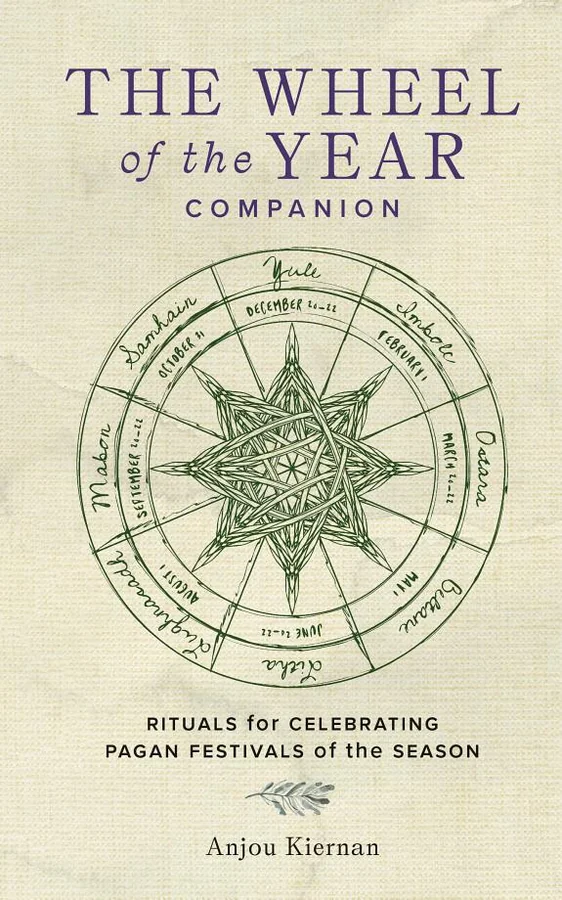
The Wheel of the Year Companion
 82
82

The Wheel of the Year Companion
Anjou Kiernan’s *The Wheel of the Year Companion* presents a refreshingly straightforward approach to the Wiccan calendar. Unlike many texts that drown readers in dense lore, Kiernan offers a practical, almost workbook-like, structure for each of the eight Sabbats. The strength lies in its directness; each section provides specific ritual elements, correspondences, and spellwork suggestions without unnecessary embellishment. For instance, the section on Beltane offers clear instructions for a handfasting ritual and a Maypole dance, grounding the celebration in tangible actions. A notable limitation, however, is the book’s reliance on established Wiccan paradigms, offering little in the way of critical engagement or alternative perspectives on the Wheel’s origins or interpretations. While meticulously organized, it assumes a certain foundational knowledge and acceptance of neo-pagan cosmology. Still, for its intended audience, it serves as a reliable and accessible guide for seasonal observance.
📝 Description
82
Anjou Kiernan's 2024 book details the eight Wiccan festivals with practical ritual guidance.
The Wheel of the Year Companion by Anjou Kiernan is a guide to the eight seasonal festivals observed in Wiccan and related neo-pagan traditions. Published in 2024, the book offers practical instructions for engaging with these celebrations. It serves as a resource for practitioners who wish to deepen their connection to natural cycles and spiritual energies throughout the year.
This volume is suited for individuals actively practicing or studying modern Wicca. Those who value structured ritual and spellwork tied to seasonal observances will find it particularly useful. Beginners can use it as a clear framework for understanding and celebrating the holidays, while experienced practitioners may find new ritual ideas or a concise reference.
This work builds on the concept of the Wheel of the Year, a framework for seasonal observance that gained prominence in the late 20th century through figures like Gerald Gardner and Doreen Valiente. Kiernan's book offers contemporary interpretations and practices for these markers, reflecting a modern pagan lineage focused on reconnecting with nature's rhythms. It positions itself within a tradition that uses the annual cycle of birth, growth, death, and rebirth as a model for spiritual practice.
💡 Why Read This Book?
• Gain actionable ritual frameworks for each of the eight Wiccan Sabbats, including specific spellwork and correspondences for Beltane, as detailed in Kiernan's guide. • Understand the energetic significance of each seasonal turning point, allowing for deeper personal alignment with the cycles of nature as presented in the book's exploration of the Wheel. • Acquire practical techniques for celebrating holidays like Samhain and Yule, moving beyond theoretical knowledge to direct, experiential engagement with the year's sacred dates.
⭐ Reader Reviews
Honest opinions from readers who have explored this book.
❓ Frequently Asked Questions
What are the eight Wiccan holidays covered in The Wheel of the Year Companion?
The book details the eight primary Sabbats of the Wiccan Wheel: Samhain, Yule, Imbolc, Ostara, Beltane, Litha, Lughnasadh, and Mabon, providing rituals and practices for each.
Is The Wheel of the Year Companion suitable for beginners in Wicca?
Yes, the companion is designed as a portable guide, offering clear instructions and practices that are accessible to those new to Wiccan traditions and seasonal celebrations.
What kind of practices are included for each holiday?
Each holiday section includes appropriate rituals, spellwork, and specific practices tailored to the season and its associated energies, offering a hands-on approach to observance.
When was The Wheel of the Year Companion first published?
Anjou Kiernan's The Wheel of the Year Companion was first published on May 21, 2024, making it a recent addition to Wiccan and neo-pagan literature.
Does the book offer historical context for the Wheel of the Year?
While primarily focused on practical application, the book implicitly draws from the historical development of the Wheel of the Year concept within 20th-century neo-paganism, notably influenced by figures like Gerald Gardner.
Can this book be used as a reference throughout the year?
Absolutely. Its structure organizes the year into eight distinct sections, making it a convenient, portable reference for practitioners to consult as each Sabbat approaches.
🔮 Key Themes & Symbolism
The Eight Sabbats
The central theme is the observance of the eight major festivals marking the turning points of the solar year within Wicca. These include the cross-quarter days (Samhain, Beltane, Lughnasadh, Imbolc) and the solstices and equinoxes (Yule, Ostara, Litha, Mabon). Each Sabbat is presented not just as a date, but as a period rich with specific energies, correspondences, and opportunities for ritual work. The companion provides the practical means to engage with these seasonal shifts, aligning personal spiritual practice with the earth's cycles.
Ritual and Spellwork Integration
This companion emphasizes actionable magic and ritual. For each Sabbat, Kiernan offers concrete spellwork suggestions, ritual outlines, and practices designed to harness the unique spiritual currents of that time. This focus moves beyond mere theoretical understanding of the Wheel to direct, experiential participation. Whether it's a spell for prosperity at Lughnasadh or a divination ritual for Samhain, the book equips practitioners with the tools to enact their spiritual beliefs.
Seasonal Correspondences
A core element is the detailed exploration of correspondences associated with each Sabbat. This includes colors, herbs, deities, symbols, and magical intentions that align with the specific energies of each festival. For example, Imbolc might be linked with purification and new beginnings, while Litha (the Summer Solstice) is associated with peak solar power and vitality. Understanding these correspondences allows for a richer, more nuanced approach to ritual crafting and personal practice throughout the year.
The Cyclical Nature of Life
The book frames the Wheel of the Year as a metaphor for the cycles of birth, growth, death, and rebirth observed in nature and within human experience. By celebrating these turning points, practitioners are encouraged to acknowledge and integrate these natural rhythms into their lives. This perspective fosters a deeper connection to the earth and a more holistic understanding of existence, recognizing endings as precursors to new beginnings.
💬 Memorable Quotes
Direct passages from the work, attributed to the author.
“The Wheel of the Year marks the sacred progression of seasons.”
— This captures the book's core premise: that the cyclical nature of the year, as observed through the eight Sabbats, holds profound spiritual significance for practitioners of Wicca and related paths.
“Each Sabbat offers unique opportunities for spellwork and reflection.”
— This highlights the practical, actionable nature of the companion, emphasizing that each festival is not just a date to acknowledge but a potent time for focused magical work and personal introspection.
“Align your practice with the earth's natural rhythms.”
— This suggests a key benefit of using the companion: fostering a deeper connection with the environment and the cosmic cycles that govern life, promoting a more grounded and integrated spiritual path.
“From the deep rest of Yule to the harvest of Lughnasadh, the Wheel turns.”
— This phrase illustrates the book's coverage of the entire annual cycle, contrasting the introspective energies of winter with the abundance of late summer, showcasing the breadth of seasonal experiences detailed.
“A portable guide for celebrating sacred holidays.”
— This directly describes the book's intended function: a concise, easily accessible resource for individuals seeking to actively participate in the observances of the Wiccan calendar throughout the year.
🌙 Esoteric Significance
Tradition
This work is firmly rooted in the tradition of modern Western Esotericism, specifically within the Wiccan and broader neo-pagan sphere. It operates within a framework that emphasizes nature worship, cyclical time, and immanent divinity, departing from more transcendent or dogmatic religious structures. Its lineage can be traced through 20th-century revivalist movements that sought to reconstruct or reinterpret pre-Christian European nature-based spiritualities, adapting them for contemporary practice.
Symbolism
The primary symbol is the Wheel itself, representing the eternal cycle of seasons, life, death, and rebirth, mirroring cosmic and personal transformations. Specific symbols evoked throughout the year include the Sun (particularly at Litha and Yule), the Earth (central to all Sabbats), and various agricultural motifs for harvest festivals like Lughnasadh and Mabon. The interplay of light and dark, growth and decay, is a constant symbolic tension explored within the book's ritual framework.
Modern Relevance
Contemporary practitioners of various neo-pagan paths, witchcraft traditions, and ecospiritual movements continue to draw upon the structure and symbolism of the Wheel of the Year. Thinkers and activists in the eco-pagan and deep ecology movements often find resonance with its emphasis on natural cycles and seasonal awareness. The companion's practical approach also makes it relevant for online communities and solitary practitioners seeking structured guidance for seasonal observance in diverse, often urban, environments.
👥 Who Should Read This Book
• Aspiring and practicing Wiccans seeking a structured, accessible guide to the eight seasonal festivals and their associated rituals. • Individuals interested in modern witchcraft traditions who wish to understand and incorporate the cyclical nature of the year into their spiritual practice. • Students of comparative religion and esoteric studies looking for practical examples of contemporary nature-based spiritual observances and their ritualistic expressions.
📜 Historical Context
The concept of the Wheel of the Year, a cycle of eight seasonal festivals, gained prominence in the mid-20th century within modern pagan and Wiccan movements. While drawing on ancient agricultural and solar calendars from various cultures, its specific articulation is largely attributed to figures like Gerald Gardner, the founder of modern Wicca, and later popularized by authors such as Doreen Valiente and Raymond Buckland. Anjou Kiernan’s *The Wheel of the Year Companion* (2024) enters this lineage, offering contemporary interpretations and practical applications. It emerged in an era where neo-paganism has diversified significantly, with many practitioners seeking accessible guides to established traditions. Unlike earlier, more foundational texts that might have focused on establishing the cosmology, Kiernan’s work assumes a degree of familiarity and provides direct ritualistic support, reflecting a mature phase of the movement where practical application is highly valued.
📔 Journal Prompts
Reflect on the transition from Yule to Imbolc and its energetic implications for your personal life.
Consider the symbolism of the Maypole at Beltane and its connection to community and fertility.
Identify one practice from the Lughnasadh section that you can integrate into your daily routine.
How does the concept of the Wheel of the Year, as presented, challenge or affirm your current spiritual understanding?
Explore the correspondences for Ostara and their relevance to your current goals for growth and balance.
🗂️ Glossary
Sabbat
A festival or celebration, particularly referring to the eight major Wiccan holidays that mark the turning points of the Wheel of the Year.
Wheel of the Year
A cyclical calendar representing the eight seasonal festivals observed in Wicca and many neo-pagan traditions, symbolizing the annual journey of life, death, and rebirth.
Samhain
The Wiccan festival celebrated around November 1st, marking the end of the harvest season and the beginning of winter, often associated with honoring ancestors and the thinning veil between worlds.
Yule
The Wiccan celebration of the Winter Solstice, typically around December 21st, symbolizing the rebirth of the Sun and the longest night of the year.
Imbolc
A Wiccan festival celebrated around February 1st, marking the halfway point between Yule and Ostara, often associated with purification, new beginnings, and the stirrings of life.
Ostara
The Wiccan celebration of the Spring Equinox, typically around March 21st, symbolizing balance, fertility, and the return of light and growth.
Beltane
A Wiccan festival celebrated around May 1st, marking the midpoint between Ostara and Litha, traditionally associated with fertility, union, and the vibrant power of spring.
This book appears in 1 collection
🔮 Readers Also Liked
Browse all →








From the “Incantations” Collection
View all →




More Free Occult Philosophy Books
View all →