Hermetica
 74
74

Hermetica
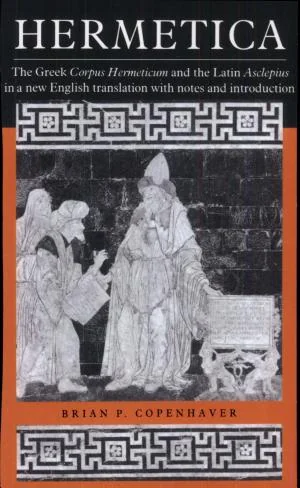
Brian P. Copenhaver's 1995 translation of the *Hermetica* provides a much-needed scholarly anchor for a body of texts that has long been subject to speculative dating and interpretation. The sheer breadth of the corpus, from the *Poimandres* to the *Asclepius*, is impressive, offering a panorama of Hellenistic philosophical and religious thought. Copenhaver's introduction meticulously situates these writings within their historical milieu, challenging the traditional view of their extreme antiquity while validating their profound impact on subsequent Western intellectual history. A notable strength is the clarity of the translation, making complex philosophical arguments accessible without sacrificing scholarly rigor. However, the sheer volume and sometimes repetitive nature of certain treatises can be daunting for the uninitiated reader, requiring significant dedication to fully absorb. The section on the concept of 'Nous' (Mind) across various dialogues offers a particularly compelling glimpse into the text's intricate cosmology. This edition stands as a definitive scholarly resource.
📝 Description
74
Brian P. Copenhaver's 1978 edition presents the Hermetica, late antique texts attributed to Hermes Trismegistus.
The Hermetica is a collection of theological and philosophical treatises from late antiquity, traditionally attributed to the Egyptian sage Hermes Trismegistus. For centuries, these writings were thought to predate biblical figures, suggesting Hermetic philosophy was an ancient, divinely inspired wisdom. The texts were primarily written in Greek during the Roman Imperial period, specifically between the 1st and 3rd centuries CE. They emerged in a cultural environment that valued syncretism and ancient knowledge. The Hermetica offered a cohesive, though varied, philosophical system that influenced later Neoplatonism and Renaissance thinkers. These texts were often compared to Christian theology, sometimes resulting in suspicion or censorship.
The central themes of the Hermetica concern the nature of God, the cosmos, humanity, and the way to salvation or gnosis. The texts propose a supreme, unknowable God from which all creation originates. Humanity, seen as created in the divine image, carries a spark of divine intellect. This spark allows for an ascent back to the divine source through knowledge and contemplation.
The Hermetica represents a significant strand of Hellenistic Gnosticism and Neoplatonism. Its purported authorship by Hermes Trismegistus, a syncretic deity blending Greek Hermes and Egyptian Thoth, lent it an aura of primeval wisdom. These texts circulated widely, shaping mystical and philosophical thought across the Mediterranean world and later influencing Renaissance occultism and magic. They provided a non-Christian framework for understanding divine revelation and the human soul's relationship to the cosmos.
💡 Why Read This Book?
• Gain direct access to foundational Hermetic teachings on the nature of God and creation, as presented in the corpus attributed to Hermes Trismegistus, moving beyond later interpretations. • Understand the historical and philosophical landscape of late antiquity by examining texts that shaped Neoplatonism and Renaissance Hermeticism, referencing their composition around the 1st to 3rd centuries CE. • Explore the concept of the divine 'Nous' (Mind) as a creative principle, a key theme that bridges the divine and material realms within the Hermetic worldview.
⭐ Reader Reviews
Honest opinions from readers who have explored this book.
❓ Frequently Asked Questions
Who is Hermes Trismegistus and what is his connection to the Hermetica?
Hermes Trismegistus is a legendary syncretic figure, a fusion of the Greek god Hermes and the Egyptian god Thoth. He is traditionally considered the author of the Hermetic texts, though scholars place their composition in late antiquity, not ancient Egypt.
When were the Hermetic texts actually written?
Most scholars date the *Hermetica* to the Roman Imperial period, primarily between the 1st and 3rd centuries CE. This contradicts the ancient belief that they were written much earlier, around the time of Moses.
What is the primary philosophical outlook of the Hermetica?
The *Hermetica* present a theological-philosophical system emphasizing the nature of God, the cosmos as divine emanation, and the human soul's potential for ascent to divine knowledge (gnosis) through intellect and contemplation.
How did the Hermetica influence later thought?
These texts were highly influential on Neoplatonism, Gnosticism, and Renaissance thinkers. They provided a philosophical alternative to Christian doctrine and fueled interest in magic, alchemy, and astrology during the Renaissance.
Is Brian P. Copenhaver's translation considered scholarly?
Yes, Copenhaver's translation, first published in 1995, is based on reliable ancient texts and includes a comprehensive introduction, making it an indispensable resource for academic study of the Hermetica.
What does the Hermetic concept of 'Nous' refer to?
'Nous' translates to Mind or Intellect. In the *Hermetica*, it signifies the divine Mind, the active principle of creation, and the spark of divinity within the human soul that allows for understanding and ascent.
🔮 Key Themes & Symbolism
Divine Emanation and Creation
The *Hermetica* describe a hierarchical cosmology where the divine unfolds into existence. The supreme God is the ultimate source, from which emanate principles like Nous (Mind) and Logos (Word), leading to the formation of the material world. This process is not one of separation but of continuous divine presence throughout creation, which is seen as a manifestation of God's order and beauty.
The Nature of God
God in the *Hermetica* is often portrayed as transcendent and unknowable in His ultimate essence, yet immanent through His creative powers. He is the Father, the Good, the All. The texts grapple with the paradox of a singular, supreme being who is both utterly beyond comprehension and the direct source of all that exists.
Gnosis and Human Ascent
A central theme is the potential for humanity to achieve Gnosis, or direct spiritual knowledge of the divine. This is facilitated by the 'Nous' or intellect within humans, a divine spark that can recall its origin. The path involves understanding the cosmos, transcending material ignorance, and achieving a reunion with the divine source.
The Divine Mind (Nous)
The concept of 'Nous' is central. It functions as the active principle of God, the source of order and intelligibility in the universe. Humans possess a share of this Nous, which enables them to perceive the divine order and, through philosophical contemplation and spiritual practice, to ascend back to the divine Mind.
💬 Memorable Quotes
Direct passages from the work, attributed to the author.
“The universe is a living being, endowed with a soul and endowed with a mind.”
— This statement expresses the Hermetic view of a divinely animated cosmos. It suggests an interconnectedness of all things, where the material world is not inert but imbued with a life force and an underlying intelligence originating from the divine.
“To know God is to love Him.”
— This aphorism highlights the ethical and devotional dimension of Hermetic philosophy. True knowledge of the divine is not merely intellectual but involves a profound affective response, leading to adoration and alignment with the divine will.
“The mind is the eye of the soul.”
— This emphasizes the critical role of intellect and consciousness in spiritual perception. The 'Nous' or mind acts as the faculty through which the soul can apprehend higher realities and understand its own divine nature.
“Man is a mortal god.”
— This paradox points to humanity's dual nature. Possessing a divine spark ('Nous'), humans have god-like potential for understanding and spiritual ascent, yet are bound by mortal existence and the material world.
“For the good is one, and is God.”
— This declaration asserts the ultimate unity and divinity of goodness. It posits that the highest good is identical with God, suggesting that striving for goodness is a direct path towards divine communion.
🌙 Esoteric Significance
Tradition
The *Hermetica* are the foundational texts of the Western Hermetic tradition, a lineage that encompasses alchemy, astrology, and magic. They represent a crucial stream of esoteric thought in antiquity, influencing Gnosticism and later Neoplatonism. Unlike purely philosophical systems, they blend cosmology, theology, and practical spiritual disciplines aimed at achieving divine union or 'gnosis'.
Symbolism
Key symbols include the 'Divine Mind' (Nous), representing the active creative intelligence and the spark within humanity. Light and darkness symbolize spiritual knowledge and ignorance, respectively. The figure of Hermes Trismegistus himself functions as an archetype of the wise intermediary, bridging the human and divine realms, and the cyclical nature of creation and return is a pervasive motif.
Modern Relevance
Contemporary Hermetic orders, alchemical practitioners, and ceremonial magicians frequently cite the *Hermetica* as primary source material. Modern esoteric thinkers and scholars of religion continue to analyze its complex cosmology and ethical teachings, finding relevance in its exploration of consciousness, divine immanence, and the human potential for spiritual transformation.
👥 Who Should Read This Book
• Students of ancient philosophy and religion seeking primary source material on Hellenistic theological and cosmological ideas, beyond Plato and Aristotle. • Aspiring practitioners of Western esotericism, including Hermeticism, alchemy, and traditional magic, who require foundational texts for their studies. • Comparative religion scholars interested in the cross-pollination of Greek, Egyptian, and Near Eastern religious and philosophical concepts during the Roman Imperial period.
📜 Historical Context
The *Hermetica* emerged within the vibrant intellectual melting pot of the Roman Empire, primarily between the 1st and 3rd centuries CE. This era saw a flourishing of syncretic religious and philosophical ideas, with Hellenistic Greece providing the philosophical language for diverse spiritual currents. The texts were composed in Greek, reflecting the cosmopolitan nature of intellectual life under Roman rule. They offered a coherent theological-philosophical system that stood in parallel, and sometimes in contrast, to the burgeoning Christian movement. Thinkers like Plotinus, a key figure in Neoplatonism, engaged with Hermetic ideas, though often critically. While the Hermetica were believed by many in antiquity and the Renaissance to be ancient Egyptian revelations, modern scholarship firmly places their composition in late antiquity, significantly influencing subsequent Western esotericism and Renaissance Hermeticism.
📔 Journal Prompts
The concept of Nous as both divine Mind and human intellect.
Reflections on the Hermetic view of the cosmos as a living, divinely animated entity.
The paradoxical nature of God as both transcendent and immanent.
Personal understanding of Gnosis as presented in the Hermetica.
The implications of 'Man is a mortal god' for human responsibility.
🗂️ Glossary
Hermes Trismegistus
A legendary syncretic figure, identified with the Greek god Hermes and the Egyptian god Thoth, credited as the author of the Hermetic texts. He represents divine wisdom and revelation.
Nous
Greek for 'Mind' or 'Intellect'. In Hermeticism, it refers to the Divine Mind, the active principle of creation, and the divine spark within the human soul that enables spiritual understanding.
Logos
Greek for 'Word' or 'Reason'. In some Hermetic contexts, it signifies the divine creative utterance or the rational order of the universe, closely associated with Nous.
Gnosis
Greek for 'Knowledge'. In the context of the Hermetica, it refers to spiritual, intuitive knowledge of the divine, leading to salvation or liberation from the material world.
Corpus Hermeticum
The collection of Greek philosophical and religious treatises attributed to Hermes Trismegistus, dating primarily from the 2nd and 3rd centuries CE.
Asclepius
A dialogue within the Hermetic corpus, notable for its discussion of cosmology, theology, and the nature of humanity, often considered a key text alongside the Corpus Hermeticum.
Hellenistic Period
The historical period following the conquests of Alexander the Great (c. 323 BCE) and lasting until the rise of the Roman Empire (c. 31 BCE). It was characterized by the spread of Greek culture and philosophy.
This book appears in 1 collection
🔮 Readers Also Liked
Browse all →









From the “Occultism” Collection
View all →






More Free Occult Philosophy Books
View all →