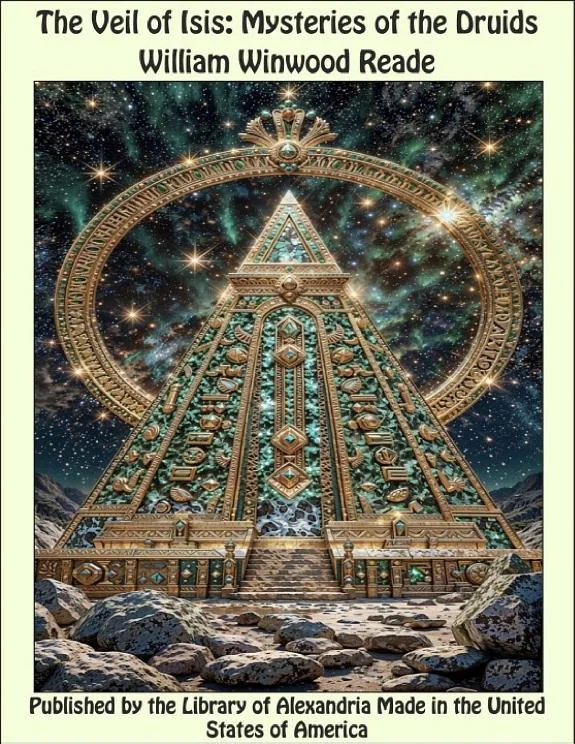
The Veil of Isis: The Mysteries of the Druids
 73
73

The Veil of Isis: The Mysteries of the Druids
Reade’s "The Veil of Isis" presents a fascinating, if somewhat melancholic, chronicle of humanity's religious impulses. The author’s strength lies in his exhaustive cataloging of early beliefs, drawing connections between seemingly disparate cultures and their worship of natural forces. He meticulously details the evolution from simple awe to complex mythologies, a process he frames as a tragic descent into superstition. However, Reade's perspective is undeniably Victorian, tinged with a condescension towards "primitive" beliefs that modern scholarship has largely moved beyond. His assertion that original worship was "pure" before being "degraded" feels less like objective analysis and more like a projection of 19th-century European values onto ancient peoples. The work is invaluable for its historical documentation but requires a critical lens to separate its factual observations from its authorial bias.
📝 Description
73
William Winwood Reade's 1861 book analyzes the degeneration of religion from primal nature worship.
Published in 1861, "The Veil of Isis: The Mysteries of the Druids" by William Winwood Reade examines the origins of human religion. Reade traces the evolution of spiritual thought from early reverence for nature to what he perceived as more complex, and often darker, religious systems. The book details how primal awe of natural forces developed into formalized practices, rituals, and mythologies across various ancient cultures.
Reade's work is suited for those interested in comparative religion, the history of ideas, and early anthropological studies. It will particularly appeal to readers curious about Victorian England's intellectual engagement with ancient civilizations and religious history. The book invites scrutiny of belief systems' roots, even if one questions the author's specific conclusions.
Reade's book emerged in the 19th century, a period of significant scholarly interest in comparative mythology and the burgeoning field of anthropology. It aligns with Victorian attempts to categorize and explain the religious practices of ancient and non-Western peoples. The work contributes to a broader discourse on the development of human religious experience, often viewed through an evolutionary lens, and stands with studies by contemporaries exploring similar themes.
💡 Why Read This Book?
• Gain insight into Victorian-era theories of religious evolution, specifically Reade's thesis on the transition from nature worship to codified religion, as discussed in the book's early chapters. • Understand Reade's specific critique of how "degrading superstitions" emerged from "simple origin" worship, providing a historical perspective on comparative religion. • Explore Reade's detailed examination of early deities like Cybele and the "Great Mother" concept, offering concrete examples of how natural forces were mythologized in ancient societies.
⭐ Reader Reviews
Honest opinions from readers who have explored this book.
❓ Frequently Asked Questions
What is William Winwood Reade's primary argument in 'The Veil of Isis'?
Reade argues that early human religion began as a pure, unadulterated worship of nature's blessings, which subsequently devolved into "degrading superstitions" and "unhallowed rites" as complex mythologies and formalised religious structures developed.
When was 'The Veil of Isis: The Mysteries of the Druids' first published?
The book was first published in the 19th century, with the edition under review noting a first publication date of 2020-09-28, likely referring to a modern reprint or digital edition of the original work.
Does the book focus solely on Druidic mysteries?
While the title mentions Druids, the book's scope is much broader, examining the early religions of mankind across various ancient cultures, tracing universal patterns of spiritual development and perceived degradation.
What historical period does Reade draw upon for his analysis?
Reade draws upon a wide range of ancient history, referencing early civilizations and their religious practices, with a focus on the perceived evolution from primal nature worship to more formalized, and in his view, less pure, religious systems.
What is the significance of the 'Veil of Isis' metaphor?
The 'Veil of Isis' metaphor likely symbolizes the hidden or obscured nature of primal religious truth, which Reade believes has been covered by layers of subsequent, often corrupting, religious development and superstition.
Is this book suitable for beginners in esoteric studies?
It can be, but with caution. It provides historical context for religious studies but reflects 19th-century biases. Beginners might benefit more from modern analyses that engage critically with Reade's perspective on early religions.
🔮 Key Themes & Symbolism
Primal Nature Worship
The work posits that early humanity experienced religion as a direct communion with nature, viewing natural phenomena like the sun, moon, and earth as benevolent forces deserving of reverence. Reade meticulously details how this uncomplicated appreciation, akin to a child's joy in blessings, formed the bedrock of all subsequent religious expression across cultures. The text emphasizes a perceived purity in this initial state, before the complexities of organized religion emerged to obscure its simple truth.
Religious Degradation
A central theme is Reade's lamentation of how early, pure worship allegedly became corrupted over time. He traces the gradual introduction of "degrading superstitions" and "unhallowed rites," attributing this decline to the rise of priestly classes, the development of complex mythologies, and the personification of natural forces into often capricious deities. This transformation, in Reade's view, darkened the understanding and presence of the divine in the ancient world.
The Great Mother Concept
The book explores the pervasive ancient concept of the "Great Mother," a primal deity embodying fertility, earth, and nurturing aspects of nature. Reade connects this archetype across various cultures, viewing it as a significant manifestation of early religious devotion focused on the generative powers of the cosmos. The worship of figures like Cybele is presented as a key example of this ancient reverence for the life-giving forces of the world.
Evolution of Myth and Ritual
Reade charts the progression from simple animistic beliefs to elaborate pantheons and ritualistic practices. He analyzes how astronomical observations, seasonal cycles, and the need to explain phenomena like death and rebirth contributed to the development of complex religious narratives and ceremonies. The work examines the transition from intuitive reverence to formalized religious systems that, in his critique, eventually obscured the original divine essence.
💬 Memorable Quotes
Direct passages from the work, attributed to the author.
“At first men enjoyed the blessings of nature as children do, without inquiring into causes.”
— This highlights Reade's view of primal humanity's relationship with the divine, characterized by unexamined gratitude for natural abundance, similar to a child's simple acceptance of parental care.
“It was sufficient for them that the earth gave them herbs, that the trees bore them fruit...”
— This illustrates the fundamental, direct connection Reade believed existed between early peoples and the life-sustaining forces of nature, forming the basis of their initial spiritual experiences.
“The worship of God... His presence in the ancient world.”
— This phrase suggests Reade's belief that a singular, pure divine presence was perceived by early humans, but this perception was gradually obscured and diminished by the emergence of polytheism and elaborate, often superstitious, religious systems.
“The Mysteries of the Druids”
— While the title focuses on the Druids, this phrase suggests the book may explore specific, perhaps hidden or esoteric, aspects of their belief systems, linking them to broader themes of ancient religious practices and natural worship.
💡 Key Ideas
Editorial paraphrase of the work's core concepts — not direct quotes.
To trace back the worship of God to its simple origin, and to mark the gradual process of those degrading superstitions...
This quote captures Reade's core thesis: that religious history is a narrative of decline from an original, pure state of nature worship into increasingly complex and corrupted forms of belief and practice.
🌙 Esoteric Significance
Tradition
While not strictly adhering to a single esoteric lineage, Reade's work touches upon themes found in Hermeticism and Neoplatonism concerning the relationship between the material world and a primal divine source. His tracing of early religions and their perceived "degradation" echoes Gnostic concerns about the corruption of original divine knowledge. The focus on nature worship and archetypal "Great Mother" figures also speaks to pre-Christian European mystical traditions, suggesting an attempt to understand a universal, ancient spiritual current.
Symbolism
The "Veil of Isis" itself is a potent symbol, referencing the ancient Egyptian goddess Isis whose veil was said to conceal all that was, is, or ever would be. In Reade's context, it symbolizes the obscured nature of primal religious truth, hidden by layers of subsequent human interpretation, superstition, and complex dogma. The book also explores symbols of fertility and nature, such as the "Great Mother," representing the generative and life-sustaining forces of the cosmos that early religions sought to honor.
Modern Relevance
Contemporary scholars and practitioners interested in the history of religion and comparative mythology frequently reference Reade's work for its detailed cataloging of ancient beliefs, even while critically engaging with his Victorian-era biases. His exploration of nature worship and archetypal deities like the "Great Mother" continues to inform discussions in modern Paganism, Goddess spirituality, and fields seeking to understand the psychological and sociological roots of religious expression in pre-modern societies.
👥 Who Should Read This Book
• Students of comparative religion and mythology seeking to understand 19th-century perspectives on the origins and evolution of belief systems. • Researchers interested in the historical context of Victorian anthropology and its engagement with ancient civilizations and their religious practices. • Readers curious about early theories on nature worship, the "Great Mother" archetype, and the perceived transition from primal spirituality to organized religion.
📜 Historical Context
Published in the late 19th century, "The Veil of Isis: The Mysteries of the Druids" emerged during a vibrant period of Victorian intellectualism focused on comparative mythology and the origins of religion. Reade's work engaged with prevailing evolutionary theories applied to human culture and belief systems, much like his contemporary Sir James Frazer in "The Golden Bough." This era saw a surge in scholarly interest in ancient civilizations and a desire to categorize and explain the diverse religious practices observed worldwide. Reade's perspective, however, often carried a critical tone, viewing the development of religion as a process of decline from a purer, primal state. This contrasted with more purely anthropological or sociological approaches that might have sought to understand the function of religion within societies without such a value judgment. The work contributed to a broader discourse on the universality of human spiritual experience, albeit through a lens shaped by Victorian sensibilities and a particular interpretation of ancient history.
📔 Journal Prompts
The concept of "degrading superstitions" in early religion.
Early humanity's unexamined enjoyment of "blessings of nature."
The "Great Mother" archetype as a reflection of primal worship.
Reade's view on the "simple origin" versus complex ritual.
The "Veil of Isis" metaphor and obscured divine presence.
🗂️ Glossary
Degrading superstitions
A term used by Reade to describe religious beliefs and practices that he viewed as corrupted or fallen from an earlier, purer state of worship, often involving complex rituals or perceived irrationality.
Unhallowed rites
Refers to religious ceremonies or practices that Reade considered impious or improper, contrasting them with the perceived purity of original, natural worship. It implies a deviation from a sacred or natural order.
Great Mother
An archetypal deity representing fertility, earth, and the nurturing aspects of the cosmos. Reade discusses this concept as a significant manifestation of early religious devotion focused on the generative powers of nature.
Simple origin
Reade's term for the hypothesized initial state of human religion, characterized by direct reverence for natural phenomena and an unmediated experience of the divine, free from complex dogma or ritual.
Veil of Isis
A symbolic representation, often associated with the Egyptian goddess Isis, signifying the hidden or obscured nature of ultimate truth or primal divine essence, which Reade suggests has been covered by subsequent religious developments.
Blessings of nature
The natural bounty and phenomena (e.g., fertile land, harvests, sunlight) that early humans directly experienced and revered, forming the basis of their initial spiritual understanding before abstract religious systems emerged.
Priestly classes
Groups or individuals who develop specialized roles in religious practice and administration. Reade suggests their rise contributed to the formalization and, in his view, corruption of early religious expression.
This book appears in 1 collection
🔮 Readers Also Liked
Browse all →









From the “Druidism” Collection
View all →




More Free Occult Philosophy Books
View all →