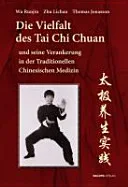
“Die” Vielfalt des Tai Chi Chuan und seine Verankerung in der Traditionellen Chinesischen Medizin (TCM)
 77
77

“Die” Vielfalt des Tai Chi Chuan und seine Verankerung in der Traditionellen Chinesischen Medizin (TCM)
Runjin Wu, Lichan Zhu, and Thomas Jonasson's "Die" Vielfalt des Tai Chi Chuan und seine Verankerung in der Traditionellen Chinesischen Medizin (TCM) offers a structured approach to understanding Tai Chi not merely as a martial art but as a somatic practice deeply embedded in a medical cosmology. The book's strength lies in its detailed exposition of how specific Tai Chi movements, such as the "Push Hands" (Tui Shou) exercises, can be directly related to TCM concepts like "Yin and Yang" balance and the free flow of "Qi" through meridians. A notable limitation, however, is the dense academic tone which, while precise, may present a barrier for casual practitioners seeking a more accessible guide. The section detailing the "Eight Energies" (Ba Jin) and their application in posture, for instance, is exceptionally clear but requires dedicated study. Overall, the work provides a rigorous, scholarly bridge between two complex systems, serving as a valuable reference for those committed to its depth.
📝 Description
77
Published in 2008, Wu, Zhu, and Jonasson's book connects Tai Chi Chuan's diverse forms to Traditional Chinese Medicine.
This text examines the relationship between Tai Chi Chuan and Traditional Chinese Medicine (TCM). It details various Tai Chi forms, going beyond simple practice to discuss their core principles. The book aims to show how Tai Chi's movements, breathing, and philosophy align with TCM's view of health and vital energy, or Qi.
It is intended for Tai Chi practitioners who want a deeper theoretical grasp of their art. Students and practitioners of TCM will also find it useful for understanding the physical and energetic aspects of movement therapy. Those interested in the philosophical links between martial arts, mind-body practices, and ancient Chinese medical theory will find this resource helpful.
The work systematically links the physical art of Tai Chi to its medical and philosophical origins. It distinguishes Tai Chi practice from interpretations focused solely on performance. This approach contributes to a clearer articulation of the historical roots and theoretical frameworks of both practices.
This work situates Tai Chi Chuan within the broader context of Chinese internal arts and their connection to medical and philosophical traditions. It highlights how the practice of Tai Chi is not merely physical exercise but a method for cultivating and balancing vital energy (Qi), a central concept in Taoism and Traditional Chinese Medicine. The book draws parallels between Tai Chi's movements and the energetic pathways (meridians) described in TCM, suggesting a unified system of health cultivation rooted in ancient Chinese cosmology.
💡 Why Read This Book?
• Gain a deeper understanding of "Qi" cultivation through specific Tai Chi "Eight Energies" (Ba Jin) exercises, as detailed in the book's examination of movement mechanics and energetic flow. • Explore the direct physiological correlations between Tai Chi postures and Traditional Chinese Medicine's understanding of "meridians" and "acupoints," moving beyond anecdotal claims. • Appreciate the historical lineage of Tai Chi Chuan by examining its 2008 publication within the context of growing Western engagement with Eastern medical arts and philosophies.
⭐ Reader Reviews
Honest opinions from readers who have explored this book.
❓ Frequently Asked Questions
What specific TCM concepts are directly linked to Tai Chi movements in this book?
The book directly links Tai Chi movements to fundamental TCM concepts such as "Qi" (vital energy), "Yin and Yang" balance, and the "Five Elements" (Wu Xing). It explores how specific postures and forms are believed to influence the flow of "Qi" through the body's "meridians" and "acupoints."
Is this book suitable for complete beginners to Tai Chi?
While the book provides foundational knowledge, its depth and focus on TCM integration suggest it's best suited for those with some existing familiarity with Tai Chi Chuan or a strong interest in its theoretical underpinnings alongside Traditional Chinese Medicine.
What distinguishes this book from other Tai Chi guides?
Unlike many guides focused solely on technique, this book's primary distinction is its explicit and detailed exploration of Tai Chi Chuan's deep roots in Traditional Chinese Medicine, offering a unique perspective on the art's therapeutic and energetic dimensions.
When was "Die" Vielfalt des Tai Chi Chuan und seine Verankerung in der Traditionellen Chinesischen Medizin originally published?
The book "Die" Vielfalt des Tai Chi Chuan und seine Verankerung in der Traditionellen Chinesischen Medizin was first published in 2008.
Does the book discuss specific Tai Chi forms or styles?
Yes, the work discusses the "diversity" ("Vielfalt") of Tai Chi Chuan, implying an examination of various forms and their underlying principles, particularly as they relate to TCM, rather than focusing on a single style.
Who are the authors of this work?
The authors of "Die" Vielfalt des Tai Chi Chuan und seine Verankerung in der Traditionellen Chinesischen Medizin are Runjin Wu, Lichan Zhu, and Thomas Jonasson.
🔮 Key Themes & Symbolism
Qi and Meridians
This book meticulously details how Tai Chi Chuan practice directly influences "Qi" (vital energy) and its pathways, known as "meridians" in Traditional Chinese Medicine. It moves beyond the abstract to show how specific movements, stances, and breathing techniques are designed to promote the unimpeded circulation of "Qi" throughout the body. By correlating Tai Chi's somatic principles with TCM's diagnostic and therapeutic frameworks, the authors illuminate the art's potential for health maintenance and energetic balancing.
Yin and Yang Integration
A central theme is the embodiment of "Yin and Yang" principles within Tai Chi Chuan. The work explores how the dynamic interplay of yielding and asserting, stillness and motion, softness and hardness, as expressed in Tai Chi forms, mirrors the fundamental concept of "Yin and Yang" in TCM. This integration is presented not just as philosophical adherence but as a practical method for achieving physiological and energetic harmony, crucial for well-being.
The Five Elements Framework
The book examines the application of the "Five Elements" (Wu Xing) theory—Wood, Fire, Earth, Metal, and Water—to Tai Chi Chuan. It elucidates how different movements, postures, and even emotional states associated with Tai Chi can be understood and harmonized through the lens of the "Five Elements." This provides a nuanced understanding of how Tai Chi can address imbalances related to specific organ systems as defined in TCM.
Somatic Practice as Medicine
Fundamentally, this work positions Tai Chi Chuan as a profound form of "somatic medicine." It argues that the deliberate, mindful movements of Tai Chi offer a direct means of influencing the body's internal landscape, aligning with TCM's holistic approach to health. The text presents Tai Chi not just as exercise but as a sophisticated system for self-regulation, energetic cultivation, and disease prevention, rooted in ancient medical wisdom.
💬 Memorable Quotes
Direct passages from the work, attributed to the author.
“The Eight Energies (Ba Jin) in Tai Chi correspond to specific TCM principles.”
— This interpretation points to the detailed analysis within the book that connects the fundamental energetic qualities of Tai Chi (like pushing, pulling, expanding) to established TCM concepts, offering a structured way to understand their therapeutic applications.
“The Five Elements (Wu Xing) provide a framework for understanding Tai Chi's influence on organ systems.”
— This interpretation underscores the book's use of the Wu Xing theory to categorize and explain how different aspects of Tai Chi practice can positively affect specific organ functions and energetic imbalances recognized in Traditional Chinese Medicine.
💡 Key Ideas
Editorial paraphrase of the work's core concepts — not direct quotes.
Tai Chi movements are designed to cultivate, balance, and circulate Qi.
This paraphrased concept highlights the core assertion of the book: that the physical practice of Tai Chi is intrinsically linked to the management and flow of vital energy, a key tenet of Traditional Chinese Medicine.
Harmony of Yin and Yang is achieved through the dynamic interplay of Tai Chi forms.
This paraphrased quote emphasizes how the book views Tai Chi's movements not as static poses but as a dynamic process that embodies and balances opposing forces, essential for maintaining health according to TCM principles.
Tai Chi Chuan serves as a somatic practice for energetic balancing.
This paraphrased statement captures the book's perspective on Tai Chi as a physical discipline that directly impacts the body's energetic state, serving as a method for achieving internal equilibrium consistent with TCM's goals.
🌙 Esoteric Significance
Tradition
This work aligns with the esoteric tradition of internal alchemy and vital energy cultivation, deeply rooted in Taoist philosophy and Traditional Chinese Medicine. While not strictly Hermetic or Kabbalistic, it shares the common esoteric goal of harmonizing the microcosm (human body) with the macrocosm (universe) through disciplined practice. It departs from purely philosophical Taoism by grounding its principles in the specific, applied medical framework of TCM, emphasizing tangible energetic shifts and physiological balance.
Symbolism
Key symbols include "Qi" (vital energy), represented as a flowing, invisible force essential for life and health, and the "Eight Energies" (Ba Jin) which symbolize fundamental movement qualities like yielding, pressing, and expanding. The "Five Elements" (Wu Xing) serve as a symbolic system to categorize and understand the dynamic interactions within the body and between the body and its environment, mirroring natural cycles.
Modern Relevance
Contemporary practitioners of somatic therapies, integrative medicine, and embodied psychology increasingly draw upon the principles articulated in works like this. Thinkers exploring the science of Qi Gong and Tai Chi for chronic pain management, stress reduction, and neurological rehabilitation find the book's detailed explanations of energetic flow and meridian theory highly relevant. It bridges ancient concepts with modern scientific investigation into neuroplasticity and psychosomatic health.
👥 Who Should Read This Book
• Practitioners of Tai Chi Chuan seeking a deeper theoretical framework connecting their movements to Traditional Chinese Medicine principles like "Qi" and "meridians." • Students and practitioners of Traditional Chinese Medicine interested in understanding the somatic and energetic applications of movement therapy beyond acupuncture and herbs. • Scholars and enthusiasts of comparative philosophy and mind-body disciplines exploring the intricate relationship between martial arts, ancient medical systems, and energetic cultivation.
📜 Historical Context
Published in 2008, "Die" Vielfalt des Tai Chi Chuan und seine Verankerung in der Traditionellen Chinesischen Medizin emerged during a significant period of academic and popular interest in mind-body practices and complementary medicine. The late 20th and early 21st centuries saw a surge in Western scientific inquiry into disciplines like acupuncture and Qigong, seeking to validate their efficacy and understand their mechanisms. This work by Wu, Zhu, and Jonasson contributes to this discourse by offering a rigorous, systematic examination of Tai Chi Chuan's integration with Traditional Chinese Medicine (TCM). It addresses a need for clearer articulation of the theoretical underpinnings that connect the somatic art to its medical roots, moving beyond purely folkloric or performance-based interpretations. While competing schools of thought often presented Tai Chi solely as a martial art or a gentle exercise, this book places it firmly within a complex medical cosmology, engaging with scholars and practitioners seeking deeper, evidence-based connections between physical practice and internal energetic balance.
📔 Journal Prompts
The concept of "Qi" flow and its relationship to specific Tai Chi movements.
How the "Eight Energies" (Ba Jin) manifest in your practice and TCM understanding.
Reflecting on the "Yin and Yang" balance as depicted in a particular Tai Chi posture.
Connections between the "Five Elements" (Wu Xing) and your personal energetic state.
The role of "meridians" in the perceived health benefits of Tai Chi Chuan.
🗂️ Glossary
Qi (Chi)
In Traditional Chinese Medicine, Qi is the vital life force or energy that animates all living things. Its smooth and balanced flow is considered essential for health.
Meridians
These are pathways or channels within the body through which Qi is believed to flow, connecting different organs and tissues. They form the basis of acupuncture theory.
Yin and Yang
Fundamental concepts in Chinese philosophy and TCM representing complementary, interconnected, and interdependent forces. Yin is typically associated with passivity, coolness, and darkness, while Yang embodies activity, warmth, and brightness.
Wu Xing (Five Elements)
A Chinese philosophical concept representing Wood, Fire, Earth, Metal, and Water. In TCM, these elements are used to categorize phenomena and explain the interactions and relationships between different aspects of the body and the natural world.
Ba Jin (Eight Energies)
Referring to eight fundamental energetic qualities or forces (e.g., Peng, Lu, Ji, An, Cai, Lie, Zhou, Kao) that are expressed through Tai Chi Chuan movements, each with specific applications and energetic correspondences.
Somatic
Relating to the body, especially as distinct from the mind or spirit. Somatic practices focus on bodily sensations and awareness.
TCM
Abbreviation for Traditional Chinese Medicine, a holistic medical system developed over thousands of years in China.